7.6 Organizational Design Considerations

💼Intro to Business Unit 7 Review
7.6 Organizational Design Considerations
💼 Intro to Business
7.1
Building Organizational Structures
7.2
Contemporary Structures
7.3
Using Teams to Enhance Motivation and Performance
7.4
Authority—Establishing Organizational Relationships
7.5
Degree of Centralization
7.6
Organizational Design Considerations
7.7
The Informal Organization
7.8
Trends in Organizational Structure
Organizational Structure Types and Considerations

Top images from around the web for Mechanistic vs organic structures
Organizational Design Considerations | OpenStax Intro to Business View original
Is this image relevant?
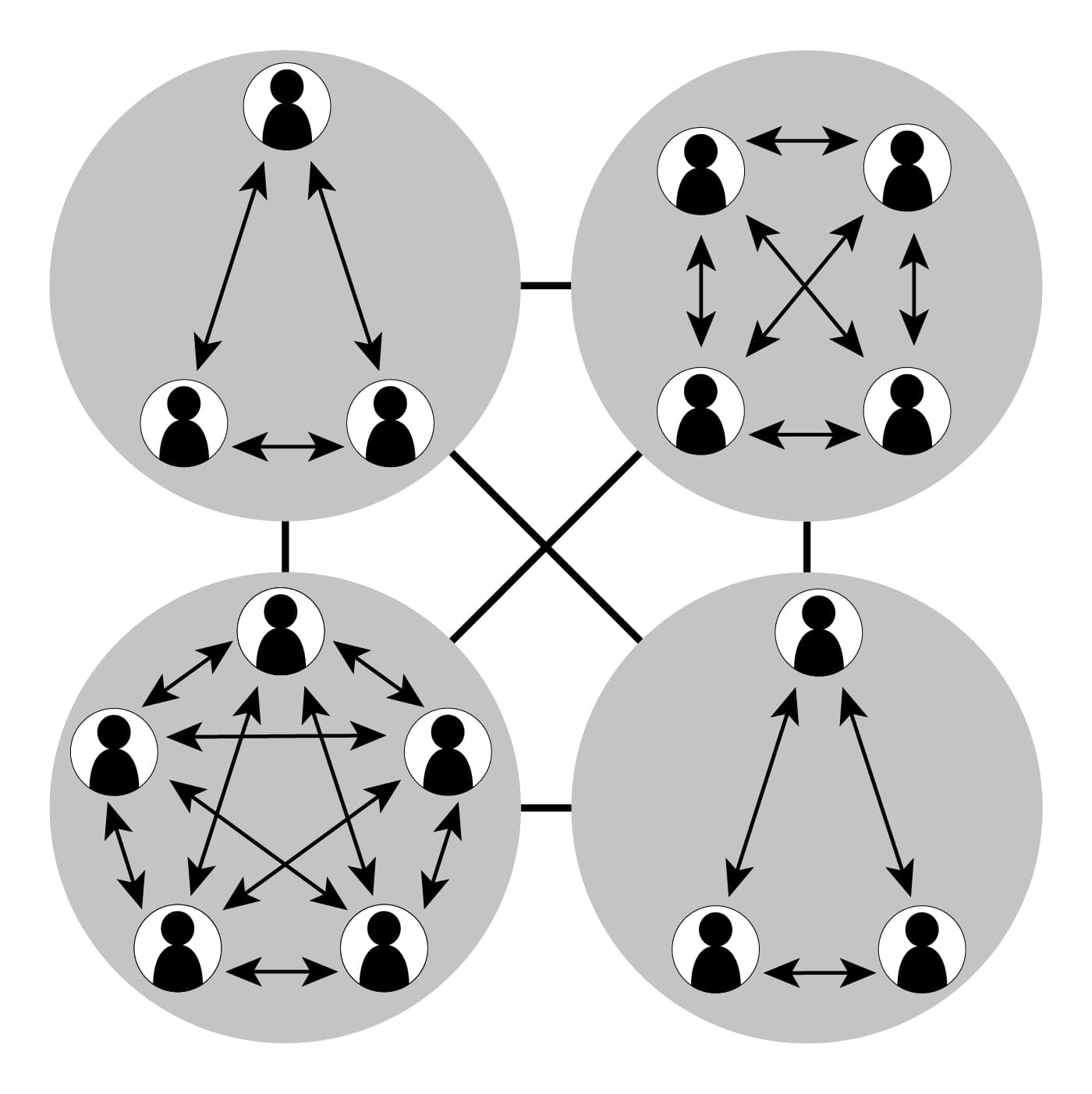
Organic versus Mechanistic Models | Organizational Behavior and Human Relations View original
Is this image relevant?
Organic versus Mechanistic Models | Organizational Behavior and Human Relations View original
Is this image relevant?
Organizational Design Considerations | OpenStax Intro to Business View original
Is this image relevant?
Organic versus Mechanistic Models | Organizational Behavior and Human Relations View original
Is this image relevant?
Mechanistic vs. Organic Structures
These are the two ends of the spectrum when it comes to organizational design. Most real companies fall somewhere in between, but understanding the extremes helps you see the trade-offs.
Mechanistic structures are built for control and consistency:
- Decision-making is highly centralized, with power concentrated at the top of the hierarchy
- Formalized rules and procedures govern how employees work (think detailed employee handbooks, standard operating procedures)
- Rigid hierarchy with clearly defined reporting relationships and chain of command
- Specialized, narrowly defined tasks limit cross-functional collaboration
- Best suited for stable environments and routine tasks where consistency matters, like manufacturing or the fast-food industry
Organic structures are built for flexibility and innovation:
- Decision-making is decentralized, with authority distributed throughout the organization
- Flexible rules and procedures give employees discretion in how they solve problems
- Flat hierarchy with fewer management layers and more horizontal communication
- Broadly defined roles encourage versatility and teamwork
- Best suited for dynamic environments and complex tasks that require quick responses, like technology startups or consulting firms

Factors Influencing Structural Choice
Four major factors push a company toward one end of the spectrum or the other.
Strategy plays a direct role. A cost leadership strategy (like Walmart's) aligns with mechanistic structures because the emphasis is on efficiency, standardization, and minimizing costs. A differentiation or innovation strategy (like Apple's) aligns with organic structures because the emphasis is on creativity and adapting to changing customer needs.
Size matters too. Smaller organizations tend to be more organic because communication and coordination are naturally easier with fewer people. As organizations grow larger, they tend to adopt more mechanistic features. Formal control mechanisms and specialization become necessary to manage the complexity of multiple departments and locations.
Environment is about what's happening outside the company. Stable, predictable environments (like the utilities industry) favor mechanistic structures because standardized processes and long-term planning work well. Dynamic, rapidly changing environments (like e-commerce) favor organic structures because adaptability is essential for survival.
Organizational culture also shapes structural choice. A company's values, beliefs, and norms influence whether employees and leaders gravitate toward formal control or collaborative flexibility. A culture that prizes individual initiative will struggle under a rigid mechanistic structure, and vice versa.

Advantages and Challenges of Each Approach
Mechanistic Advantages
- Efficiency in stable environments through optimized, standardized processes
- Clear lines of authority and responsibility reduce ambiguity and improve accountability
- Consistent quality control and predictable outcomes
- Well suited for large-scale operations requiring coordination and economies of scale (e.g., the automotive industry)
Mechanistic Challenges
- Inflexible when the environment changes quickly
- Reduced employee autonomy and innovation due to strict rules
- Slow decision-making caused by bureaucracy and multiple approval layers
- Communication barriers between departments can create silos
Organic Advantages
- Quick adaptation to market changes and evolving customer needs
- Encourages employee autonomy, creativity, and problem-solving
- Faster decision-making because front-line employees are empowered
- Better communication and collaboration through cross-functional teams
Organic Challenges
- Role ambiguity and conflict from overlapping responsibilities
- Harder to maintain control and consistency across the organization
- Heavy reliance on employee skills and self-motivation without strict oversight
- Not ideal for large-scale, standardized operations that depend on efficiency
Common Organizational Structures
Beyond the mechanistic/organic spectrum, companies choose from several specific structural forms:
- Functional structure groups employees by specialized function or department (marketing, finance, operations). This is the most traditional setup and works well when efficiency within each function is the priority.
- Divisional structure organizes the company into separate business units based on products, markets, or geographic regions. Each division operates somewhat independently, which helps large companies stay responsive to different customer bases.
- Matrix structure combines functional and divisional approaches. Employees report to two managers (a functional manager and a project or product manager). This can improve coordination across departments but also creates complexity around authority.
No single structure is universally best. Contingency theory captures this idea: the most effective organizational structure depends on a company's specific internal factors (strategy, size, culture) and external factors (industry stability, competition, market complexity). The goal is alignment between the structure and the situation the company actually faces.
See Fiveable more often in Google
Mark Fiveable as a preferred source and Google is more likely to show you our guides in Top Stories, with a "preferred" badge in AI Mode and AI Overviews.