4.1 Going It Alone: Sole Proprietorships

💼Intro to Business Unit 4 Review
4.1 Going It Alone: Sole Proprietorships
💼 Intro to Business
Sole Proprietorships
A sole proprietorship is a business owned and operated by one person, with no legal distinction between the owner and the business itself. It's the most common form of business ownership in the U.S., and understanding how it works is a solid foundation for comparing it to partnerships, corporations, and other structures covered later in this unit.

Top images from around the web for Advantages of sole proprietorships
G. Mick Smith, PhD: Honors Business Economics Chapter 3, 3 November 2010 View original
Is this image relevant?
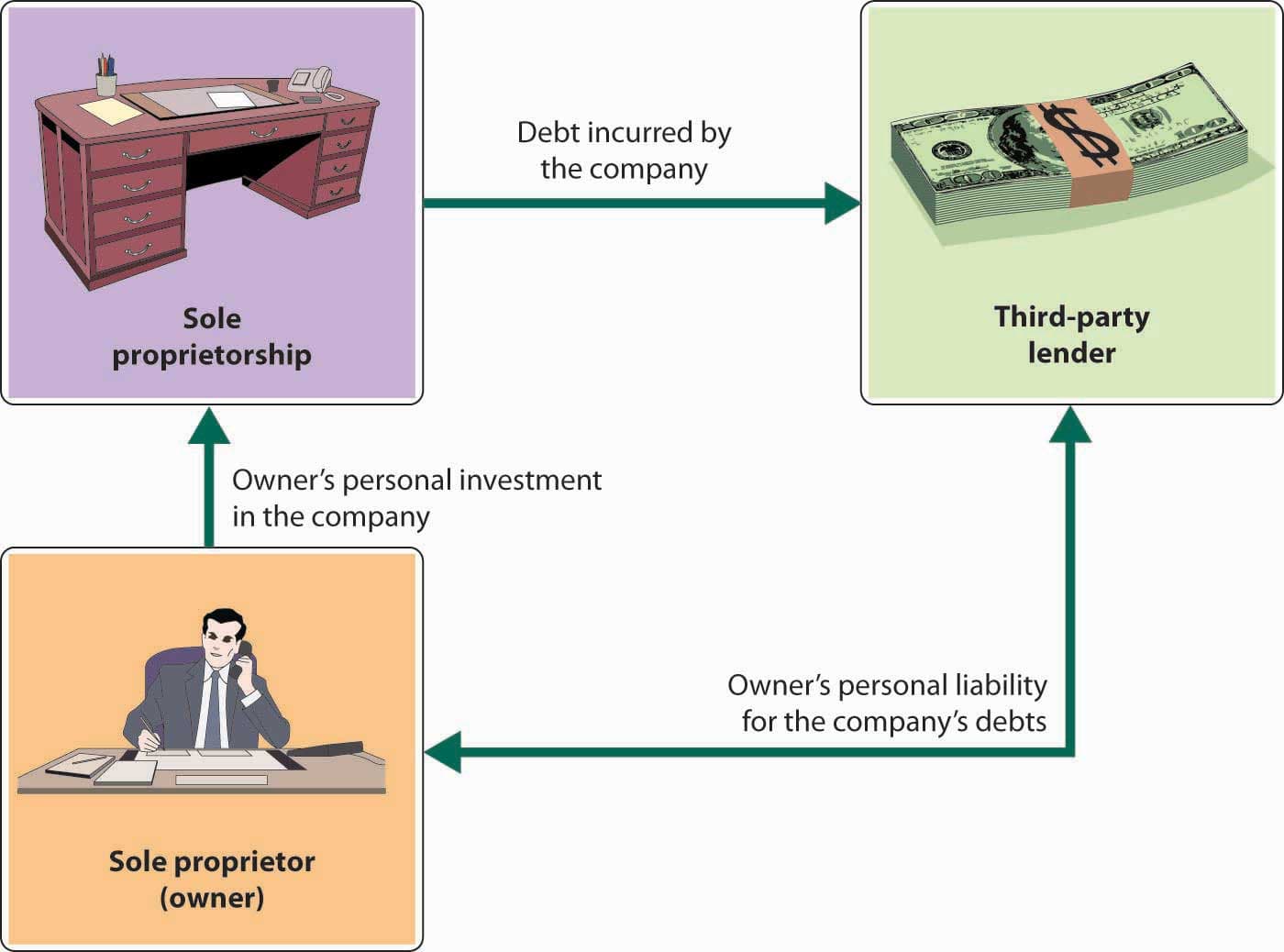
Reading: Sole Proprietorship and Partnerships | Introduction to Business View original
Is this image relevant?
4.4 Corporation – Foundations of Business View original
Is this image relevant?
G. Mick Smith, PhD: Honors Business Economics Chapter 3, 3 November 2010 View original
Is this image relevant?
Reading: Sole Proprietorship and Partnerships | Introduction to Business View original
Is this image relevant?
Advantages of Sole Proprietorships
Ease of formation. Sole proprietorships require very little paperwork to get started. In most cases, you just need the appropriate business licenses and permits for your city or state. There are no incorporation fees or ongoing compliance filings like you'd see with a corporation. That means lower startup costs and a faster path from idea to open-for-business.
Profit retention. Because there are no partners or shareholders, the owner keeps all profits after taxes. This creates a direct incentive to grow the business. It also means the owner can reinvest earnings however they see fit, whether that's buying new equipment, expanding marketing, or simply taking home more income.
Operational control. The sole proprietor makes every decision: pricing, product offerings, marketing strategies, hiring. There's no board of directors to consult and no partner to negotiate with. This allows the business to pivot quickly when market conditions change or a new opportunity appears.

Disadvantages of Sole Proprietorships
Unlimited liability. This is the biggest drawback. Because there's no legal separation between you and your business, you are personally responsible for all business debts and legal obligations. If the business gets sued or can't pay its bills, creditors can go after your personal assets: your home, savings, car, investments. A corporation or LLC would shield those personal assets, but a sole proprietorship does not.
Difficulty raising capital. Sole proprietors typically fund their businesses through personal savings, personal loans, or money from family and friends. Banks and investors often view sole proprietorships as higher risk because the business depends entirely on one person. That makes it hard to secure the large amounts of capital needed for significant growth or expansion.
Limited managerial expertise. As a sole proprietor, you're the accountant, the marketer, the HR department, and the salesperson all at once. Most people don't have deep expertise in every area a business requires. Wearing all those hats can lead to inefficiencies, missed opportunities, and burnout over time.

Suitability of the Sole Proprietorship Structure
Not every business should be a sole proprietorship. The structure works well in some situations and poorly in others.
Good fit for sole proprietorships:
- Small-scale businesses with low startup costs, such as freelance writing, tutoring, or lawn care
- Service-based businesses built on the owner's personal skills, like consulting, personal training, or photography
- Businesses with a local market focus and modest growth goals, such as a neighborhood café or small retail shop
- Entrepreneurs who prioritize full control and flexibility over their operations
Situations where a sole proprietorship may be limiting:
- Businesses in high-liability industries where lawsuits are common, such as construction or healthcare
- Ventures that need significant capital investment to get off the ground, like manufacturing or tech startups
- Industries requiring specialized expertise across multiple areas that one person can't realistically cover
- Businesses planning rapid expansion, franchising, or seeking outside investors
Entrepreneurship and Small Business Considerations
Many entrepreneurs start out as sole proprietors because the barrier to entry is so low. But even with a simple structure, the responsibilities of business ownership still apply. Sole proprietors should develop a business plan, understand their target market, and manage their finances carefully.
One key detail for exam purposes: sole proprietors report all business income and expenses on their personal tax returns (using Schedule C on a federal return). The business itself doesn't file a separate tax return. This is called pass-through taxation, and it simplifies the tax process but also means business profits are taxed at the owner's individual income tax rate.
See Fiveable more often in Google
Mark Fiveable as a preferred source and Google is more likely to show you our guides in Top Stories, with a "preferred" badge in AI Mode and AI Overviews.