16.7 Buying and Selling at Securities Exchanges

💼Intro to Business Unit 16 Review
16.7 Buying and Selling at Securities Exchanges
💼 Intro to Business
Securities Trading
NYSE and NASDAQ
The two dominant U.S. stock exchanges operate in fundamentally different ways, and understanding that difference matters for grasping how trades actually get executed.
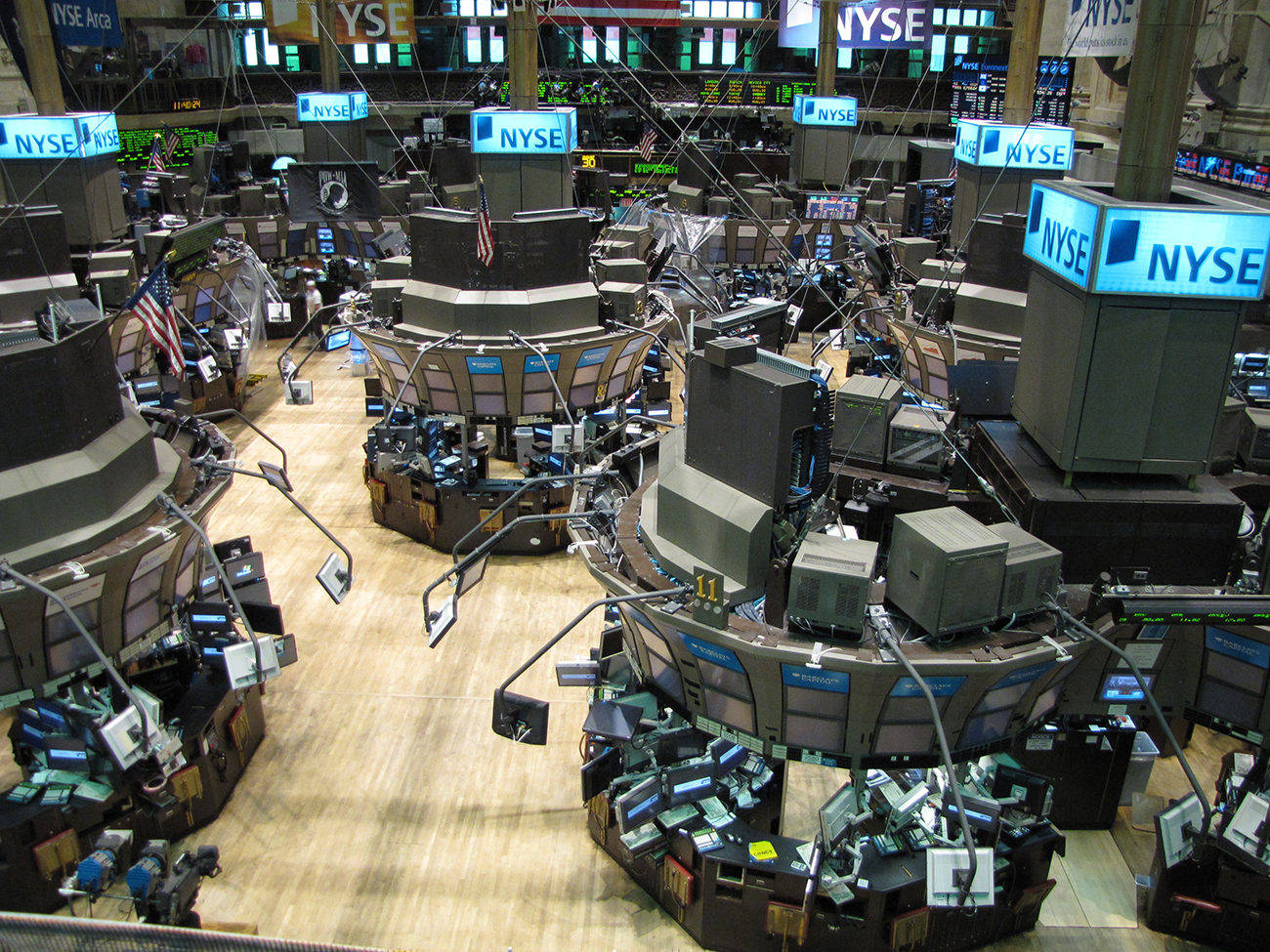
The NYSE (New York Stock Exchange) is an auction market. It still has a physical trading floor on Wall Street where designated specialists (now called Designated Market Makers) act as auctioneers, matching buy and sell orders. Orders are executed based on price and time priority, meaning the best price gets filled first, and if two orders have the same price, the one placed earlier wins. The NYSE tends to list larger, well-established companies, often called blue-chip stocks.
The NASDAQ (National Association of Securities Dealers Automated Quotations) is a fully electronic market with no physical trading floor. All trades happen through a computer network. Instead of a single specialist per stock, multiple market makers compete to execute trades by continuously quoting bid prices (what they'll pay to buy) and ask prices (what they'll accept to sell). This competition tends to keep prices tight. NASDAQ is known for listing tech and growth-oriented companies like Apple and Microsoft, though it lists firms across many industries.
Bid price = the highest price a buyer is willing to pay. Ask price = the lowest price a seller is willing to accept. The gap between them is the spread.
Broker and Dealer Markets
These two terms describe how a market is structured, not just where trading happens.
- Broker markets: Brokers act as intermediaries, matching buyers with sellers on behalf of clients. They never own the securities themselves. They earn a commission (typically a fee or percentage of the trade value) for facilitating the transaction. The NYSE and Tokyo Stock Exchange (TSE) are examples of broker markets.
- Dealer markets: Dealers (also called market makers) buy and sell securities from their own inventory, acting as principals in each trade. They provide liquidity, meaning there's always someone ready to buy or sell. Dealers profit from the spread between their bid and ask prices rather than from commissions. NASDAQ and the London Stock Exchange (LSE) are examples of dealer markets.
The practical difference: in a broker market, your order waits until a matching order appears. In a dealer market, the dealer steps in and trades with you directly, which can mean faster execution.
Alternative and Global Securities Markets
Alternative Trading Systems and Foreign Exchanges
Not all trading happens on the NYSE or NASDAQ. Alternative Trading Systems (ATS) are electronic platforms that match buyers and sellers directly, bypassing traditional exchanges.
- They typically offer lower transaction costs because they cut out some intermediaries
- They can provide anonymity, which matters for large institutional investors who don't want their big orders to move the market price before they finish trading
- Common examples include dark pools (private exchanges where order details aren't publicly visible) and electronic communication networks (ECNs)
- Many ATS platforms allow trading outside regular exchange hours, giving investors more flexibility
Foreign exchanges let investors buy and sell securities from other countries. Major ones include the London Stock Exchange (LSE), Tokyo Stock Exchange (TSE), and Hong Kong Stock Exchange (HKEX). These exchanges give investors access to companies and industries that may not be available domestically.
Some companies pursue cross-listing, where they list their shares on multiple exchanges (for example, a Japanese company listing on both the TSE and the NYSE). This increases the company's liquidity and exposes it to a broader investor base, though the company must meet each exchange's listing requirements and regulations.
Globalization of securities markets ties all of this together. Because major exchanges operate across different time zones, trading effectively happens around the clock. When the NYSE closes, Asian markets are opening, and European markets bridge the gap. This interconnection allows capital to flow across borders and gives investors the ability to diversify their holdings across different economies and asset classes.
See Fiveable more often in Google
Mark Fiveable as a preferred source and Google is more likely to show you our guides in Top Stories, with a "preferred" badge in AI Mode and AI Overviews.