7.5 Degree of Centralization

💼Intro to Business Unit 7 Review
7.5 Degree of Centralization
💼 Intro to Business
7.1
Building Organizational Structures
7.2
Contemporary Structures
7.3
Using Teams to Enhance Motivation and Performance
7.4
Authority—Establishing Organizational Relationships
7.5
Degree of Centralization
7.6
Organizational Design Considerations
7.7
The Informal Organization
7.8
Trends in Organizational Structure
Organizational Structure and Decision-Making
Every business has to decide who gets to make decisions. Centralization concentrates that authority at the top of the organization, while decentralization spreads it across multiple levels. Where a company falls on this spectrum shapes how fast it can respond, how consistent its policies are, and how empowered its employees feel.

Top images from around the web for Centralization and decision-making authority
The Decision Making Process | Organizational Behavior and Human Relations View original
Is this image relevant?
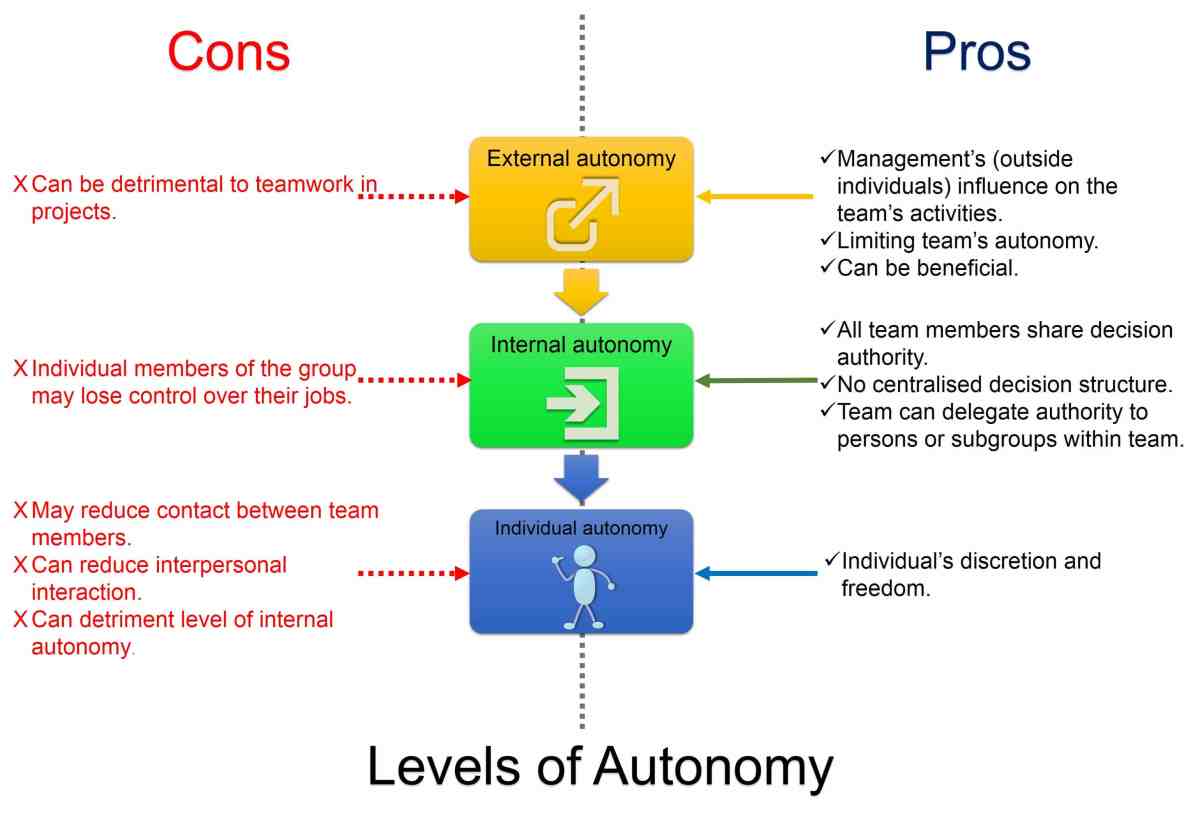
Self-organising teams · Langerman Panta Rhei View original
Is this image relevant?
Organizational Design Considerations | OpenStax Intro to Business View original
Is this image relevant?
The Decision Making Process | Organizational Behavior and Human Relations View original
Is this image relevant?
Self-organising teams · Langerman Panta Rhei View original
Is this image relevant?
Centralization and Decision-Making Authority
Centralization means most decisions flow through top management. In highly centralized organizations like government agencies, lower-level employees have limited autonomy. They follow directives from above rather than making calls on their own.
Decentralization distributes decision-making authority to managers and employees at various levels. Startups often operate this way because they need people to act quickly without waiting for approval from a chain of executives. Retail chains also use decentralization so that individual store managers can adapt to local customer preferences.
The degree of centralization directly affects how information flows through an organization:
- Centralized structures can slow things down because decisions need approval from the top before anything moves forward
- Decentralized structures speed things up because employees closer to the problem can act on it right away. Tech companies often favor this approach so engineering teams can iterate without bottlenecks
Most real organizations aren't purely one or the other. They fall somewhere on a spectrum, centralizing some functions (like finance or legal) while decentralizing others (like marketing or customer service).

Factors Influencing Span of Control
Span of control refers to the number of subordinates who report directly to a single manager. A wide span means one manager oversees many people; a narrow span means fewer direct reports. Several factors determine what's appropriate:
- Nature of the work — Complex tasks like research and development require more hands-on supervision, so managers tend to have fewer direct reports. Simple, repetitive tasks like assembly line work allow a wider span because the work is predictable.
- Employee skills and experience — Senior engineers who know their jobs well need less oversight, so their manager can handle a wider span. Entry-level employees typically need more guidance, which narrows the span.
- Managerial capabilities — A manager with strong leadership and communication skills can effectively oversee more people. A newer manager may need a narrower span to stay on top of things.
- Degree of standardization — When processes are highly standardized (think fast-food restaurants with detailed procedures for everything), employees can work more independently, allowing a wider span. Customized work like consulting requires closer supervision and a narrower span.
- Geographic dispersion — Multinational corporations with teams spread across countries often need narrower spans of control because coordinating across distance and time zones is harder. A company operating from a single location can support wider spans since everyone is nearby.

Centralized vs. Decentralized Structures
Neither approach is universally better. Each comes with real trade-offs.
Benefits of Centralization
- Consistency in decisions and policies across the entire organization (standardized procedures)
- Easier coordination and control of activities (centralized budgeting)
- Reduced duplication of efforts and resources (shared services)
- Clearer lines of authority and accountability
Risks of Centralization
- Slower decision-making due to bureaucratic approval chains
- Reduced flexibility when circumstances change quickly
- Lower employee morale when people feel micromanaged
- Decision-making bottlenecks when top executives become overloaded
Benefits of Decentralization
- Faster responses to local needs (regional offices adapting to their markets)
- Higher employee motivation from a sense of ownership and empowerment
- Development of managerial skills at lower levels through real leadership opportunities
- Reduced burden on top management through delegation
Risks of Decentralization
- Inconsistency across the organization when regions develop different strategies
- Difficulty coordinating between departments that operate in silos
- Higher costs from duplicated resources and redundant functions
- Risk of suboptimal decisions when managers lack a big-picture perspective
The right balance depends on the company's size, industry, and strategy. A hospital system might centralize patient safety protocols for consistency but decentralize scheduling decisions to individual departments.
Organizational Culture and Effectiveness
Organizational culture and structure influence each other. A company that values innovation and employee autonomy will naturally lean toward decentralization. A company that prioritizes uniformity and risk control will tend toward centralization.
This relationship matters because structure alone doesn't determine performance. Two companies with identical org charts can perform very differently depending on their cultures. A decentralized structure only works well if employees are trained and trusted to make good decisions. A centralized structure only works well if top management can process information and respond fast enough.
When culture and structure are aligned, the organization runs more smoothly. When they clash (for example, a rigid hierarchy in a company that claims to value creativity), you get frustration, inefficiency, and turnover.
See Fiveable more often in Google
Mark Fiveable as a preferred source and Google is more likely to show you our guides in Top Stories, with a "preferred" badge in AI Mode and AI Overviews.