2.4 Reflection and refraction

🔋Electromagnetism II Unit 2 Review
2.4 Reflection and refraction
🔋 Electromagnetism II
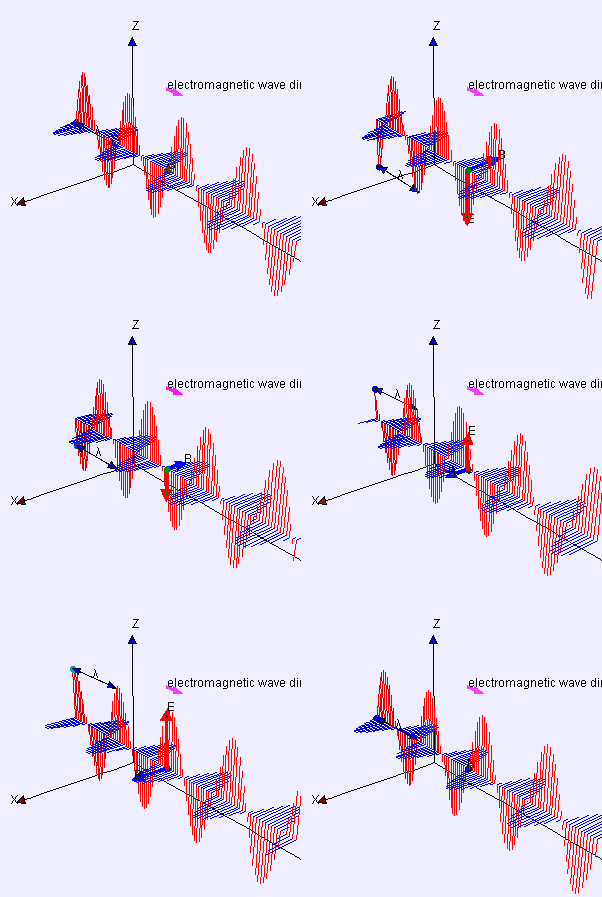
Reflection and refraction describe how electromagnetic waves behave when they hit boundaries between different media. These phenomena follow directly from Maxwell's equations and the boundary conditions they impose, and they underpin everything from antenna design to fiber-optic communication. This guide covers the physics of reflection and refraction, the key equations (Fresnel, Snell's law), polarization effects, dispersion, and multilayer structures.
Reflection of electromagnetic waves
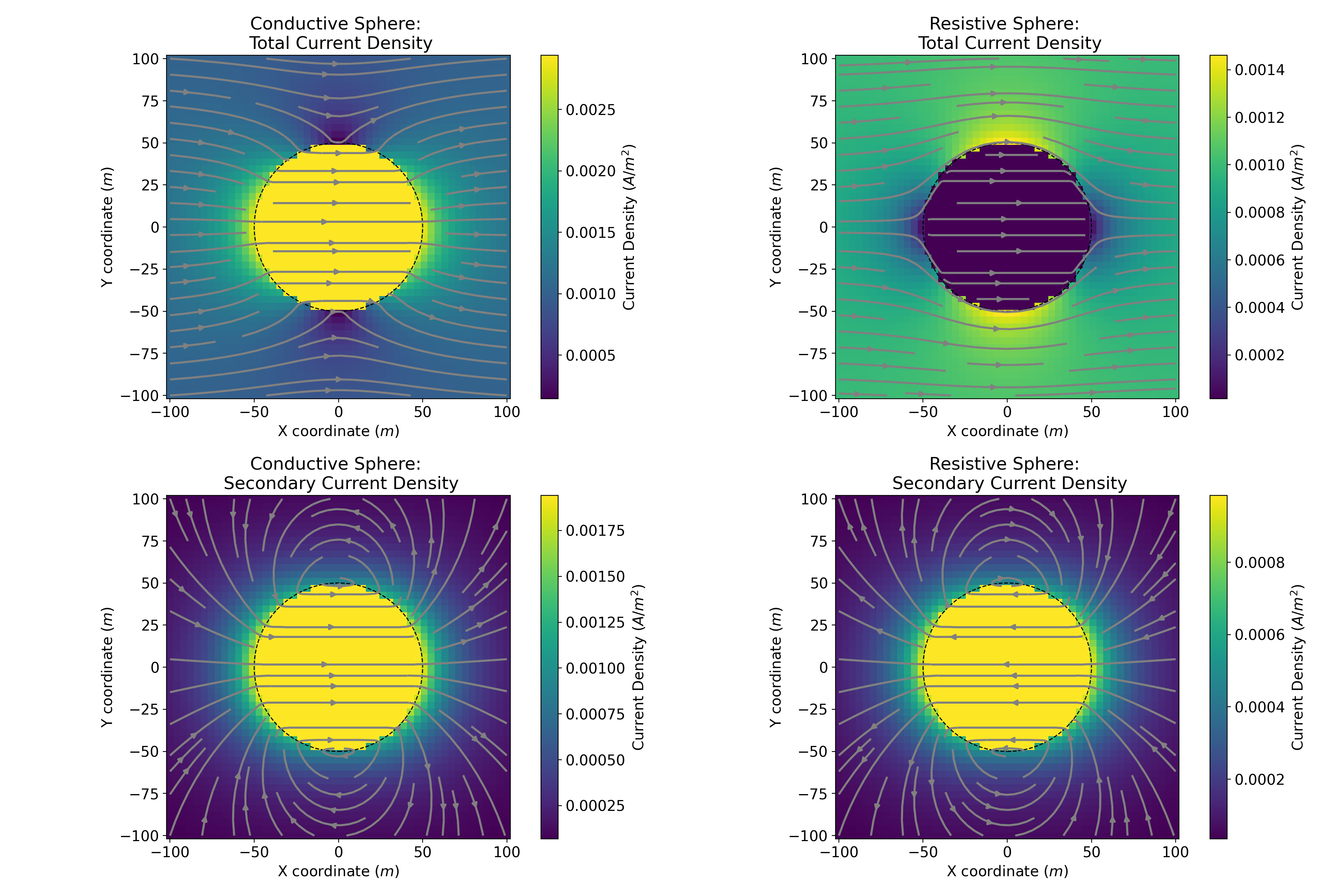
When an electromagnetic wave hits a boundary between two media, some fraction of the wave bounces back into the original medium. How much gets reflected, and with what phase, depends on the electromagnetic properties of both media: their conductivity, permittivity, and permeability.
Reflection at conducting surfaces
A perfect conductor cannot sustain an electric field inside it. The boundary condition requires the tangential electric field to vanish at the surface, which forces the incident wave to reflect with a 180-degree phase shift in the electric field component. The magnetic field component, by contrast, reflects in phase with the incident wave.
This complete reflection is why conducting surfaces make effective reflectors. Parabolic dish antennas and the metallic walls of waveguides both exploit this property.
Reflection coefficients
The reflection coefficient is a complex quantity giving the amplitude ratio and phase difference between reflected and incident waves.
For normal incidence at a dielectric-dielectric interface, it simplifies to:
where and are the refractive indices of the two media.
More generally, using impedances (which is necessary for lossy or conducting media), the reflection coefficient at normal incidence is:
where and are the wave impedances of the two media. The sign of tells you whether the reflected electric field is in phase or inverted relative to the incident field.
Phase shift upon reflection
The phase behavior depends on which medium has the higher refractive index:
- Low-to-high index (e.g., air to glass): The reflected electric field picks up a 180-degree phase shift ().
- High-to-low index (e.g., glass to air): No phase shift on the electric field ().
Note: the bullet above corrects the original convention. Think of it this way: reflecting off a "harder" (higher-index) medium inverts the electric field, analogous to a wave on a string reflecting off a fixed end.
For reflection at a dielectric-conductor interface, the phase shift is generally neither 0 nor exactly 180 degrees but depends on the conductivity and frequency, since the impedance of the conductor is complex.
Reflectance vs frequency
Reflectance is the fraction of incident power that gets reflected. Because material properties (permittivity, permeability, conductivity) are frequency-dependent, so is reflectance.
- Metals have high reflectance at radio and infrared frequencies but become increasingly transparent in the ultraviolet and X-ray regimes as the electrons can no longer respond fast enough to the oscillating field.
- Dielectrics can show sharp reflectance features near lattice absorption resonances. In ionic crystals, these are called Reststrahlen bands, where reflectance approaches unity over a narrow frequency range.
Reflectance vs angle of incidence
Reflectance depends on the angle of incidence, and the behavior differs for the two polarization states:
- For dielectric-dielectric interfaces, reflectance for both polarizations increases with angle, reaching 100% at grazing incidence ().
- For p-polarized light, reflectance drops to zero at Brewster's angle before rising again toward grazing incidence.
- For s-polarized light, reflectance increases monotonically with angle.
At a dielectric-conductor interface, reflectance is high at all angles but still shows polarization-dependent variation, with a pseudo-Brewster angle where the p-polarized reflectance reaches a minimum (though it doesn't go to zero for a real conductor).
Reflectance vs polarization
Because the Fresnel coefficients differ for s- and p-polarization, the reflectance of an interface is generally polarization-dependent at oblique incidence. The most dramatic example is Brewster's angle, where while remains nonzero. This polarization selectivity is exploited in:
- Brewster windows in laser cavities (to suppress reflection losses for p-polarized light)
- Polarizing beam splitters (to separate s and p components)
Applications of reflection
- Antennas: parabolic reflectors, corner reflectors
- Waveguides: metallic walls, dielectric mirrors
- Optical components: mirrors, beam splitters
- Imaging systems: telescopes, microscopes
Refraction of electromagnetic waves
When a wave crosses from one medium into another with a different refractive index, the transmitted wave changes direction. The frequency stays the same (it must, to satisfy boundary conditions at all times), but the wavelength and propagation speed change.
Refraction at dielectric interfaces
At a dielectric boundary, part of the wave transmits into the second medium. The transmitted wave has:
- The same frequency as the incident wave
- A different wavelength ()
- A different propagation direction, governed by Snell's law
Snell's law for refraction
Snell's law follows from requiring the tangential components of and to be continuous across the interface at every point and at all times. This phase-matching condition gives:
where is the angle of incidence and is the angle of refraction, both measured from the surface normal.
A wave going from a low-index to a high-index medium bends toward the normal; going from high to low index, it bends away from the normal.
Refractive index vs frequency
The refractive index of any real material varies with frequency. This is dispersion.
- Normal dispersion: increases with frequency. This is the typical behavior far from resonances and is why a prism spreads white light into a spectrum with blue refracted more than red.
- Anomalous dispersion: decreases with increasing frequency. This occurs near absorption resonances where the material strongly absorbs.
The Kramers-Kronig relations connect the real part of the complex refractive index (which governs refraction) to the imaginary part (which governs absorption). They're not independent: if you know the absorption spectrum over all frequencies, you can compute the dispersion, and vice versa.
Refractive index vs polarization
In anisotropic materials (most crystals), the refractive index depends on the polarization direction of the wave relative to the crystal axes.
Birefringence is the difference in refractive index between two orthogonal polarization states. In a uniaxial crystal like calcite, one polarization (the ordinary ray) sees a fixed index regardless of propagation direction, while the other (the extraordinary ray) sees an index that varies with angle relative to the optic axis. This is the basis for wave plates and many polarization-control devices.
Critical angle and total internal reflection
When light travels from a higher-index medium () into a lower-index medium (), there's a maximum angle of incidence beyond which no transmitted wave propagates. This critical angle is:
For , all incident power is reflected back into the first medium. This is total internal reflection (TIR). Beyond the critical angle, the "transmitted" field doesn't vanish entirely; it becomes an evanescent wave that decays exponentially into the second medium and carries no time-averaged power across the interface.
TIR is the operating principle behind optical fibers, where light is confined to the high-index core by repeated total internal reflection at the core-cladding boundary.
Brewster's angle
At Brewster's angle, the reflected and refracted rays are perpendicular to each other (they make a 90° angle). Under this geometric condition, the p-polarized component cannot be reflected because the oscillating dipoles in the second medium would need to radiate along their own oscillation axis, which they can't do.
At :
- (no p-polarized reflection)
- (s-polarized light still partially reflects)
- The reflected beam is therefore purely s-polarized
Fresnel equations for refraction
The Fresnel equations give the amplitude reflection and transmission coefficients for each polarization at a dielectric interface.
For s-polarization:
For p-polarization:
where is determined from via Snell's law. The power reflectance and transmittance are and . Note the factor in : it accounts for the change in beam cross-section and wave speed across the interface, ensuring .
Applications of refraction
- Lenses: converging and diverging, based on curved dielectric surfaces
- Prisms: exploit dispersion for spectral separation or beam steering
- Optical fibers: use TIR for low-loss light guiding in telecommunications
- GRIN optics: gradient-index lenses where a spatially varying refractive index replaces curved surfaces
Polarization effects on reflection and refraction
Polarization plays a central role in how waves reflect and refract. The electric field vector can be decomposed into two components relative to the plane of incidence, and each component interacts differently with the interface.
S-polarization vs P-polarization
- S-polarized (senkrecht, German for perpendicular): the electric field oscillates perpendicular to the plane of incidence (and therefore parallel to the interface surface).
- P-polarized (parallel): the electric field oscillates in the plane of incidence.
Any arbitrary polarization can be decomposed into s and p components. The Fresnel equations, Brewster's angle, and critical angle all treat these two components separately, which is why the distinction matters.
Brewster's angle and polarizing angle
"Polarizing angle" is simply another name for Brewster's angle, emphasizing its practical use: if you reflect unpolarized light off a dielectric surface at , the reflected beam is purely s-polarized. The transmitted beam is partially polarized (enriched in the p component but not purely p-polarized, since some s-polarized light also transmits).
Stacking multiple Brewster-angle surfaces in series (a "pile of plates" polarizer) progressively removes more of the s component from the transmitted beam.
Polarization-dependent reflectance and transmittance
At normal incidence (), there's no distinction between s and p polarization, so . As the angle increases:
- decreases, reaching zero at Brewster's angle, then rises steeply toward 1 at grazing incidence.
- increases monotonically, approaching 1 at grazing incidence.
This angular dependence is fully described by the Fresnel equations and is the reason that light reflected at steep angles off water or glass is strongly polarized.
Polarization-selective devices
- Polarizing beam splitters: reflect s-polarized light and transmit p-polarized light (or vice versa), typically using multilayer coatings tuned near Brewster's angle.
- Wave plates: exploit birefringence to introduce a controlled phase delay between s and p (or ordinary and extraordinary) components. A quarter-wave plate converts linear to circular polarization; a half-wave plate rotates the plane of linear polarization.
- Polarizers: transmit one polarization and absorb or reflect the other. Examples include Polaroid film (dichroic absorption) and wire-grid polarizers (reflection of the component with parallel to the wires).
These devices are essential in laser systems, LCD displays, optical communication (polarization-division multiplexing), and polarimetric imaging.
Dispersion in reflection and refraction
Dispersion means that the refractive index depends on frequency, so different spectral components of a wave travel at different speeds. This affects both how waves refract (different colors bend by different amounts) and how pulses spread out in time as they propagate.
Frequency-dependent refractive index
This section overlaps with the earlier discussion under refraction, but the key points bear repeating in the context of pulse propagation:
- Most transparent materials exhibit normal dispersion () away from resonances.
- Near absorption lines, anomalous dispersion () occurs.
- The Kramers-Kronig relations guarantee that dispersion and absorption are linked: you can't have one without the other.
Group velocity vs phase velocity
In a dispersive medium, two velocities matter:
- Phase velocity: . This is the speed of a single-frequency plane wave's phase fronts.
- Group velocity: , where the group index is .
The group velocity is the speed at which the envelope of a wave packet (and therefore energy and information) travels. In regions of normal dispersion, . In anomalous dispersion regions, can exceed or even exceed , but this doesn't violate relativity because the signal velocity (front velocity) never exceeds .
Chromatic dispersion
A short pulse contains a spread of frequencies. In a dispersive medium, these frequency components travel at different group velocities, causing the pulse to broaden in time. This is chromatic dispersion.
It's quantified by the group velocity dispersion (GVD), defined as , where is the propagation constant. Equivalently, the dispersion parameter (commonly used in fiber optics, in units of ps/(nm·km)) relates to GVD by:
Chromatic dispersion is one of the primary factors limiting data rates and transmission distances in fiber-optic communication.
Material dispersion vs waveguide dispersion
Total chromatic dispersion in a guided-wave structure has two contributions:
- Material dispersion: arises from the frequency dependence of the bulk refractive index of the core and cladding materials.
- Waveguide dispersion: arises because the fraction of the mode's power in the core vs. cladding changes with frequency, altering the effective index.
In standard single-mode silica fiber, material dispersion dominates at shorter wavelengths and is zero near . Waveguide dispersion shifts the overall zero-dispersion wavelength to around . By modifying the fiber's index profile, engineers can design dispersion-shifted fibers with zero dispersion at (the minimum-loss wavelength) or dispersion-flattened fibers with low dispersion over a broad band.
Dispersion compensation techniques
For long-haul fiber links and ultrafast laser systems, accumulated dispersion must be compensated. Common approaches:
- Dispersion-compensating fibers (DCFs): specialty fibers with large negative dispersion that cancel the positive dispersion of standard transmission fiber.
- Fiber Bragg gratings (FBGs): periodic index modulations in fiber that reflect different wavelengths at different depths, introducing a wavelength-dependent group delay.
- Chirped mirrors: multilayer dielectric mirrors where the Bragg wavelength varies with depth, providing a controlled frequency-dependent phase on reflection. Widely used in ultrafast lasers.
- Grating or prism compressors: pairs of diffraction gratings or prisms that introduce angular dispersion, giving different path lengths to different wavelengths. Used to compress chirped pulses back to their transform-limited duration.
Reflection and refraction at layered media
Stacking multiple thin films creates interference between the many reflected and transmitted partial waves at each interface. By choosing layer thicknesses and refractive indices, you can engineer the spectral reflectance and transmittance to almost any desired profile.
Reflection and transmission coefficients for multilayers
The standard tool for analyzing multilayer structures is the transfer matrix method. Here's how it works:
- Assign a characteristic matrix to each layer. For a layer of thickness , refractive index , at angle , the matrix is:
where is the phase thickness, and is the effective admittance (which differs for s- and p-polarization).
- Multiply the matrices for all layers in order, from the first layer the wave encounters to the last:
- Extract the reflection and transmission coefficients from the elements of , using the admittances of the incident and substrate media as boundary conditions.
This method handles any number of layers, arbitrary angles of incidence, and both polarizations. It's the workhorse behind thin-film design software.
Common multilayer designs include:
- Antireflection coatings: a single quarter-wave layer with eliminates reflection at one wavelength; multilayer stacks broaden the bandwidth.
- High-reflection (Bragg) mirrors: alternating quarter-wave layers of high and low index, achieving reflectances above 99.99%.
- Interference filters: combine Bragg mirrors with spacer layers to create narrow-bandpass or notch filters.
See Fiveable more often in Google
Mark Fiveable as a preferred source and Google is more likely to show you our guides in Top Stories, with a "preferred" badge in AI Mode and AI Overviews.