11.6 Electromagnetic spectrum management

🔋Electromagnetism II Unit 11 Review
11.6 Electromagnetic spectrum management
🔋 Electromagnetism II
Electromagnetic spectrum overview
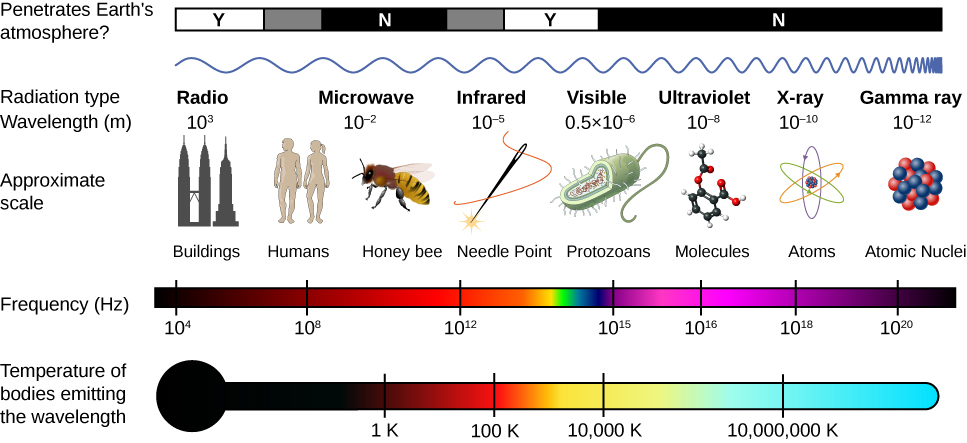
The electromagnetic spectrum is the full range of frequencies and wavelengths over which electromagnetic radiation exists. Managing this spectrum is central to electromagnetic compatibility: every wireless system, broadcast service, and sensing application must coexist within a finite set of usable frequencies. Poor spectrum management leads directly to the interference problems covered elsewhere in this unit.
EM waves propagate through free space at the speed of light and exhibit reflection, refraction, diffraction, and interference. These behaviors determine how signals reach receivers and how unwanted signals create EMI.
Frequency bands and wavelengths
The spectrum is divided into named frequency bands, each suited to different applications based on propagation characteristics:
- Extremely low frequency (ELF) and very low frequency (VLF) penetrate water and earth, useful for submarine communications
- High frequency (HF) reflects off the ionosphere, enabling long-distance shortwave radio
- Very high frequency (VHF) and ultra-high frequency (UHF) are workhorses for FM radio, television, and two-way radio
- Super high frequency (SHF) and above support radar, satellite links, and high-capacity data
The fundamental relationship between wavelength and frequency is:
where is wavelength, is frequency, and is the speed of light in vacuum. Lower frequencies correspond to longer wavelengths (radio waves at kHz to MHz have wavelengths from kilometers to meters), while higher frequencies have shorter wavelengths (gamma rays at Hz have sub-picometer wavelengths).
Properties of EM waves
Several wave properties matter for spectrum management:
- Amplitude determines signal strength or intensity.
- Phase describes the position of peaks and troughs relative to a reference. Phase differences between multipath copies of a signal are a major source of interference.
- Polarization is the orientation of the electric field vector. It can be linear (horizontal or vertical), circular, or elliptical. Polarization mismatch between transmitter and receiver causes signal loss, but it can also be exploited to reduce interference between co-frequency systems.
As EM waves propagate through real media, they experience attenuation (loss of power with distance), dispersion (frequency-dependent velocity causing pulse spreading), and scattering (redirection by particles or irregularities). Each of these affects how spectrum is planned and shared.
Spectrum allocation
Spectrum allocation is the process of assigning specific frequency bands to different services and applications. The goal is efficient, interference-free use of a finite resource. Allocation decisions happen at three levels: international, regional, and national.
Regulatory bodies and processes
- The International Telecommunication Union (ITU) coordinates global spectrum allocation through the Radio Regulations, updated at World Radiocommunication Conferences (WRCs) held roughly every 3-4 years. The ITU divides the world into three regions for allocation purposes.
- Regional organizations harmonize spectrum use within their areas. Examples include CEPT (Europe) and CITEL (the Americas).
- National regulators manage spectrum within their borders. The FCC (United States) and Ofcom (United Kingdom) are two well-known examples.
The allocation process typically involves public consultations, technical compatibility studies, and international negotiations. This multi-layered structure means that a frequency band might be allocated to different services in different countries, which creates coordination challenges at borders and for satellite systems.
Licensed vs. unlicensed bands
Licensed bands grant exclusive rights to a specific user or service within a geographic area. Cellular networks, broadcast television, and satellite services operate in licensed spectrum. The exclusivity provides predictable interference environments but comes at significant cost (often through auctions).
Unlicensed bands allow anyone to transmit without a license, subject to technical rules. The ISM bands (e.g., 2.4 GHz, 5.8 GHz) are the most familiar examples, hosting Wi-Fi, Bluetooth, and Zigbee. Unlicensed bands impose power limits and sometimes duty-cycle restrictions to keep interference manageable. The tradeoff: no cost to access, but no guarantee of interference-free operation.
Primary vs. secondary allocations
Within a given band, users are classified by priority:
- Primary users have priority access and are protected from interference caused by secondary users.
- Secondary users may operate in the band only on a non-interference basis. They must not cause harmful interference to primary users and must accept any interference they receive from them.
For example, broadcasting and cellular services typically hold primary allocations, while amateur radio operators often hold secondary allocations in shared bands. This hierarchy is critical for interference management: secondary users need techniques (like spectrum sensing) to detect and avoid primary transmissions.
Spectrum sharing techniques
Because spectrum is finite and demand keeps growing, sharing techniques allow multiple users or services to coexist in the same frequency band. Each technique separates users along a different dimension.
Time division multiple access (TDMA)
TDMA separates users in time. A single frequency channel is divided into repeating time slots, and each user transmits only during its assigned slot.
- The channel is divided into frames, each containing a fixed number of time slots.
- Each user is assigned one or more slots per frame.
- Only one user transmits at any given instant on that channel, so co-channel interference between TDMA users on the same carrier is avoided.
- Guard times between slots account for propagation delay and timing errors.
TDMA was the basis for GSM (2G) cellular networks and is still used in some satellite systems.
Frequency division multiple access (FDMA)
FDMA separates users in frequency. The available band is divided into narrower sub-channels, and each user gets a dedicated sub-channel.
- Users transmit simultaneously, each on their own frequency.
- Guard bands between sub-channels prevent adjacent channel interference.
- FDMA was the foundation of 1G analog cellular (e.g., AMPS) and remains common in satellite transponder allocation.
The main drawback is that each sub-channel sits idle when its assigned user has nothing to send, wasting capacity.

Code division multiple access (CDMA)
CDMA separates users by code. All users transmit simultaneously over the same wideband channel, but each is assigned a unique pseudo-random spreading code.
- The transmitter multiplies the user's narrowband data signal by a wideband spreading code, spreading it across a large bandwidth.
- To other receivers without the matching code, this spread signal looks like low-level wideband noise.
- The intended receiver multiplies the received signal by the same spreading code, which "despreads" the desired signal back to narrowband while leaving other users' signals spread (and thus noise-like).
- System capacity is limited by the total interference from all other users (the "near-far" problem), making power control essential.
CDMA underpins 3G networks (UMTS, CDMA2000) and is used in GPS signal processing.
Dynamic spectrum access (DSA)
DSA represents a shift from static allocation to real-time, opportunistic spectrum use. Instead of permanently assigning bands, DSA lets users access spectrum that is temporarily unused.
Cognitive radio is the enabling technology. A cognitive radio can:
- Sense the spectrum environment to detect which channels are occupied.
- Decide which unused channels to use, based on sensing results and/or a spectrum database.
- Adapt its transmission parameters (frequency, power, modulation) to avoid interfering with incumbent users.
- Vacate the channel if a primary user appears.
Implementation approaches include:
- Spectrum sensing (energy detection, cyclostationary feature detection)
- Geolocation databases that track which frequencies are available at each location
- Dynamic frequency selection (DFS), already required for 5 GHz Wi-Fi to protect radar systems
A real-world example is TV white space (TVWS) communications, where devices use vacant TV broadcast channels in the UHF band for broadband access, particularly in rural areas.
Interference management
Interference management ties spectrum management directly to the core theme of this unit: electromagnetic compatibility. Even with careful allocation, interference occurs, and managing it requires understanding its types, applying mitigation techniques, and enforcing regulations.
Types of interference
- Co-channel interference happens when two or more transmitters use the same frequency. Their signals overlap at the receiver, degrading the signal-to-interference ratio. This is the primary concern in cellular frequency reuse planning.
- Adjacent channel interference results from energy leaking from a neighboring frequency channel into the desired channel. Causes include imperfect transmitter filtering and receiver selectivity limitations, as well as transmitter nonlinearities that generate spectral regrowth.
- Intersystem interference occurs between different wireless systems sharing the same or nearby bands. A well-known example is the potential for LTE signals near 1575 MHz to interfere with GPS receivers.
- Multipath interference arises when reflections of the same signal arrive at the receiver with different delays and phases. Depending on the phase relationships, this causes constructive or destructive interference, leading to fading.
Interference mitigation techniques
Several tools are available, often used in combination:
- Frequency planning and coordination: Carefully assigning frequencies to base stations or transmitters so that co-channel users are geographically separated. Cellular networks use frequency reuse patterns for this purpose.
- Power control: Adjusting transmit power to the minimum needed for reliable communication. This reduces the interference footprint of each transmitter. Power control is especially critical in CDMA systems.
- Directional antennas and beamforming: Focusing radiated energy toward the intended receiver rather than broadcasting omnidirectionally. This reduces interference in other directions. Massive MIMO in 5G takes this further with highly focused beams.
- Interference cancellation: Techniques like successive interference cancellation (SIC) decode the strongest interfering signal first, subtract it from the received signal, then decode the next strongest, and so on. Parallel interference cancellation (PIC) estimates and subtracts all interferers simultaneously.
- Spread spectrum: Both frequency hopping (rapidly switching carrier frequencies) and direct sequence spread spectrum (DSSS) (spreading the signal with a code) reduce vulnerability to narrowband interference by distributing energy across a wide bandwidth.
Spectrum monitoring and enforcement
Spectrum management doesn't end at allocation. Ongoing monitoring ensures compliance:
- Monitoring systems use distributed sensors, spectrum analyzers, and direction-finding equipment to detect unauthorized transmissions and locate interference sources.
- Regulatory enforcement agencies (e.g., the FCC's Enforcement Bureau) investigate reports of harmful interference.
- Enforcement actions range from warnings and fines to equipment seizure and license revocation.
Monitoring is increasingly automated, with networks of sensors feeding data to centralized analysis systems that can flag anomalies in real time.
Spectrum efficiency
Spectrum efficiency measures how effectively the available frequency resources are used. As demand for wireless capacity grows, improving efficiency is the alternative to simply allocating more bandwidth.
Spectral efficiency metrics
Spectral efficiency is typically expressed in bits per second per Hertz (bps/Hz). This tells you how much data you can push through each Hz of bandwidth.
The metric applies at different scales:
- Link spectral efficiency: The efficiency of a single transmitter-receiver pair. Shannon's capacity theorem sets the theoretical upper bound: , where is capacity in bps, is bandwidth in Hz, and SNR is the signal-to-noise ratio.
- System spectral efficiency: Accounts for the entire network, including frequency reuse, multiple access overhead, and control signaling. Measured in bps/Hz per cell or sector.
- Area spectral efficiency: Total throughput per unit area, in bps/Hz/km². This captures how densely you can reuse spectrum geographically.
Techniques for improving efficiency
- Advanced modulation: Higher-order schemes like 64-QAM or 256-QAM pack more bits per symbol, increasing bps/Hz. The tradeoff is that they require higher SNR to decode reliably.
- Advanced coding: Error-correcting codes like LDPC and turbo codes allow operation closer to Shannon's limit by recovering data even with significant noise.
- MIMO (multiple-input multiple-output): Using multiple antennas at both transmitter and receiver creates parallel spatial channels. A MIMO system can theoretically quadruple throughput compared to a single-antenna system in rich scattering environments.
- Adaptive modulation and coding (AMC): The transmitter dynamically selects the modulation order and code rate based on current channel conditions. Good channel? Use 256-QAM with a high code rate. Poor channel? Drop to QPSK with heavy coding. This maximizes average throughput.
- Interference alignment: A theoretical technique where transmitters coordinate their signals so that interference at each receiver occupies the smallest possible subspace, leaving more room for desired signals.
Cognitive radio and dynamic spectrum access
Cognitive radio and DSA (introduced in the sharing section above) also improve efficiency by filling in the gaps left by static allocation. Studies have shown that at any given time and location, large portions of licensed spectrum sit idle. Cognitive radios can exploit these "spectrum holes."
Key sensing techniques include:
- Energy detection: Simple and fast, but can confuse noise with weak primary signals.
- Cyclostationary feature detection: Exploits the periodic statistical properties of modulated signals to distinguish them from noise. More reliable than energy detection but computationally heavier.
- Geolocation databases: Rather than sensing, the cognitive radio queries a database that knows which frequencies are available at its location. This is the approach used in TVWS systems and avoids the hidden-node problem inherent in sensing-only approaches.
Spectrum policy and economics
Technical spectrum management doesn't happen in a vacuum. Policy decisions and economic mechanisms shape who gets access to spectrum, at what cost, and under what conditions.
Spectrum auctions and pricing
Most countries now use auctions to assign valuable commercial spectrum licenses. Auctions replaced older methods (like "beauty contests" where regulators picked winners based on proposals) because they reveal the market value of spectrum and tend to allocate it to those who will use it most productively.
Common auction formats include:
- Simultaneous multiple-round (SMR) auctions: Bidders place bids on multiple lots simultaneously across many rounds, allowing them to adjust strategy as prices are revealed.
- Combinatorial clock auctions (CCA): Bidders can bid on packages of lots, which helps avoid the "exposure problem" where a bidder wins some lots but not the complementary ones it needs.
Beyond auctions, regulators use spectrum usage fees (annual charges for holding a license) and incentive pricing to discourage hoarding of unused spectrum.
Spectrum trading and leasing
Spectrum trading allows license holders to sell or transfer their spectrum rights to other parties. This creates a secondary market that can reallocate spectrum more efficiently than waiting for the next regulatory proceeding.
Spectrum leasing is a lighter-weight arrangement where a license holder temporarily grants another party the right to use some or all of its spectrum. This increases utilization because spectrum that would otherwise sit idle can be put to use.
Regulatory safeguards are necessary to prevent excessive concentration of spectrum. These include spectrum caps (limits on how much spectrum one entity can hold in a given band or market) and competition reviews of proposed trades.
Spectrum sharing incentives and challenges
Encouraging incumbent license holders to share "their" spectrum with others requires the right incentive structures. Frameworks like the Citizens Broadband Radio Service (CBRS) in the 3.5 GHz band in the U.S. use a three-tiered access model:
- Incumbent Access (highest priority, e.g., Navy radar)
- Priority Access Licenses (auctioned, protected from tier 3)
- General Authorized Access (open, lowest priority)
A Spectrum Access System (SAS) coordinates access in real time, ensuring higher-priority users are protected.
Challenges remain significant: ensuring fairness among users, managing real-time interference, maintaining quality of service, and building trust that sharing won't degrade incumbent operations.
Emerging trends and technologies
New technologies and applications are reshaping spectrum demand and management strategies.
5G and beyond
5G networks use spectrum across three ranges, each serving a different purpose:
- Low-band (below ~1 GHz): Wide coverage, building penetration, but limited bandwidth.
- Mid-band (~1-6 GHz): The "sweet spot" balancing coverage and capacity. The 3.5 GHz band (C-band) is a key 5G band globally.
- High-band/mmWave (~24-100 GHz): Massive bandwidth for extreme data rates, but limited range and poor penetration.
5G introduces spectrum-relevant technologies including massive MIMO (arrays of 64+ antenna elements for precise beamforming), network slicing (partitioning a physical network into virtual networks with different spectrum and QoS characteristics), and dynamic spectrum sharing (DSS) between 4G and 5G on the same carrier.
Research into 6G is exploring the use of sub-terahertz (100-300 GHz) and terahertz bands, along with AI-driven spectrum management and reconfigurable intelligent surfaces (RIS) that can shape the propagation environment itself.
Millimeter wave and terahertz bands
Millimeter wave (mmWave) spectrum spans 30-300 GHz and offers bandwidths of hundreds of MHz to several GHz per channel. This makes it attractive for high-capacity links, but propagation is challenging:
- High free-space path loss (proportional to )
- Significant atmospheric absorption, especially near 60 GHz (oxygen absorption) and 183 GHz (water vapor)
- Poor diffraction around obstacles, making line-of-sight critical
- Rain attenuation becomes significant above ~10 GHz
Terahertz (THz) bands (0.1-10 THz) offer even larger bandwidths but face even more severe propagation losses. Current research focuses on short-range, very high data rate links and sensing/imaging applications. Spectrum management at these frequencies is still in early stages, with the ITU beginning to study allocation frameworks.
Satellite and space-based systems
Satellite systems are experiencing rapid growth, particularly non-geostationary orbit (NGSO) constellations:
- LEO constellations (e.g., Starlink at ~550 km altitude, OneWeb at ~1,200 km) provide low-latency broadband using Ku-band (12-18 GHz) and Ka-band (26.5-40 GHz) spectrum.
- MEO systems (e.g., O3b/SES at ~8,000 km) serve enterprise and backhaul markets.
Spectrum coordination challenges include:
- In-line interference between NGSO and geostationary (GEO) satellites when an NGSO satellite passes through the beam of a GEO link
- Sharing between satellite and terrestrial 5G systems, particularly in C-band and Ka-band
- Managing the sheer number of NGSO satellites (thousands per constellation) requiring frequency coordination
Spectrum for IoT and M2M communications
The IoT demands connectivity for billions of devices, most of which send small amounts of data infrequently. Spectrum solutions fall into two categories:
- Licensed LPWAN technologies: NB-IoT and LTE-M operate within existing cellular spectrum, offering carrier-grade reliability and QoS guarantees.
- Unlicensed LPWAN technologies: LoRaWAN (using sub-GHz ISM bands like 868 MHz in Europe, 915 MHz in the U.S.) and Sigfox provide long-range, low-power connectivity without spectrum licensing costs.
The diversity of IoT applications (from smart meters to autonomous vehicles) means spectrum requirements vary enormously in terms of data rate, latency, reliability, and energy efficiency. Coexistence between the growing number of IoT devices and existing services in shared bands is an active area of standards development and regulatory attention.
See Fiveable more often in Google
Mark Fiveable as a preferred source and Google is more likely to show you our guides in Top Stories, with a "preferred" badge in AI Mode and AI Overviews.