7.2 Christianization efforts

🏹Native American History Unit 7 Review
7.2 Christianization efforts
🏹 Native American History
Early missionary activities
Christianization was one of the primary tools European colonizers used to reshape Native American societies. Missionaries didn't just seek religious converts; they served as agents of broader colonial projects that aimed to restructure indigenous economies, social systems, and cultural identities. Understanding these efforts is essential for grasping how assimilation policies operated on the ground.
Different European powers brought distinct approaches to evangelization, shaped by their own religious traditions and colonial strategies.

Top images from around the web for Spanish missions
File:San Francisco de Asis--Mission Dolores.JPG - Wikipedia View original
Is this image relevant?
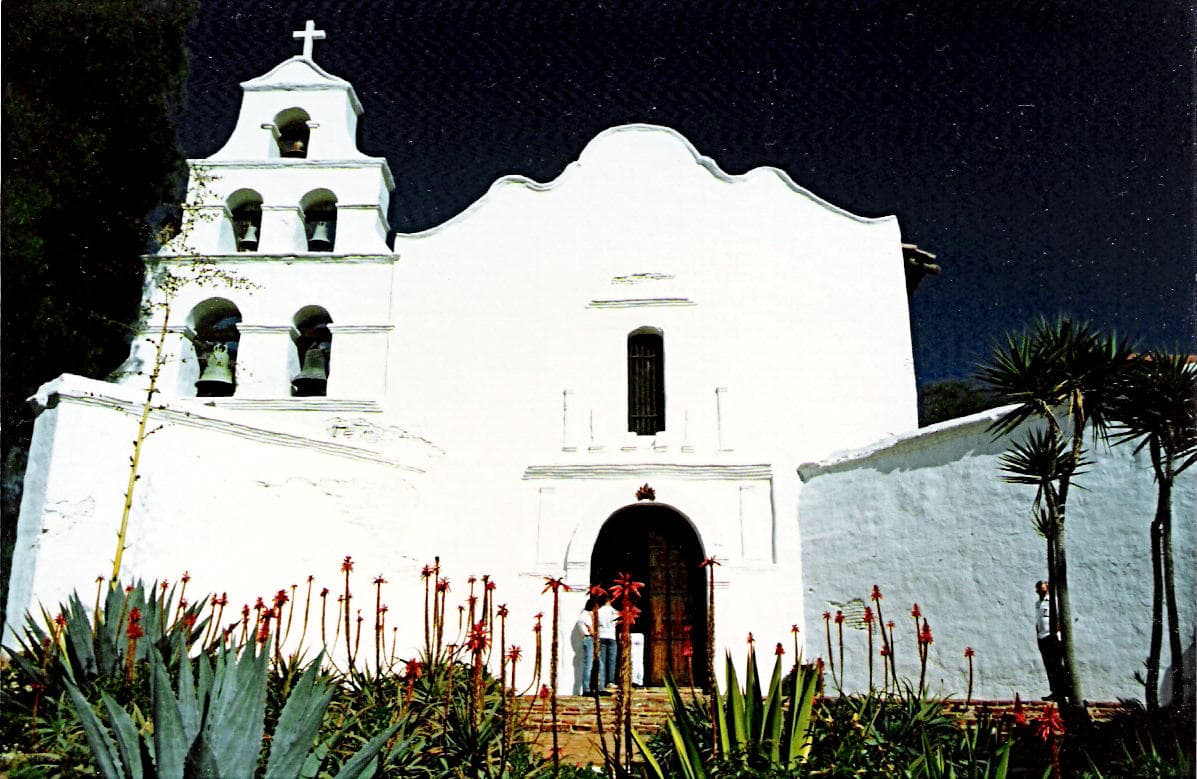
File:Mission San Diego 1987.jpg - Wikipedia View original
Is this image relevant?
Spanish missions in the Sonoran Desert - Wikipedia View original
Is this image relevant?
File:San Francisco de Asis--Mission Dolores.JPG - Wikipedia View original
Is this image relevant?
File:Mission San Diego 1987.jpg - Wikipedia View original
Is this image relevant?
Spanish missions
Spain built the most extensive mission infrastructure in North America, stretching across present-day Florida, the Southwest, and California. Franciscan and Dominican friars founded and ran these missions, which functioned as more than churches. They were centers of religious conversion, cultural assimilation, and economic production.
- Missions organized Native labor around European-style agriculture and craft production
- The encomienda system granted Spanish colonists control over Native labor and tribute, tying conversion directly to economic exploitation
- Notable missions include Mission San Diego de Alcalá (founded 1769) and Mission San Francisco de Asís (1776)
- The Pueblo Revolt of 1680 was partly a direct response to the coercive nature of Spanish missionization
French Jesuit missions
French missionaries operated primarily in New France, covering modern-day Canada and the northern United States. The Jesuits, called "Black Robes" by many Native peoples, took a notably different approach from the Spanish.
- Jesuits prioritized learning indigenous languages and understanding local cultures before attempting conversion
- They established missions among the Huron (Wendat), Algonquin, and Iroquois peoples
- Missionaries like Jean de Brébeuf and Isaac Jogues lived within Native communities rather than relocating people to mission compounds
- The French approach was generally less coercive than the Spanish model, though it still aimed to fundamentally alter Native belief systems
- Jesuit writings, known as the Relations, became major primary sources documenting Native cultures of this period
English Protestant missions
English efforts concentrated in New England and along the eastern seaboard, driven largely by Puritan theology.
- Puritans created "praying towns", segregated communities where converted Natives lived under English-style governance and social rules
- John Eliot translated the Bible into the Massachusett (Algonquian) language, producing the first Bible printed in North America (1663)
- Protestant missionaries emphasized literacy and education as prerequisites for conversion, unlike the more ritual-focused Catholic approach
- Institutions like Harvard's Indian College (established 1655) were created to train Native preachers, though very few students actually graduated
- The praying town model collapsed during King Philip's War (1675–1676), when even converted Natives were interned or killed by English colonists
Conversion methods
Missionaries used a wide range of strategies, from patient persuasion to outright coercion. These methods were rarely just about religion; they were intertwined with colonial goals of cultural and economic control.
Forced vs. voluntary conversion
The line between "forced" and "voluntary" conversion was often blurry in a colonial context where refusing Christianity could mean losing access to trade goods, political alliances, or physical safety.
- Spanish conquistadors sometimes demanded immediate conversion upon first contact with indigenous groups
- Forced conversion involved threats, destruction of sacred objects, and physical punishment for practicing traditional ceremonies
- Some Native individuals and communities chose conversion strategically, gaining political leverage or access to European trade networks
- Syncretism frequently occurred as Native peoples incorporated Christian elements into their existing belief systems rather than fully replacing them. This was often a way of preserving traditional practices under a Christian surface.
Education and assimilation
Missionary schools became a primary vehicle for conversion, targeting children in particular.
- Children were often separated from families and communities to attend mission schools
- Curriculum combined religious instruction with European-style agriculture, trades, and domestic skills
- Native languages and cultural practices were typically forbidden or actively punished
- This model laid the groundwork for the more systematic boarding school system that emerged in the late 19th century
Use of Native languages
The question of whether to use Native languages or force European ones was a real strategic debate among missionaries.
- Some missionaries learned indigenous languages to communicate religious concepts more effectively
- Christian texts, including Bibles, catechisms, and hymns, were translated into Native languages
- Missionaries sometimes developed writing systems for previously unwritten languages, which had the unintended effect of helping preserve those languages
- Other missionaries insisted on European-language-only instruction, viewing Native languages as obstacles to full assimilation
Impact on Native cultures
Christianization didn't just change what people believed. It restructured how communities were organized, how families functioned, and how knowledge was transmitted.
Changes in social structures
- Missionaries promoted the European-style nuclear family model, disrupting traditional extended kinship systems that were central to tribal governance and identity
- In some communities, social organization shifted from matrilineal (descent traced through the mother) to patrilineal patterns
- Traditional leadership roles were undermined as missionaries elevated Christian converts to positions of authority
- Gender roles were reshaped according to European Christian norms, often reducing the political and economic power women held in many Native societies
- Communal land use patterns were disrupted in favor of individual property ownership
Syncretism of beliefs
Rather than simply accepting or rejecting Christianity, many Native peoples created blended belief systems.
- Christian saints were sometimes incorporated into existing frameworks of spirits and sacred beings
- Traditional ceremonies adapted to include Christian elements like crosses and prayers
- Christian concepts were reinterpreted through indigenous cultural lenses, producing meanings missionaries never intended
- Syncretic movements emerged over time, including the Ghost Dance and the Native American Church, which combined Native and Christian elements in distinct ways
Loss of traditional practices
- Missionaries and colonial authorities actively suppressed Native spiritual ceremonies and rituals, sometimes by law
- Traditional healing practices declined as European medicine was promoted (and as disease made traditional remedies seem less effective)
- Oral traditions and storytelling eroded as written texts gained prominence and as the social contexts for oral transmission were disrupted
- Coming-of-age ceremonies were abandoned or modified under missionary pressure
- Sacred sites were seized, destroyed, or made inaccessible

Native resistance and adaptation
Native peoples were never passive recipients of Christianization. Responses ranged from armed resistance to creative adaptation, and these strategies shifted as colonial pressures changed over time.
Rejection of Christianity
- Some communities flatly refused to adopt Christianity, sometimes violently expelling missionaries
- The Pueblo Revolt of 1680 is one of the most dramatic examples: Pueblo peoples drove the Spanish out of New Mexico for twelve years, destroying churches and reasserting traditional practices
- Many groups continued traditional spiritual practices in secret or in remote areas beyond missionary reach
- Preservation of indigenous languages and oral traditions served as a form of cultural resistance even when overt opposition was impossible
Incorporation of Christian elements
- Some Native peoples selectively adopted Christian beliefs that aligned with their existing worldviews while rejecting others
- Christian symbols and rituals were sometimes used to augment rather than replace traditional practices
- Native Christian leaders emerged who could move between both religious traditions, serving as cultural brokers
- These hybrid practices frustrated missionaries who wanted complete conversion but proved remarkably durable
Revitalization movements
Prophetic movements arose at various points, seeking cultural and spiritual renewal in response to colonial pressures.
- Handsome Lake (Seneca, early 1800s) founded a movement blending traditional Iroquois beliefs with selected Christian moral teachings, especially temperance
- The Ghost Dance (1870s and 1890s) promised the return of traditional ways and the departure of European settlers; its suppression led to the Massacre at Wounded Knee in 1890
- The Peyote religion combined Native ceremonial practices with Christian theology, eventually organizing as the Native American Church in 1918
- These movements addressed social crises like alcoholism, land loss, and cultural disintegration while promoting collective identity
Government policies
Colonial and U.S. government policies shaped Christianization in direct and indirect ways. The government frequently used Christian institutions as instruments of assimilation policy.
Indian Removal Act implications
The Indian Removal Act of 1830 forced the relocation of southeastern tribes to Indian Territory (present-day Oklahoma), with cascading effects on religious life.
- Removal severed communities from ancestral lands and sacred sites essential to traditional spiritual practices
- In new territories, displaced tribes encountered fresh waves of missionary activity
- Some tribes, like the Cherokee, had already adopted Christianity in significant numbers and used their conversion as an argument against removal, though this strategy ultimately failed
- The upheaval of removal made communities more vulnerable to missionary influence by disrupting existing social and spiritual structures
Boarding school system
The boarding school system, established in the late 19th century, represented the most systematic government-backed Christianization effort.
- Richard Henry Pratt founded the Carlisle Indian Industrial School in 1879 with the explicit philosophy of "Kill the Indian, save the man"
- Children were forcibly removed from families, often for years at a time
- Christian education and worship were mandatory components of the curriculum
- Students were punished for speaking Native languages, wearing traditional clothing, or practicing cultural traditions
- The system inflicted deep and lasting trauma, with effects still felt across Native communities today
Native American churches
Over time, Native peoples established their own Christian institutions on their own terms.
- Native-led Christian denominations incorporated indigenous cultural elements into worship
- The Native American Church, formally organized in 1918, combined peyote ceremony with Christian theology and became one of the most widespread Native religious movements
- The American Indian Religious Freedom Act of 1978 formally recognized Native peoples' right to practice traditional religions, though enforcement remained inconsistent
- Debates continue within Native communities about whether Christianity can be separated from its colonial history
Key figures and events
Junípero Serra
Junípero Serra (1713–1784) was a Franciscan friar who founded nine missions along the California coast, beginning with Mission San Diego de Alcalá in 1769. His missions became the backbone of Spanish colonization in California, organizing Native labor and enforcing conversion.
Serra remains deeply controversial. The Catholic Church canonized him as a saint in 2015, a decision that drew sharp protest from many Native Californians and their allies. Critics point to documented use of corporal punishment against Native converts and the devastating mortality rates at California missions, where disease and harsh conditions killed thousands.
John Eliot
John Eliot (1604–1690), a Puritan minister in Massachusetts, became known as the "Apostle to the Indians." He learned the Massachusett language and produced the first complete Bible printed in North America (the "Eliot Indian Bible," 1663). He established fourteen praying towns in Massachusetts.
Eliot also authored The Indian Grammar Begun, one of the earliest European studies of a Native American language. His work influenced later Protestant missionary efforts, though the praying town system he built was largely destroyed during King Philip's War.

Handsome Lake movement
Handsome Lake (Ganeodiyo, c. 1735–1815) was a Seneca prophet who experienced a series of visions beginning in 1799. He founded a revitalization movement that blended traditional Iroquois beliefs with elements drawn from Christianity, particularly Quaker teachings.
- He promoted temperance, family cohesion, and a return to traditional agricultural practices
- His teachings were codified in the Code of Handsome Lake (Gaiwi:yo), which is still recited today
- The Handsome Lake religion, also called the Longhouse Religion, continues to influence Haudenosaunee (Iroquois) spirituality and culture
Regional variations
Christianization played out very differently depending on which European power was involved, which Native nations were present, and what the local environment looked like.
Southwest vs. Northeast
- Southwest: Spanish missions dominated, focusing on sedentary Pueblo peoples. Missions emphasized communal living and agricultural labor within mission compounds. This region saw some of the most intense resistance, including the Pueblo Revolt. The architectural and cultural legacy of the mission system remains visible today.
- Northeast: English Protestant and French Catholic missions competed for influence among more mobile Algonquian and Iroquoian peoples. This competition sometimes gave Native communities leverage to play European powers against each other. The praying town model and Jesuit missions represented two very different approaches operating in close proximity.
Plains vs. Pacific Northwest
- Plains: Missionary activity came later here because the nomadic lifestyles of Plains tribes made mission-based conversion difficult. Christian influence often arrived through government agents and boarding schools rather than traditional missions. The Ghost Dance movement, which incorporated Christian elements, emerged in this region.
- Pacific Northwest: Multiple denominations competed for converts among diverse coastal and interior peoples. Missionaries clashed with practices like the potlatch (ceremonial gift-giving feasts) and totem carving traditions. Unique syncretic practices developed in this region.
Southeast vs. Great Lakes
- Southeast: Early Spanish and later English missionary efforts significantly affected tribes like the Cherokee, Creek, Choctaw, and Chickasaw. Some southeastern tribes adopted Christianity and European-style literacy at relatively high rates, partly as a strategy for political survival. The Cherokee, for instance, developed their own syllabary and published a bilingual newspaper.
- Great Lakes: French Jesuit influence predominated among Anishinaabe peoples (Ojibwe, Odawa, Potawatomi). This region developed distinctive Native Catholic traditions that persist in some communities today.
Contemporary issues
The legacy of Christianization remains a live issue in Native American communities, shaping ongoing debates about identity, healing, and sovereignty.
Reconciliation efforts
- Several Christian denominations have issued formal apologies for their roles in colonization and forced assimilation
- Repatriation of sacred objects and ancestral remains from church and museum collections continues under the Native American Graves Protection and Repatriation Act (NAGPRA, 1990)
- Some religious institutions have partnered with Native communities on social justice projects, though trust remains limited
- Native American theology has emerged as a field seeking to bridge indigenous and Christian beliefs on Native peoples' own terms
Native Christian leaders
- Native American clergy and theologians have risen within various Christian denominations, advocating for culturally relevant worship and ministry
- Native-led Christian organizations and seminaries work to integrate traditional cultural values with Christian practice
- These leaders often navigate tension between their Christian faith and broader Native community movements toward decolonization
Decolonization of spirituality
- A growing movement seeks to reclaim and revitalize traditional spiritual practices independent of Christian influence
- Recovery and preservation of indigenous languages is central to this effort, since languages carry spiritual knowledge that doesn't translate easily
- Scholars and activists challenge Eurocentric interpretations of Native spirituality and history
- The decolonization movement raises difficult questions for Native Christians about whether their faith can be fully separated from its colonial origins
Long-term consequences
Cultural identity challenges
Many Native individuals today navigate complex questions about religious and cultural identity. The loss of indigenous languages has made it harder to transmit traditional spiritual knowledge across generations. Intergenerational conflicts sometimes arise between community members who identify as Christian and those working to revitalize traditional practices. Efforts to reclaim traditional spirituality are growing, but the centuries-long impact of Christianization means that recovery is often incomplete.
Intergenerational trauma
The trauma of forced conversion and cultural suppression didn't end with the policies that caused it. Boarding school survivors passed their experiences down through disrupted parenting patterns, substance abuse, and mental health challenges. The loss of traditional family structures and spiritual practices created a cultural dislocation whose effects compound over generations. Healing movements today draw on both Native and Christian spiritual practices to address this legacy.
Modern Native spirituality
Contemporary Native spirituality takes many forms. Some communities have successfully revived traditional ceremonies and practices. Others maintain syncretic traditions that blend Native and Christian elements. Legal protections like the American Indian Religious Freedom Act (1978) and NAGPRA (1990) have supported these efforts, though enforcement gaps remain. A growing body of Native American theology seeks to reconcile indigenous and Christian beliefs without erasing the history of how Christianity arrived.
See Fiveable more often in Google
Mark Fiveable as a preferred source and Google is more likely to show you our guides in Top Stories, with a "preferred" badge in AI Mode and AI Overviews.