19.5 Cancer Immunobiology and Immunotherapy

🦠Microbiology Unit 19 Review
19.5 Cancer Immunobiology and Immunotherapy
🦠 Microbiology
Cancer Immunobiology
Cancer immunobiology studies how the immune system recognizes and attacks cancer cells, and how tumors fight back to avoid destruction. Understanding this interplay is central to modern cancer treatment, since immunotherapy now stands alongside surgery, radiation, and chemotherapy as a major therapeutic strategy.

Top images from around the web for Recognition of cancer cells
T cell receptor - wikidoc View original
Is this image relevant?
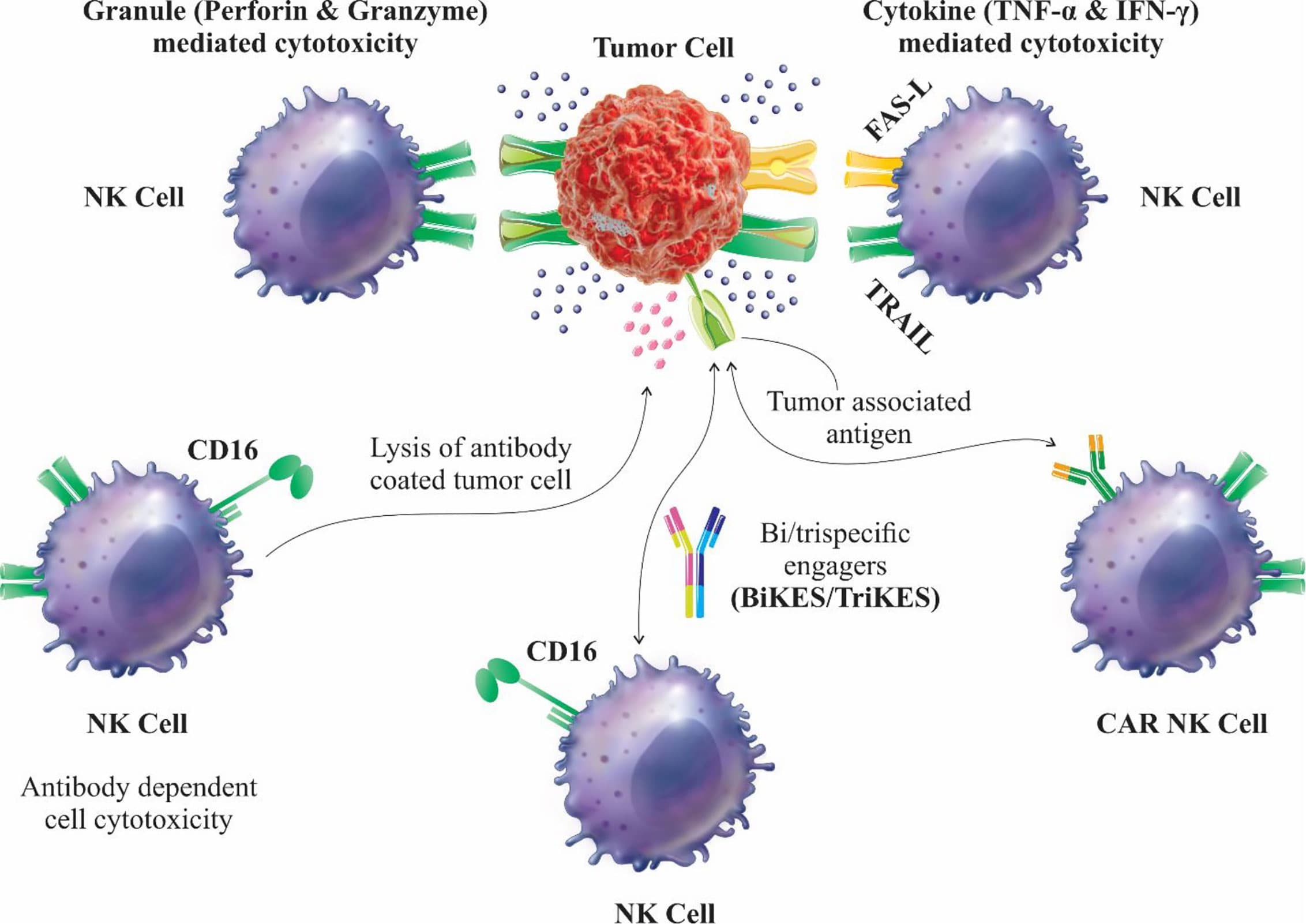
Frontiers | CAR-NK Cell: A New Paradigm in Tumor Immunotherapy View original
Is this image relevant?
Frontiers | Cytokine and Chemokine Signals of T-Cell Exclusion in Tumors View original
Is this image relevant?
T cell receptor - wikidoc View original
Is this image relevant?
Frontiers | CAR-NK Cell: A New Paradigm in Tumor Immunotherapy View original
Is this image relevant?
Recognition of Cancer Cells
Your immune system doesn't just wait for infections. It also patrols tissues for cells that have become abnormal, a process called immune surveillance. Both innate and adaptive immune cells participate, including natural killer (NK) cells, dendritic cells (DCs), and T cells.
Tumor-associated antigens (TAAs) are the markers that tip off the immune system. Cancer cells express proteins that are either unique to the tumor or abnormally overexpressed compared to normal tissue. Examples include:
- Mutated proteins (neoantigens) created by DNA mutations in the tumor
- Cancer-testis antigens like NY-ESO-1, which are normally expressed only in reproductive tissue but get turned on in tumors
- Differentiation antigens like CD19, which are normal proteins expressed at unusually high levels
Antigen presentation and T cell activation follow a specific sequence:
- Dendritic cells capture and process TAAs from the tumor.
- DCs present TAA fragments on major histocompatibility complex (MHC) molecules to T cells in lymph nodes.
- CD8+ cytotoxic T lymphocytes (CTLs) recognize TAAs on MHC class I molecules and directly kill cancer cells.
- CD4+ helper T cells recognize TAAs on MHC class II molecules and secrete cytokines that support CTL activity and B cell responses.
Antibody-mediated responses add another layer of defense. B cells produce antibodies that bind TAAs on cancer cell surfaces. These antibodies can trigger killing through two main mechanisms:
- Antibody-dependent cellular cytotoxicity (ADCC): NK cells and other immune cells recognize the antibody coating the cancer cell and destroy it.
- Complement-dependent cytotoxicity (CDC): the complement cascade is activated on the cancer cell surface, punching holes in the membrane.
Therapeutic antibodies exploit these mechanisms. Rituximab (targets CD20 on B cell lymphomas) and blinatumomab (a bispecific antibody that bridges T cells to CD19 on tumor cells) are two examples used clinically.

Tumor Microenvironment and Immune Evasion
Even though the immune system can recognize cancer, tumors develop ways to suppress and escape immune attack. The tumor microenvironment (TME) is the local ecosystem surrounding the tumor, and it's often deeply immunosuppressive.
How tumors suppress immunity:
- Cancer cells and surrounding stromal cells secrete immunosuppressive molecules like TGF-β and IL-10, which dampen T cell and NK cell function.
- Regulatory T cells (Tregs) and myeloid-derived suppressor cells (MDSCs) accumulate in the TME, actively blocking anti-tumor immune responses.
Cancer stem cells are a small subpopulation within a tumor that can self-renew and differentiate into other tumor cell types. They tend to resist conventional therapies like chemotherapy and radiation, which is one reason tumors can recur after treatment appears successful.
Tumor-infiltrating lymphocytes (TILs) are immune cells that have migrated into the tumor. Their presence generally correlates with a better prognosis, because it means the immune system is actively engaging the cancer. TILs can also be harvested, expanded in the lab, and reinfused into the patient as a form of adoptive cell therapy.
Immunogenic cell death is a concept worth understanding: certain cancer treatments (some chemotherapies, radiation) don't just kill tumor cells quietly. They cause the dying cells to release danger signals and tumor antigens, which then recruit and activate immune cells. This can turn a local treatment into a broader immune response against the tumor.

Effectiveness of Immunotherapy Approaches
Checkpoint inhibitors are among the most widely used immunotherapies. Here's the logic behind them:
- T cells have built-in "brakes" called immune checkpoints (such as CTLA-4 and PD-1) that normally prevent overactivation.
- Tumors exploit these brakes. Cancer cells often express PD-L1, which binds PD-1 on T cells and shuts them down.
- Checkpoint inhibitor drugs block this interaction, releasing the brakes so T cells can attack the tumor again.
- These drugs have shown strong results in melanoma, lung cancer, and several other cancers, though not all patients respond.
- Because checkpoint inhibitors remove immune restraints broadly, they can cause autoimmune-related side effects like colitis and pneumonitis.
Adoptive cell therapy (ACT) involves giving patients large numbers of tumor-fighting T cells:
- T cells are collected from the patient (or engineered in the lab).
- They are expanded and activated outside the body (ex vivo).
- The activated cells are infused back into the patient.
The most prominent form is CAR T cell therapy, where T cells are genetically engineered to express a chimeric antigen receptor targeting a specific TAA. CAR T cells targeting CD19 have been highly effective against B cell leukemias and lymphomas. However, ACT faces real challenges: manufacturing is complex and expensive, solid tumors have been much harder to treat than blood cancers, and patients can develop cytokine release syndrome (CRS), a potentially dangerous inflammatory reaction.
Oncolytic viruses are genetically modified viruses (such as herpes simplex virus or adenovirus) designed to selectively infect and lyse cancer cells while sparing normal tissue. When the cancer cells burst open, they release TAAs and danger signals that can stimulate an anti-tumor immune response. As a standalone treatment, oncolytic viruses have shown limited efficacy, so they're often combined with checkpoint inhibitors or other immunotherapies. Safety concerns around viral replication and unintended spread remain an active area of research.
Cancer Vaccines
Preventive vs. Therapeutic Cancer Vaccines
These two categories have fundamentally different goals: preventive vaccines stop cancer from developing in the first place, while therapeutic vaccines try to treat cancer that already exists.
Preventive cancer vaccines are given to healthy individuals and target viruses known to cause cancer:
- HPV vaccines (Gardasil, Cervarix) protect against human papillomavirus strains responsible for cervical, anal, and oropharyngeal cancers.
- Hepatitis B vaccines (Engerix-B, Recombivax HB) prevent chronic HBV infection, which is a major risk factor for liver cancer (hepatocellular carcinoma).
These vaccines work by inducing both humoral (antibody) and cellular immunity against viral antigens, preventing the initial infection that would otherwise lead to malignant transformation over time.
Therapeutic cancer vaccines are given to patients who already have cancer. Their goal is to activate and expand tumor-specific T cells and build memory responses against the tumor. They target TAAs or neoantigens (unique mutations specific to that patient's tumor).
Therapeutic vaccines come in several forms:
- Cell-based vaccines: Dendritic cells are loaded with tumor antigens in the lab and reinfused. Sipuleucel-T, used for metastatic prostate cancer, is the best-known example.
- Non-cell-based vaccines: These include peptide vaccines (e.g., gp100 peptide for melanoma), DNA vaccines, and RNA vaccines, all encoding tumor antigens to prime the immune system.
- Personalized neoantigen vaccines: These are custom-built based on sequencing the patient's individual tumor mutations. They're currently in clinical trials and represent a frontier of precision immunotherapy.
Therapeutic cancer vaccines have generally shown more modest clinical results than checkpoint inhibitors or CAR T cells so far, but combining them with other immunotherapies is an active and promising area of research.
See Fiveable more often in Google
Mark Fiveable as a preferred source and Google is more likely to show you our guides in Top Stories, with a "preferred" badge in AI Mode and AI Overviews.