17.3 Cellular Defenses

🦠Microbiology Unit 17 Review
17.3 Cellular Defenses
🦠 Microbiology
Components and Formation of Blood in Cellular Defense
Blood serves as the body's primary transport system for immune cells, carrying defensive cells to sites of infection throughout the body. Understanding its components and how they're produced is foundational to understanding cellular innate defenses.

Top images from around the web for Components of blood for defense
Innate Immune Response | OpenStax: Biology View original
Is this image relevant?
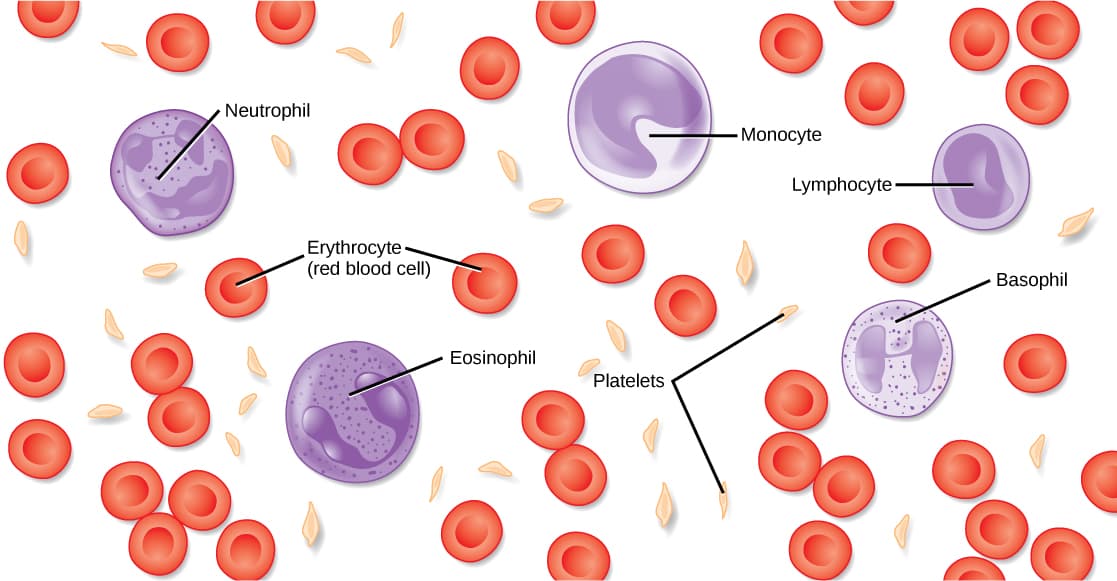
Components of the Blood | OpenStax Biology 2e View original
Is this image relevant?
Cellular Defenses | Microbiology View original
Is this image relevant?
Innate Immune Response | OpenStax: Biology View original
Is this image relevant?
Components of the Blood | OpenStax Biology 2e View original
Is this image relevant?
Components of Blood for Defense
Blood has two main parts: plasma and formed elements.
Plasma is the liquid portion of blood. It contains dissolved proteins, nutrients, and waste products, and it acts as the transport medium that distributes immune cells and signaling molecules throughout the body.
Formed elements include three categories:
- Red blood cells (erythrocytes) deliver oxygen to tissues. They support immune cell function indirectly by keeping tissues oxygenated, but they don't participate in defense themselves.
- White blood cells (leukocytes) are the primary cells of the immune response. The major types are neutrophils, eosinophils, basophils, monocytes, and lymphocytes, each with specialized defensive roles covered below.
- Platelets (thrombocytes) are best known for blood clotting and wound healing (hemostasis), but they also release cytokines and growth factors that contribute to inflammation and help modulate the immune response.

Process of Hematopoiesis
Hematopoiesis is the formation and development of blood cells. In adults, it occurs primarily in the bone marrow.
It starts with hematopoietic stem cells (HSCs), which can give rise to all blood cell types through differentiation. HSCs branch into two main lineages:
- Myeloid progenitors develop into red blood cells, platelets, and most white blood cells (neutrophils, eosinophils, basophils, and monocytes).
- Lymphoid progenitors develop into lymphocytes (B cells, T cells, and NK cells).
White blood cells have limited lifespans, so the body must continually replenish them. Neutrophils, for example, survive only about 5 days in circulation. If hematopoiesis is impaired, white blood cell counts drop, leading to immunodeficiency and increased susceptibility to infections.

Formed Elements in Innate Immunity
Each type of white blood cell plays a distinct role in innate defense. Here's what each one does and why it matters:
Neutrophils are the most abundant white blood cells in circulation and the first responders to infection. They phagocytose (engulf and digest) bacteria and fungi, and they release antimicrobial proteins and reactive oxygen species to kill pathogens. When you see pus at an infection site, that's largely dead neutrophils.
Eosinophils specialize in defense against large parasites like helminths (parasitic worms) that are too big to phagocytose. Instead, they release cytotoxic granules that damage the parasite's outer surface. They also help modulate inflammatory responses.
Basophils release histamine and other inflammatory mediators that promote vasodilation and recruit other immune cells to the site of infection. They're also involved in allergic reactions and hypersensitivity responses, and they contribute to defense against parasites.
Monocytes circulate in the blood, but when they migrate into tissues, they differentiate into macrophages or dendritic cells. Macrophages phagocytose pathogens and cellular debris, clearing infections and maintaining tissue homeostasis. Dendritic cells present antigens to lymphocytes, forming a critical bridge between innate and adaptive immunity.
Natural killer (NK) cells target virus-infected cells and tumor cells. They recognize abnormal cells and kill them by releasing cytotoxic granules that induce apoptosis (programmed cell death). NK cells also produce cytokines like interferon-γ (IFN-γ), which activate macrophages and regulate other immune cell functions.
Immune System Overview
The immune system operates through two interconnected branches:
- Innate immunity is the first line of defense, providing rapid, nonspecific protection. It includes physical barriers (skin, mucous membranes), the cellular components described above, and soluble factors. It also initiates inflammation to contain and eliminate threats.
- Adaptive immunity develops more slowly but provides specific, long-lasting protection. It involves B and T lymphocytes that recognize specific antigens and generates immunological memory for faster responses upon re-exposure.
The complement system enhances both branches. It consists of plasma proteins that opsonize pathogens (coat them to make phagocytosis easier), activate inflammation, and recruit immune cells to infection sites.
The cellular defenses covered in this section sit squarely within innate immunity, but monocyte-derived dendritic cells and NK cell cytokine production show how innate responses feed directly into adaptive immunity.
See Fiveable more often in Google
Mark Fiveable as a preferred source and Google is more likely to show you our guides in Top Stories, with a "preferred" badge in AI Mode and AI Overviews.