17.2 Chemical Defenses

🦠Microbiology Unit 17 Review
17.2 Chemical Defenses
🦠 Microbiology
Chemical Defenses in Innate Immunity
Your body produces a wide range of chemical molecules that destroy or neutralize pathogens without needing prior exposure. These chemical defenses are part of the innate immune system, meaning they're nonspecific: they target broad features shared by many microbes rather than recognizing one particular pathogen. This section covers the major enzymes, antimicrobial peptides, complement pathways, and other proteins involved.

Top images from around the web for Enzymes as pathogen defense
Frontiers | Defensins: A Double-Edged Sword in Host Immunity View original
Is this image relevant?
Frontiers | The Roles of Phospholipase A2 in Phagocytes View original
Is this image relevant?
Frontiers | Cathelicidin Host Defense Peptides and Inflammatory Signaling: Striking a Balance View original
Is this image relevant?
Frontiers | Defensins: A Double-Edged Sword in Host Immunity View original
Is this image relevant?
Frontiers | The Roles of Phospholipase A2 in Phagocytes View original
Is this image relevant?
Enzymes as Pathogen Defense
Several enzymes in body secretions can directly damage microbial structures. They work by targeting components common to many pathogens, like peptidoglycan or membrane phospholipids.
- Lysozyme is found in tears, saliva, nasal secretions, and other body fluids. It cleaves the bond between NAM and NAG in peptidoglycan, the structural polymer in bacterial cell walls. This causes the cell to lyse (burst). Lysozyme is particularly effective against Gram-positive bacteria like Staphylococcus aureus because their thick peptidoglycan layer is more exposed. Gram-negative bacteria have an outer membrane that partially shields their thinner peptidoglycan layer.
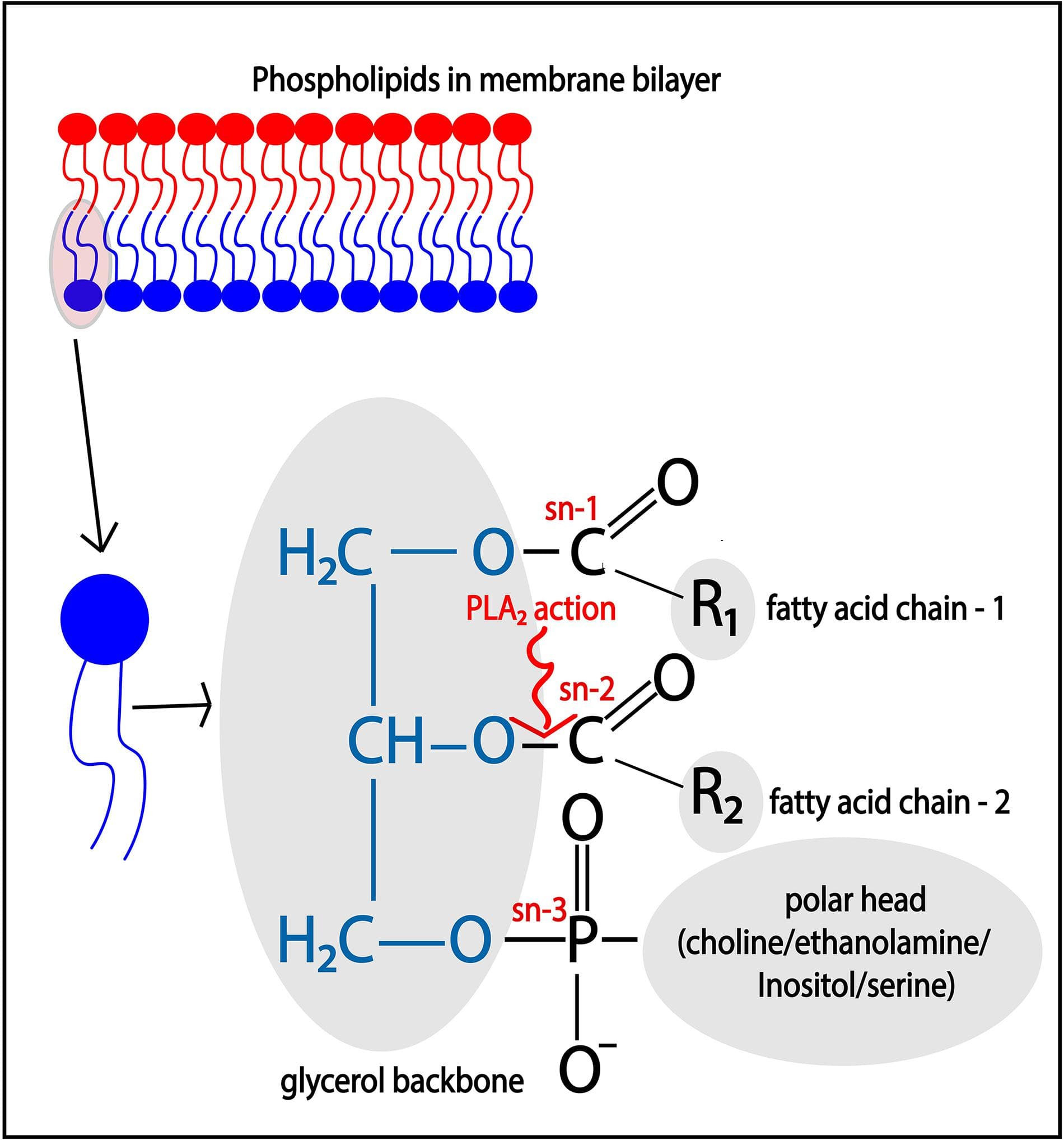
- Phospholipase A2, also present in tears and other secretions, degrades phospholipids in bacterial cell membranes. By breaking down the membrane itself, it leads to cell death. It's active against organisms like Pseudomonas aeruginosa.

Antimicrobial Peptides
Antimicrobial peptides (AMPs) are small proteins produced by leukocytes and epithelial cells. They kill microbes primarily by disrupting their membranes, and they act against a broad spectrum of organisms.
- Defensins form pores in bacterial cell membranes, causing lysis. They're effective against both Gram-positive bacteria (Streptococcus pneumoniae) and Gram-negative bacteria (Escherichia coli). Defensins are found in neutrophil granules and on mucosal surfaces.
- Cathelicidins also disrupt bacterial membranes but can additionally inhibit bacterial growth through non-lytic mechanisms. Their range is especially broad: they're active against bacteria (Listeria monocytogenes), fungi (Candida albicans), and even enveloped viruses (Influenza A).

Antimicrobial Proteins in Innate Immunity
Beyond enzymes and AMPs, the innate immune system uses several soluble proteins in the blood and tissues to recognize and help destroy pathogens.
Complement System
The complement system is a group of over 30 plasma proteins that circulate in inactive forms. When activated, they interact in a cascade that promotes inflammation, enhances phagocytosis, and directly kills microbes. The three major outcomes are described below under complement pathways.
Pattern-Recognition Molecules
These soluble proteins recognize conserved carbohydrate or chemical patterns on microbial surfaces and then trigger complement activation or enhance phagocytosis.
- Collectins include mannose-binding lectin (MBL) and surfactant proteins A and D. MBL binds mannose residues on microbial surfaces (a sugar arrangement rare on human cells). This activates the lectin complement pathway and enhances phagocytosis of organisms like Mycobacterium tuberculosis. Surfactant proteins A and D are especially important in the lungs.
- Ficolins function similarly to collectins but bind to acetylated compounds (like GlcNAc) on microbial surfaces. They also activate the lectin complement pathway and promote phagocytosis of bacteria such as Streptococcus pyogenes.
Acute-Phase Proteins
During infection or tissue injury, the liver ramps up production of acute-phase proteins. These circulate in the blood and assist the immune response.
- C-reactive protein (CRP) binds to phosphocholine on bacterial cell walls (e.g., Streptococcus pneumoniae) and activates the classical complement pathway. CRP levels rise dramatically during infection, which is why clinicians use CRP as a blood marker for inflammation.
- Serum amyloid P component (SAP) is structurally related to CRP but recognizes a wider range of microbial surface molecules. It activates the classical complement pathway and enhances phagocytosis of pathogens like Neisseria meningitidis.
Complement Pathways: Activation and Functions
All three complement pathways converge on the same key step: generating C3 convertase, which cleaves C3 into C3a and C3b. From there, they produce C5 convertase, which cleaves C5 and initiates the terminal pathway. The pathways differ in how they get started.
Classical Pathway
- Activated when C1 binds to antigen-antibody complexes on a microbial surface, or when CRP/SAP bound to a pathogen recruits C1.
- C1 activates C4 and C2, producing the C3 convertase C4b2a.
- C3b joins the complex to form the C5 convertase C4b2a3b.
Lectin Pathway
- Activated when MBL or ficolins bind to carbohydrate patterns on microbial surfaces.
- MBL-associated serine proteases (MASPs) cleave C4 and C2, generating the same C3 convertase as the classical pathway: C4b2a.
- The C5 convertase is also C4b2a3b, identical to the classical pathway from this point forward.
Alternative Pathway
- Always active at a low level because C3 spontaneously hydrolyzes in plasma (called "C3 tickover").
- If C3b lands on a microbial surface (which lacks the regulatory proteins found on host cells), it binds Factor B. Factor D then cleaves Factor B, producing the C3 convertase C3bBb.
- Properdin stabilizes C3bBb on the microbial surface, amplifying the response.
- Additional C3b molecules join to form the C5 convertase C3bBb3b.
A useful way to keep the pathways straight: the classical pathway needs antibodies (or CRP/SAP), the lectin pathway needs MBL or ficolins, and the alternative pathway is always "on" and just needs a microbial surface to amplify.
Common Functions of All Three Pathways
Once complement is activated, the downstream effects are the same regardless of which pathway started the cascade:
- Opsonization: C3b and iC3b coat the microbial surface. Phagocytes have receptors for these fragments, so coated microbes are much more efficiently engulfed.
- Chemotaxis: C5a is a powerful chemoattractant that recruits neutrophils and other phagocytes to the infection site. C3a also contributes to inflammation by triggering mast cell degranulation.
- Membrane Attack Complex (MAC): C5b recruits C6, C7, C8, and multiple copies of C9. Together they form a pore in the microbial membrane, causing lysis. The MAC is especially effective against Gram-negative bacteria, which lack the thick peptidoglycan layer that can resist pore formation.
Innate Immune System Recognition and Response
Chemical defenses don't work in isolation. They connect to broader innate immune mechanisms through recognition and signaling.
- Pattern recognition receptors (PRRs) on immune cells (such as Toll-like receptors) detect pathogen-associated molecular patterns (PAMPs) on microbes. PAMPs include structures like lipopolysaccharide (LPS), flagellin, and double-stranded RNA. These are molecules that pathogens need but human cells don't produce.
- When PRRs detect PAMPs, they trigger signaling cascades that activate inflammation, phagocytosis, and the production of cytokines that coordinate the broader immune response.
- The acute-phase response is a systemic reaction to infection or injury. The liver increases production of acute-phase proteins (CRP, SAP, MBL, and others), the body develops fever, and neutrophil production ramps up in the bone marrow.
- Inflammation is the localized version of this response. Its four cardinal signs are redness, swelling, heat, and pain. These result from increased blood flow, vascular permeability, and immune cell recruitment to the affected tissue. Inflammation creates conditions that favor pathogen clearance and tissue repair.
See Fiveable more often in Google
Mark Fiveable as a preferred source and Google is more likely to show you our guides in Top Stories, with a "preferred" badge in AI Mode and AI Overviews.