17.4 Pathogen Recognition and Phagocytosis

🦠Microbiology Unit 17 Review
17.4 Pathogen Recognition and Phagocytosis
🦠 Microbiology
Leukocyte Migration and Pathogen Recognition
Leukocytes are the body's mobile defenders. To do their job, they need to leave the bloodstream, find the infection, and then recognize what they're fighting. This section covers how they get there and how they identify pathogens once they arrive.

Top images from around the web for Leukocyte migration to infected tissues
Frontiers | Elucidating the Biomechanics of Leukocyte Transendothelial Migration by Quantitative ... View original
Is this image relevant?
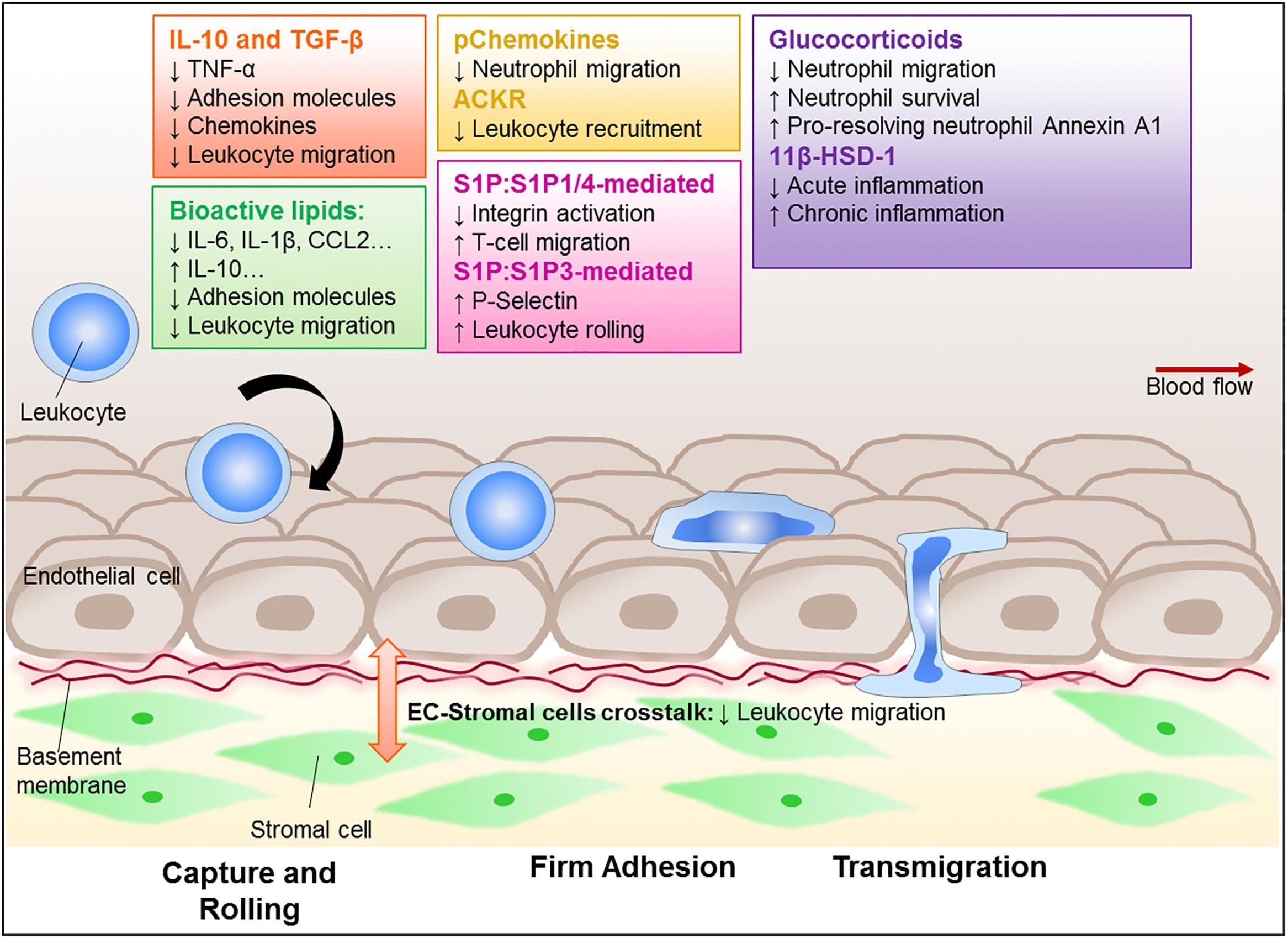
Frontiers | Triggering the Resolution of Immune Mediated Inflammatory Diseases: Can Targeting ... View original
Is this image relevant?
Frontiers | Vascular Endothelial Galectins in Leukocyte Trafficking View original
Is this image relevant?
Frontiers | Elucidating the Biomechanics of Leukocyte Transendothelial Migration by Quantitative ... View original
Is this image relevant?
Frontiers | Triggering the Resolution of Immune Mediated Inflammatory Diseases: Can Targeting ... View original
Is this image relevant?
Leukocyte Migration to Infected Tissues
Getting leukocytes out of the blood and into infected tissue is a multi-step process. Each step depends on specific molecular interactions between the leukocyte and the blood vessel wall.
- Margination — Leukocytes move from the center of the blood vessel toward the vessel wall, usually because blood flow slows in inflamed areas.
- Rolling adhesion — Selectins (L-selectin on leukocytes, P-selectin on endothelial cells) create loose, reversible bonds. The leukocyte "rolls" along the vessel wall rather than flowing past.
- Tight adhesion — Integrins on the leukocyte surface bind firmly to adhesion molecules on endothelial cells (ICAM-1, VCAM-1). This anchors the leukocyte in place.
- Diapedesis (transmigration) — The leukocyte squeezes between endothelial cells and exits the bloodstream into the surrounding tissue. This whole exit process is also called extravasation.
Once in the tissue, the leukocyte still needs directions. Chemotaxis is the process of following a concentration gradient of chemical signals toward the infection site. The leukocyte moves from areas of low signal concentration to high concentration, like following a trail.
Key chemotactic factors include:
- Bacterial products such as fMLP (a formylated peptide released by bacteria)
- Complement proteins, especially C5a
- Cytokines like IL-8 and MCP-1, which are released by cells already at the infection site to recruit more leukocytes
Cytokines don't just attract leukocytes. They also coordinate the broader inflammatory response, activating endothelial cells and other immune cells in the area.
Mechanisms of Pathogen Recognition
Leukocytes recognize pathogens through two main strategies: direct pattern recognition and opsonization.
Pattern Recognition Receptors (PRRs) are proteins on (or inside) leukocytes that detect conserved molecular structures found on pathogens but not on host cells. These structures are called pathogen-associated molecular patterns (PAMPs).
- Toll-like receptors (TLRs) sit on the cell surface or within endosomes and recognize a wide range of PAMPs. For example, TLR4 detects lipopolysaccharide (LPS) from Gram-negative bacteria, TLR2 recognizes peptidoglycan from Gram-positive bacteria, and TLR7 detects single-stranded viral RNA.
- C-type lectin receptors (CLRs) recognize carbohydrate structures on pathogens. Dectin-1, for instance, binds β-glucan in fungal cell walls.
- NOD-like receptors (NLRs) are intracellular receptors. NOD1 and NOD2 detect fragments of bacterial peptidoglycan that have entered the cytoplasm.
Opsonization is the second strategy. Instead of recognizing the pathogen directly, the immune system coats it with molecules (called opsonins) that leukocytes can grab onto more easily. Think of it as putting a handle on something slippery.
- Antibodies (IgG) bind to pathogen surfaces. Leukocytes then recognize the antibody's Fc region through Fc receptors (FcγRI, FcγRII).
- Complement protein C3b deposits on pathogen surfaces during complement activation. Leukocytes recognize C3b through complement receptors (CR1, CR3).
Opsonization dramatically increases the efficiency of phagocytosis because the phagocyte no longer has to rely solely on recognizing the pathogen itself.

Innate and Adaptive Immunity
Everything covered so far falls under innate immunity, which provides a rapid, non-specific first line of defense. Innate responses don't improve with repeated exposure to the same pathogen.
Adaptive immunity develops more slowly (days rather than minutes to hours) but produces a highly specific response and immunological memory. The bridge between the two systems is antigen presentation: innate immune cells like macrophages and dendritic cells process pathogen fragments and display them on MHC molecules, which activates T cells and kicks off the adaptive response.
Inflammation is a central feature of innate immunity. It increases blood flow and vascular permeability at the infection site, which helps leukocytes reach the tissue faster and in greater numbers.
Phagocytosis and Pathogen Elimination
Phagocytosis is the process by which certain leukocytes (mainly neutrophils, macrophages, and dendritic cells) engulf and destroy pathogens. It proceeds in defined steps, each dependent on the one before it.

Steps of Phagocytosis
- Recognition and attachment — The phagocyte binds to the pathogen using its surface receptors. These can be PRRs (like TLRs) that recognize PAMPs directly, or Fc receptors and complement receptors that bind opsonized pathogens.
- Engulfment — The phagocyte's membrane extends pseudopods around the pathogen, driven by actin polymerization. The membrane eventually surrounds the pathogen completely, forming an intracellular vesicle called a phagosome.
- Phagosome-lysosome fusion — The phagosome merges with one or more lysosomes to form a phagolysosome. This delivers digestive enzymes and drops the pH, creating a hostile environment for the trapped pathogen.
Pathogen Destruction in the Phagolysosome
Once the phagolysosome forms, the pathogen is killed through two categories of mechanisms:
Oxygen-dependent mechanisms (the more potent of the two):
- The respiratory burst is triggered by the enzyme NADPH oxidase, which generates reactive oxygen species (ROS) including superoxide anion (), hydrogen peroxide (), and hypochlorous acid (). These are highly toxic to microbes.
- Inducible nitric oxide synthase (iNOS) produces nitric oxide (), which generates reactive nitrogen species (RNS) that further damage pathogen proteins and DNA.
Oxygen-independent mechanisms:
- Acidification of the phagolysosome to pH 4.5–5.0 inhibits pathogen metabolism and activates acid-dependent enzymes.
- Antimicrobial proteins and peptides such as lysozyme (degrades peptidoglycan), defensins, and cathelicidins (disrupt microbial membranes).
- Proteolytic enzymes like elastase and cathepsins break down bacterial proteins.
Together, these mechanisms ensure that most pathogens are efficiently destroyed once phagocytosed. Some pathogens, however, have evolved strategies to survive inside phagocytes, which is a topic you'll encounter when studying specific bacterial pathogens like Mycobacterium tuberculosis.
See Fiveable more often in Google
Mark Fiveable as a preferred source and Google is more likely to show you our guides in Top Stories, with a "preferred" badge in AI Mode and AI Overviews.