7.4 Sum-to-Product and Product-to-Sum Formulas

📏Honors Pre-Calculus Unit 7 Review
7.4 Sum-to-Product and Product-to-Sum Formulas
📏 Honors Pre-Calculus
continue practicing 7.4
Multiple choice
Sum-to-Product and Product-to-Sum Formulas
These formulas let you convert between products of trig functions and sums (or differences) of trig functions. Why would you want to do that? Because sometimes a product like is hard to work with, but the equivalent sum is much easier to simplify or solve. The reverse is also true: a sum like can be factored into a product, which is often the key to solving trig equations.
Both sets of formulas come directly from the sum and difference identities you already know. They're not new math; they're just rearrangements of those earlier identities.
Sum-to-Product and Product-to-Sum Formulas
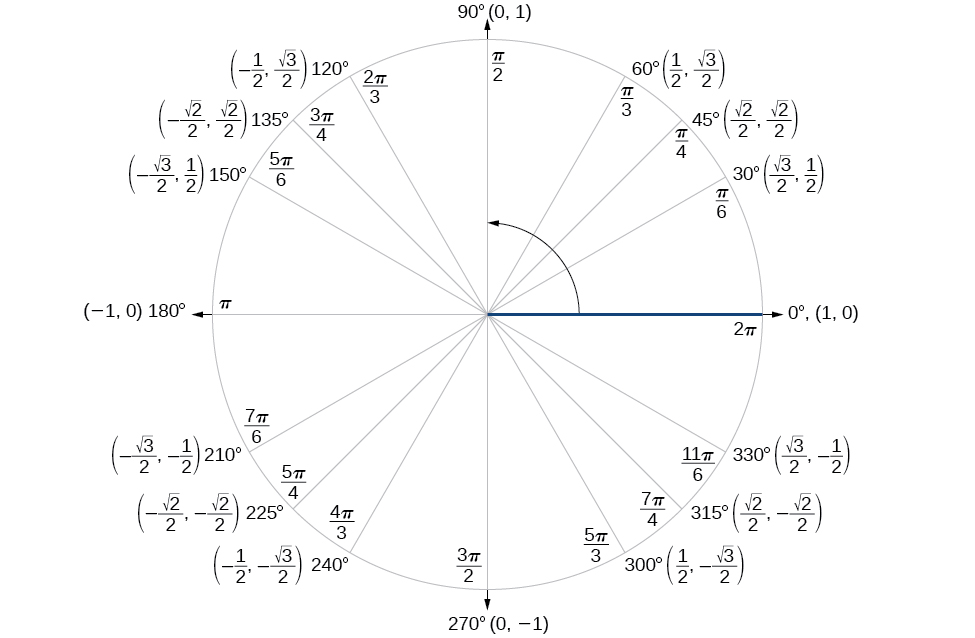
Products to sums conversion
The product-to-sum formulas turn a product of two trig functions into a sum or difference. Here are the four formulas:
Notice the pattern: sin·cos formulas produce sines on the right side, cos·cos produces cosines with a plus, and sin·sin produces cosines with a negative sign out front. Paying attention to these patterns helps you avoid mixing up the formulas on a test.
How to apply them:
- Identify which type of product you have (sin·cos, cos·sin, cos·cos, or sin·sin).
- Determine your A and B values. The order matters for sin·cos vs. cos·sin.
- Plug A and B into the matching formula.
- Simplify the result.
Example: Write as a sum.
Here and , and you have sin·cos, so use the first formula:

Sums to products transformation
The sum-to-product formulas go the other direction: they take a sum or difference of trig functions and rewrite it as a product. These are especially useful for solving equations, because setting a product equal to zero lets you use the zero-product property.
The key step every time is computing and . A common mistake is forgetting to divide by 2, so double-check that.
Example: Write as a product.
Here and . Compute the two pieces:
Apply the cos - cos formula:
Applications of trigonometric formulas
Simplifying expressions: When you see a complicated trig expression, look for products or sums that match one of these formulas. Convert it, then combine with other identities you know (Pythagorean identity , double-angle formulas, etc.) to keep simplifying.
Evaluating exact values: You can use these formulas to find exact values of expressions that don't correspond to standard angles on their own.
For example, to evaluate :
- Use the cos·cos product-to-sum formula with and .
Solving equations: Converting sums to products is a powerful technique for trig equations because you can factor.
For instance, to solve :
- Apply sum-to-product:
- Set each factor to zero: or
- Solve each equation separately to find all solutions.
This factoring approach is often much faster than trying to expand everything with other identities.
Advanced Trigonometric Concepts
- These formulas work in both degrees and radians. In pre-calc and beyond, radians are the standard, so practice using radian inputs.
- All trig functions are periodic, which means equations typically have infinitely many solutions. When solving, find the solutions in one period first, then generalize using the period (e.g., add for sine and cosine, or for tangent).
- In more advanced courses, these formulas connect to Euler's formula (), which provides an elegant way to derive all of these identities from exponential properties. You don't need Euler's formula for this course, but it's good to know the connection exists.
See Fiveable more often in Google
Mark Fiveable as a preferred source and Google is more likely to show you our guides in Top Stories, with a "preferred" badge in AI Mode and AI Overviews.