7.2 Sum and Difference Identities

📏Honors Pre-Calculus Unit 7 Review
7.2 Sum and Difference Identities
📏 Honors Pre-Calculus
continue practicing 7.2
Multiple choice
Sum and Difference Identities
Trigonometric sum and difference identities let you find exact values of trig functions at non-standard angles by rewriting them as combinations of angles you already know (like 30°, 45°, 60°). They also help you simplify complex trig expressions and prove other identities.
These identities are the foundation for double-angle and half-angle formulas you'll see next, so getting comfortable with them now pays off quickly.
Sum and Difference Identities
Cosine sum and difference applications
The cosine identities are:
Notice the pattern: the cosine formulas use cosine-cosine and sine-sine products. The sum formula has a minus sign between them, and the difference formula has a plus sign. This is the opposite of what you might expect, so watch out.
Example: Find the exact value of
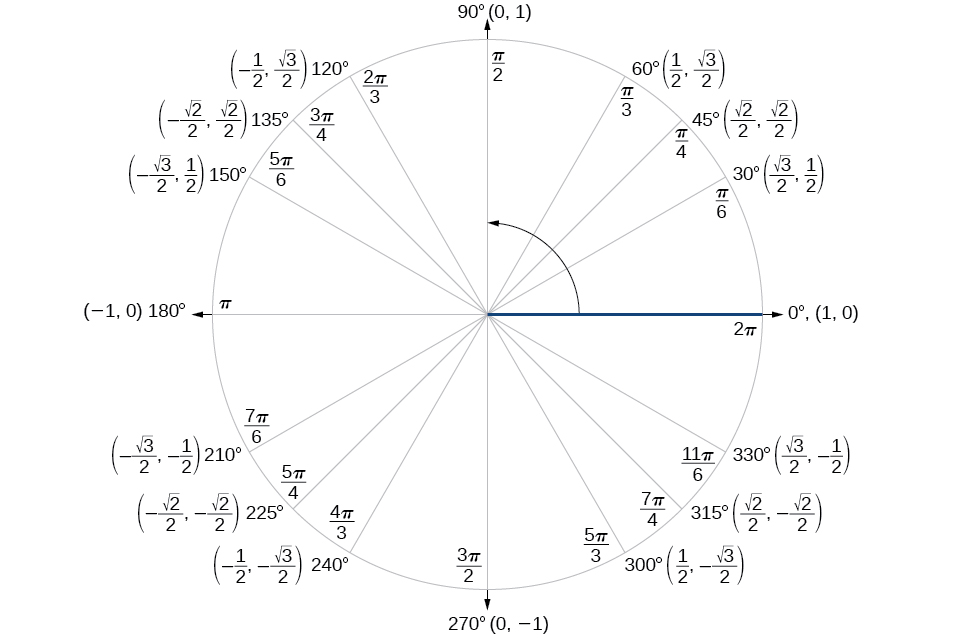
You can write 75° as 45° + 30°, then apply the sum formula:
- Set and
- Substitute:
- Plug in known values:
- Simplify:
These formulas work the same way with radian measure. For instance, can be split into .

Sine sum and difference usage
The sine identities are:
Here the pattern is: sine-cosine and cosine-sine products, and the sign between them matches the operation (sum gives plus, difference gives minus). This is the more intuitive one.
Example: Find the exact value of
Write 15° as 45° − 30°:
- Set and
- Substitute:
- Plug in known values:
- Simplify:
The key skill is recognizing how to decompose an angle into sums or differences of special angles (multiples of 30° and 45°, or in radians, multiples of and ).
Tangent sum and difference simplification
The tangent identities are:
These are fractions, which makes them a bit messier to work with. The sign in the numerator matches the operation, while the sign in the denominator is flipped.
Example: Find the exact value of
Write 75° as 45° + 30°:
- Plug in:
- Rationalize if needed by multiplying by
One thing to watch: the tangent formula is undefined when (because the denominator becomes zero). This happens when , which makes sense since is undefined.
Cofunction Identities and Proof Techniques
Cofunction identities with sum-difference formulas
Cofunction identities state that a trig function of an angle equals the co-function of its complement. Two angles are complementary when they add to 90° (or ).
You can actually prove these using the sum and difference formulas. For example, to show :
- Apply the sine difference formula:
- Substitute known values:
- Simplify:
This connection between cofunction identities and sum/difference formulas shows up frequently in identity proofs, so it's worth understanding rather than just memorizing.
Sum-difference formulas in identity proofs
When you need to verify a trig identity, the general approach is to pick the more complex side and transform it into the simpler side.
Steps for proving identities using sum-difference formulas:
- Identify which side looks more complicated and start there
- Look for expressions like or that you can expand
- Apply the appropriate sum or difference formula
- Simplify using known values, Pythagorean identities, or algebraic techniques (factoring, combining fractions)
- Continue simplifying until you reach the other side of the equation
Common proof strategies:
- Direct manipulation: Work one side until it matches the other. This is the most common approach.
- Work both sides independently: Simplify each side separately until they reach the same expression. (Some instructors require you to work only one side, so check your class expectations.)
Example: Prove that
- Expand the left side using both sine formulas:
- This is a difference of squares pattern:
- Replace with and with :
- Distribute:
- The middle terms cancel:
Connection to Double-Angle and Half-Angle Formulas
The sum and difference identities lead directly to other important formulas:
- Double-angle formulas come from setting in the sum formulas. For instance, , giving you .
- Half-angle formulas are then derived from the double-angle formulas by solving for or .
You'll work with these in upcoming sections, but understanding that they're built from sum and difference identities helps you reconstruct them if you forget.
See Fiveable more often in Google
Mark Fiveable as a preferred source and Google is more likely to show you our guides in Top Stories, with a "preferred" badge in AI Mode and AI Overviews.