8.3 Dark Romanticism and Gothic Literature

🧁English 12 Unit 8 Review
8.3 Dark Romanticism and Gothic Literature
🧁 English 12
Key Features and Authors of Dark Romanticism and Gothic Literature
Dark Romanticism and Gothic literature explore the shadowy corners of the human psyche. These genres delve into sin, guilt, and psychological torment, using gloomy settings and supernatural elements to heighten emotions and suspense. Where Transcendentalists like Emerson and Thoreau saw human nature as fundamentally good, Dark Romantics pushed back hard, insisting that people are flawed, morally complicated, and capable of real darkness.

Top images from around the web for Features of Dark Romanticism
File:Cole Thomas Romantic Landscape with Ruined Tower 1832-36.jpg - Wikimedia Commons View original
Is this image relevant?
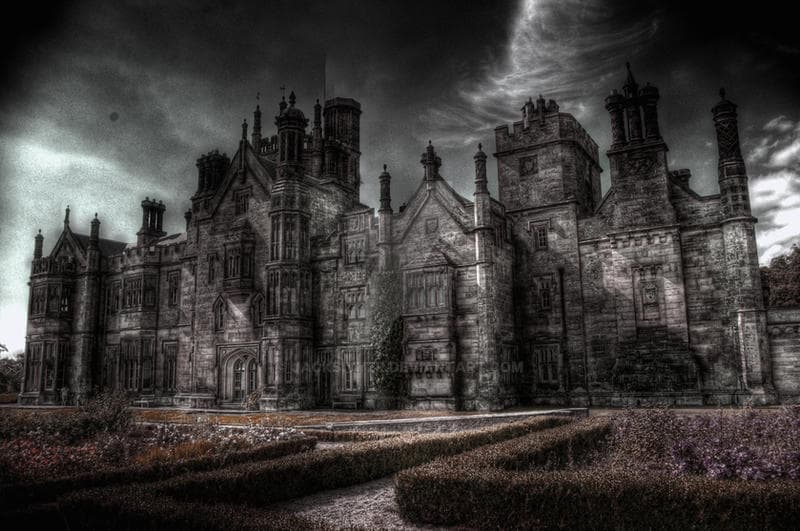
Gothic Architecture two by JackSivyer on DeviantArt View original
Is this image relevant?
File:William Blake 003.jpg - Wikimedia Commons View original
Is this image relevant?
File:Cole Thomas Romantic Landscape with Ruined Tower 1832-36.jpg - Wikimedia Commons View original
Is this image relevant?
Gothic Architecture two by JackSivyer on DeviantArt View original
Is this image relevant?
Features of Dark Romanticism
Darker aspects of human nature. Dark Romantic writers zero in on sin, evil, and the hidden depths of the mind. Characters wrestle with guilt, madness, and psychological torment. In Poe's "The Tell-Tale Heart," for example, the narrator's obsession and paranoia drive him to murder and then to confess, undone by the sound of a heartbeat that may exist only in his mind.
Gothic elements. These stories rely on atmosphere. Think crumbling castles, decaying mansions, shadowy rooms, and supernatural events like ghostly apparitions. The settings aren't just backdrop; they actively build dread and suspense.
Symbolism and allegory. Dark Romantics use symbols to carry deeper meanings. Hawthorne's black veil in "The Minister's Black Veil" isn't just a piece of fabric; it represents secret sin and the barriers people put between themselves and others. Many of these works function as full allegories, using their plots to explore moral and philosophical questions.
Rejection of Transcendentalist optimism. This is the defining split. Transcendentalists believed humans could achieve perfection through intuition and connection with nature. Dark Romantics were skeptical. They saw human fallibility and moral corruption as inescapable realities, not problems you could meditate your way out of.
Isolation and alienation. Characters in these works are often outcasts. Hester Prynne in The Scarlet Letter is publicly shamed and forced to the margins of her Puritan community. These characters struggle internally while also clashing with the rigid expectations of society around them.

Poe and Hawthorne as Dark Romantics
Edgar Allan Poe is the writer most people associate with this tradition. He mastered both the short story and poetry, exploring death, madness, and the macabre across works like "The Raven," "The Fall of the House of Usher," and "The Cask of Amontillado." Poe frequently used unreliable narrators, characters whose mental instability makes you question everything they tell you. He also pioneered detective fiction with "The Murders in the Rue Morgue," making him one of the most versatile writers of the period.
Nathaniel Hawthorne took a different approach, grounding his work in the history and culture of Puritan New England. His major concern was how sin and guilt ripple outward, affecting not just individuals but entire communities across generations. The Scarlet Letter is his most famous exploration of this theme, tracing how one act of adultery warps the lives of everyone connected to it. Hawthorne relied heavily on allegory and symbolism to layer moral complexity into his narratives.

Psychological and Comparative Elements
Psychology in Gothic Literature
Gothic literature is deeply interested in what happens inside people's heads. Characters grapple with inner demons, repressed desires, and fractured identities. Writers use dreams, hallucinations, and altered mental states to pull readers into a character's distorted perception of reality.
Supernatural elements serve a psychological purpose in these works. Ghosts, monsters, and otherworldly beings (like Frankenstein's creature in Mary Shelley's novel) blur the line between what's real and what's imagined. Often, the supernatural functions as an externalization of a character's internal fears or guilt.
The uncanny is a concept worth knowing. It describes the effect of making something familiar feel suddenly strange and unsettling. A childhood home that now feels threatening, a face that looks almost but not quite right. Gothic writers use the uncanny to create deep unease without relying on outright horror.
Gothic settings mirror psychology. A decaying mansion doesn't just look creepy; it reflects the mental deterioration of the character living in it. Claustrophobic rooms and winding corridors intensify the sense of being trapped, both physically and mentally. Poe's "The Fall of the House of Usher" is a textbook example: the crumbling house and Roderick Usher's crumbling mind are essentially the same thing.
Dark Romanticism vs. the Broader Romantic Movement
These two movements share roots but diverge in significant ways.
Similarities:
- Both emphasize emotion and individualism over cold rationality
- Both reject Enlightenment-era faith in pure reason
- Both recognize nature as a powerful, awe-inspiring force
Key Differences:
| Dark Romanticism | Broader Romanticism | |
|---|---|---|
| View of human nature | Pessimistic; humans are flawed and fallible | Optimistic; humans can achieve perfectibility |
| Treatment of nature | Nature is sinister, indifferent, or destructive | Nature is beautiful, healing, and spiritually uplifting |
| Use of the supernatural | Explores psychological depths, fear, and guilt | Evokes wonder, mystery, or spiritual enlightenment |
| Literary style | Gothic elements, suspense, psychological complexity | Lyrical, idealistic portrayals of emotion and landscape |
The simplest way to remember the distinction: Romantic writers looked at the world and saw potential. Dark Romantic writers looked at the same world and saw what could go wrong.
See Fiveable more often in Google
Mark Fiveable as a preferred source and Google is more likely to show you our guides in Top Stories, with a "preferred" badge in AI Mode and AI Overviews.