12.4 Contemporary Novel Forms and Experimentation

🧁English 12 Unit 12 Review
12.4 Contemporary Novel Forms and Experimentation
🧁 English 12
Contemporary Novel Forms
Contemporary novels don't always look or read like traditional fiction. Authors experiment with structure, language, and even visual elements to tell stories in ways that match the complexity of the worlds they're depicting. This unit covers the major forms these experiments take and how to evaluate whether they actually work.

Top images from around the web for Range of contemporary novel forms
Category:Epistolary novels - Wikimedia Commons View original
Is this image relevant?
The Graphic Classroom: TEACHING GRAPHIC NOVELS: PRACTICAL STRATEGIES FOR THE SECONDARY ELA CLASSROOM View original
Is this image relevant?
YA Book Queen: Top Ten Favorite YA Contemporary Novels View original
Is this image relevant?
Category:Epistolary novels - Wikimedia Commons View original
Is this image relevant?
The Graphic Classroom: TEACHING GRAPHIC NOVELS: PRACTICAL STRATEGIES FOR THE SECONDARY ELA CLASSROOM View original
Is this image relevant?
Range of Contemporary Novel Forms
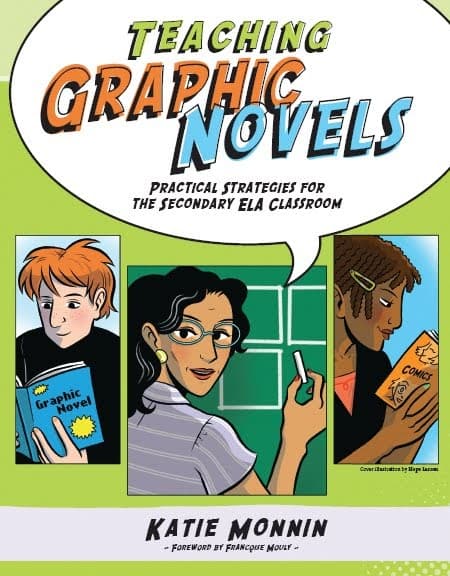
Graphic novels combine visual art with text in a sequential panel format. The images aren't just illustrations; they carry meaning on their own through visual metaphors, symbolism, and the way panels are arranged on a page. Art Spiegelman's Maus uses animal figures to represent different nationalities during the Holocaust, while Marjane Satrapi's Persepolis depicts growing up during the Iranian Revolution through stark black-and-white drawings. In both cases, the visual style is inseparable from the story's meaning.
Epistolary novels tell their stories entirely through documents: letters, emails, diary entries, text messages, or other written artifacts. This form gives you direct access to characters' voices without a traditional narrator filtering things. Alice Walker's The Color Purple unfolds through letters written by its protagonist, Celie, and the shift in her voice over time mirrors her personal growth. Stephen Chbosky's The Perks of Being a Wallflower uses a similar letter-based structure to create intimacy with the reader.
Hypertext fiction is built for digital reading. Instead of moving page by page, readers click links to navigate between sections, choosing their own path through the narrative. Michael Joyce's afternoon, a story (1987) is one of the earliest examples. There's no single "correct" reading order, which means the story changes depending on the choices you make. This form raises interesting questions about authorship and control over narrative.

Experimentation in Language and Form
Not all experimentation involves new media. Many contemporary novels push boundaries through how they handle language and structure on the printed page.
- Fragmented narratives break away from chronological order, sometimes using multiple narrators or timelines that the reader has to piece together. David Mitchell's Cloud Atlas nests six different stories within each other across centuries, while Italo Calvino's If on a winter's night a traveler keeps interrupting its own plot to start new ones.
- Stream of consciousness attempts to replicate the flow of a character's thoughts, complete with abrupt shifts, associations, and lack of conventional punctuation or sentence structure. Virginia Woolf's Mrs. Dalloway moves fluidly between characters' inner lives, and James Joyce's Ulysses takes the technique to its extreme in the final chapter's unpunctuated monologue.
- Genre-blending mixes conventions from different literary genres into a single work. Michael Chabon's The Yiddish Policemen's Union is both a detective novel and an alternate history. Mark Z. Danielewski's House of Leaves combines horror, academic satire, and romance while also experimenting with page layout itself.
- Experimental language can mean inventing entirely new vocabulary or warping syntax beyond normal usage. Anthony Burgess created "Nadsat," a slang dialect mixing English and Russian, for A Clockwork Orange. Joyce's Finnegans Wake goes further, building sentences from multilingual puns and portmanteau words that resist straightforward reading.

Influences and Evaluation
Influences on Contemporary Novels
Several broader cultural forces shape how contemporary novelists experiment with form.
Digital storytelling reflects how technology has changed the way people consume narratives. Some novels incorporate digital formats directly: Eli Horowitz and Matthew Derby's The Silent History was originally released as a serialized app with location-based bonus content. Jennifer Egan's "Black Box" was first published as a series of tweets. These works treat the medium as part of the message.
Globalization has expanded whose stories get told and how. Novels increasingly explore transnational identities and the experience of living between cultures. Junot Díaz's The Brief Wondrous Life of Oscar Wao weaves Dominican history with American pop culture, and Chimamanda Ngozi Adichie's Americanah examines race and belonging across Nigeria, England, and the United States.
Multilingual narratives use code-switching and untranslated phrases to reflect characters' actual linguistic realities. Arundhati Roy's The God of Small Things incorporates Malayalam words and syntax patterns into its English prose. When authors leave words untranslated, it's a deliberate choice that can put certain readers in the position of outsider, mirroring the characters' own experiences of cultural displacement.
Representation of diverse cultures has become a major force in contemporary fiction. "Own voices" literature, where authors write from their own cultural experience, has gained prominence. Khaled Hosseini's The Kite Runner draws on his Afghan background, and Min Jin Lee's Pachinko traces four generations of a Korean family in Japan. These novels don't just depict different cultures; they often challenge dominant narratives about those cultures.
Evaluating Experimental Novel Forms
When you're asked to assess whether an experimental technique "works," consider these four criteria:
- Reader engagement: Does the experimentation draw you deeper into the story, or does it create a barrier? Strong experimental fiction balances innovation with enough accessibility that readers stay invested.
- Thematic resonance: Does the form match the content? The fragmented structure of Cloud Atlas, for instance, reinforces its themes about how stories and actions echo across time. If the form feels arbitrary rather than purposeful, that's a weakness.
- Literary innovation: Does the work contribute something genuinely new to the novel as a form? Consider whether it influenced other writers or opened up possibilities that didn't exist before.
- Artistic cohesion: Do all the experimental elements hold together as a unified work? A novel might use inventive techniques in individual sections but still need to function as a whole narrative.
See Fiveable more often in Google
Mark Fiveable as a preferred source and Google is more likely to show you our guides in Top Stories, with a "preferred" badge in AI Mode and AI Overviews.