17.1 Research Methods and Source Evaluation

🧁English 12 Unit 17 Review
17.1 Research Methods and Source Evaluation
🧁 English 12
Types of Sources and Source Evaluation
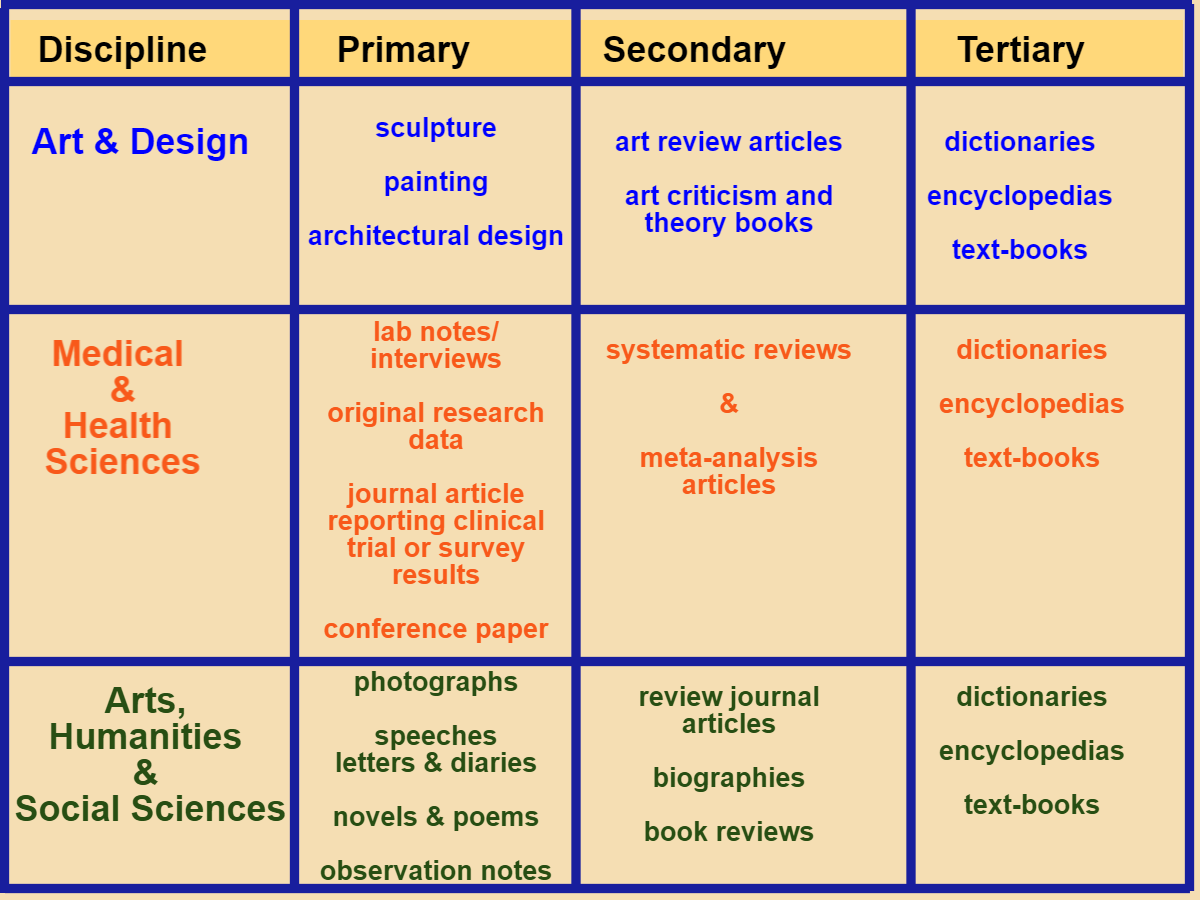
Research sources fall into three categories: primary, secondary, and tertiary. Each serves a different purpose in the research process, and knowing the difference helps you choose the right source for the right job.
Types of Research Sources
Primary sources provide original, first-hand accounts or raw data gathered directly from subjects or events. These include interviews, diaries, original research papers, and photographs. If someone witnessed it, created it, or collected the data themselves, it's primary.
Secondary sources interpret or analyze primary sources, offering critical commentary and context. Textbooks, biographies, and review articles all fall here. Think of a historian writing about World War II letters (the letters are primary; the historian's book is secondary).
Tertiary sources compile information from primary and secondary sources into broad overviews. Encyclopedias, bibliographies, and fact books are typical examples. These are useful starting points for understanding a topic, but you'll rarely want to cite them as your main evidence in a research paper.
Evaluation of Source Quality
Not all sources are created equal. You can assess quality through three lenses:
- Credibility looks at the author's credentials and expertise, the publication date (is the information current?), and the publisher's reputation. A peer-reviewed journal article by a university researcher carries more weight than an unsigned blog post.
- Reliability examines whether the source went through peer review, whether its methodology and data collection are sound, and whether its findings are consistent with other reputable sources.
- Relevance considers how well the source aligns with your specific research question, the depth and breadth of its coverage, and whether it's written for an appropriate audience. A children's encyclopedia entry on climate change probably won't cut it for a senior research paper.

Research Strategies and Methods
Strategies for Source Location
Finding good sources takes more than typing a question into a search bar. Here are four approaches that work well together:
-
Keyword identification and refinement. Start with your core terms, then use synonyms and related phrases. Combine them with Boolean operators: AND narrows results (e.g., "climate change" AND "agriculture"), OR broadens them ("global warming" OR "climate change"), and NOT excludes irrelevant hits ("mercury" NOT "planet").
-
Database-specific search techniques. Academic databases like JSTOR or EBSCOhost use subject headings and controlled vocabulary that differ from everyday language. Use advanced search filters to limit results by date range, publication type, or peer-review status.
-
Citation chaining. Once you find one strong source, mine it in two directions. Backward chaining means checking that source's bibliography for earlier works. Forward chaining means finding newer works that cite your source (Google Scholar's "Cited by" feature makes this easy). This is one of the fastest ways to build a solid source list.
-
Open access repositories and academic search engines. Tools like Google Scholar, JSTOR, and arXiv provide free or low-cost access to scholarly articles and preprints. Your school library's database access is also worth using since it unlocks paywalled content.
Strengths vs. Limitations of Research Methods
Different research methods suit different questions. Each comes with trade-offs:
| Method | Strengths | Limitations |
|---|---|---|
| Surveys | Large sample sizes; quantifiable data | Risk of response bias; limited depth |
| Interviews | In-depth information; flexible questioning | Time-consuming; potential interviewer bias |
| Case studies | Detailed, real-world analysis of specific instances | Limited generalizability; potential selection bias |
| Experimental research | Controls variables; can establish cause-and-effect | May create artificial settings; ethical considerations |
| Observational studies | Captures natural behavior; longitudinal potential | Observer effect can skew results; difficult to replicate |
The best research projects often combine multiple methods. A survey might reveal broad trends, while follow-up interviews add depth and nuance to those findings. When choosing your method, consider what kind of evidence your research question actually demands.
See Fiveable more often in Google
Mark Fiveable as a preferred source and Google is more likely to show you our guides in Top Stories, with a "preferred" badge in AI Mode and AI Overviews.