2.1 Old English and Middle English Literature

🧁English 12 Unit 2 Review
2.1 Old English and Middle English Literature
🧁 English 12
Old English Literature
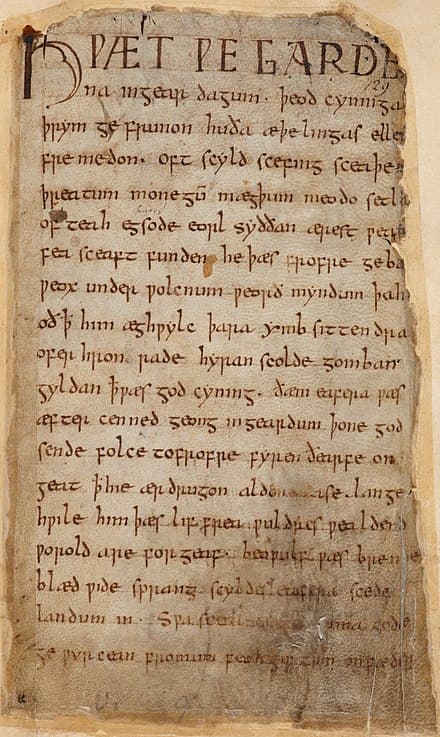
Old English literature grew out of an oral tradition where stories were performed aloud, not read silently. The techniques poets used reflect that origin: every device was designed to be heard. Middle English literature, arriving after the Norman Conquest, brought new vocabulary, new verse forms, and new themes that mirrored a changing English society.

Top images from around the web for Characteristics of Old English literature
Alliterative verse experiment: religious poem 1 by studentofrhythm on DeviantArt View original
Is this image relevant?
Alliterative verse - Wikipedia View original
Is this image relevant?
Old English literature - Wikipedia View original
Is this image relevant?
Alliterative verse experiment: religious poem 1 by studentofrhythm on DeviantArt View original
Is this image relevant?
Alliterative verse - Wikipedia View original
Is this image relevant?
Characteristics of Old English Literature
Old English poetry was composed for performance. Poets (called scops) memorized and recited long works, so the verse needed built-in patterns that aided memory and held an audience's attention.
- Alliterative verse repeated consonant sounds at the beginnings of stressed syllables within a line. This wasn't decoration; it was the organizing principle of the poetry, the way rhyme organizes a sonnet.
- Caesura is a strong pause in the middle of a poetic line, splitting it into two halves. Each half typically contains two stressed syllables. You can almost feel the poet pausing for breath or dramatic effect.
- Kennings are compound metaphorical phrases that stand in for a simpler word. "Whale-road" means sea; "bone-house" means body; "battle-light" means sword. They add vivid imagery and were a hallmark of the Anglo-Saxon poetic style.
The most famous Old English work, Beowulf, showcases all three of these techniques. Its themes center on heroism, loyalty to one's lord, fate (wyrd), and the tension between pagan warrior values and Christian morality.

Features of Middle English Literature
After the Norman Conquest in 1066, English absorbed a massive wave of French and Latin vocabulary. Grammar simplified too: Old English had complex inflectional endings (like Latin), but Middle English dropped most of them, relying more on word order instead.
These changes in the language came alongside changes in literary style:
- Rhyming verse gradually replaced alliterative verse. End rhyme became the dominant sound pattern, though some poets (like the anonymous author of Sir Gawain and the Green Knight) blended both traditions.
- New genres appeared, including the romance (tales of chivalric adventure and courtly love) and the lyric (shorter poems expressing personal emotion).
- Frame narratives structured multiple stories inside an overarching story. Chaucer's Canterbury Tales is the classic example: a group of pilgrims each tell a tale during their journey, letting Chaucer represent voices from across medieval society.
Middle English literature also became more socially varied. Where Old English works focused on kings and warriors, Middle English writers depicted merchants, clergy, tradespeople, and peasants.

Old English vs. Middle English Works
| Old English | Middle English | |
|---|---|---|
| Language | Heavily Germanic; complex inflections | French and Latin vocabulary mixed in; simplified grammar |
| Verse form | Alliterative verse with caesura | Primarily rhyming verse; some alliterative survival |
| Central themes | Warrior heroism, loyalty, fate, elegiac loss | Courtly love, chivalry, religious devotion, social satire |
| Tone | Often somber and fatalistic | More varied; ranges from devout to comic |
| Shared elements | Both use poetic forms, include didactic (teaching) purposes, and value honor and moral conduct | The shift from warrior culture to courtly ideals is one of the biggest thematic changes. Old English heroes like Beowulf prove themselves through physical combat and loyalty to a lord. Middle English heroes like Sir Gawain are tested through courtesy, self-control, and devotion to a code of chivalric behavior. ### Contexts of Medieval English Literature Understanding the historical backdrop makes these literary shifts click. - Old English period (c. 450–1066): Anglo-Saxon tribes settled in Britain, bringing Germanic languages and a warrior culture organized around tribal loyalty. The gradual Christianization of England (starting around 597 CE) introduced Latin literacy and blended Christian themes into existing storytelling traditions. - The Norman Conquest (1066): William the Conqueror's victory at the Battle of Hastings transformed English society. French became the language of the court and nobility, Latin dominated the Church and law, and English persisted mainly among common people. The feudal system reshaped social hierarchies. - Middle English period (c. 1150–1500): Over time, English reasserted itself as a literary language, now enriched with French and Latin borrowings. Literacy expanded beyond monasteries. A growing middle class began to appear in literature both as audience and subject, and writers like Chaucer used that broader social world to craft satire and social commentary. These cultural layers, Germanic, Christian, French, and Italian (Chaucer was deeply influenced by Boccaccio and Petrarch), all blended together to produce the rich and varied body of medieval English literature. |
See Fiveable more often in Google
Mark Fiveable as a preferred source and Google is more likely to show you our guides in Top Stories, with a "preferred" badge in AI Mode and AI Overviews.