5.1 Contextualizing 18th-Century States

🇪🇺AP European History Unit 5 Review
5.1 Contextualizing 18th-Century States
🇪🇺 AP European History
This topic sets up the big picture for the years from 1648 to 1815, when European states moved through crisis, conflict, and dramatic change. In AP European History, the key idea is that different models of political sovereignty, growing commercial rivalries, and the spread of Enlightenment reason all collided, setting the stage for the French Revolution, Napoleon, and a nationalist reaction.
Why This Matters for the AP European History Exam
This topic is the "set the scene" section for Unit 5, which carries 10 to 15 percent of the exam and covers roughly 1648 to 1815. You will not usually be tested on contextualization by itself, but the framework here shows up everywhere later. On free-response questions, you often need a sentence or two of context to open an essay, and the ideas in this topic give you exactly that. Knowing how sovereignty, commercial competition, and the tension between reason and emotion fit together helps you build causation, comparison, and continuity-and-change arguments across the rest of the unit.
Use this topic to connect threads. When you reach the French Revolution, Napoleon, the Congress of Vienna, and Romanticism, you should be able to point back to the conditions described here as the reasons those developments unfolded.
Key Takeaways
- From about 1648 to 1815, European states experienced repeated crisis and conflict driven by political, economic, and cultural change.
- Different models of political sovereignty shaped how states related to each other and to individuals, and the French Revolution challenged Europe's existing political and social order.
- Napoleon claimed to defend revolutionary ideals while imposing French control over much of Europe, which eventually provoked a nationalist reaction.
- The expansion of European commerce fed a growing worldwide economic network, and commercial rivalries influenced diplomacy and warfare among states.
- Enlightenment ideas spread reason into politics, society, and ethics, but that emphasis on reason was challenged by a revival of emotion and feeling.
- Revolution, war, and rebellion revealed the emotional power of mass politics and nationalism.
From Sovereignty to Crisis: The Big Picture
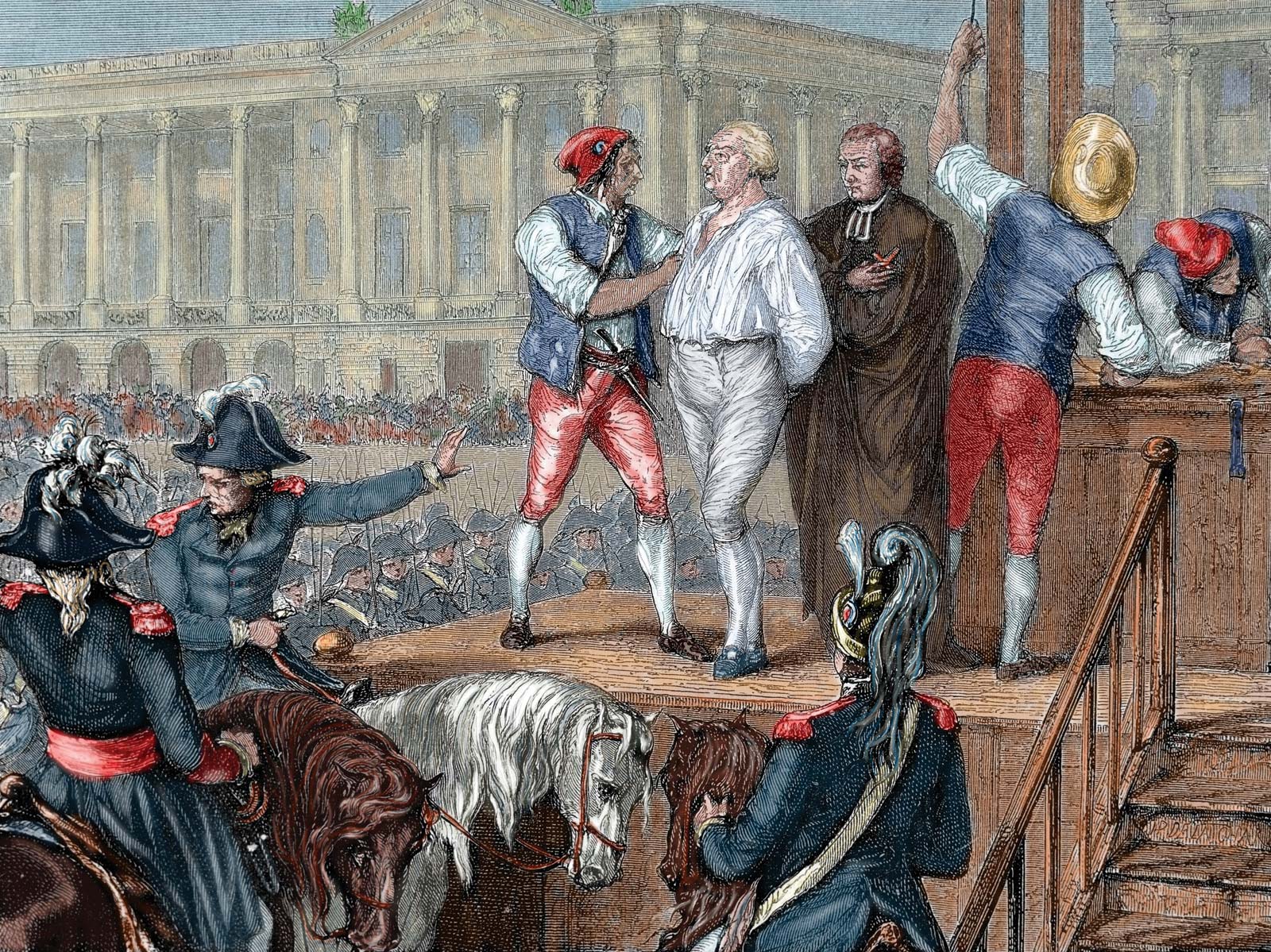
Between 1648 and 1815, the question of who holds power and where it comes from drove much of European history. Different models of political sovereignty shaped both the relationships among states and the relationship between a state and its people. Some states leaned toward absolutism, where rulers claimed strong centralized authority. Others, like Britain after its constitutional developments, limited the monarch and gave more power to representative bodies.
The Peace of Westphalia (1648) is a useful starting marker for this period because it reinforced the idea of state sovereignty in European diplomacy. Over the following century, these competing ideas about power did not stay stable. Enlightenment thinking pushed people to question the divine right of kings and to imagine sovereignty resting with the people, which built pressure that eventually exploded in revolution.
Commercial Rivalries Drove Diplomacy and War
The growth of European commerce did not just make some states rich. It pulled states into competition that shaped their foreign policy and their wars. As trade networks expanded into a worldwide economic system, rivalries over markets, routes, and colonies became central to how states dealt with one another.
- Sea powers competed for influence in the Atlantic and beyond throughout the 18th century.
- Commercial competition between states like Britain and France fed directly into diplomacy and warfare.
- These rivalries are a major reason the conflicts of this period were fought in Europe and overseas at the same time.
The Seven Years' War (1756 to 1763) is an example of how commercial and colonial competition could turn into large-scale conflict. Treat it as an illustration of the pattern, not as required content for this specific contextualization topic.
Reason Versus Emotion: The Cultural Backdrop
Enlightenment values had a strong influence over European ideas and culture during this period. Thinkers applied reason to political, social, and ethical questions, pushing for progress, natural rights, and rational reform. That emphasis on reason is one of the defining features of the intellectual world heading into Unit 5.
But reason did not go unchallenged. A revival of public expression of emotion and feeling pushed back against the idea that logic alone could explain human life. This tension between reason and emotion is the seed of Romanticism, which you study later in the unit. For now, the key point is that European culture was not moving in one single direction.
This cultural shift also had political weight. Revolution, war, and rebellion in this era showed the emotional power of mass politics and nationalism. People could be moved to act not only by rational arguments but by shared feeling, identity, and loyalty to a nation.
How the Pieces Connect
The three threads in this topic, sovereignty, commerce, and the reason-versus-emotion tension, do not sit in separate boxes. They feed each other.
- Commercial rivalries strained state finances and pushed governments into costly wars, which created the fiscal pressure that later helped trigger the French Revolution.
- Enlightenment ideas about reason and rights gave revolutionaries language to challenge old forms of sovereignty.
- The emotional power of mass politics and nationalism turned revolutionary energy into a force that Napoleon both used and unleashed, and that eventually turned against him.
Holding these connections in mind is the whole point of a contextualization topic. It is the map you use to make sense of everything that follows in Unit 5.
How to Use This on the AP European History Exam
Free Response
Use this material to write strong context statements. A good opening to a Unit 5 essay can briefly describe the competing models of sovereignty, the commercial rivalries among states, or the tension between Enlightenment reason and rising emotion before you move into your thesis. Keep it short and relevant to the prompt instead of dumping everything you know.
Causation
When a question asks why the French Revolution happened or why Napoleon rose and fell, reach back to this topic. Connect commercial rivalry and war debt, Enlightenment challenges to sovereignty, and the emotional pull of mass politics and nationalism. Showing how these forces combined is exactly the kind of causation reasoning AP rewards.
Continuity and Change
This period is full of both. Sovereignty debates and commercial rivalries continued from earlier units, while the French Revolution and the nationalist reaction marked sharp change. Practice naming what stayed the same and what broke from the past so you can handle continuity-and-change prompts across the unit.
Common Trap
Do not turn contextualization into a list of disconnected facts. Graders want to see how the background actually relates to the specific development you are explaining. Always link your context back to the prompt.
Common Misconceptions
- Misconception: Contextualization is the same as a full narrative.Actually: Contextualization is not the same as a full narrative. You do not need to retell the entire French Revolution here; you need the conditions that explain why it and the other Unit 5 developments occurred.
- Misconception: The Peace of Westphalia ended all conflict and created modern nations.Actually: The Peace of Westphalia did not end all conflict or create modern nations. It is a useful starting point for state sovereignty, not a clean break that fixed Europe's politics.
- Misconception: The Enlightenment won total control over European culture.Actually: The Enlightenment did not win total control over European culture. Reason was influential, but it was actively challenged by a revival of emotion and feeling, which is why Romanticism emerged.
- Misconception: Napoleon spread the French Revolution out of pure idealism.Actually: Napoleon did not simply spread the French Revolution out of pure idealism. He claimed to defend its ideals while imposing French control over much of Europe, and that control is what provoked nationalist resistance.
- Misconception: Nationalism in this period was always about unifying existing countries.Actually: Nationalism in this period was not always about unifying existing countries. Much of it grew as an emotional reaction to French expansion and as a sense of shared language, history, and identity.
Related AP European History Guides
Practice Questions for 5.1
1 of 10
During the eighteenth century, European states increasingly engaged in conflicts that spanned multiple continents, such as the Seven Years' War. Which of the following best explains the underlying process driving this shift in European warfare?
A.
States utilized religious alliances to monopolize overseas trade, transforming regional disputes into global military conflicts.
B.
States utilized mercantilist policies to monopolize overseas trade, transforming regional disputes into global military conflicts.
C.
States utilized Enlightenment diplomacy to deregulate overseas trade, transforming regional disputes into global military conflicts.
D.
States utilized mercantilist policies to monopolize overseas trade, successfully preventing major military conflicts on the continent.
Vocabulary
The following words are mentioned explicitly in the AP® course framework for this topic.Term | Definition |
|---|---|
commercial rivalries | Competition among European states for trade, resources, and economic dominance that influenced diplomatic and military conflicts. |
Enlightenment thought | Intellectual movement focused on empiricism, skepticism, human reason, and rationalism that challenged prevailing patterns of thought regarding social order, institutions of government, and the role of faith. |
French Revolution | A period of radical social and political upheaval in France (1789-1799) that fundamentally transformed French society and had lasting effects across Europe. |
mass politics | Political movements and activities involving large numbers of ordinary people rather than just elites, often driven by emotional appeals and nationalist sentiment. |
Napoleon Bonaparte | French military leader who seized power during the French Revolution and imposed French control over much of continental Europe before his eventual defeat. |
nationalism | A political ideology emphasizing loyalty to one's nation and national interests, which emerged as a reaction to Napoleonic expansion. |
political sovereignty | The supreme power and authority of a state to govern itself and make independent decisions without external interference. |
Scientific Revolution | A period of European intellectual and cultural change characterized by new scientific methods based on observation, experimentation, and mathematics that challenged classical views of the cosmos, nature, and the human body. |
Frequently Asked Questions
What is AP Euro 5.1 about?
AP Euro 5.1 gives the context for European crisis and conflict from 1648 to 1815. Focus on sovereignty, commercial rivalry, Enlightenment ideas, the French Revolution, Napoleon, and nationalism as the setup for Unit 5.
Why does 1648 matter for AP Euro Unit 5?
The year 1648 points back to the Peace of Westphalia and changing ideas about political sovereignty. By Unit 5, those models of sovereignty shaped how states related to each other and to individuals.
How does mercantilism fit into AP Euro 5.1?
Mercantilism fits the topic because European commerce expanded into a worldwide economic network, and commercial rivalries influenced diplomacy and warfare among states. Use it as economic context, not as the only focus of the topic.
How did Enlightenment ideas shape this period?
Enlightenment thinkers applied reason to politics, society, and ethics. Those ideas helped challenge older political and social orders, even as emotion, feeling, mass politics, and nationalism also became powerful forces.
How should I use Topic 5.1 on AP Euro free-response questions?
Use Topic 5.1 to write contextualization for DBQs and LEQs. A strong setup can connect absolutism or constitutionalism, commercial rivalry, Enlightenment thought, and revolutionary change to the specific prompt.
Do I need to memorize every 18th-century state for AP Euro 5.1?
No. This topic is mainly about context. Know the broad patterns: state sovereignty, economic rivalry, Enlightenment ideas, the French Revolution, Napoleon, and nationalism. Use specific states only when they help support an argument.
See Fiveable more often in Google
Mark Fiveable as a preferred source and Google is more likely to show you our guides in Top Stories, with a "preferred" badge in AI Mode and AI Overviews.