9.6 Ethiopian literature

🪕World Literature I Unit 9 Review
9.6 Ethiopian literature
🪕 World Literature I
Ethiopian literature spans thousands of years, making it one of the oldest continuous literary traditions in Africa. Its roots in ancient Ge'ez texts, oral traditions, and religious writing from both Orthodox Christianity and Islam give it a unique place in world literature. This section covers the major forms, key works, and themes that define Ethiopian literary culture.
Origins of Ethiopian literature
Ethiopia's literary tradition reaches back to ancient civilizations in the Horn of Africa, long before most European literary traditions took shape. The country's diverse linguistic landscape and cultural heritage produced both oral and written forms that laid groundwork for African literature more broadly.

Top images from around the web for Ancient Ge'ez texts
Letteratura ge'ez - Wikipedia View original
Is this image relevant?
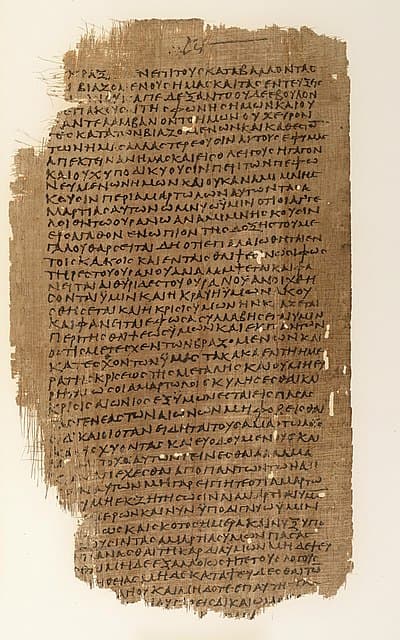
Book of Enoch - Wikipedia View original
Is this image relevant?
BibliOdyssey: Ethiopian Manuscripts View original
Is this image relevant?
Letteratura ge'ez - Wikipedia View original
Is this image relevant?
Book of Enoch - Wikipedia View original
Is this image relevant?
Ancient Ge'ez texts
Ge'ez emerged as the primary literary language of ancient Ethiopia around the 4th century CE. It functioned much like Latin did in medieval Europe: a language of religion, law, and scholarship rather than everyday speech.
- Includes religious manuscripts, royal chronicles, and legal documents
- Preserved in monasteries and churches, providing insights into early Ethiopian culture and beliefs
- Notable works include the Psalter of Mary and the Book of Enoch (1 Enoch), which survives in its complete form only in Ge'ez, even though it was originally composed in a Semitic language centuries earlier
Oral traditions
Oral literature predates written texts in Ethiopia and formed the basis for many later written works. These traditions encompass folktales, proverbs, and epic poems passed down through generations.
- Often feature recurring themes of heroism, morality, and cultural values
- Shaped by Ethiopia's diverse ethnic groups, including the Oromo, Amhara, and Tigray, each contributing distinct storytelling conventions
- Many written works later drew directly on these oral sources, blending spoken tradition with literary craft
Religious influences
Religious texts and themes sit at the center of Ethiopian literature. Ethiopia's position as one of the earliest centers of Christianity in Africa, combined with a significant Islamic presence, created a literary culture where sacred and secular writing constantly intertwined.
Ethiopian Orthodox Christianity
Christianity was introduced in the 4th century CE and became the state religion, making it the dominant literary influence for over a millennium.
- Produced numerous religious texts, including translations of the Bible into Ge'ez
- Developed a distinct tradition of religious poetry and hymns called Deggwa, used in liturgical worship
- Monastic scribes played a crucial role in preserving and copying manuscripts, functioning as Ethiopia's primary literary infrastructure before the printing press
Islamic literary contributions
Islam arrived in Ethiopia in the 7th century, influencing literature particularly in the eastern and southern regions.
- Produced texts in Arabic and Ajami (African languages written in Arabic script)
- Includes works on Islamic jurisprudence, Sufi poetry, and historical chronicles
- A notable example is the Futuh al-Habasha (The Conquest of Abyssinia), a 16th-century chronicle of the wars between the Adal Sultanate and the Ethiopian Empire
Major literary forms
Qene poetry
Qene is a highly sophisticated form of poetry composed in Ge'ez and Amharic. Its defining feature is the technique called "Wax and Gold" (sem-enna-werq): the "wax" is the surface meaning of the poem, while the "gold" is the hidden, deeper meaning underneath.
- Often used in religious contexts and for social commentary
- Relies on double entendre and complex wordplay
- Requires extensive knowledge of Ethiopian history, culture, and language to fully appreciate, which is why Qene composition was traditionally taught in church schools over many years of study
Historical chronicles
These texts record the reigns of Ethiopian emperors and major events, blending historical fact with legendary elements and religious symbolism.
- Provide valuable insights into Ethiopian politics, society, and culture across centuries
- Notable examples include the Kebra Nagast (discussed below) and the chronicles of Emperor Zara Yaqob (15th century), which detail both political reforms and religious campaigns
Hagiographies
Known in Ge'ez as Gadl, these are biographies of saints and religious figures. They serve as both devotional texts and historical documents.
- Often include accounts of miraculous events and moral lessons
- Important for understanding the development of Ethiopian Orthodox Christianity
- Functioned as popular literature, read aloud in churches and monasteries
Key literary works
Kebra Nagast
The Kebra Nagast ("The Glory of Kings") is a 14th-century national epic that traces the lineage of Ethiopian emperors back to King Solomon and the Queen of Sheba. According to the text, their son Menelik I brought the Ark of the Covenant to Ethiopia.
- Combines elements of history, legend, and religious symbolism
- Crucial for understanding Ethiopian national identity and royal ideology
- Later became an important text for the Rastafari movement as well

Fetha Nagast
The Fetha Nagast ("The Law of the Kings") is a legal code compiled in the 13th century. It combines elements of Roman-Byzantine law with Ethiopian customary law.
- Served as the basis for Ethiopia's legal system until the 20th century, when Emperor Haile Selassie introduced a modern constitution
- Reflects the influence of both Christian and Islamic legal traditions
Gadla Sama'etat
The Gadla Sama'etat ("Acts of the Martyrs") is a collection of hagiographies of Ethiopian saints, written in Ge'ez and later translated into Amharic.
- Includes accounts of both early Christian martyrs and Ethiopian religious figures
- An important source for understanding how Ethiopian Orthodox Christianity developed its distinct character
Prominent Ethiopian authors
Tsegaye Gabre-Medhin
A renowned poet, playwright, and essayist active in the mid-20th century, Tsegaye wrote in both Amharic and English, bridging traditional and modern literary styles.
- Notable works include the play Tewodros and the poetry collection Collision of Altars
- Served as Poet Laureate of Ethiopia
- Advocated for the preservation of Ethiopian culture while engaging with global literary traditions
Haddis Alemayehu
A pioneering novelist and diplomat of the 20th century, Haddis is best known for Fiqir Iske Meqabir (Love to the Grave), widely considered a masterpiece of Amharic fiction.
- Addressed themes of social inequality, tradition vs. modernity, and political corruption
- Helped establish the modern Amharic novel as a recognized literary form
Mengistu Lemma
An influential playwright and poet of the mid-20th century, Mengistu pioneered the use of colloquial Amharic in literature rather than the more formal literary register.
- Known for satirical plays addressing social and political issues
- Notable works include Yalaccha Gabicha (Marriage of Unequals), which critiques class divisions in Ethiopian society
Themes in Ethiopian literature
National identity
Ethiopian literature frequently explores what it means to be Ethiopian in a diverse, multi-ethnic nation. This theme carries special weight because Ethiopia was never colonized by a European power (Italy's brief occupation from 1936-1941 is generally distinguished from formal colonization). Writers often draw on historical and mythological elements to construct national narratives, while also grappling with tensions between unity and ethnic diversity.
Cultural heritage
Many works emphasize preserving Ethiopia's rich cultural traditions by retelling or reinterpreting traditional stories and legends. A recurring concern is how to maintain cultural identity in the face of modernization, and how language, religion, and customs shape Ethiopian identity across generations.
Social critique
Ethiopian writers have used satire and allegory to examine poverty, inequality, and political corruption. Works in this vein frequently explore tensions between traditional values and modern social changes, including gender roles, access to education, and rural-urban divides. Haddis Alemayehu's and Mengistu Lemma's works are strong examples of this tradition.
Language and script

Amharic vs. Ge'ez
Ge'ez served as the primary literary language until the 19th century, much as Latin persisted in European scholarly writing long after it ceased to be a spoken language. Amharic gradually replaced Ge'ez as the dominant literary language during the 19th and 20th centuries, though Amharic literature still frequently incorporates Ge'ez phrases and concepts. Today, Ethiopian literature also includes works in Oromo, Tigrinya, and other languages.
Fidel writing system
Ethiopia uses a unique alphasyllabary script called Fidel (also known as Ethiopic). Unlike alphabets where consonants and vowels are separate letters, each Fidel character represents a consonant-vowel combination.
- Consists of 26 base characters, each with seven forms representing different vowel sounds (yielding over 180 characters total)
- Used for writing Ge'ez, Amharic, Tigrinya, and other Ethiopian languages
- Has been adapted for modern technology, including computer keyboards and Unicode support
Modern Ethiopian literature
Post-revolution writings
The 1974 Ethiopian Revolution overthrew Emperor Haile Selassie and installed a Marxist military government (the Derg). Literature produced in this period and its aftermath often addresses political repression, social upheaval, and ideological conflict.
- Includes works written both within Ethiopia and by exiled authors
- Notable authors include Sebhat Gebre-Egziabher and Nega Mezlekia, whose memoir Notes from the Hyena's Belly recounts growing up during the revolution
Diaspora literature
Ethiopian authors living abroad have created a growing body of work, often writing in English or other international languages. These works explore exile, cultural identity, and the immigrant experience while providing a bridge between Ethiopian and international literary traditions.
- Notable authors include Dinaw Mengestu (The Beautiful Things That Heaven Bears) and Maaza Mengiste (The Shadow King, shortlisted for the Booker Prize in 2020)
Literary movements
Ethiopianism
Ethiopianism is a literary and cultural movement emphasizing Ethiopia's unique heritage and independence. It often draws on the Kebra Nagast and other traditional texts, celebrating Ethiopia's successful resistance to European colonialism. The movement influenced not only Ethiopian writers but also Black intellectuals across the diaspora who looked to Ethiopia as a symbol of African sovereignty.
Pan-Africanism in literature
Ethiopian literature has engaged with Pan-African themes of continental unity and solidarity, shaped by Ethiopia's symbolic importance in Pan-African movements. As the seat of the African Union (headquartered in Addis Ababa), Ethiopia holds a special place in African political and cultural imagination. Writers like Tsegaye Gabre-Medhin explored African identity and cultural exchange across national boundaries.
Global impact
Ethiopian literature in translation
A growing body of Ethiopian works has been translated into major world languages, allowing wider access to Ethiopian literary traditions. Translation poses real challenges, particularly with forms like Qene poetry, where the "Wax and Gold" double meanings are deeply embedded in the Ge'ez or Amharic language and resist direct translation.
International recognition
Ethiopian authors have increasingly received prestigious literary awards and fellowships. Ethiopian literature now appears in world literature curricula and anthologies, and scholarly interest in Ethiopian literary traditions continues to grow. This recognition helps challenge Western-centric literary canons and highlights the depth and diversity of African literary production.
See Fiveable more often in Google
Mark Fiveable as a preferred source and Google is more likely to show you our guides in Top Stories, with a "preferred" badge in AI Mode and AI Overviews.