1.2 Greek mythology

🪕World Literature I Unit 1 Review
1.2 Greek mythology
🪕 World Literature I
Greek mythology forms the bedrock of Western literature. These ancient stories gave us archetypes, narrative structures, and themes that writers have drawn on for nearly three thousand years. They also offer a window into how the ancient Greeks understood the world, from natural phenomena to human psychology. For World Literature I, a working knowledge of these myths is essential because later authors constantly allude to them.
The Olympian pantheon, heroes like Achilles and Odysseus, and creatures like the Minotaur aren't just entertaining characters. They embody tensions between fate and free will, pride and punishment, mortality and divinity. Those tensions drive the literature you'll study throughout this course.
Origins of Greek mythology
Greek myths didn't appear fully formed. They evolved over centuries, absorbing influences from older traditions and neighboring cultures before being written down in the texts we read today.

Top images from around the web for Pre-Olympian deities
change warrior: gifts of Gaia View original
Is this image relevant?
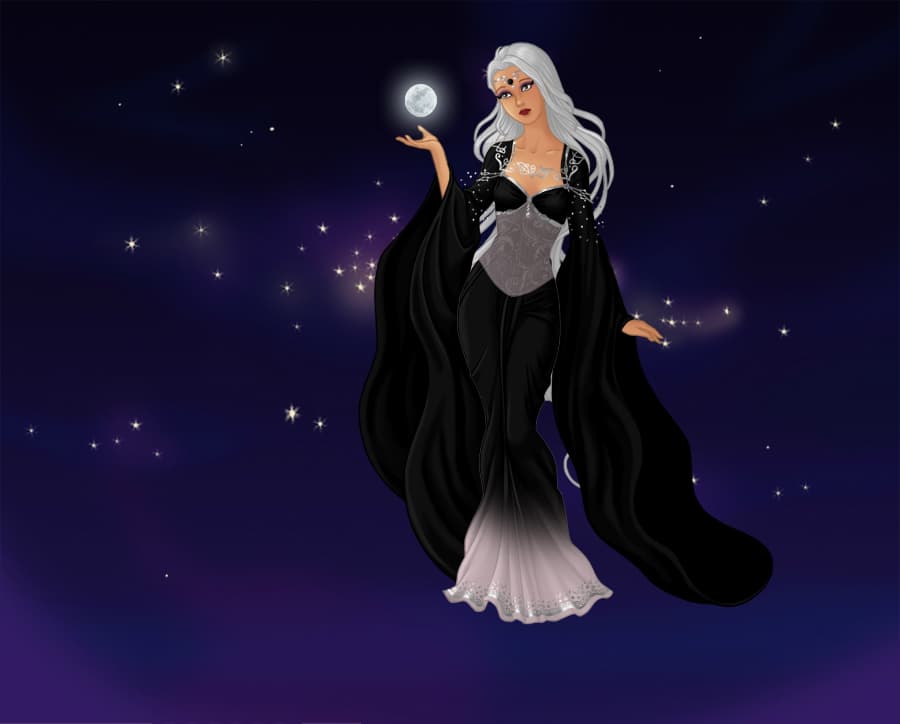
Nyx - the goddess of the night, a primordial deity by redwarrior2426 on DeviantArt View original
Is this image relevant?
Ancient Greek deities by Cirandel on DeviantArt View original
Is this image relevant?
change warrior: gifts of Gaia View original
Is this image relevant?
Nyx - the goddess of the night, a primordial deity by redwarrior2426 on DeviantArt View original
Is this image relevant?
Pre-Olympian deities
Before the Olympians, Greek cosmology featured primordial gods who represented fundamental aspects of the universe rather than human-like personalities. Chaos (the initial void), Nyx (Night), and Erebus (Darkness) were less characters than abstract forces.
- Gaia (Earth) and Uranus (Sky) are the most important primordial figures for the mythology that follows. Their children, the Titans, set the stage for the cosmic power struggles that eventually produced the Olympian gods.
- These early deities often lacked anthropomorphic (human-shaped) qualities, which makes them quite different from the very human Olympians who replaced them.
Influence of Near Eastern myths
Greek mythology didn't develop in isolation. Trade and cultural contact across the ancient Mediterranean brought Greek storytellers into contact with Mesopotamian, Egyptian, and Phoenician traditions.
- The Greek flood myth of Deucalion closely parallels the flood narrative in the Mesopotamian Epic of Gilgamesh (and the earlier Sumerian flood story of Utnapishtim within it).
- Aphrodite's origins show strong similarities to the Phoenician goddess Astarte and the Mesopotamian Ishtar.
- These parallels traveled through Mediterranean trade routes and colonial contact, not the Silk Road (which connected China to the West much later and much farther east).
Oral tradition and early texts
For centuries, myths were passed down orally. Bards performed and adapted these stories for their audiences, which means the myths shifted and evolved with each retelling.
- Homer's Iliad and Odyssey (composed around the 8th century BCE) are the earliest major Greek literary texts to survive. They mark the transition from oral to written mythological tradition.
- Hesiod's Theogony (around 700 BCE) systematized the genealogy of the gods, laying out the creation of the cosmos and the succession of divine rulers in a single narrative.
- Even after these texts were written down, oral performance remained the primary way most Greeks encountered their myths.
Major Olympian gods
The twelve Olympians (the number varies slightly depending on the source) lived atop Mount Olympus and governed different aspects of nature and human life. What makes them distinctive as mythological figures is how human they are: jealous, petty, generous, lustful, and wise by turns.
Zeus and divine hierarchy
Zeus, king of the gods, rose to power by overthrowing his father Cronus (more on that in the creation myths section below). He ruled from Mount Olympus and wielded thunderbolts as symbols of his authority.
- Zeus maintained cosmic order through a web of alliances, rivalries, and negotiations among the other gods.
- He frequently intervened in mortal affairs, and many myths revolve around the consequences of his actions, particularly his many romantic pursuits.
- His authority was supreme but not absolute. Other gods regularly challenged, tricked, or defied him.
Roles and domains of gods
Each Olympian governed specific domains. Knowing these helps you recognize their roles when they appear in the literature:
- Poseidon: seas, earthquakes, and horses
- Athena: wisdom, strategic warfare, and crafts
- Apollo: prophecy, music, medicine, and the sun (in later tradition)
- Artemis: the hunt, wilderness, and the moon
- Demeter: agriculture, fertility, and the seasonal cycle
- Ares: war (its brutal, chaotic side, in contrast to Athena's strategic approach)
- Aphrodite: love and beauty
- Hephaestus: forge, fire, and craftsmanship
- Hermes: messengers, travelers, and thieves
- Dionysus: wine, ecstasy, and theater
Relationships among deities
The gods' complex family ties and rivalries drive many mythological plots.
- Hera, Zeus's wife and queen of the gods, frequently sought revenge against his mortal lovers and their offspring. Her jealousy is a recurring engine of conflict in many myths.
- Siblings Artemis and Apollo often acted in concert, sometimes collaborating in punishments of mortals who offended them.
- Rivalries shaped the mortal world too. Athena and Poseidon competed for patronage of Athens; Athena won by offering the olive tree, and the city took her name.
Greek heroes and demigods
Heroes and demigods occupy the space between mortals and gods. Many are children of a god and a human, giving them extraordinary abilities but not immortality. Their stories form the basis for most Greek epic poetry and tragedy.
Common heroic archetypes
Greek heroes tend to fall into recognizable types, and recognizing these archetypes will help you analyze characters across World Literature I:
- The warrior hero: Achilles is the prime example, defined by unmatched martial prowess but also by rage and a short temper that creates as many problems as his strength solves.
- The clever hero: Odysseus relies on wit and cunning rather than brute force. His intelligence is both his greatest asset and, at times, a source of arrogance.
- The tragic hero: Oedipus possesses noble qualities but is undone by a fatal flaw (in his case, the relentless pursuit of truth). Tragic heroes suffer downfalls that feel both inevitable and undeserved.
- The culture hero: Prometheus stole fire from the gods and gave it to humanity, advancing civilization at enormous personal cost.
Notable heroic quests
Many Greek myths follow a quest structure where the hero must complete a dangerous mission:
- Jason and the Argonauts sailed to retrieve the Golden Fleece, facing trials that tested the entire crew.
- Theseus traveled to Crete to enter the Labyrinth and slay the Minotaur, saving Athenian youth from sacrifice.
- Perseus was sent to behead Medusa, succeeding with the help of divine gifts (winged sandals, a reflective shield, a cap of invisibility).
- Orpheus descended into the underworld to rescue his dead wife Eurydice, only to lose her by looking back at the last moment.
Heracles vs other heroes
Heracles (Romanized as Hercules) stands apart from other Greek heroes in several ways:
- His father was Zeus, giving him superhuman strength beyond any other hero.
- He completed the Twelve Labors as penance for killing his own family in a fit of madness sent by Hera. These labors ranged from slaying the Nemean Lion to capturing Cerberus from the underworld.
- Unlike most heroes, Heracles achieved apotheosis, meaning he became a god after death. Most Greek heroes, no matter how great, remained mortal.
- Other heroes tended to specialize: Achilles in combat, Odysseus in cunning. Heracles was defined by sheer endurance and versatility.
Mythical creatures and monsters
Creatures and monsters serve as obstacles heroes must overcome, but they also carry symbolic weight. They often represent primal fears, natural dangers, or moral lessons.
Creatures of land and sea
- Centaurs (half-human, half-horse) ranged from the wise teacher Chiron, who mentored Achilles, to wild, violent creatures who embodied untamed nature.
- Satyrs and nymphs were nature spirits associated with specific gods (satyrs with Dionysus, various nymphs with forests, rivers, or the sea).
- Scylla and Charybdis, a six-headed monster and a deadly whirlpool, flanked a narrow strait. Odysseus had to navigate between them, giving us the phrase "between a rock and a hard place."
- Pegasus, the winged horse, sprang from Medusa's blood when Perseus beheaded her.

Monsters in heroic tales
Monsters typically exist to be defeated, and the method of defeat often matters as much as the victory itself:
- The Minotaur, trapped in the Labyrinth of Crete, demanded regular human sacrifices until Theseus slew it.
- The Hydra, a multi-headed serpent, regrew two heads for every one cut off. Heracles had to cauterize each neck stump with fire to stop the regrowth.
- The Chimera, a fire-breathing hybrid (lion's head, goat's body, serpent's tail), was defeated by Bellerophon riding Pegasus.
- Medusa, a Gorgon whose gaze turned onlookers to stone, was beheaded by Perseus using a reflective shield to avoid looking at her directly.
Symbolic meanings of creatures
- The Sphinx posed riddles to travelers outside Thebes and killed those who answered wrong. She represents the danger of unsolved mysteries and the power of intellect (Oedipus defeated her by answering correctly).
- Cerberus, the three-headed dog guarding the underworld, symbolized the boundary between life and death, a threshold that could not be crossed lightly.
- The Sirens sang irresistibly beautiful songs that lured sailors to their deaths, embodying the danger of temptation.
- The Phoenix (more prominent in Egyptian and later Roman tradition than in classical Greek sources) signified death and rebirth through its cycle of burning and renewal.
Creation myths and cosmogony
Greek creation myths explain how the universe came into being and how the current divine order was established. These narratives set up the power dynamics and conflicts that drive later mythology.
Primordial beings and Titans
- Chaos, the initial void, gave rise to the first primordial entities: Gaia (Earth), Tartarus (the deep underworld), and Eros (desire/creative force).
- The Titans, children of Gaia and Uranus, ruled the cosmos in the generation before the Olympians. Key Titans include Cronus (who ruled after overthrowing Uranus), Rhea (his wife), Oceanus, and Prometheus.
- Atlas was later punished by Zeus to hold up the sky, a vivid image of the Titans' defeat and subjugation.
Birth of the cosmos
The Greek creation sequence unfolds in stages:
- Chaos exists first as a formless void.
- Gaia (Earth) emerges and forms the physical foundation of the world.
- Gaia produces Uranus (Sky), who becomes her mate and the father of the Titans.
- Pontus (Sea) arises to fill the world's basins.
- Celestial bodies are often personified as deities: Helios (Sun), Selene (Moon), Eos (Dawn).
This sequence moves from formlessness to structure, from abstract forces to recognizable, personified beings.
Succession myths
A pattern of violent generational overthrow runs through Greek cosmogony:
- Uranus imprisoned his monstrous children (the Cyclopes and Hecatoncheires) inside Gaia, causing her pain. She persuaded her son Cronus to castrate and overthrow him.
- Cronus, now ruling, feared a prophecy that his own child would overthrow him. He swallowed each of his children at birth.
- Rhea hid the youngest child, Zeus, and gave Cronus a stone wrapped in swaddling clothes instead.
- Zeus grew up in secret, returned, and forced Cronus to disgorge his siblings. Together they waged the Titanomachy (war against the Titans) and won.
- Zeus established the Olympian order, dividing the cosmos: he took the sky, Poseidon the sea, and Hades the underworld.
This succession pattern (son overthrowing father) is a recurring motif with parallels in Near Eastern mythology.
Trojan War cycle
The Trojan War cycle is the single most important mythological narrative for Greek literature. Homer's Iliad and Odyssey both draw from it, and countless later works reference its events and characters.
Causes and key figures
The war's origins involve both divine and human causes:
- At the wedding of Peleus and Thetis, the goddess Eris (Discord) threw a golden apple inscribed "for the fairest" among the goddesses. Paris of Troy was chosen to judge between Hera, Athena, and Aphrodite. He chose Aphrodite, who promised him the most beautiful woman in the world.
- That woman was Helen, wife of Menelaus, king of Sparta. Paris took Helen to Troy (whether by abduction or mutual choice depends on the source).
- Agamemnon, Menelaus's brother and king of Mycenae, assembled a massive Greek coalition to retrieve Helen.
- Achilles, the greatest Greek warrior, and Hector, Troy's foremost defender, are the central figures of the Iliad.
Major events and battles
- The Greeks besieged Troy for ten years without breaking through its walls.
- In the Iliad's central conflict, Achilles withdraws from battle after Agamemnon takes his war prize, Briseis. Without Achilles, the Greeks suffer heavy losses.
- The death of Patroclus (Achilles' closest companion, killed by Hector) drives Achilles back into battle. He kills Hector and drags his body behind his chariot.
- The war ends when Odysseus devises the Trojan Horse: Greek soldiers hide inside a giant wooden horse, the Trojans bring it inside their walls, and the Greeks emerge at night to sack the city.
Aftermath and nostos stories
Nostos means "homecoming," and the Greeks' troubled returns from Troy generated their own cycle of stories:
- Odysseus's ten-year journey home is the subject of Homer's Odyssey, filled with encounters with monsters, gods, and temptations.
- Agamemnon returned home only to be murdered by his wife Clytemnestra and her lover Aegisthus, a story dramatized in Aeschylus's Oresteia.
- Aeneas, a Trojan survivor, escaped the burning city and eventually journeyed to Italy. His story, told in Virgil's Aeneid (a Roman epic, not Greek), connects Greek mythology to the founding legend of Rome.
Greek mythology in literature
Greek myths provided the raw material for the major literary genres of ancient Greece and continued to shape Western literature for millennia afterward.
Epic poetry of Homer
Homer's two epics are foundational texts for this course:
- The Iliad focuses on the wrath of Achilles during the final year of the Trojan War. It's not a complete account of the war but a focused exploration of rage, honor, and mortality.
- The Odyssey narrates Odysseus's ten-year journey home, exploring themes of cunning, loyalty, and identity.
- Both epics use conventions you should recognize: invocations to the Muse (calling on divine inspiration to begin the poem), formulaic epithets ("swift-footed Achilles," "rosy-fingered Dawn"), and in medias res structure (beginning in the middle of the action).
- These conventions aided oral performance. Epithets and repeated phrases gave the bard time to think and helped audiences follow the story.
Greek tragedies and mythology
The three great Athenian tragedians all drew their plots from mythology:
- Aeschylus wrote the Oresteia trilogy, tracing the curse on Agamemnon's house from the Trojan War through a cycle of revenge and, finally, justice.
- Sophocles is best known for the Oedipus cycle (Oedipus Rex, Oedipus at Colonus, Antigone), which explores fate, free will, and the consequences of seeking truth.
- Euripides often reinterpreted myths in provocative ways. His Medea examines gender, power, and revenge by giving full voice to a woman traditionally cast as a villain.
- Tragedies typically focused on the aftermath of well-known myths or explored lesser-known angles, assuming the audience already knew the basic story.

Later adaptations and retellings
- Ovid's Metamorphoses (1st century CE, written in Latin) retold Greek myths with a unifying theme of transformation. It became one of the most influential sources of mythological knowledge in the Western tradition.
- Renaissance and medieval writers (Dante, Chaucer, Shakespeare) frequently alluded to Greek myths.
- Modernist authors used myth as structural scaffolding: James Joyce's Ulysses maps a single day in Dublin onto the Odyssey; T.S. Eliot's The Waste Land weaves in mythological references throughout.
- Contemporary retellings like Madeline Miller's Circe and The Song of Achilles revisit classical myths from perspectives the originals marginalized.
Mythological themes and motifs
Several recurring themes run through Greek mythology. These same themes appear throughout World Literature I, so recognizing them here will pay off later.
Fate vs free will
The tension between destiny and choice is one of the deepest questions in Greek myth.
- The Moirai (Fates) were three goddesses who spun, measured, and cut the thread of each mortal's life. Even Zeus was sometimes said to be bound by their decisions.
- Prophecies in Greek myth almost always come true, often because of the very actions taken to prevent them. Oedipus's parents tried to avoid the prophecy that he would kill his father and marry his mother, but their actions set the prophecy in motion.
- Gods intervened constantly in mortal affairs, raising the question: if divine forces shape your life, how much agency do you really have?
Hubris and divine punishment
Hubris (excessive pride or arrogance, especially toward the gods) is one of the most dangerous traits a mortal can display in Greek myth. The gods punish it swiftly and creatively:
- Arachne boasted that her weaving surpassed Athena's. Athena transformed her into a spider, condemned to weave forever.
- Icarus ignored his father Daedalus's warning and flew too close to the sun on wings held together with wax. The wax melted, and he fell to his death.
- Sisyphus tried to cheat death itself. His punishment: rolling a boulder up a hill for eternity, only to watch it roll back down each time.
- Niobe boasted that her fourteen children made her superior to the goddess Leto, who had only two (Apollo and Artemis). Apollo and Artemis killed all of Niobe's children.
Love and transformation
Physical transformation is a signature motif of Greek myth, and it's frequently linked to love or desire:
- Daphne, pursued by Apollo, was transformed into a laurel tree to escape him. Apollo then made the laurel his sacred plant.
- Romantic encounters between gods and mortals often produced demigod offspring (Perseus, Heracles, Helen), blurring the boundary between divine and human.
- Transformations could be punishments (Arachne), protections (Daphne), or expressions of grief (Niobe, turned to weeping stone).
- Ovid's Metamorphoses made transformation the central organizing principle of mythology, treating physical change as a metaphor for the power of love, loss, and divine will.
Religious practices and cults
Greek mythology wasn't just storytelling. It was intertwined with actual religious practice. Understanding this context helps explain why these stories mattered so deeply and why they appear so frequently in literature connected to public life.
Temples and sacred sites
- Temples served as houses for cult statues of the gods, not as congregational spaces. Worship happened outside, at altars.
- The Parthenon in Athens was dedicated to Athena, the city's patron goddess.
- The Oracle at Delphi, sacred to Apollo, was the most famous prophetic site in the Greek world. City-states and individuals consulted it before major decisions.
- Mount Olympus, the highest peak in Greece, was considered the home of the gods, though no mortal could reach its divine summit.
Rituals and sacrifices
- Libations (pouring wine or other liquids onto the ground) were offered to the gods before meals, journeys, or important events.
- Animal sacrifice was the central act of Greek public religion. The meat was shared among worshippers, while the fat and bones were burned for the gods.
- Votive offerings (small statues, pottery, weapons) were left at temples to thank gods for favors or to request blessings.
- Major festivals like the Dionysia (honoring Dionysus, where tragedies and comedies were performed) and the Panathenaea (honoring Athena) combined religious ritual with athletic and artistic competitions.
Mystery cults and initiations
Alongside public religion, mystery cults offered initiates secret knowledge and the promise of a better afterlife:
- The Eleusinian Mysteries honored Demeter and Persephone. Initiates underwent secret rites that promised them a blessed existence after death. The details were so closely guarded that we still don't know exactly what happened during the ceremonies.
- Dionysian Mysteries involved ecstatic worship, ritual intoxication, and the experience of losing individual identity in collective frenzy.
- The Orphic tradition focused on purification of the soul and escape from the cycle of reincarnation, drawing on myths of Orpheus's journey to the underworld.
Legacy and influence
Greek mythology's reach extends far beyond the ancient world. Its stories, characters, and themes have been continuously adapted, reinterpreted, and referenced across cultures and centuries.
Roman adaptation of myths
- Romans adopted Greek gods but changed their names: Zeus became Jupiter, Athena became Minerva, Aphrodite became Venus, Ares became Mars, and so on.
- Virgil's Aeneid deliberately modeled itself on Homer's epics while creating a Roman national origin story.
- Ovid's Metamorphoses became the single most important transmission vehicle for Greek myths into the medieval and Renaissance Western world.
- Roman religion practiced syncretism, blending Greek, native Italian, and other cultural traditions into a composite mythology.
Impact on Western literature
Greek myths have been a continuous presence in Western literary tradition:
- Renaissance writers like Shakespeare filled their works with mythological allusions (A Midsummer Night's Dream, Troilus and Cressida).
- Romantic poets like Keats ("Ode on a Grecian Urn") and Shelley ("Prometheus Unbound") returned to mythological themes to explore beauty, suffering, and rebellion.
- Modernist authors used myth as a structural device: Joyce's Ulysses parallels the Odyssey; Eliot's The Waste Land draws on fertility myths and the Fisher King legend.
- Contemporary literature continues to retell and subvert classical myths, often centering voices the originals silenced.
Greek myths in modern media
- Film adaptations (Troy, O Brother, Where Art Thou?) bring mythological narratives to wide audiences, though often with significant changes.
- Video games like the God of War series and Hades let players interact directly with mythological characters and settings.
- Comic books, graphic novels, and young adult fiction (Rick Riordan's Percy Jackson series) introduce Greek myths to new generations.
- Science fiction and fantasy genres regularly borrow mythological structures, character types, and themes.
See Fiveable more often in Google
Mark Fiveable as a preferred source and Google is more likely to show you our guides in Top Stories, with a "preferred" badge in AI Mode and AI Overviews.