12.3 Good vs. evil

🪕World Literature I Unit 12 Review
12.3 Good vs. evil
🪕 World Literature I
The concept of good versus evil is one of the most persistent themes in world literature. Nearly every culture has produced stories that wrestle with what makes actions, people, or forces "good" or "evil," and those stories reveal a great deal about each society's values. This guide covers how that moral dichotomy appears across texts, characters, symbols, and narrative structures in World Literature I.
Concept of Good vs. Evil
At its core, the good-versus-evil theme reflects humanity's drive to categorize ethical behavior. Literary works don't just label things as right or wrong; they dramatize the struggle between those forces, forcing characters (and readers) to confront moral choices and their consequences.
Universal Moral Dichotomy
Many traditions present good and evil as cosmic opposites locked in ongoing conflict. Zoroastrian mythology, for example, frames the entire universe as a battleground between Ahura Mazda (good) and Angra Mainyu (evil). Norse mythology similarly pits the gods of Asgard against destructive giants, building toward the apocalyptic battle of Ragnarök.
These cosmic struggles do more than entertain. They establish archetypal patterns that recur across literature: the hero who fights darkness, the villain who threatens order, and the moral stakes that give a story its weight.
Cultural Variations in Morality
What counts as "good" or "evil" shifts depending on the culture producing the text. Greek ethics, rooted in thinkers like Aristotle, tend to emphasize individual virtue and personal excellence. Confucian ethics, by contrast, prioritize social harmony, filial duty, and collective well-being.
These differences show up directly in literature. A Greek hero like Achilles pursues personal glory, while characters in Chinese literary traditions often face dilemmas about loyalty to family or state. Recognizing these cultural frameworks helps you avoid reading every text through a single moral lens.
Literary Representations
Ancient Mythological Narratives
Ancient myths personify good and evil through gods, demons, and supernatural beings. In the Ramayana, the hero Rama battles the demon king Ravana, a conflict that represents dharma (cosmic order) against adharma (chaos). In the Iliad, the gods themselves take sides in the Trojan War, using mortals as instruments in larger moral and personal disputes.
These narratives establish archetypal heroism and villainy that later literature draws on constantly. They also use divine intervention as a way to show moral forces acting within human affairs.
Religious Texts and Parables
Religious texts like the Bible, the Quran, and the Bhagavad Gita codify moral teachings through stories and allegories. They tend to draw sharper lines between virtuous and sinful behavior than mythological narratives do. Parables (short moral stories) are a key device here: think of the Parable of the Good Samaritan, which teaches compassion through a simple, memorable scenario.
Reward-and-punishment structures reinforce these lessons. Characters who act righteously are blessed; those who sin face consequences. These patterns deeply influenced later literary traditions in both religious and secular writing.
Epic Poetry and Folklore
Epics like Beowulf and the Epic of Gilgamesh frame heroic quests as moral journeys. Beowulf's battles against Grendel, Grendel's mother, and the dragon aren't just physical contests; they represent the defense of civilization against destructive, chaotic forces.
Folklore, often preserved through oral tradition, similarly encodes cultural values. Themes of honor, loyalty, and betrayal recur across traditions, and supernatural elements (monsters, enchantments, magical helpers) serve as stand-ins for moral forces.
Archetypal Characters
Heroes and Villains
The simplest moral framework in literature gives you a clearly good hero and a clearly evil villain. Odysseus, despite his flaws, represents Greek ideals of cleverness and perseverance. Ravana in the Ramayana embodies arrogance and the violation of moral order.
Over time, though, these portrayals grew more complex. Even in ancient texts, heroes aren't always perfectly virtuous, and villains sometimes have understandable motivations. That evolution matters for how you read these characters.
Antiheroes and Moral Ambiguity
Some of the most compelling figures in world literature resist easy classification. Medea, who murders her own children to punish her unfaithful husband, is both a sympathetic victim and a terrifying avenger. Gilgamesh begins as a tyrant who oppresses his people before grief transforms him into a seeker of wisdom.
These characters explore ethical gray areas. They force you to ask whether "good" and "evil" are fixed categories or whether context and motivation matter.
Trickster Figures
Tricksters blur moral boundaries through cunning and deception. Loki in Norse mythology causes both chaos and, sometimes, accidental good. Anansi in West African and Caribbean folklore uses cleverness to overturn power structures, often outwitting stronger opponents.
Tricksters serve as catalysts for change. They challenge rigid social norms and remind audiences that moral categories aren't always stable.
Symbolism and Imagery
Light vs. Darkness
The association of light with goodness and darkness with evil is one of the most widespread symbolic patterns in literature. It appears in creation narratives (Genesis begins with God creating light out of darkness), in character descriptions (virtuous characters bathed in light, villains cloaked in shadow), and in setting (dark forests, bright heavens).
Light typically symbolizes knowledge, purity, and hope, while darkness represents ignorance, corruption, and fear.
Heaven vs. Hell
Afterlife destinations serve as ultimate moral scorecards. The Greek Elysium rewards the virtuous; Tartarus punishes the wicked. Hindu and Buddhist traditions describe Naraka as a realm of suffering for immoral souls. Dante's Divine Comedy maps out an elaborate Christian afterlife with precise moral categories.
These concepts also function as metaphors for earthly conditions. A character living in misery might be described as being "in hell," linking physical suffering to moral states.
Nature vs. Corruption
Many texts contrast the purity of the natural world with human-caused degradation. Pastoral imagery (gardens, unspoiled landscapes) often represents innocence or moral ideals, while cities, wastelands, or polluted spaces suggest moral decay.
The "fall from grace" narrative, found in traditions from Genesis to countless folk tales, connects this symbolism to the loss of original innocence through moral failure.

Philosophical Perspectives
Dualism in World Religions
Dualism is the belief that good and evil are fundamental, opposing forces in the universe. Zoroastrianism is the clearest example, but dualistic thinking also appears in Manichaeism and, in a different form, in Christianity's God-versus-Satan framework.
Taoism offers an interesting contrast. Rather than opposing forces in conflict, the yin-yang concept presents complementary forces that depend on each other. This philosophical difference shapes how literature from these traditions portrays moral struggle.
Ethical Frameworks and Morality
Three major ethical frameworks show up repeatedly in how literary characters make decisions:
- Consequentialism: Judges actions by their outcomes. A character who lies to save a life might be "good" under this framework.
- Deontology: Judges actions by whether they follow moral rules, regardless of outcome. Lying is wrong even if it saves a life.
- Virtue ethics: Focuses on the character of the person. A "good" person cultivates virtues like courage, temperance, and justice.
You don't need to label every character's philosophy, but recognizing these frameworks helps you analyze moral dilemmas in texts.
Existentialism and Moral Relativism
Later philosophical movements challenge the idea that good and evil are absolute categories. Existentialism argues that individuals must create their own moral meaning in an indifferent universe. Moral relativism holds that ethical judgments depend on cultural or personal context.
While these perspectives are more associated with modern and postmodern literature, seeds of them appear in earlier texts. Gilgamesh's crisis of meaning after Enkidu's death, for instance, has existentialist undertones.
Narrative Structures
Quest Narratives
The quest is one of the most common structures for exploring moral growth. A protagonist leaves home, faces trials that test their character, and returns transformed. The Odyssey follows this pattern as Odysseus struggles to return home, learning (sometimes painfully) about loyalty, humility, and perseverance. Journey to the West sends the monk Xuanzang on a pilgrimage where each obstacle represents a spiritual and ethical challenge.
The key insight: the physical journey mirrors an internal moral journey.
Morality Tales and Fables
Fables and morality tales deliver clear moral lessons through simple narratives. Aesop's Fables use animal characters to illustrate human virtues and vices (the tortoise's persistence beats the hare's arrogance). The Indian Panchatantra similarly uses animal stories to teach practical wisdom about ethics, politics, and human nature.
These texts serve a didactic purpose, meaning they're designed to teach. Their simplicity makes them accessible across ages and cultures.
Tragedy and Hubris
Tragedy explores what happens when characters violate moral or divine order, often through hubris (excessive pride). In Oedipus Rex, Oedipus's determination to uncover the truth, despite warnings, leads to his downfall. The audience experiences catharsis, a purging of emotions like pity and fear, that prompts reflection on moral limits.
The tragic structure reinforces a core idea: there are boundaries to human power, and crossing them has consequences.
Psychological Aspects
Inner Conflict and Duality
Some of the richest explorations of good and evil happen inside a single character. The struggle between virtuous impulses and destructive ones drives character development in texts from Arjuna's moral crisis in the Bhagavad Gita to the split personality of Stevenson's Dr. Jekyll and Mr. Hyde.
This internal duality reflects the idea that good and evil aren't just external forces but competing drives within every person.
Collective Unconscious Archetypes
Carl Jung proposed that certain symbols and character types are shared across all human cultures as part of a collective unconscious. Relevant archetypes include:
- The Shadow: The dark, repressed side of the self
- The Hero: The figure who confronts evil and restores order
- Anima/Animus: The unconscious feminine or masculine aspects of a person
Whether or not you accept Jung's theory, these archetypes are useful tools for identifying recurring patterns across world literature.
Moral Development Theories
Lawrence Kohlberg's theory of moral development describes stages of ethical reasoning, from obedience-based morality (following rules to avoid punishment) to principled morality (acting on universal ethical principles). Characters in literature often move through these stages as part of their growth arcs.
Gilgamesh, for example, begins ruling through raw power and gradually develops a more reflective, principled understanding of what it means to be a good king.
Cultural Influences
Eastern vs. Western Concepts
Western moral frameworks tend to emphasize individual choice and personal virtue (Aristotelian ethics, Christian free will). Eastern frameworks more often stress harmony, duty, and the individual's role within a larger social or cosmic order (Confucian ren, Buddhist compassion, Hindu dharma).
These differences produce different kinds of moral dilemmas in literature. A Western hero might struggle with personal conscience; an Eastern hero might struggle with conflicting duties to family, ruler, and cosmic law.
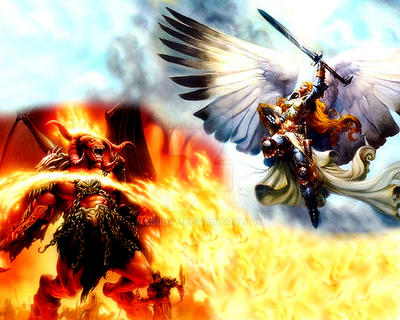
Indigenous Perspectives
Indigenous literary traditions often present morality as inseparable from the natural and spiritual worlds. Humans, animals, spirits, and the land are interconnected, and moral behavior means maintaining balance among them.
These perspectives challenge the human-centered moral frameworks common in Western literature and offer alternative ways of thinking about ethical responsibility.
Postcolonial Interpretations
Postcolonial criticism examines how colonialism imposed certain moral frameworks on colonized peoples and how literature responds to that imposition. Writers from formerly colonized nations often reinterpret classic texts, questioning whose version of "good" and "evil" gets told.
Chinua Achebe's critique of Joseph Conrad's Heart of Darkness, for instance, challenges the way that novel frames African people and European morality. This lens is increasingly important in how world literature is read and taught.
Literary Devices
Allegory and Metaphor
Allegory tells a story that operates on two levels: the literal narrative and a deeper moral or political meaning. Plato's Allegory of the Cave represents the journey from ignorance to enlightenment. Dante's Divine Comedy maps the entire Christian moral universe through an allegorical journey through Hell, Purgatory, and Paradise.
Metaphor works on a smaller scale, using concrete images to convey abstract moral ideas (a storm representing inner turmoil, a garden representing innocence).
Personification of Good and Evil
Giving human form to abstract moral forces makes them vivid and relatable. Medieval morality plays like Everyman feature characters literally named "Good Deeds," "Knowledge," and "Death." Religious texts personify evil as Satan, Mara, or Iblis.
Over time, these personifications became more nuanced. Rather than flat symbols, later literature creates complex characters who embody moral forces while still feeling psychologically real.
Irony and Subversion
Irony allows writers to challenge straightforward moral narratives. When a supposedly "good" character causes harm, or a "villain" acts with unexpected compassion, the reader is forced to reconsider their assumptions.
Dramatic irony (where the audience knows something the character doesn't) is especially powerful in moral contexts. In Oedipus Rex, the audience knows Oedipus is the source of the plague he's trying to cure, which deepens the tragedy's moral weight.
Historical Context
Medieval Morality Plays
Morality plays were allegorical dramas popular in medieval Europe that personified virtues and vices as characters. Everyman, the best-known example, follows a character who discovers that only his Good Deeds will accompany him to face God's judgment.
These plays served a didactic purpose for largely illiterate audiences, making abstract Christian moral teachings concrete and dramatic. They also influenced the development of later dramatic forms and character types.
Enlightenment Era Debates
The Enlightenment (roughly 17th-18th centuries) brought rationalist approaches to ethics. Thinkers like Locke, Rousseau, and Kant argued that morality could be grounded in reason rather than religious authority alone. Rousseau's idea that humans are naturally good but corrupted by society, for instance, challenged the Christian doctrine of original sin.
These debates influenced literature by creating characters who reason through moral problems rather than simply following divine commands.
Romanticism and Gothic Literature
Romanticism (late 18th-19th centuries) pushed back against Enlightenment rationalism, emphasizing emotion, intuition, and the darker aspects of human nature. Gothic literature in particular explored moral ambiguity through settings of decay and dread, psychologically complex characters, and plots that blur the line between good and evil.
Works like Mary Shelley's Frankenstein ask whether the "monster" or its creator is the true villain, reflecting Romantic interest in the moral consequences of unchecked ambition.
Contemporary Interpretations
Postmodern Moral Ambiguity
Postmodern literature resists the idea that good and evil are clear, stable categories. Characters in postmodern works often face situations where no choice is clearly "right," and narratives may refuse to deliver moral resolution.
This reflects broader philosophical trends like existentialism (you create your own meaning) and poststructuralism (meaning is always unstable and context-dependent).
Deconstruction of Binary Oppositions
Deconstruction, associated with philosopher Jacques Derrida, examines how binary oppositions (good/evil, light/dark, civilized/savage) depend on each other for meaning. "Good" only makes sense in relation to "evil," and the boundary between them is less stable than it appears.
In literary analysis, this approach reveals how texts sometimes undermine the very moral categories they seem to establish.
Ethical Dilemmas in Literature
Some of the most powerful moments in world literature present moral situations with no clean answer. Should Arjuna fight a war against his own family? Is Medea justified in her revenge? These dilemmas don't resolve neatly, and that's the point.
They invite you to engage actively with the text, weighing competing values and considering consequences rather than passively absorbing a moral lesson. This kind of critical engagement is central to studying world literature.
See Fiveable more often in Google
Mark Fiveable as a preferred source and Google is more likely to show you our guides in Top Stories, with a "preferred" badge in AI Mode and AI Overviews.