9.1 African oral epics

🪕World Literature I Unit 9 Review
9.1 African oral epics
🪕 World Literature I
African oral epics are long narrative traditions that preserve the histories, values, and identities of African societies. Predating written literature on the continent, these epics were performed by trained storytellers and passed down across generations, making them some of the oldest continuous literary traditions in the world.
Studying these epics in a world literature course matters because they challenge assumptions about what "literature" looks like. These aren't texts composed by a single author at a desk. They're living performances that shift with each telling, blending history, myth, music, and audience interaction into something no written tradition fully replicates.
Origins of African oral epics
African oral epics emerged long before written literature took hold on the continent, and they served as a primary means of recording history and reinforcing cultural identity. These narratives weave together real historical events, mythological elements, and the moral values of the societies that produced them. Rather than being simple entertainment, they functioned as a culture's collective memory in narrative form.

Top images from around the web for Cultural significance
Culture of Africa - Wikipedia View original
Is this image relevant?
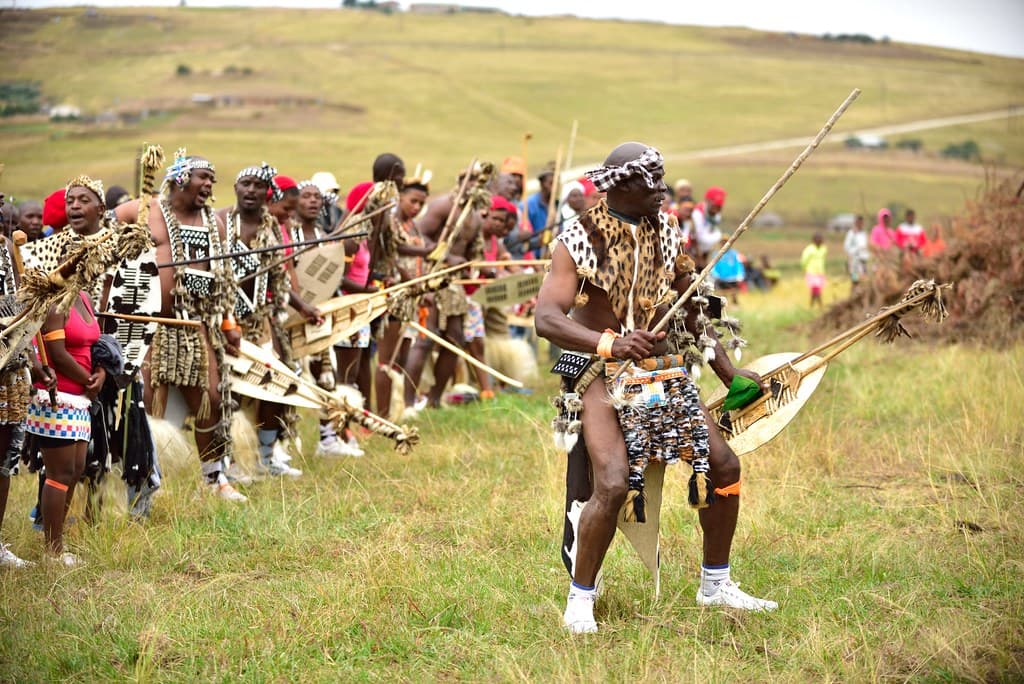
Zulu Culture, KwaZulu-Natal, South Africa | South African Tourism | Flickr View original
Is this image relevant?
Art of the Kingdom of Benin - Wikipedia View original
Is this image relevant?
Culture of Africa - Wikipedia View original
Is this image relevant?
Zulu Culture, KwaZulu-Natal, South Africa | South African Tourism | Flickr View original
Is this image relevant?
Cultural significance
Oral epics embody the shared values and collective memory of African communities. Through heroic tales and cautionary stories, they reinforce social norms and moral codes, teaching listeners what a society considers virtuous or dangerous.
They also serve as vehicles for intergenerational knowledge transfer. Before written records, these epics preserved ancestral wisdom, genealogies, and historical knowledge. Performing them at communal gatherings fostered cultural pride and a shared sense of identity among community members.
Historical context
Many of the best-known epics emerged during the era of pre-colonial African kingdoms and empires, particularly the Mali Empire (c. 1235–1600) and the Songhai Empire (c. 1430–1591). The narratives reflect the political structures, social hierarchies, and cultural practices of those periods.
These epics chronicle significant events like the founding of dynasties, migrations, and major conflicts. They weren't frozen in time, though. As societies changed, storytellers incorporated new elements while preserving the traditional core of each narrative.
Transmission methods
The primary carriers of these epics are griots (also called jeli in Mande languages), trained storytellers who dedicate their lives to mastering the tradition. Transmission follows a clear process:
- A young apprentice, often born into a griot family, begins learning from an elder griot in childhood.
- The apprentice memorizes vast repertoires using mnemonic devices like rhythm, repetition, and formulaic phrases.
- Performance elements are layered in: gestures, facial expressions, vocal modulation, and musical accompaniment.
- During live performance, the griot adapts to audience reactions, meaning each retelling contains subtle variations while the core narrative stays intact.
This flexibility is a feature, not a flaw. It keeps the epic alive and relevant to each new audience.
Key characteristics
African oral epics have distinctive features shaped by the fact that they're performed, not read. Understanding these characteristics helps you appreciate why these narratives work the way they do and how they differ from written epics you may have encountered elsewhere.
Narrative structure
The episodic format is one of the most recognizable features. Rather than following a single continuous plotline, the narrative unfolds in distinct episodes. This structure serves two practical purposes: it makes memorization easier for the performer, and it allows flexibility in how much of the epic gets performed in a single session.
Storytelling is often non-linear, incorporating flashbacks, prophecies, and parallel narratives. Frame stories may contextualize the main narrative, and digressions or sub-plots enrich the central story rather than distracting from it. Many epics also use a cyclical structure, where recurring themes and motifs circle back on themselves, reinforcing the epic's core messages.
Performance elements
Performance is not an add-on to the text; it is the text. Key techniques include:
- Call-and-response patterns that turn passive listeners into active participants
- Musical accompaniment on instruments like the kora (a 21-string harp-lute) or balafon (a wooden xylophone), which heighten emotional impact
- Dramatic pauses and vocal modulation to build suspense or emphasize key moments
- Ritualized gestures and movements that carry specific cultural meanings
- Adaptation of performance style depending on who's in the audience and the setting
Themes and motifs
Several themes recur across different African oral epic traditions:
- Heroic quests and coming-of-age journeys form the backbone of many narratives
- Conflicts between tradition and change, or between the individual and the community, drive dramatic tension
- Supernatural elements like magic, spirits, and divine intervention appear frequently and are treated as natural parts of the story world
- Ancestral wisdom and respect for elders are consistently upheld as core values
- Questions of power, justice, and moral responsibility run through nearly every major epic
Notable African oral epics
Looking at specific epics brings the general characteristics discussed above into focus. These three come from different regions and ethnic groups, showing the diversity of the tradition.
Sundiata epic
The Sundiata (also spelled Sunjata) is perhaps the most widely studied African oral epic. It recounts the life of Sundiata Keita, the historical founder of the Mali Empire in the 13th century.
The narrative blends verified historical events with mythological elements and cultural symbolism. Sundiata is born with a disability, endures exile, and ultimately returns to defeat the sorcerer-king Sumanguru at the Battle of Kirina (c. 1235). Themes of destiny, exile, and the responsibilities of leadership are central.
The epic incorporates praise songs and genealogies that establish the legitimacy of Sundiata's rule. D.T. Niane's 1960 transcription, based on the griot Mamadou Kouyaté's telling, is the version most commonly read in literature courses, though many regional variants exist.
Mwindo epic
This epic originates from the Nyanga people of the eastern Democratic Republic of Congo. Mwindo is a supernatural hero born with magical powers, including the ability to walk and talk from birth.
The narrative centers on a father-son conflict: Mwindo's father, Chief Shemwindo, tries to kill him because he fears being overthrown. Mwindo survives, embarks on a series of adventures through the underworld and sky, and ultimately learns that personal power must be tempered by community responsibility and humility.
The epic draws on trickster tale conventions and creation myths. Stylistically, it's notable for its heavy use of repetition and parallelism, which are hallmarks of Nyanga oral performance.
Ozidi saga
From the Ijo (Ijaw) people of the Niger Delta in Nigeria, the Ozidi Saga tells the story of a warrior who seeks revenge for his father's murder. The saga was notably documented by the playwright J.P. Clark-Bekederemo in the 1960s.
It explores themes of justice, supernatural power, and the consequences of violence. The narrative structure is complex, with multiple episodes and a large cast of characters. One of its most distinctive features is the prominent role of women as powerful figures, particularly Ozidi's grandmother Oreame, who uses her supernatural abilities to guide and protect him.
Role of griots
Griots are far more than storytellers. In many West African societies, they function as historians, diplomats, musicians, and custodians of cultural knowledge. Understanding their role is essential to understanding how oral epics actually work.
Social function
Griots act as living repositories of cultural knowledge and historical records. Their responsibilities include:
- Maintaining genealogies and praise traditions for prominent families, sometimes stretching back centuries
- Serving as mediators in disputes and advisors to political leaders
- Performing at major social events like weddings, naming ceremonies, and funerals
- Reinforcing shared values and social cohesion through their performances
In many traditional contexts, griots hold a distinct social caste position, set apart from other members of society precisely because of their specialized knowledge.
Training and education
Becoming a griot requires years of rigorous apprenticeship, typically beginning in childhood within a griot family. The training process involves:
- Memorizing vast repertoires of stories, songs, genealogies, and praise poems through constant repetition
- Learning to play traditional instruments (kora, balafon, ngoni)
- Developing vocal techniques and performance skills
- Studying the art of improvisation and learning to adapt narratives to different audiences and contexts
- Gaining deep knowledge of history, politics, and cultural traditions to inform and enrich performances

Preservation techniques
Griots use several cognitive and artistic strategies to manage the enormous amount of material they carry:
- Mnemonic devices like rhythm, alliteration, and assonance help anchor material in memory
- Formulaic phrases and stock epithets serve as building blocks that can be assembled flexibly during performance
- Mental maps of story structures and character relationships provide a framework the griot navigates in real time
- Musical accompaniment reinforces narrative rhythms and emotional content, giving the performer additional memory cues
- Stories are adapted to incorporate new events while the core narrative elements remain stable
Stylistic features
The literary devices found in African oral epics are shaped by the demands of oral performance. They need to be memorable for the performer, engaging for the audience, and flexible enough to work across different tellings.
Formulaic language
Formulaic language refers to stock phrases, epithets, and standardized expressions that recur throughout an epic. A hero might be introduced with the same praise name every time, or episodes might open and close with set phrases.
These formulas aren't signs of unoriginality. They serve as structural anchors for the performer, helping them navigate long narratives from memory. They also create a sense of familiarity and ritual for the audience. Praise names and honorific titles emphasize character traits, while formulaic transitions move the narrative smoothly between scenes.
Repetition and parallelism
Repetition is one of the most prominent features of oral epic style. Key phrases or lines are repeated to reinforce important concepts, and parallel sentence structures create rhythm and emphasis.
Incremental repetition is especially effective: a phrase is repeated with slight additions or changes each time, building intensity. For example, a hero's strength might be described in escalating terms across successive lines. Call-and-response patterns, where the griot delivers a line and the audience responds, also fall under this category.
Symbolism and imagery
Oral epics draw heavily on the natural world for symbolic meaning. Animals, plants, and weather phenomena carry culturally specific associations. The lion, for instance, frequently symbolizes royal power in West African epics, while the spider often represents cunning.
Cultural symbols like masks and totems appear alongside vivid sensory imagery that creates immersive experiences for listeners. Metaphors and similes are rooted in local contexts, meaning they may require cultural knowledge to fully interpret. Color symbolism also plays a role, conveying emotions, social status, or spiritual significance.
Influence on literature
African oral epics haven't stayed confined to oral performance. Their narrative techniques, themes, and structures have shaped written literature across Africa and beyond.
Written adaptations
The most direct form of influence is transcription. D.T. Niane's Sundiata: An Epic of Old Mali (1960) is the best-known example, presenting a griot's oral performance in written form. Daniel Biebuyck and Kahombo Mateene transcribed the Mwindo Epic in 1969, and J.P. Clark-Bekederemo documented the Ozidi Saga.
Beyond transcription, written novels have incorporated oral epic elements. Chinua Achebe's Things Fall Apart (1958), while not an epic retelling, draws on Igbo oral traditions in its use of proverbs, storytelling rhythms, and communal narrative voice. Bilingual publications have also preserved original languages alongside translations, maintaining linguistic nuances that single-language editions lose.
Modern retellings
Contemporary authors and artists continue to reimagine traditional material for new audiences:
- Wole Soyinka's Death and the King's Horseman (1975) draws on Yoruba ritual and narrative traditions for the stage
- Graphic novel adaptations bring visual dimensions to oral narratives
- Children's literature versions make complex epics accessible to younger readers
- Science fiction and fantasy writers draw on African epic traditions for world-building and character archetypes
- Digital storytelling projects use multimedia to recreate aspects of live oral performance
Impact on African literature
The influence on African written literature runs deep. Many African novelists use non-linear and episodic narrative structures that echo oral epic forms. Proverbs, riddles, and traditional sayings appear frequently in African fiction and poetry.
Oral traditions have also encouraged African writers to explore themes rooted in their own cultural contexts rather than following European literary models. The use of African languages and dialects in literature, promoted partly by the example of oral traditions, has helped preserve linguistic diversity. Writers like Ngũgĩ wa Thiong'o have explicitly connected their literary projects to the preservation of oral heritage.
Comparative analysis
Comparing African oral epics to other traditions highlights what makes them distinctive while also revealing storytelling patterns that cross cultural boundaries.
African vs. European epics
| Feature | African Oral Epics | European Epics |
|---|---|---|
| Hero type | Often communal; hero succeeds through community support | Often individual; hero succeeds through personal prowess |
| Supernatural elements | Seamlessly integrated into the narrative world | Often set apart or framed as divine intervention |
| Textual stability | Fluid; each performance is a unique version | Tend toward fixed, authoritative texts (especially after being written down) |
| Historical distance | Often feature relatively recent historical figures (e.g., Sundiata, 13th century) | Frequently set in a distant mythological past (e.g., Odysseus, Beowulf) |
| Performance emphasis | Central to the tradition; the epic is the performance | Performance elements largely lost once texts were written down |
Oral vs. written traditions
Oral traditions allow for greater flexibility and real-time adaptation to audience reactions, but they depend on the performer's memory and skill. Written traditions produce more stable texts but sacrifice the performance elements that give oral epics their distinctive energy.
Oral epics naturally exist in multiple versions, since each griot's telling differs. Written epics tend toward a single "definitive" text. Memory techniques like repetition and formulaic language are far more prominent in oral traditions because they're functionally necessary. Written traditions, freed from memory constraints, can develop more intricate narrative structures and detailed character interiority.
Neither form is superior. They represent different solutions to the challenge of preserving and transmitting stories across time.
Cultural preservation
Preserving African oral epics is a pressing concern because the conditions that sustained these traditions for centuries are changing rapidly.
Challenges in the modern era
- Urbanization and migration disrupt the communal settings where epics were traditionally performed
- Younger generations increasingly lack interest in or access to traditional storytelling apprenticeships
- Modern entertainment (television, internet, social media) competes for attention that once went to live performance
- Indigenous languages crucial to preserving the nuances of oral epics are declining, with UNESCO estimating that many African languages are endangered
- The performance dimension of these epics is extremely difficult to capture in written or recorded formats

UNESCO recognition
UNESCO has included several African oral traditions on its Intangible Cultural Heritage lists, providing international recognition and supporting preservation efforts. This recognition helps secure funding for documentation projects, raises global awareness of oral traditions' value, and encourages national governments to implement protective measures.
However, UNESCO listing alone doesn't solve the underlying challenges. Preservation ultimately depends on living communities continuing to practice and value these traditions.
Digital archiving efforts
Technology offers new tools for preservation, though each has limitations:
- Audio and video recordings capture performance aspects that written transcriptions miss
- Online databases and digital archives make materials accessible to researchers and communities worldwide
- Virtual reality projects attempt to recreate immersive storytelling experiences
- Collaborative projects between universities and local communities aim to ensure that documentation serves the communities themselves, not just outside scholars
- AI and machine learning tools are being developed for transcription and translation of recordings, though accuracy with tonal languages and regional dialects remains a challenge
Themes and values
The themes running through African oral epics aren't just literary motifs. They reflect the philosophical frameworks and ethical systems of the societies that produced them.
Heroism and leadership
African oral epics tend to emphasize collective heroism over individual achievement. The hero rarely succeeds alone; community support, ancestral guidance, and alliances are essential. This contrasts with many Western epic traditions where the hero's personal strength or cunning is paramount.
Leadership is explored as a set of responsibilities, not just a position of power. Effective rulers demonstrate wisdom, justice, and compassion. The tension between personal desires and societal obligations is a recurring source of dramatic conflict, and the consequences of abusing power are shown clearly.
Ancestral wisdom
Respect for ancestors is a foundational value in many African oral epics. Ancestors aren't simply figures of the past; they remain active presences who offer guidance and whose teachings carry binding authority.
Many epics operate with a concept of cyclical time that links past, present, and future generations. Elders serve as living bridges to ancestral knowledge, and characters who ignore or defy ancestral teachings typically face serious consequences. The spiritual connection between the living and the deceased is treated as real and consequential within the narrative world.
Community and identity
The relationship between individual identity and communal belonging is one of the richest themes in African oral epics. Characters must navigate the tension between personal ambition and collective well-being.
Exile and return is a common narrative pattern (Sundiata's story is a prime example), exploring what it means to be separated from one's community and what reintegration requires. Cultural practices and rituals are depicted as essential to reinforcing group identity, and the power of unity in overcoming challenges is consistently affirmed.
Performance aspects
You can't fully understand African oral epics by reading transcriptions alone. Performance is integral to the art form, not a decorative layer on top of a "real" text underneath.
Musical accompaniment
Music and narrative are deeply intertwined. The kora, talking drum, and balafon are among the most common instruments used. Specific musical themes or motifs are often associated with particular characters or events, functioning almost like a soundtrack.
Rhythmic patterns reinforce the narrative structure, and changes in tempo and intensity mirror emotional shifts in the story. The musician (who may be the griot or a separate performer) has room for improvisation, creating a dynamic interplay between music and words.
Audience participation
African oral epic performance is not a one-way broadcast. Call-and-response is the most common participatory technique: the griot delivers a line or phrase, and the audience responds with a set reply or affirmation.
Audience members may join in choruses or refrains, and the griot actively reads the crowd, adjusting pacing, emphasis, and even content based on reactions. Local references or current events might be woven in to increase relevance. Interruptions and questions are often welcome, creating a genuinely dialogic experience rather than a passive one.
Ritual significance
Many epics are performed during specific cultural ceremonies or festivals, not just for casual entertainment. Ritual elements like libations (pouring liquid offerings) and invocations may be incorporated into the performance itself.
Storytelling in these contexts can function as a form of spiritual or ancestral communication. Certain gestures or movements carry sacred meanings, and taboos or restrictions may govern when, where, and by whom certain epics can be performed. This ritual dimension reinforces the idea that these narratives carry real cultural weight and authority.
Literary analysis
Applying literary analysis tools to African oral epics reveals layers of complexity that reward close attention. These narratives are as artistically sophisticated as any written literary tradition.
Character archetypes
Several recurring character types appear across different African oral epics:
- The communal or reluctant hero who must grow into leadership (Sundiata, Mwindo)
- Trickster figures who challenge social norms and authority through cleverness and disruption
- Wise elders or mentors who guide protagonists with ancestral knowledge
- Supernatural beings (spirits, deities) who participate actively in the narrative rather than simply observing from above
- Complex antagonists whose motivations are rooted in cultural contexts rather than being purely evil
Plot structures
The episodic structure allows griots to expand or contract performances as needed. Cyclical narrative patterns reflect cultural concepts of time as recursive rather than strictly linear.
Quest or journey motifs are central to character development in many epics. Prophecies and predestination function as plot devices that create dramatic irony, since the audience often knows the hero's fate before the hero does. The core dramatic engine in many epics is the conflict between individual desires and communal responsibilities.
Symbolic interpretations
Literary analysis of symbolism in these epics requires cultural context. Animals represent specific character traits or values within their cultures of origin. Numbers and patterns in narrative structures often carry significance that isn't immediately obvious to outside readers.
Supernatural occurrences can be interpreted as metaphors for psychological or social phenomena, though it's worth noting that many of these traditions treat the supernatural as literally real, not merely symbolic. Objects like weapons and talismans frequently carry symbolic weight in character development and plot progression, representing power, identity, or spiritual connection.
See Fiveable more often in Google
Mark Fiveable as a preferred source and Google is more likely to show you our guides in Top Stories, with a "preferred" badge in AI Mode and AI Overviews.