9.2 African folktales

🪕World Literature I Unit 9 Review
9.2 African folktales
🪕 World Literature I
Origins of African folktales
African folktales represent one of the oldest and most diverse storytelling traditions in world literature. They offer a direct window into the values, beliefs, and social structures of hundreds of distinct societies across the continent. Studying them alongside other cultural narratives helps reveal which themes are truly universal and which storytelling techniques are unique to African traditions.

Top images from around the web for Oral tradition importance
Zulu Culture, KwaZulu-Natal, South Africa | South African Tourism | Flickr View original
Is this image relevant?
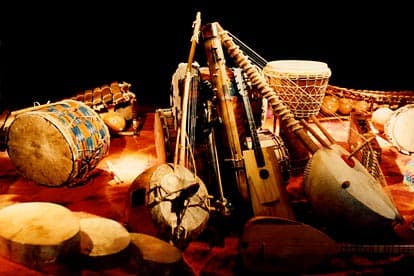
TFA-Period-3 - Chapter 11b oral tradition, folktales View original
Is this image relevant?
Culture of Africa - Wikipedia View original
Is this image relevant?
Zulu Culture, KwaZulu-Natal, South Africa | South African Tourism | Flickr View original
Is this image relevant?
TFA-Period-3 - Chapter 11b oral tradition, folktales View original
Is this image relevant?
Oral tradition importance
Before written literature existed in most of Africa, oral tradition was the way communities transmitted knowledge, history, and cultural values across generations. A storytelling session wasn't just entertainment; it was a communal event that bonded people together. These stories also served as living documents, adapting and evolving over time to reflect changing societal norms while preserving their core messages. Because stories were maintained in local languages and dialects, oral tradition played a key role in preserving Africa's extraordinary linguistic diversity.
Cultural diversity in Africa
Africa encompasses over 3,000 distinct ethnic groups, each with its own folktale traditions. That number matters because it means there's no single "African folktale" style. The continent's diverse landscapes shape the stories too: tales from the Sahel savannah differ in setting and imagery from those born in Central African rainforests.
- Religious beliefs woven into folktales range from indigenous spiritual systems to Islam and Christianity
- Stories are told in hundreds of different languages, and the specific language often carries wordplay, proverbs, and rhythms that don't fully translate
- Regional economies and lifestyles (pastoral, agricultural, coastal) influence which animals, objects, and conflicts appear in the tales
Role of storytellers
Storytellers, known by various titles across the continent (the West African griot being the most widely recognized), act as custodians of cultural heritage and collective memory. They possess specialized skills in memorization, vocal performance, and audience engagement. A skilled storyteller adjusts the tale to suit the audience, expanding or condensing episodes, shifting tone for children versus elders.
These figures often hold esteemed positions in their communities as educators and entertainers alike. Their craft is typically passed down through apprenticeship systems, where a younger storyteller learns not just the stories but the performance techniques, vocal patterns, and improvisational skills that bring them to life.
Common themes in folktales
African folktales blend entertainment with instruction. They explore universal human experiences and moral dilemmas, which is part of why they resonate across cultures. At the same time, analyzing recurring themes reveals the specific values and concerns shared across diverse African societies.
Morality and ethics
Most African folktales carry a moral dimension. Characters face dilemmas and make choices, and the story shows the consequences. Virtues like honesty, kindness, and respect for elders are rewarded; greed, selfishness, and dishonesty lead to downfall.
- Reward-and-punishment narratives reinforce societal values in a way that's memorable and concrete
- Proverbs and sayings are often embedded directly in the tale, encapsulating the lesson in a phrase listeners can carry with them
- The moral isn't always simple; some tales present genuine ethical complexity where the "right" choice isn't obvious
Nature and animals
Animals are central to African folktales, almost always personified with human characteristics and behaviors. A tortoise might be greedy, a hare clever, a lion proud. These aren't random assignments; they reflect long-standing cultural associations specific to each region's local fauna.
Nature also serves an explanatory function. Many tales are etiological, meaning they explain the origins of natural phenomena: why the leopard has spots, how a particular river was formed, or why the bat flies at night. The relationship between humans and nature in these stories tends to emphasize interconnectedness rather than dominance.
Trickster characters
The trickster is one of the most distinctive and beloved character types in African folktales. These figures embody cunning and cleverness, typically portrayed as smaller or weaker animals who outsmart larger, more powerful ones.
- Anansi the spider (Akan/West African tradition) uses wit and deception to achieve his goals
- Ijapa the tortoise (Yoruba tradition) is known for his scheming nature
- Hare appears across East and Southern African traditions as a quick-thinking survivor
Tricksters serve a dual role: they're heroes who demonstrate that intelligence can overcome brute strength, but they're also troublemakers whose schemes sometimes backfire. This duality reflects complex societal attitudes toward cleverness, adaptability, and the subversion of power structures.
Supernatural elements
The boundary between the natural and supernatural worlds is often fluid in African folktales. Stories feature spirits, ghosts, shape-shifters, and ancestral beings who interact with the living. Mystical objects like magical calabashes or talking drums drive plots forward.
Transformation and metamorphosis are recurring motifs: a character might shift between human and animal form, or an ordinary object might reveal hidden powers. These elements aren't treated as strange within the story's logic. The supernatural is woven seamlessly into everyday life, reflecting worldviews in which the spiritual and material realms are deeply connected.
Structure and style
African folktales employ distinctive narrative techniques shaped by their origins in oral performance. Understanding these structural features is essential for appreciating how the stories work and why they take the forms they do.
Narrative techniques
Several techniques distinguish African oral narratives:
- Frame stories connect multiple tales within a larger narrative, giving a storytelling session coherence
- Non-linear storytelling uses flashbacks and foreshadowing to build complexity
- Audience participation through call-and-response segments turns listeners into active contributors
- Episodic structures allow storytellers flexibility to shorten, lengthen, or rearrange segments based on the occasion
- Direct address breaks the "fourth wall," with the storyteller speaking to listeners to create intimacy and hold attention
Use of repetition
Repetition is a structural tool, not a flaw. In an oral tradition where nothing is written down, repetition serves critical purposes:
- Refrains and repeated phrases help both the storyteller remember the tale and the audience follow along
- Repeated actions or events (a character visiting three different animals, for instance) build tension and create a satisfying rhythm
- Incremental repetition adds new elements with each cycle, so the story progresses even as it repeats
- Songs or chants embedded in the narrative invite the audience to join in
- Formulaic openings and closings signal the boundaries of the story, much like "Once upon a time" in European traditions
Call and response format
Call and response is one of the most interactive features of African storytelling. The storyteller poses a phrase or question, and the audience responds with a set reply. This technique reinforces the communal nature of the tradition: the story belongs to everyone present, not just the teller.
The complexity varies. Sometimes it's a simple confirmation ("Story!" / "Story, let it come!"). Other times, the audience sings a chorus or completes a phrase. Beyond engagement, call and response functions as a mnemonic device and enhances the rhythmic, almost musical quality of oral performance.
Symbolism and metaphor
African folktales are rich in symbolic language:
- Natural elements like trees, rivers, and crossroads represent abstract concepts (life, transition, choice)
- Animal characteristics stand in for human traits: the cunning spider, the proud lion, the patient tortoise
- Color symbolism reflects specific cultural associations that vary by region
- Symbolic objects or actions carry meaning beyond the literal: sharing food might represent trust, while crossing a river might symbolize transformation
This layered meaning allows folktales to operate on multiple levels simultaneously, entertaining children while conveying deeper messages to adult listeners.
Functions in society
African folktales play roles that extend well beyond entertainment. They function as tools for education, social bonding, cultural preservation, and communal enjoyment, often all at once within a single storytelling session.

Educational purpose
Folktales transmit historical knowledge and cultural traditions to younger generations in a form that's engaging and memorable. Through narrative examples, they teach practical skills, survival techniques, and ethical guidelines for social behavior. Many tales explain natural phenomena or the origins of cultural practices, answering the "why" questions children naturally ask.
Riddles and puzzles embedded in stories also develop critical thinking and problem-solving skills, making the educational function active rather than passive.
Social cohesion
Storytelling sessions reinforce shared values and cultural identity within a community. When everyone knows the same stories, those narratives become common reference points for social interaction and discourse. The intergenerational nature of storytelling (elders telling to youth, with everyone gathered together) strengthens bonds across age groups.
Folktales also address social conflicts and tensions indirectly. An allegorical narrative about animals quarreling can comment on a real community dispute without naming anyone, promoting empathy and offering resolution models.
Cultural preservation
Folktales serve as repositories for indigenous worldviews, belief systems, and traditional knowledge. By maintaining stories in local languages, they safeguard linguistic diversity. The tradition is adaptive: stories retain core cultural elements while evolving to address changing social contexts.
This adaptability has been especially important in resisting cultural erosion from globalization and modernization. Communities that maintain active storytelling traditions preserve a living connection to their heritage.
Entertainment value
The entertainment function shouldn't be underestimated. Folktales provide communal enjoyment through engaging narratives, humor, dramatic tension, and suspense. Fantastical elements stimulate imagination and offer escapism. For the storyteller, performance is a form of creative and artistic expression, with skilled tellers commanding attention through voice, gesture, and timing.
Notable African folktales
Examining specific folktale traditions from different regions of Africa provides concrete examples of the themes, structures, and cultural contexts discussed above.
Anansi stories
Anansi stories originate from the Akan people of Ghana in West Africa. Anansi is a trickster spider whose cunning and wit drive the plots. In a typical tale, Anansi devises a clever scheme to outsmart larger or more powerful animals, though his plans sometimes backfire due to his own greed.
These stories are historically significant beyond Africa. Through the transatlantic slave trade, Anansi tales traveled to the Caribbean and the Americas, where they survived and adapted in diaspora communities. Themes of wisdom, greed, and the triumph of intelligence over brute strength made them especially resonant for enslaved peoples navigating oppressive power structures.
Zulu legends
Zulu legends come from the Zulu people of South Africa and include creation myths explaining the origins of the Zulu people and their customs. Heroic tales celebrate Zulu kings and warriors, with Shaka Zulu being the most prominent figure. Supernatural elements like shape-shifting and ancestral spirits feature prominently.
Cattle hold deep cultural significance in Zulu society, and this is reflected in the stories: cattle appear as symbols of wealth, status, and spiritual connection.
Yoruba myths
Yoruba myths stem from the Yoruba people of Nigeria in West Africa. They center around a complex pantheon of deities called Orishas, each governing different aspects of life and nature. Creation stories explain the formation of the world and humankind, often involving the deity Obatala shaping humans from clay and Olodumare breathing life into them.
These myths explore the intricate relationships between gods, humans, and nature, with tales of divine intervention in human affairs. The Yoruba mythological system has also influenced religions in the Americas, including Candomblé in Brazil and Santería in Cuba.
Swahili tales
Swahili tales originate from the Swahili-speaking peoples of the East African coast (modern-day Kenya, Tanzania, Mozambique). They reflect the region's coastal culture and maritime traditions, often featuring seafaring adventures and encounters with mythical sea creatures.
What makes Swahili tales distinctive is their incorporation of influences from Arab, Persian, and Indian storytelling traditions, a result of centuries of Indian Ocean trade. This cross-cultural blending makes them a fascinating case study in how folktale traditions absorb and transform outside influences while retaining their own character.
Influence on literature
African folktales have shaped both African and world literature in significant ways, providing themes, characters, and narrative techniques that continue to inspire writers.
Impact on African literature
Contemporary African novelists and poets frequently draw on folktale themes, motifs, and narrative structures. Writers like Chinua Achebe incorporated proverbs and storytelling patterns from Igbo oral tradition into novels like Things Fall Apart. Ama Ata Aidoo and Ngũgĩ wa Thiong'o have similarly drawn on oral traditions in their work.
In postcolonial literature, folktales serve as a means of cultural reclamation and identity assertion, countering colonial narratives that dismissed African cultural production. The folktale tradition also bridges oral and written forms, with many authors consciously working to preserve the rhythms and structures of oral storytelling in their written prose.
Folktales in world literature
African folktales contribute to the global repertoire of mythological and folkloric narratives. Their influence extends to literary movements like magical realism, where the seamless blending of natural and supernatural elements echoes techniques found in African oral traditions.
They also provide rich comparative material for cross-cultural literary studies, revealing both shared human concerns and culturally specific ways of addressing them. Non-African authors have drawn on African themes and narrative styles, expanding the reach of these traditions.
Modern adaptations
African folktales have been transformed across media:
- Oral tales retold as children's books and illustrated stories for global audiences
- Folktale elements woven into contemporary novels and short stories
- Traditional narratives adapted for stage plays and theatrical performances
- Ancient stories reimagined in modern contexts to address current social issues
- Translations into multiple languages, making these stories accessible worldwide
Comparative analysis
Comparing African folktales with other traditions reveals both universal storytelling impulses and culturally specific expressions. Examining variations within Africa itself highlights the continent's internal diversity.

African vs. European folktales
Several key differences emerge when comparing African and European folktale traditions:
- Structure: African tales tend to be more episodic and open-ended, while European tales (especially post-Grimm) often follow a tighter arc toward resolution
- Nature: African tales generally emphasize harmony with the natural world, whereas European tales more often frame nature as something to be conquered or tamed
- Morality: The moral lessons reflect distinct cultural values; African tales may prioritize communal responsibility where European tales emphasize individual virtue
- Tricksters: Both traditions have trickster figures, but they differ in character. African tricksters like Anansi are often celebrated for their cleverness, while European tricksters (like Reynard the Fox) are more frequently portrayed as morally ambiguous
Regional variations in Africa
Even within Africa, folktales vary enormously:
- Desert tales differ from rainforest tales in setting, imagery, and the animals that appear
- Pastoral societies emphasize different themes than agricultural or coastal ones
- Gender roles and social structures are portrayed differently across regions
- Linguistic diversity means each tradition carries unique wordplay, idioms, and rhythmic patterns that shape the storytelling experience
Oral vs. written traditions
The shift from oral to written form changes the nature of a story in fundamental ways:
- Oral traditions are flexible and adaptive; each telling is a unique performance. Written versions are fixed
- Oral storytelling encourages active audience participation; reading is typically solitary and passive
- Mnemonic devices like repetition and rhythm are essential in oral traditions but can feel redundant on the page
- Oral performance engages multiple senses (voice, gesture, music, setting) that written text can only suggest
Understanding these differences matters for reading transcribed folktales, since the written version captures only part of what the original performance conveyed.
Preservation efforts
Preserving African folktales is an ongoing challenge as urbanization, globalization, and the decline of indigenous languages threaten oral traditions. Various initiatives aim to document and revitalize these storytelling practices.
Recording oral stories
Researchers use audio and video technology to capture live storytelling performances, preserving not just the words but the vocal inflections, gestures, and audience interactions that define the experience. This work involves collaboration between linguists, anthropologists, and local communities.
Key priorities include documenting stories in their original languages to preserve linguistic nuances and recording contextual information about storytellers and performance settings. Ethical challenges around informed consent and respect for cultural protocols remain important considerations.
Digital archiving
Digital technology has created new possibilities for preservation:
- Online databases and repositories make recorded folktales accessible to researchers and the public
- Searchable archives with metadata allow users to find stories by region, theme, language, or storyteller
- Cloud storage ensures long-term preservation against physical deterioration
- Digital rights management helps protect cultural intellectual property
- Experimental projects explore virtual reality to recreate storytelling environments
Contemporary storytelling
Preservation isn't only about archiving the past. Keeping the tradition alive means adapting it for the present:
- Traditional stories are being adapted for podcasts, social media, and other modern platforms
- Storytelling festivals and events promote oral traditions and bring communities together
- School curricula in several African countries now incorporate folktales to ensure intergenerational transmission
- Programs encourage young people to learn and perform traditional tales
- Professional storytellers continue to maintain and innovate within the tradition, proving that oral storytelling remains a living art form
Critical perspectives
Analyzing African folktales through different critical lenses reveals deeper meanings and contemporary relevance that a surface reading might miss.
Postcolonial interpretations
Postcolonial critics examine folktales as forms of resistance to colonial narratives. During and after colonization, maintaining oral traditions was itself an act of cultural preservation and defiance. These readings analyze how colonialism affected the transmission and reception of folktales, how stories assert indigenous identities, and how some tales were appropriated or misrepresented in colonial contexts.
The role of language is central here: telling stories in indigenous languages rather than colonial ones (English, French, Portuguese) was a way of preserving cultural autonomy.
Feminist readings
Feminist analysis looks at gender roles and power dynamics within folktales. Questions include: How are female characters represented? Do they have agency, or are they passive? How do tales reinforce or challenge traditional gender norms?
It's also worth examining the role of women as storytellers. In many African societies, women were primary custodians of certain oral traditions, particularly stories told to children. Contemporary feminist retellings reinterpret traditional stories for modern audiences, foregrounding female perspectives that may have been marginalized in earlier versions.
Anthropological studies
Anthropologists study folktales as reflections of social structures, cultural practices, and worldviews. This approach examines the role of storytelling in rituals and ceremonies, analyzes symbolism and metaphor to understand how communities conceptualize their world, and explores how folktales function in socialization and enculturation.
A key insight from anthropological study is that folktales are not static artifacts. They adapt and evolve in response to social and environmental changes, making them living documents of cultural life.
Teaching African folktales
Incorporating African folktales into a World Literature course requires thoughtful approaches to cultural context, interpretation, and interdisciplinary connections.
Classroom approaches
- Use multimedia resources (audio recordings, video of performances) to present folktales in something closer to their original oral format
- Encourage comparative analysis with folktales from students' own cultural backgrounds
- Assign creative writing exercises that use African storytelling techniques (call and response, trickster characters, etiological structure)
- Organize group performances or dramatizations of selected tales to experience the oral dimension firsthand
- Facilitate discussions that explore both universal themes and culturally specific elements
Cultural sensitivity
Teaching African folktales responsibly means providing necessary historical and cultural context for each tale. Avoid treating "Africa" as a monolith; emphasize the diversity of cultures, languages, and traditions across the continent.
Address potential stereotypes and misconceptions directly. Encourage critical thinking about cultural appropriation and representation. When possible, invite guest speakers or storytellers from African communities to share their perspectives and expertise.
Interdisciplinary connections
African folktales connect naturally to multiple disciplines:
- History and geography: Link tales to historical events and the landscapes that shaped them
- Art, music, and dance: Explore how folktales relate to other African artistic traditions
- Philosophy and religion: Examine the worldviews and belief systems embedded in the stories
- Linguistics: Investigate how language shapes storytelling through collaboration with language studies
- Environmental science: Consider the ecological knowledge preserved in tales about animals, plants, and natural phenomena
See Fiveable more often in Google
Mark Fiveable as a preferred source and Google is more likely to show you our guides in Top Stories, with a "preferred" badge in AI Mode and AI Overviews.