8.3 Classical Sanskrit drama

🪕World Literature I Unit 8 Review
8.3 Classical Sanskrit drama
🪕 World Literature I
Origins of Sanskrit drama
Sanskrit drama grew out of ancient India's religious and performative traditions, eventually becoming one of the most sophisticated theatrical forms in world literature. It blends ritual, storytelling, poetry, music, and dance into a unified art, and its conventions shaped Indian theater for centuries.

Top images from around the web for Vedic roots
Rigveda - Wikipedia View original
Is this image relevant?
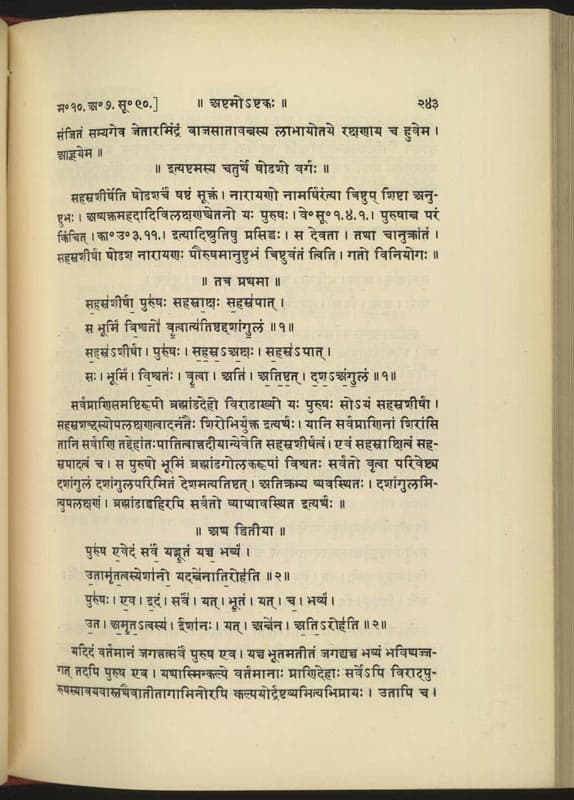
File:The Rig Veda.jpg - Wikipedia View original
Is this image relevant?
The Rig Veda - Wikisource, the free online library View original
Is this image relevant?
Rigveda - Wikipedia View original
Is this image relevant?
File:The Rig Veda.jpg - Wikipedia View original
Is this image relevant?
Vedic roots
The earliest seeds of Sanskrit drama appear in the Vedic period (roughly 1500–500 BCE). The Rig Veda contains dialogue hymns called samvada suktas, where two speakers exchange verses in a back-and-forth that feels almost theatrical. The Upanishads added philosophical dialogues and dramatic narrative structures. These texts weren't plays, but they established a tradition of using formal Sanskrit for elevated, performative speech.
Influence of oral traditions
Long before anything was written down, India had a thriving oral culture. Bards recited episodes from the great epics, the Mahabharata and Ramayana, using vocal performance, gesture, and audience interaction. Folk theater contributed techniques like mime and improvisation. Sanskrit dramatists drew on all of this, transforming oral storytelling into scripted, structured plays while preserving the sense of communal experience that made those earlier performances powerful.
Early theatrical forms
Sanskrit drama didn't appear fully formed. It evolved through simpler genres first:
- Bhana: a one-act piece, often comic, performed by a single actor
- Bhani: a monologue-based form
Street performances and traveling troupes also contributed techniques. Over time, these simpler forms gave way to the nataka, the most prestigious genre, featuring multiple acts, complex plots, and the full range of Sanskrit dramatic conventions.
Key characteristics
Sanskrit drama is a total art form. A single performance weaves together spoken dialogue, sung verse, instrumental music, dance, and elaborate visual presentation. Three features define the tradition most clearly.
Stylized performance techniques
Performance followed detailed rules laid out in Bharata's Natyashastra (composed roughly between the 2nd century BCE and 2nd century CE), the foundational treatise on Indian performing arts. Actors used:
- Mudras: codified hand gestures that convey specific emotions, objects, or actions
- Nrtya: stylized movement patterns and choreographed dance sequences
- Abhinaya: exaggerated but precise facial expressions to communicate a character's inner state
Nothing was naturalistic. Every gesture and expression followed a shared vocabulary that trained audiences could read.
Use of Sanskrit language
The language itself carried social meaning. High-status characters (kings, Brahmins, heroes) spoke in classical Sanskrit, using complex poetic meters, rhetorical devices, and elaborate wordplay. Lower-status characters and most female roles spoke in Prakrit dialects, the vernacular languages of the time. This linguistic layering told the audience immediately where a character stood in the social hierarchy.
Importance of rasa theory
Rasa (literally "juice" or "flavor") is the aesthetic emotion a performance evokes in the audience. The Natyashastra identifies eight primary rasas:
- Sringara (love/romance)
- Hasya (humor)
- Karuna (pathos/sorrow)
- Raudra (anger)
- Vira (heroism)
- Bhayanaka (terror)
- Bibhatsa (disgust)
- Adbhuta (wonder)
A ninth, shanta (peace/tranquility), was added by later theorists. The goal of a Sanskrit play wasn't just to tell a story but to produce a transcendent emotional experience in the spectator. Every element of the performance served this purpose.
Major playwrights
Sanskrit drama flourished under royal patronage, and a handful of playwrights stand out for shaping the tradition.
Kalidasa's contributions
Kalidasa (active around the 4th–5th century CE) is widely considered the greatest Sanskrit dramatist. He wrote three major plays:
- Abhijnanasakuntalam (The Recognition of Shakuntala): his masterpiece, based on a story from the Mahabharata. It tells of King Dushyanta's love for Shakuntala, their separation through a curse, and eventual reunion. When translated into English and German in the late 18th century, it stunned European readers.
- Vikramorvasiyam (Urvashi Won by Valor)
- Malavikagnimitram (Malavika and Agnimitra)
Kalidasa is celebrated for lyrical poetry, vivid natural descriptions, and psychologically rich characters.
Works of Bhasa
Bhasa predates Kalidasa, though his exact dates are uncertain. Thirteen plays are attributed to him, and they were only rediscovered in the early 20th century, dramatically expanding scholars' understanding of early Sanskrit drama. Notable works include:
- Svapnavasavadatta (The Dream of Vasavadatta)
- Urubhanga (The Breaking of the Thigh), remarkable for depicting the death of Duryodhana on stage
Bhasa innovated by dramatizing epic episodes directly and by introducing tragic elements, which later convention generally avoided.
Sudraka and Mrcchakatika
Sudraka is a possibly legendary figure credited with Mrcchakatika (The Little Clay Cart). This play stands apart from most Sanskrit drama because it focuses on ordinary urban life rather than kings and gods. The plot involves a poor Brahmin named Charudatta and a courtesan named Vasantasena, weaving together romance, political intrigue, and social commentary. Characters come from many social classes, giving the play an unusually realistic texture.
Structure and conventions
Sanskrit plays follow specific formal conventions. Knowing these helps you recognize what's happening when you read or watch one.
Nandi and sutradhar
Every Sanskrit play opens with a nandi, a benedictory verse praising a deity. Then the sutradhar (literally "holder of the strings") appears. This figure is the stage manager and narrator rolled into one. The sutradhar introduces the play, names the author, and provides context. Often the sutradhar converses with an assistant called the nati to transition naturally into the main action.

Act divisions
Plays are divided into ankas (acts), typically ranging from one to ten. Each act covers a distinct phase of the plot. Between acts, shorter interlude scenes called viskambhaka or pravesaka bridge the action, filling in events that happened offstage. Acts often close with a summarizing verse.
Use of prose vs. verse
Sanskrit drama alternates between prose and verse, and the shift is meaningful:
- Verse (usually in Sanskrit) appears during elevated speech, emotional peaks, and poetic descriptions of nature or beauty
- Prose (in Sanskrit or Prakrit) handles everyday dialogue and narrative exposition
This alternation creates a dynamic rhythm and signals shifts in tone, character status, and dramatic intensity.
Themes and motifs
Sanskrit plays return to certain themes repeatedly, reflecting the values and concerns of classical Indian civilization.
Mythology and epics
Many plays adapt stories from Hindu mythology, the Puranas, and the two great epics. Playwrights didn't just retell these stories; they reinterpreted them, using familiar mythological frameworks to explore moral dilemmas and social questions relevant to their own time. Divine interventions and supernatural elements appear frequently.
Royal court settings
The royal court is the most common setting, which makes sense given that courts were where these plays were performed and funded. Themes of dharma (duty), political intrigue, and the responsibilities of kingship recur constantly. Many plays contrast the formality of court life with scenes set in forests, gardens, or hermitages.
Love and heroism
Sringara (romantic love) is the dominant rasa in most Sanskrit plays. You'll see courtship, agonizing separation, and joyful reunion as recurring plot patterns. Vira (heroism) often intertwines with romance, as noble characters must overcome obstacles through courage and self-sacrifice before love can be fulfilled.
Performance elements
Reading a Sanskrit play on the page captures only part of the experience. These were multimedia performances.
Costumes and makeup
Costumes indicated a character's social status, profession, and emotional state through specific color symbolism. Aharyabhinaya (stylized makeup) enhanced facial expressions and helped audiences identify character types at a glance. Ornate headdresses and jewelry signaled royal or divine figures.
Music and dance
Performances incorporated gita (vocal music) and vadya (instrumental accompaniment). Specific ragas (melodic frameworks) were chosen to evoke particular moods matching the rasa of a scene. Choreographed dance sequences advanced the plot and expressed emotions that words alone couldn't capture. Tala (rhythmic patterns) structured the pacing of the performance.
Gesture language (mudras)
The mudra system is remarkably detailed:
- Asamyuta hasta: single-hand gestures
- Samyuta hasta: double-hand gestures
These gestures represent objects, actions, relationships, and abstract concepts. Combined with facial expressions and body movement, mudras created a comprehensive nonverbal language that trained audiences could follow as fluently as spoken dialogue.
Social and cultural context
You can't fully understand these plays without knowing the world they came from.
Patronage systems
Sanskrit drama depended on royal courts and wealthy patrons. Playwrights often served as court poets or advisors, and performances were staged for festivals, religious ceremonies, and special occasions. This patronage shaped what got written: themes flattering to rulers, celebrations of dharma, and political subtexts that had to be handled carefully.
Religious significance
Sanskrit drama is rooted in Hindu religious traditions. The opening nandi invokes a deity. Plots explore dharma (duty/righteousness), karma (the consequences of action), and moksha (spiritual liberation). Plays served partly as vehicles for disseminating religious teachings and moral values to audiences.

Caste representation
The caste system is embedded in the structure of Sanskrit drama. A character's caste determines what language they speak (Sanskrit vs. Prakrit), how they behave, and how other characters treat them. Some plays, like Mrcchakatika, push against these boundaries by giving sympathetic, complex portrayals to characters from lower social classes.
Literary devices
Sanskrit dramatists used a rich toolkit of literary techniques that reward close reading.
Use of allegory
Allegorical narratives allowed playwrights to address complex philosophical or politically sensitive ideas through symbolic representation. Characters sometimes embody abstract concepts (virtue, desire, duty), and plots can be read on both a literal and a symbolic level.
Symbolism in Sanskrit drama
Symbolism drawn from Hindu mythology and Indian cultural traditions pervades these plays. Natural elements carry specific meanings: the lotus suggests purity, the moon evokes beauty, certain animals represent particular qualities. Objects and actions function as metaphors for emotional states or spiritual concepts.
Poetic techniques
Sanskrit poets had an elaborate formal vocabulary:
- Chandas: complex poetic meters creating rhythmic and melodic effects
- Upama: simile
- Rupaka: metaphor
- Anuprasa: alliteration
Extended poetic descriptions called kavya passages depict nature, beauty, and emotion with extraordinary detail. These passages often pause the plot to create a mood, functioning almost like a musical interlude in the text.
Influence and legacy
Sanskrit drama's reach extends far beyond its original time and place.
Impact on regional theaters
Classical Sanskrit conventions shaped regional theater traditions across India. Koodiyattam in Kerala is one of the oldest surviving performance traditions in the world and directly preserves Sanskrit dramatic techniques. Kathakali, also from Kerala, draws on the gesture language and stylized performance methods. Devotional forms like Raslila and Ankiya Nat adapted Sanskrit themes for regional audiences and languages.
Sanskrit drama in translation
Western scholars began translating Sanskrit plays in the 18th and 19th centuries. Sir William Jones's 1789 English translation of Abhijnanasakuntalam had a major impact, influencing European Romantic writers including Goethe, who praised it enthusiastically. These translations helped establish comparative literature as a discipline and introduced Western audiences to a theatrical tradition entirely different from the Greek and Roman models they knew.
Modern interpretations
Contemporary directors in India and internationally continue to adapt Sanskrit plays for modern stages. Experimental productions explore new staging approaches while preserving the rasa-centered aesthetic. Sanskrit dramatic techniques have influenced innovations in world theater and performance art, and characters and stories from these plays appear in films, novels, and other media.
Critical analysis
Scholars approach Sanskrit drama from several angles, each revealing different dimensions of these texts.
Aesthetic theories
Critical analysis often centers on how rasa theory operates in practice. The concept of dhvani (suggestion) is particularly important: the idea that a great literary work communicates meaning not just through what it says directly but through what it implies. Alamkara (poetic ornaments) are analyzed for how they enhance both literary beauty and emotional impact. The interplay between formal structure and content is a central concern.
Gender roles in plays
Sanskrit drama follows strict conventions about gender. Female characters typically speak Prakrit rather than Sanskrit, and their behavior follows prescribed norms. Scholars examine how plays reinforce or occasionally challenge these conventions. The depiction of love, marriage, and family relationships reveals assumptions about gender and power that are worth analyzing critically.
Political subtexts
Because playwrights depended on royal patronage, direct political criticism was risky. Instead, many plays embed political commentary within mythological or historical settings. The tension between dharma (duty) and kama (desire) often maps onto real political dilemmas about governance, loyalty, and the proper use of power. Reading for these subtexts adds a layer of meaning that surface-level plot summary misses.
See Fiveable more often in Google
Mark Fiveable as a preferred source and Google is more likely to show you our guides in Top Stories, with a "preferred" badge in AI Mode and AI Overviews.