8.2 Common Propaganda Techniques

📲Media Literacy Unit 8 Review
8.2 Common Propaganda Techniques
📲 Media Literacy
Common Propaganda Techniques
Propaganda techniques are specific methods used to influence what people think, feel, or do. They show up everywhere: ads, political campaigns, news coverage, and social media. Learning to spot them is one of the most practical skills in media literacy, because once you can name a technique, it loses much of its power over you.
Identify and Describe the Most Commonly Used Propaganda Techniques in Media
There are seven techniques you'll see again and again across different types of media. Each one works differently, but they all share a common goal: bypassing your critical thinking to shape your opinion.
Bandwagon appeals to the desire to fit in by suggesting "everyone is doing it," so you should too. The underlying logic is that popularity equals correctness. A classic example: "4 out of 5 dentists recommend this toothpaste." You're not being told why it's good; you're being told that other people already chose it.
Card stacking selectively presents information to make one side look stronger while omitting or downplaying inconvenient facts. A news segment might highlight a new drug's benefits while barely mentioning its side effects. The information presented may be accurate, but the picture it paints is incomplete and therefore misleading.
Glittering generalities use vague, emotionally appealing words to stir positive feelings without providing concrete information. A beauty brand links itself to "elegance" and "sophistication," or a politician promises "freedom and a bright future." These words sound great but mean almost nothing specific. That vagueness is the point: you fill in the meaning with whatever you personally value.
Name calling attaches negative labels to opponents, dismissing their ideas without actually addressing them. Calling political opponents "radical liberals" or "far-right extremists" short-circuits debate. Instead of evaluating someone's argument, the audience reacts to the label.
Plain folks portrays the propagandist as an average, relatable person to build trust. A millionaire politician emphasizes their small-town roots and humble upbringing. The message is "I'm one of you," which makes the audience more receptive to whatever comes next.
Testimonial uses endorsements from respected or admired figures to transfer their credibility to a product or idea. An athlete endorsing sports equipment is a straightforward example. You trust the athlete's expertise, and that trust gets redirected toward the brand.
Transfer carries the authority or positive feelings associated with one thing over to something else. Featuring national flags in an ad for a domestic product links that product to patriotism. The product hasn't earned that association; it's borrowed from the symbol.

Influence of Propaganda on Audiences
Understanding which technique is being used matters, but so does understanding why that particular technique was chosen for that particular audience.
Goals shape technique selection. The propagandist's objective determines which tools they reach for:
- Name calling and card stacking aim to shut down critical thinking by provoking emotional reactions or limiting the information available.
- Glittering generalities and plain folks aim to build an emotional connection, making the audience feel good about the message or messenger.
Techniques are tailored to specific audiences. Propagandists study their target demographic and choose approaches that will resonate:
- Testimonials feature figures the target audience already admires. A young pop star endorses a fashion brand aimed at teenagers, not retirees.
- Plain folks adapts to match the audience's identity. A car company might use a rural, blue-collar spokesperson to appeal to working-class buyers.
- Bandwagon leverages the specific social norms of the group. An ad suggesting "all cool kids" wear a certain brand works on audiences who care about peer approval.
Multiple techniques often work together in a single message. Propaganda rarely relies on just one approach:
- Name calling + card stacking: An attack ad selectively presents an opponent's voting record while labeling them a "flip-flopper." The incomplete data and the negative label reinforce each other.
- Glittering generalities + transfer: A campaign ad plays patriotic music over flag imagery while promising "a stronger, safer America." The vague language and the national symbols combine to create a powerful emotional response.
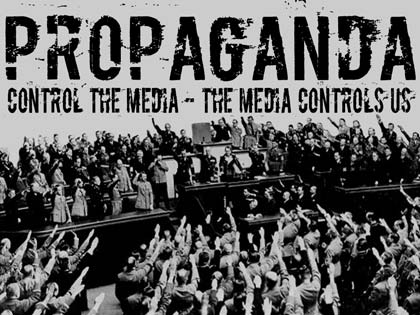
Effectiveness of Propaganda Techniques
Not all propaganda works equally well in every situation. Four key factors determine how effective a given technique will be:
- Reach and repetition. Propaganda works best when it saturates the information environment. A political slogan plastered on billboards, TV ads, and social media posts becomes familiar, and familiarity breeds acceptance. A single exposure is easy to dismiss; constant repetition makes the message feel like common knowledge.
- Audience predispositions. Techniques that align with what the audience already believes are far more potent. Anti-immigrant propaganda, for instance, gains more traction with audiences who already feel economically threatened by outsiders. Propaganda rarely creates beliefs from scratch; it amplifies and directs existing ones.
- Source credibility. Messages from trusted sources face less scrutiny. Techniques like plain folks and testimonial work precisely because they boost perceived credibility. A doctor in a white lab coat promoting a medication seems more trustworthy than a random spokesperson, even if the doctor is an actor.
- Social and political context. Propaganda thrives in climates of fear, uncertainty, and polarization. Wartime propaganda demonizing the enemy is far more effective when the nation already feels under threat. Name calling and card stacking exploit existing societal divisions rather than creating new ones.
Real-World Applications of Propaganda
Here are concrete examples of each technique across advertising and politics:
- Bandwagon
- An ad claiming 4 out of 5 dentists recommend a toothpaste brand
- A political slogan claiming a candidate has majority support
- Card stacking
- A news segment highlighting a new drug's benefits but not its risks
- An ad comparing product features favorably against cherry-picked inferior competitors
- Glittering generalities
- A beauty commercial equating a brand with "elegance" and "sophistication"
- A politician promising "freedom, democracy, and a bright future"
- Name calling
- Referring to political opponents as "radical liberals" or "far-right extremists"
- Disparaging a competing product as "low-quality junk"
- Plain folks
- A millionaire politician emphasizing their small-town roots and humble upbringing
- A food company claiming its recipes come from the founder's grandmother
- Testimonial
- An athlete endorsing a particular brand of sports equipment
- A celebrity promoting a new diet plan or workout routine
- Transfer
- Featuring national flags and symbols in a campaign for a domestic product
- Displaying religious iconography in advertisements to imply moral virtue
See Fiveable more often in Google
Mark Fiveable as a preferred source and Google is more likely to show you our guides in Top Stories, with a "preferred" badge in AI Mode and AI Overviews.