2.3 Electronic Media: Radio and Television

📲Media Literacy Unit 2 Review
2.3 Electronic Media: Radio and Television
📲 Media Literacy
Electronic media transformed how people receive information and entertainment. Radio was the first technology to broadcast content to a mass audience simultaneously, and television added a visual dimension that reshaped culture in ways still felt today. Understanding how these media developed helps you recognize the patterns of influence that carry into digital media.
Development and Impact of Electronic Media

Top images from around the web for Development of radio technology
History of broadcasting - Wikipedia View original
Is this image relevant?
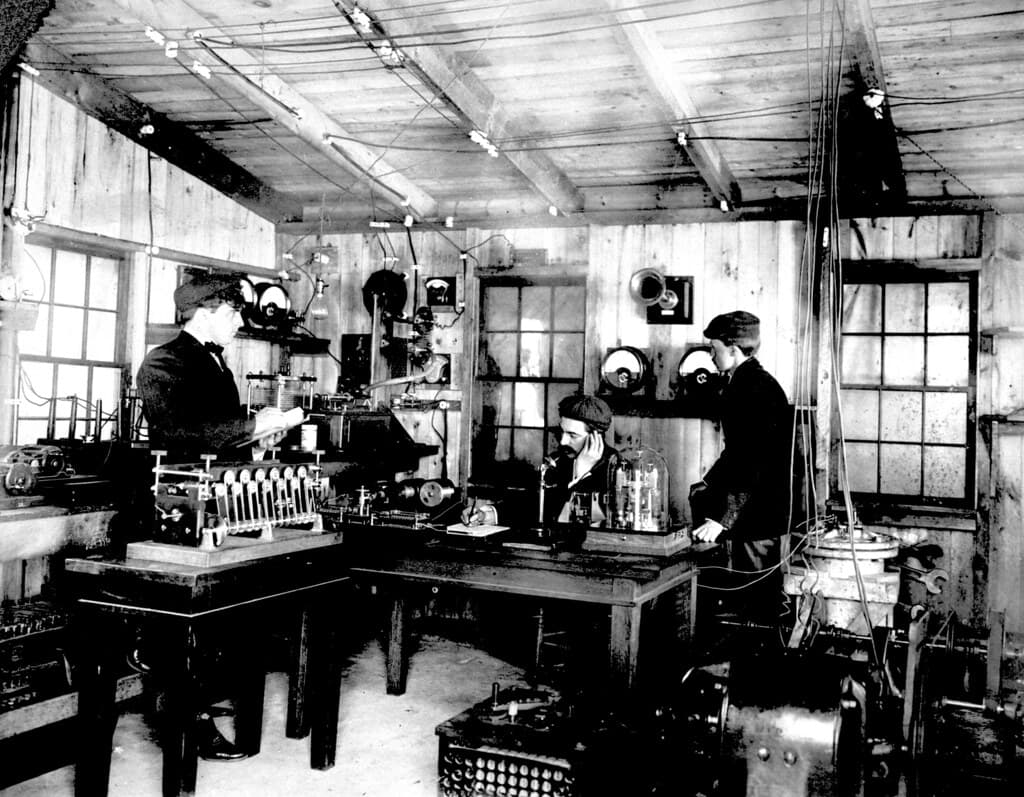
1900-02 | Fessenden made his first radio broadcast from his … | Flickr View original
Is this image relevant?
File:Fessenden 500 CPS Transmitter.jpg - Wikimedia Commons View original
Is this image relevant?
History of broadcasting - Wikipedia View original
Is this image relevant?
1900-02 | Fessenden made his first radio broadcast from his … | Flickr View original
Is this image relevant?
Development of radio technology
Radio didn't appear overnight. It grew from a series of technical breakthroughs over several decades before becoming the dominant mass medium of the early twentieth century.
- Guglielmo Marconi conducted wireless telegraphy experiments in the late 1890s, sending electrical signals without wires. This laid the foundation for radio communication, though it could only transmit coded signals, not sound.
- Reginald Fessenden made the first audio transmission in 1906, demonstrating that voices and music could travel over radio waves. (Note: the commonly cited 1900 date refers to early experiments, but his landmark broadcast was in 1906.)
- Lee de Forest invented the Audion vacuum tube in 1906, which could amplify weak radio signals. This made clearer, longer-range transmissions possible.
- KDKA in Pittsburgh aired what's widely considered the first commercial radio broadcast in 1920, covering presidential election results. This moment marks radio's transition from experimental technology to mass medium.
Growth was explosive. By 1925, over 500 radio stations were operating across the United States. Networks like NBC (1926) and CBS (1927) formed to distribute programming nationally, meaning millions of people could hear the same show at the same time for the first time in history.
The Golden Age of Radio (1930s–1940s) turned the medium into the center of American home entertainment:
- Comedy shows like Abbott and Costello
- Dramatic series like The Shadow and The War of the Worlds (Orson Welles, 1938)
- Variety programs and serialized dramas
During World War II, radio became the primary news source, with correspondents like Edward R. Murrow delivering live reports from Europe. Families gathered around the radio the way later generations would gather around the television.
Radio's dominance faded in the 1950s as television offered something radio couldn't: pictures. Radio didn't disappear, but it shifted toward music, talk shows, and local programming rather than scripted entertainment.

Rise and impact of television
Television built on radio's model of broadcasting but added a visual element that made it far more immersive and culturally powerful.
- Philo Farnsworth developed the first fully electronic television system in the late 1920s, moving beyond earlier mechanical designs.
- RCA introduced the iconoscope camera tube and kinescope receiver in the 1930s, making practical TV broadcasting possible.
- NBC began regular television broadcasting in the United States in 1939, debuting at the New York World's Fair. World War II slowed adoption, but after the war, TV took off rapidly.
By 1954, about 55% of American households owned a television set. That number kept climbing. The Golden Age of Television (1950s–1960s) brought iconic shows and personalities into living rooms:
- I Love Lucy (Lucille Ball), one of the most-watched shows in TV history
- Texaco Star Theater (Milton Berle), whose popularity earned Berle the nickname "Mr. Television"
- The Ed Sullivan Show, a variety program that introduced Americans to acts from Elvis Presley to The Beatles
Television quickly became a shared cultural experience. Unlike books or newspapers, TV gave entire communities the same reference points at the same time. This influence showed up in specific ways:
- Fashion trends: Mary Tyler Moore's capri pants on The Dick Van Dyke Show influenced what women wore.
- Language: Catchphrases like "Heeeere's Johnny!" (from The Tonight Show) entered everyday speech.
- Social norms: Shows like Father Knows Best presented idealized versions of family life that shaped audience expectations about how families "should" look.
Television also reshaped politics and advertising. The 1960 Kennedy-Nixon debates are a classic example: radio listeners thought Nixon won, but TV viewers favored Kennedy, who appeared more composed on camera. The visual medium changed what mattered in political communication.
Advertising evolved alongside television, developing techniques designed for a visual audience:
- Catchy jingles ("I'd Like to Buy the World a Coke")
- Celebrity endorsements (Ronald Reagan appeared in ads for General Electric)
- Emotional storytelling (Hallmark commercials that aimed to make viewers feel something before selling a product)
TV became the dominant advertising medium because it could combine sight, sound, and emotion to influence consumer purchasing decisions and build brand loyalty at a scale print and radio couldn't match.

Electronic media's societal influence
Both radio and television didn't just reflect society; they actively shaped how people understood it. Media literacy requires recognizing the specific mechanisms through which this happens.
Representation and stereotypes are one major area. The groups shown on screen, and how they're shown, influence audience attitudes:
- Gender roles: Characters like June Cleaver in Leave It to Beaver presented a narrow image of women as homemakers, reinforcing expectations about what women's lives should look like.
- Racial and ethnic groups: The Amos 'n' Andy radio show (and later TV show) relied on racial stereotypes for humor, shaping white audiences' perceptions of Black Americans during a period of intense segregation.
- Broader social categories: Over time, representation has expanded (such as LGBTQ+ characters in modern TV), though debates about the quality and accuracy of that representation continue.
Beyond representation, media scholars have identified several theories about how electronic media shapes public thinking:
Agenda-setting: Media doesn't tell you what to think, but it tells you what to think about. By choosing which stories to cover and how much airtime to give them, radio and TV news influence which issues the public considers important.
Framing: How a story is presented matters as much as whether it's covered. The same event can seem like a crisis or a minor issue depending on the language, images, and context the media uses. Framing shapes public opinion and can influence policy decisions.
Cultivation theory: Developed by George Gerbner, this theory argues that heavy television viewing gradually shapes viewers' perceptions of reality. People who watch a lot of TV tend to overestimate how dangerous the world is (a phenomenon called mean world syndrome), hold more homogenized views, and absorb the norms and values TV presents, even when those don't match real life.
These three concepts are central to media literacy because they explain why media influence is so powerful. It's rarely about a single show or broadcast changing someone's mind. Instead, it's the cumulative effect of repeated exposure over time that shapes how people see the world.
See Fiveable more often in Google
Mark Fiveable as a preferred source and Google is more likely to show you our guides in Top Stories, with a "preferred" badge in AI Mode and AI Overviews.