1.1 Defining Media Literacy

📲Media Literacy Unit 1 Review
1.1 Defining Media Literacy
📲 Media Literacy
Media literacy is the set of skills that lets you access, analyze, evaluate, create, and act on information across every type of media. Rather than passively scrolling through headlines or accepting messages at face value, a media-literate person asks who made this, why, and what effect is it designed to have? This unit lays the groundwork for everything else in the course by defining what media literacy actually means, how it differs from media studies, and why critical thinking is the engine that drives it all.
Understanding Media Literacy

Top images from around the web for Definition of media literacy
Media wordcloud.png View original
Is this image relevant?
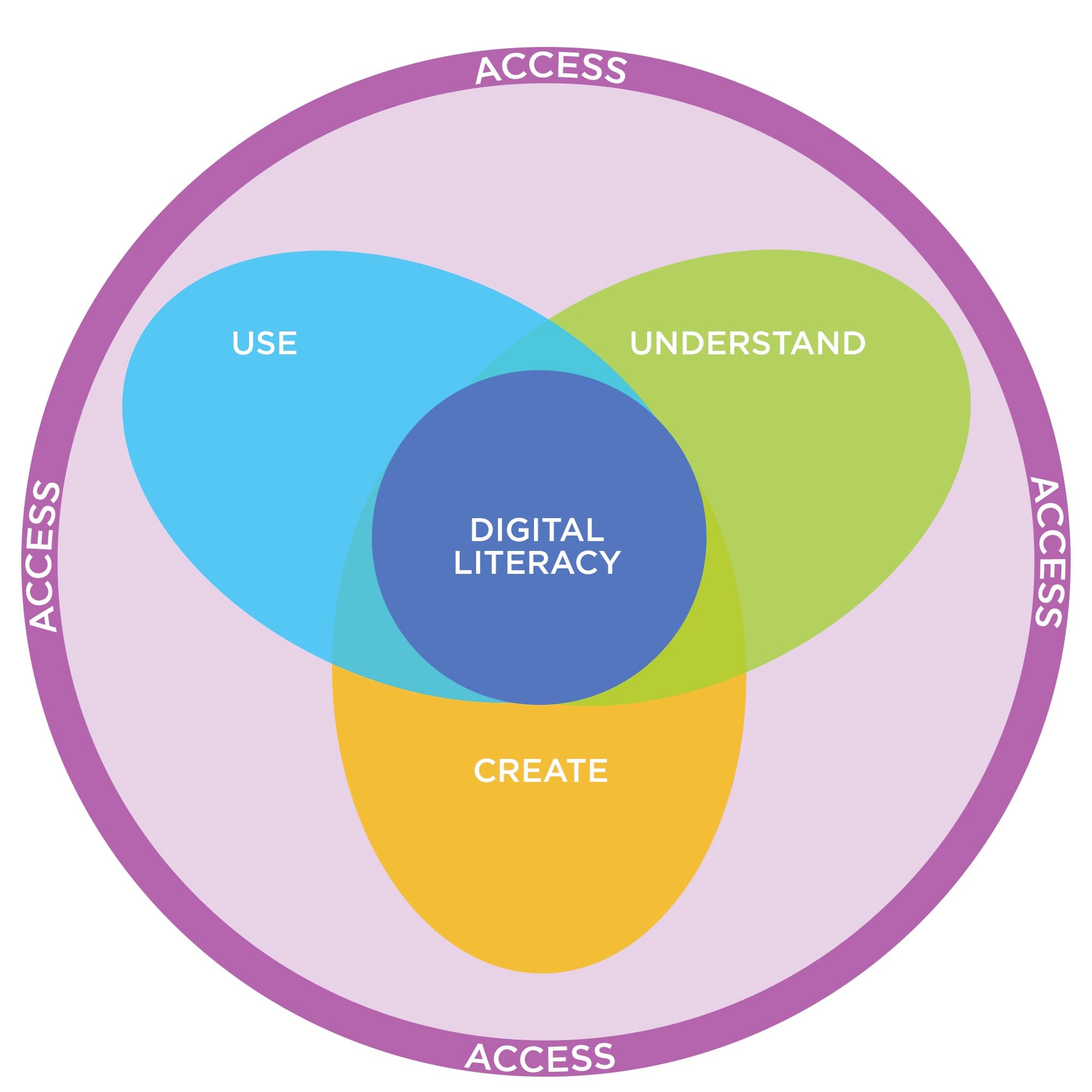
How digital literacy can help close the digital divide View original
Is this image relevant?
Introduction to the 5 Core Concepts of Media Literacy | GoOpenMichigan View original
Is this image relevant?
Media wordcloud.png View original
Is this image relevant?
How digital literacy can help close the digital divide View original
Is this image relevant?
Definition of media literacy
Media literacy is the ability to access, analyze, evaluate, create, and act using all forms of communication. Those five words aren't just a list; each one describes a distinct skill you'll build throughout this course.
- Access — Finding and using media skillfully. This includes knowing where to look for reliable information and how to use different platforms and tools to get it.
- Analyze — Comprehending messages and using critical thinking to examine their quality, truthfulness, credibility, and point of view. Analysis also means considering the potential effects or consequences a message might have on its audience.
- Evaluate — Judging the relevance and value of information based on its context, the medium it appears in, and the credibility of its source. A viral social media post and a peer-reviewed article might cover the same topic, but evaluation helps you weigh them differently.
- Create — Composing or generating your own content with awareness of purpose, audience, and composition techniques. Creation isn't just for professionals; every time you post, comment, or share, you're creating media.
- Act — Applying what you know to make informed decisions, solve problems, and take action, whether individually or as part of a group. This is where media literacy moves from the classroom into real life.

Media literacy vs media studies
These two terms sound similar but point in different directions.
- Media literacy is a skill set. It focuses on your ability to critically analyze and evaluate the media messages you encounter every day. You can apply media literacy in a science class, a voting booth, or a group chat. It crosses disciplines.
- Media studies is an academic field. It examines media production, content, and effects through historical, cultural, and sociological lenses. A media studies course might trace how television news evolved from the 1950s to today; a media literacy lesson would teach you how to evaluate a specific news segment right now.
Think of it this way: media studies helps you understand how media works as a system; media literacy gives you the tools to navigate that system yourself.

Forms of media in literacy
Media literacy applies to every format you'll encounter, not just the internet.
- Traditional media — Print (newspapers, magazines, books) and broadcast (television, radio). These still shape public opinion and set news agendas, even in a digital-first world.
- Digital media — Websites, blogs, social media platforms, mobile apps, podcasts, and video games. Digital media often blurs the line between creator and consumer; a single TikTok user can reach millions.
- Other forms — Advertising and marketing communications, public relations and strategic messaging, and entertainment (movies, music, streaming services). These are easy to overlook because they don't always feel like "media," but they carry persuasive messages just the same.
The key takeaway: if it delivers a message to an audience, it counts as media, and media literacy skills apply to it.
Critical thinking for media literacy
Critical thinking is what turns passive consumption into active engagement. Without it, the other skills in the definition above don't work very well. Here's what critical thinking lets you do with media:
- Question sources. Who created this message? What are their credentials, and do they have a reason to slant the information?
- Spot bias and stereotypes. Every piece of media is made by people with perspectives. Critical thinking helps you identify when those perspectives distort the message.
- Recognize purpose and audience. A pharmaceutical ad during a nightly news broadcast targets a very different audience than a meme on Reddit. Recognizing who a message is for and why it was made changes how you interpret it.
- Consider multiple perspectives. One news story can be framed dozens of ways. A critical thinker looks for what's included, what's left out, and whose voice is missing.
- Make informed decisions. Whether you're deciding which article to trust, which product to buy, or which candidate to support, critical thinking helps you base those choices on evidence rather than emotion or habit.
Developing these habits turns you from someone who simply receives media into someone who actively interrogates it. That shift is the entire point of media literacy.
See Fiveable more often in Google
Mark Fiveable as a preferred source and Google is more likely to show you our guides in Top Stories, with a "preferred" badge in AI Mode and AI Overviews.