6.3 Product Placement and Branded Content

📲Media Literacy Unit 6 Review
6.3 Product Placement and Branded Content
📲 Media Literacy
Product Placement and Branded Content in Media
Product placement and branded content are marketing strategies designed to weave brand messages directly into the media you already consume. Understanding how they work is central to media literacy because these techniques deliberately blur the boundary between entertainment and advertising, making them harder to recognize than a traditional commercial.

Top images from around the web for Product placement and branded content
Putting It Together: Marketing Function | Principles of Marketing View original
Is this image relevant?
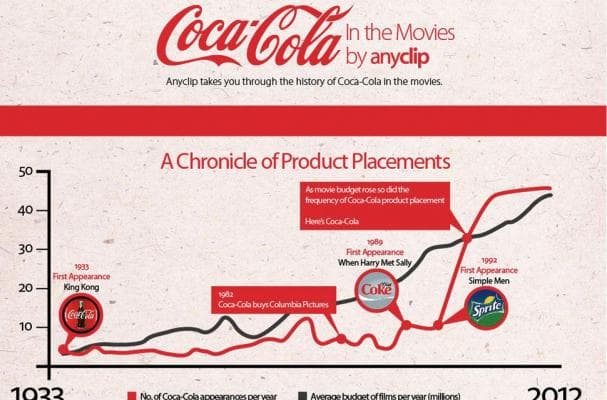
Foodista | Coca-Cola and the Movies Infographic Tracks Product Placement View original
Is this image relevant?
Outcome: Promotion: Integrated Marketing Communication (IMC) | Ivy Tech Introduction to Business View original
Is this image relevant?
Putting It Together: Marketing Function | Principles of Marketing View original
Is this image relevant?
Foodista | Coca-Cola and the Movies Infographic Tracks Product Placement View original
Is this image relevant?
Product Placement vs. Branded Content
These two terms get used interchangeably sometimes, but they're distinct strategies.
Product placement is when a branded product or service is incorporated into media content that already exists on its own, like a movie, TV show, or video game. There's usually a financial agreement between the brand and the producer. Placement can range from subtle (a Coca-Cola cup sitting on a table in the background) to overt (a character picking up that cup, taking a sip, and commenting on how refreshing it is).
Branded content flips the relationship. Instead of inserting a product into someone else's content, the brand funds or creates the content itself. Think sponsored YouTube videos, branded podcasts, or a short film produced by a clothing company. The goal is to engage you with something genuinely entertaining or useful while the brand's message is woven throughout.
The key difference: product placement puts a brand inside existing content. Branded content builds the content around the brand.

Identifying These Strategies Across Media Formats
Once you know what to look for, you'll start spotting these techniques everywhere.
- Movies and TV shows
- Visual placement of products within scenes (a character's laptop always showing the Apple logo)
- Verbal mentions or endorsements by characters ("I love my new Nike shoes")
- Plot integration, where a product becomes part of the storyline (a character driving a specific car brand during a chase scene)
- Video games
- In-game advertisements like virtual billboards for real-world products
- Branded virtual items or accessories (designer clothing for game characters)
- Sponsored game levels or missions tied to a brand
- Music videos and lyrics
- Artists wearing or showcasing specific brands on screen (designer clothing featured prominently in a music video)
- Lyrics that name-drop products or services, reinforcing brand recognition through repetition
- Social media and influencer content
- Sponsored posts or videos where an influencer promotes a product, sometimes with a discount code
- Brand partnerships where an influencer co-creates content with a company
- Product reviews or demonstrations that may look organic but involve payment or free products
Social media placements are especially tricky to identify because influencer content is designed to feel personal and authentic, which is exactly what makes it effective.

Why These Strategies Work
Product placement and branded content succeed because they bypass the mental defenses you put up when you know you're watching an ad.
- Brand awareness and recall. Seeing a product in an entertaining context makes it more memorable. Some associations become iconic over decades. James Bond has been linked to Aston Martin since the 1960s, and that pairing still shapes how people perceive the car brand.
- Emotional transfer. Positive feelings you have toward a show, movie, or creator can transfer to the featured brand. If you trust an influencer's taste, you're more likely to trust their product recommendation.
- Viral potential and earned media. A clever or memorable placement can generate conversation far beyond the original content. The placement of Reese's Pieces in E.T. the Extra-Terrestrial (1982) reportedly boosted the candy's sales by 65%, and people still reference it as a textbook example.
- Challenges and limitations. These strategies aren't foolproof. Audiences can turn against a brand if the placement feels forced or breaks immersion. Measuring direct impact on sales is also difficult since you can't easily isolate the effect of a background product shot from all other marketing a brand does.
Ethical Implications
The effectiveness of these strategies is precisely what raises ethical concerns.
Transparency and disclosure. Because product placement and branded content are designed to not look like ads, audiences can be misled about what's a genuine recommendation and what's paid promotion. The FTC (Federal Trade Commission) requires that sponsored content be clearly disclosed, but enforcement is uneven, and disclosures are often buried in small text or hashtags that viewers scroll past.
Creative integrity. When brands pay to be featured in a film or show, they sometimes gain influence over creative decisions. A director might be pressured to frame a product favorably or adjust a scene to accommodate a sponsor, which can compromise the artistic vision of the work.
Vulnerable audiences. Children and younger viewers are especially susceptible because they're less equipped to distinguish entertainment from advertising. Branded content can also normalize products like alcohol or tobacco by associating them with characters or lifestyles that audiences admire.
Consumer autonomy. At its core, the ethical question is whether you can make a truly informed decision about a product when you didn't realize you were being marketed to in the first place. This is why media literacy matters here: recognizing these techniques doesn't mean you have to reject them, but it does mean you can evaluate them critically rather than absorbing brand messages without awareness.
See Fiveable more often in Google
Mark Fiveable as a preferred source and Google is more likely to show you our guides in Top Stories, with a "preferred" badge in AI Mode and AI Overviews.