14.4 Transmedia Navigation and Storytelling

📲Media Literacy Unit 14 Review
14.4 Transmedia Navigation and Storytelling
📲 Media Literacy
Transmedia Storytelling Fundamentals
Transmedia storytelling is a narrative approach where a single story unfolds across multiple media platforms. A film might introduce the main plot, a comic book series might explore a side character's backstory, and a video game might let you experience events from a different perspective. Each piece stands on its own but also fits into a larger whole.
This matters for media literacy because transmedia is now the default strategy for major entertainment franchises. Understanding how it works helps you recognize how stories are designed to pull you across platforms and keep you engaged.

Top images from around the web for Concept of transmedia storytelling
Telling the Coaches Story | The Common Ratio View original
Is this image relevant?
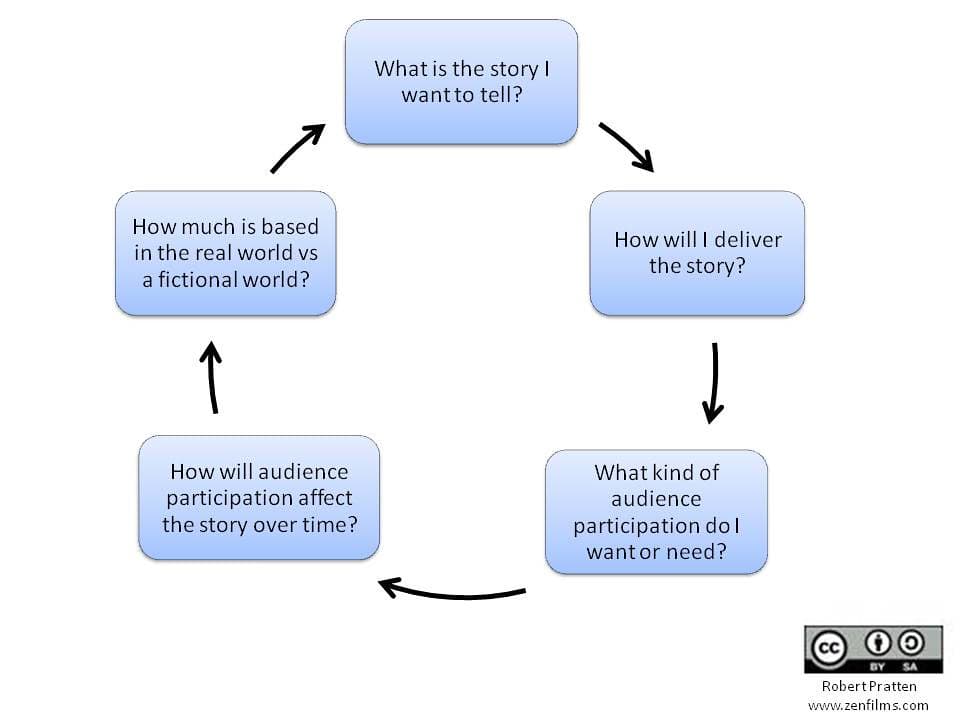
Transmedia Storytelling: Where to Begin | Transmedia Storyte… | Flickr View original
Is this image relevant?
Telling the Coaches Story | The Common Ratio View original
Is this image relevant?
Transmedia Storytelling: Where to Begin | Transmedia Storyte… | Flickr View original
Is this image relevant?
Concept of Transmedia Storytelling
The term was popularized by media scholar Henry Jenkins, who defined it as a process where elements of a story get dispersed across multiple delivery channels, with each channel making its own distinct contribution to the whole.
A few key principles set transmedia apart from simple adaptations or merchandise:
- Multiple platforms, one storyworld. The story lives across films, TV shows, comics, video games, podcasts, and more. The Star Wars franchise is a classic example: novels fill in gaps between films, animated series follow different characters, and games let you play through events the movies never showed.
- Each platform contributes something unique. A comic isn't just retelling the movie. It's adding new information, new characters, or new perspectives that expand the overall narrative. If you removed that comic from the equation, part of the storyworld would be missing.
- Multiple entry points. Not every audience member starts in the same place. Someone might discover the storyworld through a game, then move to the show, then read the comics. Good transmedia design makes each entry point accessible on its own.
- Audience navigation is required. Unlike traditional storytelling where you sit and receive a single narrative, transmedia asks you to actively seek out content across platforms. This navigation skill is itself a form of media literacy.
Narrative Structures in Transmedia
Transmedia projects use several structural approaches to spread a story across platforms. Understanding these helps you map how a franchise is built.
- Core narrative + peripheral stories. There's usually a central storyline (often the film or TV series) that serves as the backbone. Peripheral stories on other platforms expand the world without being required to follow the main plot.
- Serialized storytelling. The narrative unfolds gradually through episodic releases. TV shows and comic book series work this way, keeping audiences coming back over time.
- Parallel storylines. Different platforms follow different characters or events happening simultaneously. The TV show might follow one group while a web series follows another, and their paths occasionally cross.
- Intersecting storylines. Separate narrative threads converge at key moments, revealing connections. A clue planted in a podcast might pay off in the next season of the show.
- Character-driven extensions. Spin-off content dives into a specific character's backstory, motivations, or relationships. Think of how Better Call Saul expanded a supporting character from Breaking Bad into a full narrative.
- World-building extensions. These establish the history, mythology, geography, or rules of the fictional universe. The Lord of the Rings appendices and companion books are a pre-digital example; wikis and lore databases serve this function now.
- Temporal and spatial exploration. Prequels, sequels, and interquels fill timeline gaps, while other content opens up new locations or cultures within the storyworld.

Audience Engagement in Transmedia
Transmedia doesn't just tell you a story; it invites you to participate. This is where media literacy becomes especially important, because the line between audience and creator gets blurry.
- Interactive experiences. Some platforms let audiences directly influence the story. Choose-your-own-adventure formats (like Netflix's Black Mirror: Bandersnatch) and interactive apps put narrative decisions in the viewer's hands.
- Alternate reality games (ARGs). These blur fiction and reality by embedding puzzles, phone numbers, fake websites, and real-world events into the storytelling. Players collaborate to solve mysteries that advance the narrative. The Why So Serious? campaign for The Dark Knight had participants across cities solving clues planted by the fictional Joker.
- Easter eggs and hidden content. Rewards for attentive fans who dig deeper. A background detail in a show might reference a character from the comic, encouraging cross-platform exploration.
- Participatory culture. Fans create their own content: fan fiction, art, videos, theories, and remixes. This fan-generated material can become a significant part of how a storyworld is experienced and understood.
- Community and collective intelligence. Fans share knowledge, debate theories, and piece together narrative puzzles collaboratively. Subreddits, Discord servers, and fan wikis function as collective intelligence hubs.
- Social media integration. Characters might have in-universe social media accounts. Creators use platforms for real-time interaction, building anticipation and responding to fan reactions.
One tension worth noting: creators have to balance authorial control (keeping the story coherent and intentional) with audience agency (letting fans feel ownership and influence). Too much control and the participatory element feels fake. Too little and the narrative loses coherence.
Design of Transmedia Projects
Building a transmedia project is a complex, collaborative process. Here's how it typically unfolds:
- Define the core narrative and themes. What's the central story? Who's the target audience? What themes will hold everything together across platforms?
- Brainstorm platform-specific extensions. Generate ideas for how different media can expand the storyworld. Each extension should complement the main story, not just repeat it.
- Select platforms strategically. Choose media formats that match both the story's needs and the audience's habits. A younger audience might engage more through mobile apps and social media; a dedicated fanbase might dive into long-form podcasts or ARGs.
- Leverage each platform's strengths. Video excels at emotional storytelling. Games excel at agency and exploration. Comics can cover vast timelines efficiently. Use each medium for what it does best.
- Ensure cross-platform continuity. Details, timelines, and character traits need to stay consistent. Contradictions between platforms break immersion and frustrate engaged fans.
- Develop a cohesive aesthetic. Visual style, audio design, and tone should feel connected across all platforms, reinforcing that everything belongs to the same storyworld.
- Plan the release schedule. Timing matters. Staggering releases builds anticipation and guides audiences from one platform to the next. A promotional strategy helps audiences know where to go and when.
- Monitor and adapt. Track audience engagement and feedback. Transmedia projects can be iterative, with creators adjusting future content based on what resonates and what doesn't.
- Plan for expansion. Successful storyworlds stay alive over time. Leaving narrative threads open and designing flexible world-building allows for future growth.
Collaboration is central to this process. Writers, artists, game developers, marketers, and community managers all need to work together to keep the storyworld consistent and engaging across every platform.
See Fiveable more often in Google
Mark Fiveable as a preferred source and Google is more likely to show you our guides in Top Stories, with a "preferred" badge in AI Mode and AI Overviews.