5.4 Dividing Polynomials

📘Intermediate Algebra Unit 5 Review
5.4 Dividing Polynomials
📘 Intermediate Algebra
Division of Polynomials
Dividing polynomials extends the long division you already know from arithmetic into the world of variables and exponents. It's a core technique you'll rely on to simplify rational expressions, find roots of polynomials, and factor higher-degree expressions.
Division of Monomials
Dividing one monomial by another comes down to two moves: divide the coefficients and subtract the exponents of like bases.
- because and
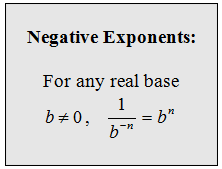
If subtracting exponents gives you a negative result, flip the variable to the denominator so the exponent becomes positive.
- because and

Polynomials Divided by Monomials
To divide a polynomial by a monomial, divide each term of the polynomial by the monomial separately.
If a term in the numerator isn't evenly divisible by the monomial, it stays as a fraction in the result.
That leftover fraction () makes the result a rational expression rather than a polynomial.
Long Division for Polynomials
Polynomial long division works just like numerical long division. Use it when the divisor has two or more terms.
- Arrange both the dividend and divisor in descending order of degree. If any degree is missing (e.g., no term), insert a placeholder with a coefficient of 0.
- Divide the leading term of the dividend by the leading term of the divisor. Write the result above the division bar.
- Multiply that result by the entire divisor.
- Subtract the product from the current dividend. (Watch your signs here; sign errors are the most common mistake.)
- Bring down the next term and repeat steps 2–4.
- Stop when the degree of what's left (the remainder) is less than the degree of the divisor.
The answer is written as:
For example, dividing by : you'd first divide by to get , multiply , subtract, bring down the next term, and continue.
Synthetic Division of Polynomials
Synthetic division is a shortcut that only works when you're dividing by a linear expression of the form .
- Write the coefficients of the dividend in descending order. Include 0 for any missing terms. To the left, write the value (the number that makes the divisor equal zero). For , use . For , use .
- Bring the leading coefficient straight down below the line.
- Multiply that number by and write the product under the next coefficient.
- Add the column (next coefficient + product) and write the sum below the line.
- Repeat steps 3–4 for every remaining coefficient.
- The final number below the line is the remainder. All the other numbers are the coefficients of the quotient, which has degree one less than the dividend.
A common mistake: forgetting to use the opposite sign. If you're dividing by , you use in synthetic division, not .
Remainder and Factor Theorems
These two theorems connect polynomial division to evaluating and factoring polynomials.
Remainder Theorem: When you divide a polynomial by , the remainder equals .
This means you can find the remainder without doing the full division. Just plug into the polynomial. For instance, if and you divide by , the remainder is .
Factor Theorem: is a factor of if and only if .
This is a direct consequence of the Remainder Theorem. If the remainder is zero, the divisor goes in evenly, which means it's a factor. So to test whether is a factor of some polynomial, just check whether .
Together, these theorems give you a fast way to find roots and factors of polynomials without fully factoring or graphing.
See Fiveable more often in Google
Mark Fiveable as a preferred source and Google is more likely to show you our guides in Top Stories, with a "preferred" badge in AI Mode and AI Overviews.