2.8 Judicial Systems

🗳️AP Comparative Government and Politics Unit 2 Review
2.8 Judicial Systems
🗳️ AP Comparative Government and Politics
TLDR
Judicial systems in AP Comparative Government cover how courts in the six course countries interpret and apply law, how judges get their jobs, and how much the courts actually act on their own. The big split is between rule of law systems (UK, Mexico, Nigeria), where law constrains the government, and rule by law systems (China, Russia, Iran), where leaders use courts as tools. Knowing the appointment process and real power of each country's courts lets you compare them quickly.
Judicial Systems AP Comparative Gov Summary
For AP Comparative Government Topic 2.8, judicial systems are about structure, function, appointment, and independence. The same formal power can mean different things across countries, so compare whether courts actually constrain government or mostly serve the ruling authority.
The most useful exam comparison is rule of law versus rule by law. The United Kingdom uses common law and an independent judiciary to support rule of law. China, Russia, and Iran show stronger rule-by-law patterns, where courts are shaped by party, executive, or religious authority. Mexico and Nigeria sit in a more transitional space with judicial review and reforms aimed at independence.
Why This Matters for the AP Comparative Government Exam
This topic builds the comparison skills the exam rewards. You are expected to describe how judiciaries are structured and how they function, then compare those features across countries. The most useful category of comparison here is whether a court genuinely checks the other branches or mostly serves them.
When you compare court systems, focus on relevant, shared categories: how judges are appointed, whether the court has judicial review, and whether that power is actually used. Picking categories both countries share is exactly the kind of comparison the exam expects, and it keeps you from listing random differences that do not connect.
Key Takeaways
- Rule of law means law limits the government; rule by law means the government uses law to control others. The UK, Mexico, and Nigeria lean toward rule of law, while China, Russia, and Iran lean toward rule by law.
- Judicial review (the power to strike down laws or actions) exists in Mexico, Nigeria, and Russia, but Russia has not used it to limit the governing branches.
- The UK Supreme Court does not have full judicial review the way some courts do; it handles final appeals, protects rights and liberties, and rules on devolution disputes.
- Appointment processes vary: many countries (Mexico, Nigeria, Russia) use presidential nomination plus a confirming body, while China's judges are controlled by the Chinese Communist Party and Iran's judiciary is shaped by the Supreme Leader and religious law.
- Iran's judiciary must apply Islamic Sharia law, and its head is appointed by the Supreme Leader, tying the courts to religious authority.
- Mexico and Nigeria have both tried to make their courts more independent and legitimate through reforms aimed at reducing corruption and strengthening the judiciary.
Judicial Systems in the Six Course Countries

A judicial system is how a country's laws are interpreted, applied, and enforced through its courts. The key things to track for each country are the same: what the courts do, how judges are appointed, whether they have judicial review, and whether the courts actually act independently or follow the ruling power.
China
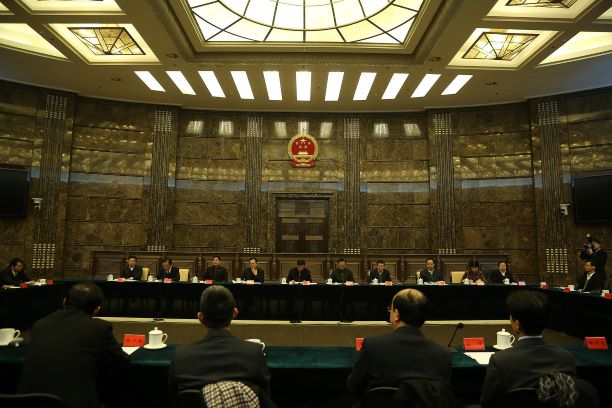
- China operates under rule by law, not rule of law. Courts apply law, but they answer to the Chinese Communist Party rather than limiting it.
- The Party controls most judicial appointments, so the courts function as an extension of CCP power rather than an independent check.
Iran

- The judiciary's main job is to keep the legal system based on religious law, so judges must be trained in Islamic Sharia law.
- The head of the judiciary is appointed by the Supreme Leader.
- That head can nominate half of the Guardian Council, with approval by the Majles, which links the courts to both religious and political authority.
Mexico
- The judiciary is in transition. The Supreme Court has the power of judicial review, and constitutional amendments have been added to make the system more independent and effective.
- Supreme Court magistrates are nominated by the president and approved by the Senate for a 15-year term.
Nigeria
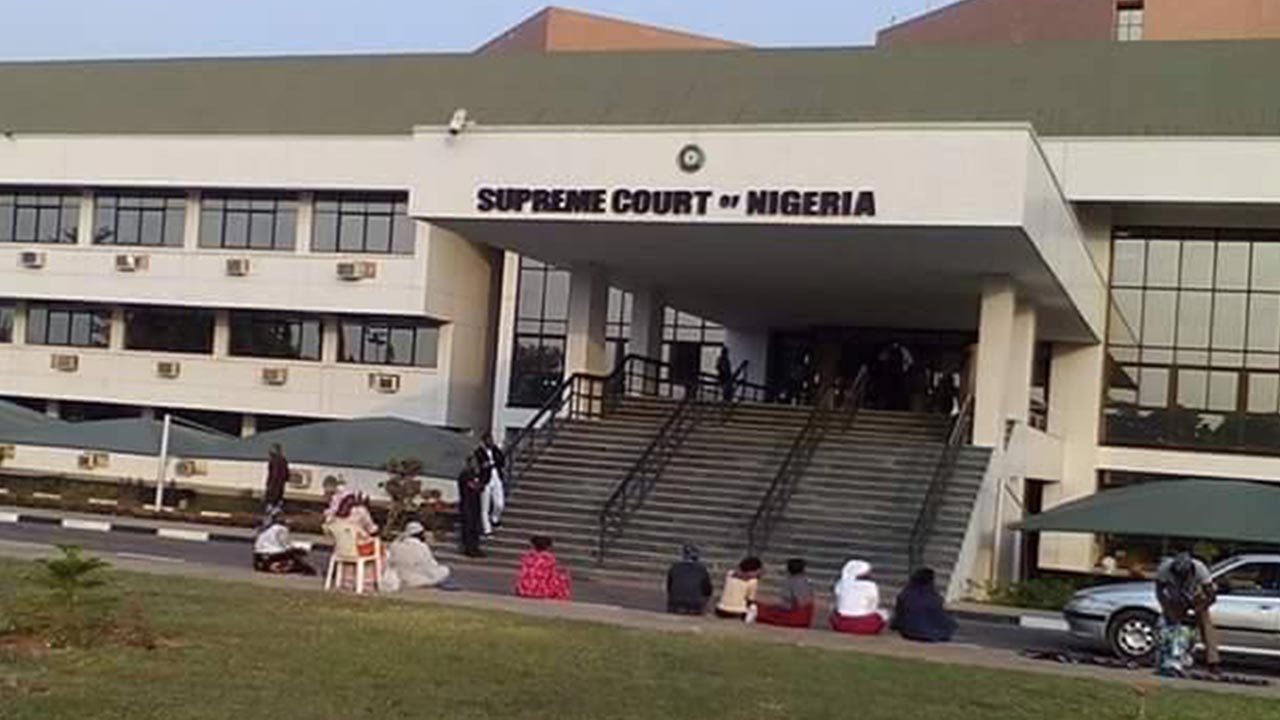
- The judiciary has the power of judicial review. Reforms have aimed to rebuild its legitimacy and independence by reducing corruption.
- Supreme Court judges are recommended by a judicial council and appointed by the president with Senate confirmation.
- Under Nigeria's federal system, Islamic Sharia Courts have been established in the northern states.
Russia
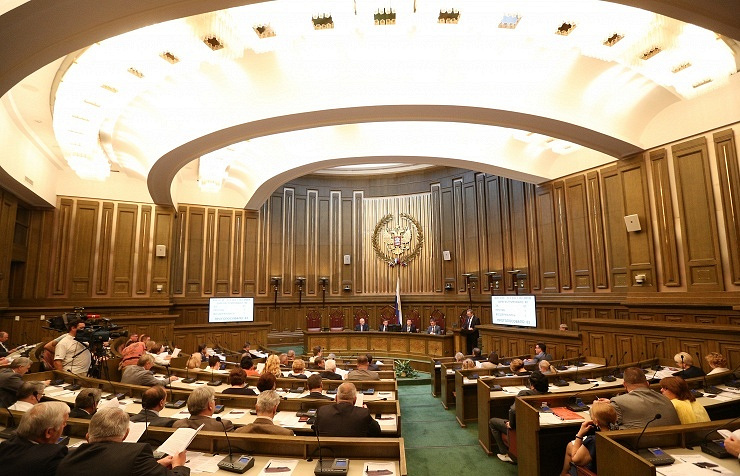
- The government uses the judicial system to target opposition.
- The courts have judicial review on paper, but that power has not been used to limit the authority of the governing branches.
- Judges are nominated by the president and approved by the Federation Council.
United Kingdom
- The judicial system uses common law to enforce the rule of law.
- Major functions of the Supreme Court include serving as the final court of appeals, protecting human and civil rights and liberties, and ruling on devolution disputes (disagreements over powers given to Scotland, Wales, and Northern Ireland).
How to Use This on the AP Comparative Government Exam
Comparison
When a question asks you to compare judiciaries, pick a category that both countries actually share. Good categories here include appointment method, presence of judicial review, and whether the court is independent in practice. For example, you can compare Russia and Mexico on judicial review: both technically have it, but Mexico uses it while Russia does not turn it against the governing branches. That kind of "same feature, different real-world use" point is strong comparison.
Common Trap
Do not stop at what a constitution says on paper. Russia and China both look more independent in their written rules than they are in practice. The exam rewards you for noting the gap between formal power and how courts are actually used.
Building an Argument
If you need to argue whether a country's judiciary supports democracy, connect court features to outcomes. Independent courts that can overrule other branches and protect rights tend to support the rule of law. Courts that are controlled by a party or leader tend to reinforce that leader's power instead.
Common Misconceptions
- Misconception: Every Supreme Court can strike down laws.Actually: Not true. The UK Supreme Court does not have the same broad power to nullify laws that some courts do, because of parliamentary sovereignty. Its big jobs are final appeals, rights protection, and devolution disputes.
- Misconception: Having judicial review means a court is independent.Actually: Russia shows why this is wrong. The power can exist on paper and still never be used to limit the governing branches.
- Misconception: Rule of law and rule by law are the same thing.Actually: They are opposites in spirit. Rule of law means leaders are bound by law; rule by law means leaders use law as a tool to control others.
- Misconception: Appointment by a president automatically means the court is controlled.Actually: Several countries use presidential nomination plus a confirming body, like a senate or council. The level of independence depends on the whole process, terms, and how courts behave, not just who nominates.
- Misconception: Iran's courts are like secular courts elsewhere.Actually: Iran's judiciary is built around religious law, judges are trained in Sharia, and the Supreme Leader appoints its head, so religious authority shapes the system directly.
Related AP Comparative Government Guides
Practice Questions for 2.8
1 of 10
A report notes Iran enforces Sharia nationwide while Nigeria applies secular law and regional Sharia, concluding Iran's system is more unified. What limitation affects this analysis?
A.
It equates uniform law with judicial quality and ignores independence
B.
Regional population sizes do not determine judicial independence or effectiveness
C.
It omits the number of judges in each country's judiciary
D.
Authors' academic disciplines do not address judicial independence
Vocabulary
The following words are mentioned explicitly in the AP® course framework for this topic.Term | Definition |
|---|---|
civil rights | Fundamental freedoms and protections from government interference, such as freedom of speech, press, religion, and assembly. |
common law | A legal system based on court decisions and precedents rather than written statutes, used in the United Kingdom and other countries. |
court of appeals | A court that reviews decisions made by lower courts to determine if legal errors occurred. |
devolution disputes | Legal conflicts concerning the transfer of powers from a central government to regional or local governments. |
federalism | A system of government in which power is divided between a central government and regional or state governments. |
Guardian Council | An Iranian supervisory body that ensures legislative actions are compatible with Islam and Sharia law. |
human rights | Fundamental rights and freedoms that all people are entitled to, protected by courts and legal systems. |
Islamic Sharia law | A legal system based on Islamic religious principles and teachings that governs civil and criminal matters in some countries. |
judicial appointments | The process by which judges are selected and appointed to serve in the judicial system. |
judicial review | The power of courts to examine laws and government actions to determine if they are constitutional. |
judiciary | The system of courts and judges in a country that interprets and applies laws and resolves disputes. |
rule by law | A system in which the state uses laws as a tool to reinforce its own authority, typically associated with authoritarian regimes. |
rule of law | The principle that all individuals and institutions, including the government, are subject to and accountable to the law. |
Supreme Court | The highest court in a country's judicial system that serves as the final authority on legal matters. |
Frequently Asked Questions
What do judicial systems do in AP Comparative Government?
Judicial systems interpret and apply laws, resolve disputes, and may protect rights or review government actions. Their real power depends on structure, appointments, and independence.
Is China’s judiciary independent?
China’s judiciary is not independent in the rule-of-law sense. Under rule by law, the judicial system is subordinate to the Chinese Communist Party, which controls most judicial appointments.
What is the difference between rule of law and rule by law?
Rule of law means government is constrained by law. Rule by law means leaders use law and courts as tools of control rather than being meaningfully limited by them.
Which AP Comp Gov countries have judicial review?
Mexico and Nigeria have judicial review, and Russia has it formally but does not use it to limit governing branches. The UK Supreme Court has important appellate, rights, and devolution functions but not broad U.S.-style review of Parliament.
How are judges appointed in Mexico, Nigeria, and Russia?
Mexico’s Supreme Court magistrates are nominated by the president and approved by the Senate for 15-year terms. Nigeria’s Supreme Court judges are recommended by a judicial council and appointed by the president with Senate confirmation. Russia’s judges are nominated by the president and approved by the Federation Council.
What is a common mistake about judicial systems?
A common mistake is assuming formal judicial review means real independence. Russia shows that a court can have review on paper while still failing to limit the governing branches in practice.
See Fiveable more often in Google
Mark Fiveable as a preferred source and Google is more likely to show you our guides in Top Stories, with a "preferred" badge in AI Mode and AI Overviews.