Nigeria

🗳️AP Comparative Government and Politics Review
Nigeria
🗳️ AP Comparative Government and Politics
Overview
Nigeria is a democratizing multiparty republic with a presidential system, and it's one of the six required course countries in AP Comparative Government. Power in Nigeria transitioned to a multiparty republic following decades of military rule, which makes it the course's go-to case for democratization, federalism in a divided society, and the resource curse.
Africa's most populous country gained independence from Britain in 1960, then cycled through coups, a civil war (1967-1970), and long stretches of military government before the 1999 constitution launched the current democratic era. With more than 250 ethnic groups, a Muslim-majority north and a Christian-and-animist south, and an economy built on oil, Nigeria shows up in every unit of the course. If you can explain why a country this diverse uses federalism, ethnic quotas, and a special presidential election rule, you understand Nigeria.
Government Structure
Nigeria is a federal presidential republic. The constitution separates power among an elected president, a bicameral National Assembly, and a judiciary with judicial review, and it divides authority between the national government and 36 states.
| Feature | Nigeria |
|---|---|
| Regime type | Democratizing multiparty republic (post-military rule) |
| System | Presidential |
| State structure | Federal, 36 states plus the Federal Capital Territory (Abuja) |
| Executive | Directly elected president, head of state and head of government, two four-year term limit |
| Legislature | Bicameral National Assembly: Senate and House of Representatives |
| Senate | 3 senators per state (109 total with the FCT), confirmation and impeachment powers |
| House of Representatives | 360 members, single-member districts, seats allocated by state population |
| Judiciary | Supreme Court with judicial review; Sharia courts in northern states |
| Elections | Plurality voting; president needs most votes plus 25% in two-thirds of states |
| Major parties | People's Democratic Party (PDP), All Progressives Congress (APC) |
| Election administration | Independent National Electoral Commission (INEC) |
Executive. The president is both head of state and head of government, plus chief executive, commander in chief, and head of the civil service. The president approves domestic legislation, conducts foreign policy, and appoints cabinet ministers subject to Senate confirmation. Term limits cap presidents at two four-year terms. An informal practice called "zoning" rotates the presidency between northern and southern candidates to maintain regional balance, but it isn't written into law.
Legislature. The National Assembly is bicameral. Both the Senate and the House of Representatives must approve legislation, and bills still require the president's signature to become law. The Senate holds unique impeachment and confirmation powers. The constitution gives the legislature impeachment power and oversight authority, and it uses both to stay independent and check the executive, though the House is often constrained by a president who wants more concentrated power.
Judiciary. Nigeria's judiciary has the power of judicial review. Supreme Court judges are recommended by a judicial council, appointed by the president, and confirmed by the Senate. Since the return to democracy, Nigeria has worked to reestablish the judiciary's legitimacy and independence by reducing corruption. Because of federalism, northern states have established Islamic Sharia courts alongside the secular system.
Elections. House members are directly elected in single-member districts, with each state's seat count based on population. Each of the 36 states elects three senators. Presidential candidates must win the most votes nationally AND secure at least 25 percent of the vote in two-thirds of Nigeria's states, a rule that directly reflects the regime's federal character. If no candidate meets both criteria, a runoff follows. As part of its democratic transition, Nigeria created an independent election commission (INEC) to reduce voter fraud and manipulation and enhance electoral competition.
Nigeria Across the Course
Unit 1: Political Systems, Regimes, and Governments
Nigeria is the course's example of a transition from military rule to a multiparty republic. It's also one of the two required examples (with Iran) of violent government transitions through revolutions or coups d'etat. Nigeria has experienced more coups than Mexico since 1960 because sharper ethnic and religious divides provoked conflict between groups for control of the central government, which gave the military openings to intervene.
Federalism is the other big Unit 1 story. Like Mexico and Russia, Nigeria divides power among levels of government to give localities a degree of autonomy over social and educational services while reserving key powers for the national government. Federalism here is a survival strategy: it manages diversity and reduces incentives for secession. On stability, Nigeria is a required example of state responses to separatist group violence, drug trafficking, and discrimination based on gender or religious differences. Think Boko Haram's insurgency in the northeast, Niger Delta militancy, and lingering Biafran separatism in the southeast.
Unit 2: Political Institutions
Nigeria and Mexico are the course's two presidential systems. That means a cabinet responsible mostly to the elected executive, a legislature that can remove cabinet members only through impeachment, separate fixed-term popular elections for the legislature, and a top executive who is both head of state and head of government.
Know the checks in detail. The Senate confirms appointments and holds impeachment power. The legislature passes bills into law, but bills still need the president's signature. The judiciary exercises judicial review and is rebuilding legitimacy after years of military interference and corruption. And remember the federalism twist on the courts: Sharia courts operate in northern states, a sign that subnational governments have real legal autonomy.
Unit 3: Political Culture and Participation
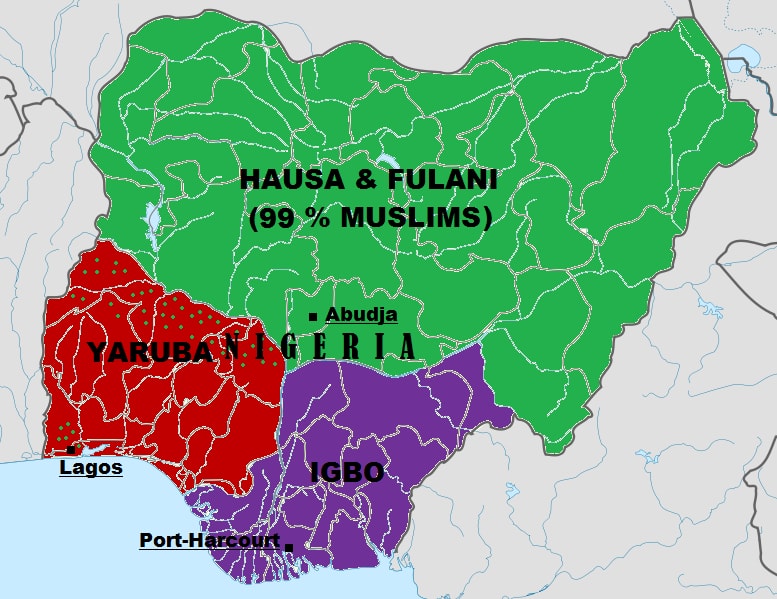
Nigeria's defining cleavages are ethnic, religious, and regional. More than 250 ethnic groups, with the Hausa-Fulani, Yoruba, and Igbo as the largest, overlap with a religious-regional split between the predominantly Muslim north and the south, where Christians and animists are concentrated. Ethnicity plays a more significant role in Nigeria than in Mexico because of different colonial histories and the greater diversity and politicization of ethnic and religious identities in Nigeria. These long-standing cleavages have produced separatist movements and radical religious elements like Boko Haram.
Civil society is the brighter side of this unit. Nigeria, like Mexico, benefits from an increasingly active civil society, much of which focuses on reducing corruption. Religious organizations, labor unions, professional associations, and human rights NGOs all push for governance reform, and youth-led mobilizations like the 2020 EndSARS protests against police brutality show citizens pressuring the state outside formal channels.
Unit 4: Party and Electoral Systems and Citizen Organizations
Nigeria has a multiparty system with about 30 registered political parties, but two strong parties matter most: the People's Democratic Party (PDP) and the All Progressives Congress (APC). These two have alternated control of the National Assembly, and a third party has had a degree of electoral success. The PDP held the presidency from 1999 to 2015; the APC's 2015 win marked Nigeria's first democratic transfer of power between parties. Nigerian parties are built more on regional bases and elite networks than ideology, and ethnic quotas affect representation in the federal legislature.
Memorize the election rules from the table above, especially the presidential formula (most votes plus 25 percent in two-thirds of the states). The course frames Nigeria's majoritarian rules, like those in Iran and Russia, as providing winners with a national mandate.
Social movements are heavily tested here. The Movement for the Emancipation of the Niger Delta (MEND) and the Movement for the Survival of the Ogoni People (MOSOP) emerged to advocate for ethnic minority rights and protest unjust extraction and distribution of oil in the Niger Delta. Boko Haram is the movement attempting to establish an Islamic state in northern Nigeria. Together they illustrate movements pressuring the state to redistribute revenue from key exports like oil.
Unit 5: Political and Economic Changes and Development
Nigeria is a rentier state, deriving a sizable share of government revenue from oil and gas exports. That brings the full resource curse package: lack of economic diversification, revenue swings tied to oil prices, currency overvaluation, rich-poor disparity, corruption, and weak accountability because the government doesn't rely heavily on citizen taxes. Oil resources are nationalized, but the foreign multinational corporations that underwrite Nigeria's oil production exercise real political influence.
The required market-reform example is the state-owned Nigerian National Petroleum Corporation (NNPC) collaborating with foreign companies in joint ventures to extract and produce oil. Nigeria has also enacted economic liberalization policies (like China), including IMF-backed structural adjustment programs involving privatization, reduced tariffs, and reduced subsidies. Regionally, Nigeria belongs to the Economic Community of West African States (ECOWAS), a required supranational organization example that pressures policymakers to liberalize trade.
Two more required Unit 5 facts: unequal gender access to education between Nigeria's north and south is the social-policy example, and brain drain (skilled, educated Nigerians emigrating to escape policies seen as limiting, corrupt, or repressive) is the demographic-change example, shared with Iran.
Key Comparisons
Nigeria vs. Mexico is the comparison the course leans on hardest. Both are presidential, federal systems that transitioned to democracy, created independent election commissions, and have active anti-corruption civil societies. The differences: Nigeria's transition followed military rule while Mexico's followed single-party dominance, Nigeria has experienced far more coups since 1960, and ethnicity is far more politicized in Nigeria.
Nigeria vs. Iran. These are the two required examples of violent government transitions. Both are rentier states experiencing brain drain. But religious law works differently: Iran's entire legal system must be based on Sharia, while Nigeria's Sharia courts exist only in northern states under federalism, alongside secular courts.
Nigeria vs. Russia and Iran on elections. All three use majoritarian presidential rules that give winners a national mandate, but Nigeria's formula is plurality plus geographic distribution (25 percent in two-thirds of states), not a two-round absolute majority like Russia and Iran use.
Oil-sector management. Nigeria's NNPC runs joint ventures with foreign companies, Mexico opened Pemex to private investment, and Russia re-nationalized energy under Putin. This three-way comparison is a classic Comparative Analysis setup.
For a side-by-side view across all six countries, use the comparison tables guide.
Common Mistakes
- Saying the president just needs the most votes. The fix: a winning candidate needs the most votes AND at least 25 percent in two-thirds of the 36 states. The distribution requirement exists because of federalism, and FRQs love asking why.
- Confusing Nigeria's Sharia courts with Iran's system. The fix: in Nigeria, Sharia courts operate only in northern states under federalism; in Iran, the entire national legal system must conform to Sharia.
- Treating PDP and APC as ideological rivals like US parties. The fix: describe them as elite coalitions with regional bases that have alternated control of the National Assembly, not programmatic left-right parties.
- Lumping MEND, MOSOP, and Boko Haram together. The fix: MEND and MOSOP are Niger Delta movements about oil revenue and ethnic minority rights; Boko Haram seeks an Islamic state in the north. Different regions, different goals.
- Forgetting the legislature has real power. The fix: the National Assembly can impeach the president and uses oversight to check the executive, even though the president's signature is still required for bills and the executive pushes for concentrated power. Don't write Nigeria off as a rubber-stamp legislature.
- Vague resource-curse answers. The fix: name specific mechanisms, such as weak accountability because the government doesn't depend on citizen taxes, revenue volatility, and corruption. A useful data point: Nigerian voter turnout fell from just under 50 percent in 2007 to 32 percent in 2015, the kind of trend a Quantitative Analysis FRQ asks you to interpret.
Practice and Next Steps
Nigeria touches every unit, so test yourself across all of them. Run targeted multiple-choice sets in guided practice, then write a Comparative Analysis response pairing Nigeria with Mexico or Iran using FRQ practice with instant scoring. Drill the vocabulary that shows up in Nigeria questions, like rentier state, judicial review, and majoritarian elections, in the key terms glossary. When you've reviewed all six countries, take a full-length practice exam to see how Nigeria questions fit into the real 55-question multiple-choice section and four FRQs. Then move on to the other course countries on the review by country page.
Frequently Asked Questions
What type of government does Nigeria have in AP Comp Gov?
Nigeria is a democratizing multiparty republic with a federal presidential system. The directly elected president is both head of state and head of government, the bicameral National Assembly (Senate and House of Representatives) approves legislation, and power is divided between the national government and 36 states.
How does Nigeria's presidential election work?
A winning candidate must receive the most votes nationally AND at least 25 percent of the vote in two-thirds of Nigeria's 36 states. The distribution requirement reflects Nigeria's federal character by forcing candidates to build support across regions, not just in their ethnic or regional base.
How is Nigeria's use of Sharia law different from Iran's?
In Nigeria, Islamic Sharia courts exist only in northern states under federalism, operating alongside secular national courts. In Iran, the entire legal system must be based on Sharia. This is a common exam comparison, so review Iran's system alongside Nigeria's.
Why is Nigeria considered a rentier state?
Nigeria derives a sizable percentage of total government revenue from oil and gas exports rather than citizen taxes, which weakens government accountability. The resource curse follows: lack of economic diversification, revenue swings with oil prices, corruption, and stark rich-poor disparity. The state-owned NNPC runs joint ventures with foreign companies to extract and produce oil.
What are the main political parties in Nigeria for AP Comp Gov?
The People's Democratic Party (PDP) and the All Progressives Congress (APC) are the two strong parties in Nigeria's multiparty system of about 30 registered parties, and they have alternated control of the National Assembly. The PDP held the presidency from 1999 to 2015; the APC's 2015 win was Nigeria's first democratic transfer of power between parties.
How does the AP Comp Gov exam compare Nigeria and Mexico?
Both are presidential, federal systems with independent election commissions and anti-corruption civil societies, but Nigeria has experienced more coups since 1960 because its sharper ethnic and religious divides invited military intervention, and ethnicity is more politicized in Nigeria. Practice writing this comparison with FRQ practice and instant scoring.
See Fiveable more often in Google
Mark Fiveable as a preferred source and Google is more likely to show you our guides in Top Stories, with a "preferred" badge in AI Mode and AI Overviews.