United Kingdom

🗳️AP Comparative Government and Politics Review
United Kingdom
🗳️ AP Comparative Government and Politics
Overview
The United Kingdom is the democratic regime of AP Comparative Government, and it anchors nearly every democracy-side comparison in the course. The UK is a parliamentary democracy with a ceremonial monarch, a unitary state structure softened by devolution, and a common law judiciary, making it the go-to example for rule of law, free media, fair elections, and fusion of executive and legislative power.
Whenever the exam asks you to contrast democratic and authoritarian regimes, the UK is usually your democratic case. It's also the course's required parliamentary system, its main devolution case, and the country attached to three required referendum examples (devolution, an independence question, and withdrawal from the European Union). If you can explain how the UK government works and why its institutions look the way they do, you have evidence ready for a huge share of free-response prompts.
Government Structure
The UK is a unitary parliamentary democracy. Lawmaking and executive functions are fused: the House of Commons selects the head of government, and it can remove the prime minister and cabinet. There's no separately elected president, no codified single-document constitution, and no court that can strike down ordinary legislation the way the US Supreme Court can.
| Feature | United Kingdom |
|---|---|
| Regime type | Democratic |
| System | Parliamentary (fused executive and legislative functions) |
| Head of state | Monarch (ceremonial) |
| Head of government | Prime minister, leader of the largest party or coalition in the Commons |
| Legislature | Bicameral: elected House of Commons, appointed House of Lords |
| Electoral system (Commons) | Single-member district, first-past-the-post (plurality) |
| Judiciary | Common law; Supreme Court is the final court of appeals |
| State structure | Unitary, with devolution to multiple regional parliaments |
A few details worth locking in:
Executive. The monarch is the ceremonial head of state and formally appoints as prime minister the leader of the party or coalition holding the most seats in the House of Commons. The PM can call elections, sets the foreign policy agenda, serves as de facto commander in chief, and acts as chief executive over the civil service. Real power sits with the PM, not the Crown.
Legislature. The elected House of Commons approves legislation and is solely responsible for decisions on financial bills like new taxes. The appointed House of Lords reviews and amends bills from the Commons, which effectively delays implementation and acts as a power check. The Commons is highly organized by political parties, and voting follows strict party discipline. During Question Time, members can question the prime minister directly, holding the PM accountable and opening debate. All members of the Commons face election every 5 years, which keeps lawmakers working for their constituents.
Judiciary. The UK uses common law to enforce the rule of law. The Supreme Court serves as the final court of appeals, protects human and civil rights and liberties, and rules on devolution disputes between Westminster and the regional governments.
Checks in a fused system. Parliamentary systems have fewer institutional obstacles to enacting policy than presidential systems, but Parliament still checks the executive. It can censure cabinet ministers, refuse to pass legislation the executive proposes, question the executive and cabinet ministers, and impose time deadlines on calling new elections. The biggest check of all: the legislature can remove the head of government and cabinet.
The United Kingdom Across the Course
Unit 1: Political Systems, Regimes, and Governments
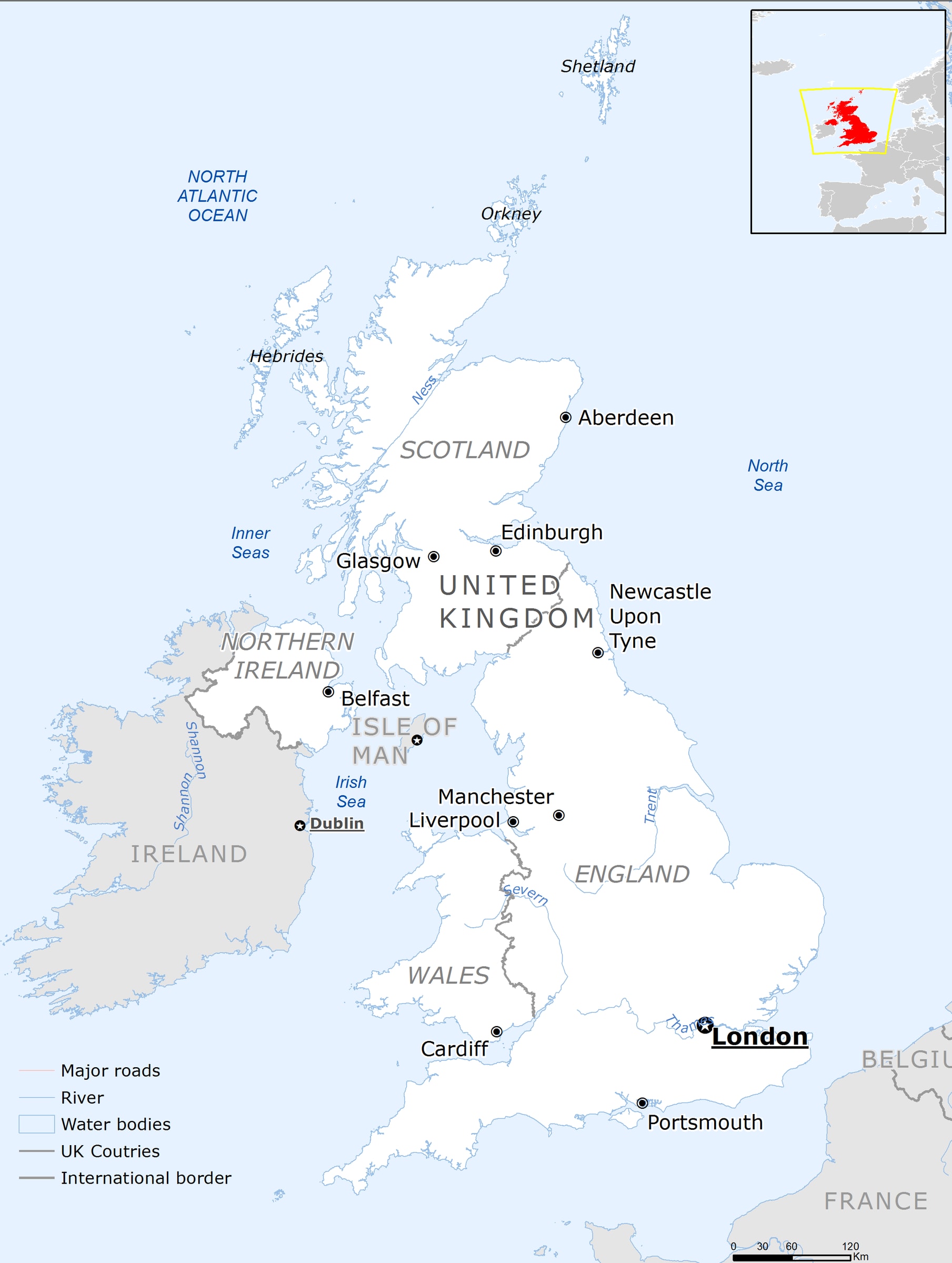
The UK is a democratic regime in a unitary state. Democratic regimes rely on rule of law, meaning the state is limited to the same rules as its citizens, tolerate a high degree of media freedom, and hold elections that let citizens control the policy-making process. The UK checks all three boxes.
The unitary label needs nuance, and the course expects you to give it. Power is concentrated at the national level in Westminster, which allows more uniform policies and potentially more efficient policy making. But constitutional reforms devolved power to multiple parliaments, allowing the regime to maintain stability. That's the key Unit 1 move: the UK responded to regional pressure not by becoming federal, but by delegating power downward while Westminster stays sovereign. Devolution can enhance legitimacy (matching policies to local needs, increasing participation, better representing ethnic and religious minorities) or weaken it (contradictory policies, regional inequality, sharper ethnic and local tensions).
Legitimacy in the UK also flows from tradition. The monarchy and centuries of institutional continuity give the regime a traditional source of legitimacy on top of its electoral one, and democratic regimes like the UK can maintain sovereignty using less coercive power than authoritarian regimes need.
Unit 2: Political Institutions
This is the UK's heaviest unit. Get fluent in the parliamentary model: the legislature selects and removes the head of government and cabinet, lawmaking and executive functions are combined, and the result is fewer institutional obstacles to enacting policy than in presidential systems like Mexico or Nigeria.
Know each institution's job. The PM (head of government) versus the monarch (ceremonial head of state). The Commons (elected, approves legislation, controls money bills, 5-year election cycle) versus the Lords (appointed, reviews and amends, delays as a check). The Supreme Court (final appeals, rights protection, devolution disputes) operating in a common law tradition. And know the accountability tools: Question Time, censure of ministers, refusing executive legislation, and removal of the government.
Unit 3: Political Culture and Participation
The UK's signature participation tool is the referendum, which lets citizens vote directly on policy questions. The course requires three UK referendum subjects: devolution of powers to regional assemblies, the separation and creation of an independent nation-state (the Scottish independence question), and withdrawal from the European Union (Brexit). Referenda can promote democratic policy making, let a chief executive bypass the legislature, or oblige citizens to make difficult and potentially unpopular decisions. Brexit is the classic example of that last one.
As a democratic regime, the UK tolerates a high degree of media freedom, which encourages citizen control of the political agenda and checks political power and corruption.
The UK's social cleavages are heavily tested. Three to know:
- Ethnic and regional differences among the Scottish, English, Welsh, and Irish nations
- Religious differences between Protestants and Catholics in Northern Ireland
- Racial tensions between whites and non-European minorities whose heritage traces to the UK's colonial history
These cleavages produce both separatist movements (groups seeking full independence) and movements demanding autonomy but not independence. Scotland is the example that covers both sides: devolved parliaments answer autonomy demands, while the independence referendum addressed the separatist push.
Unit 4: Party and Electoral Systems and Citizen Organizations
Members of the House of Commons are directly elected under single-member district, first-past-the-post (FPTP) rules. The candidate with the most votes in each district wins, no majority required. This electoral system tends to promote a two-party system, provide strong constituency service and accountability (one representative per district), and ensure geographic representation.
The party system follows directly from the rules. Competition runs primarily between two major parties, the Conservative Party and the Labour Party, which control the legislature and executive because FPTP favors large parties. But here's the twist students miss: single-member districts also let regional parties win seats wherever their support is geographically concentrated, so minor parties with regional bases still get some legislative representation even as FPTP diminishes minor-party representation overall. Inside the Commons, parties enforce strict party discipline, which is how the PM's majority reliably passes the government's agenda.
The House of Lords works completely differently. Appointments are approved by the monarch, with recommendations made by the prime minister and an independent commission. No elections at all.
Unit 5: Political and Economic Changes and Development
The UK sits at the liberal end of every Unit 5 spectrum. Among the six course countries, the UK allows the most private control of natural resources (China allows the least), and it's the only course country not associated with resource nationalization.
The European Union is the course's required supranational organization, holding sovereign powers over member states and pressuring policymakers to reduce tariffs and liberalize trade. The UK's referendum on withdrawal from the EU is the required example of a country pushing back against supranational authority, which makes Brexit useful evidence for sovereignty, referenda, and globalization prompts all at once.
Demographic change drives the UK's required policy pressures. Positive net migration into the UK has produced social and political tensions, including the growth of new political parties that stand against immigration and against supranational organizations, challenging the government's legitimacy. Meanwhile, an aging population and a declining working-age population strain the universal health care system: constituents demand lower health care costs while a shrinking pool of workers faces increased tax burdens to fund it. And when budget deficits hit, governments often adopt austerity measures, cutting funding for state programs.
Key Comparisons
These are the matchups the exam keeps coming back to, and the country comparison tables lay them out side by side:
- Parliamentary vs. presidential vs. semi-presidential. The UK is the course's parliamentary system; Mexico and Nigeria are presidential; Russia is semi-presidential. Parliamentary systems have fewer institutional obstacles to enacting policy because the executive comes from the legislative majority.
- Unitary states. The UK, China, and Iran are unitary, but the UK is the devolution case. Same state structure, very different distribution of power in practice.
- Monarch vs. Supreme Leader. A past exam question flags this trap directly: the British monarch is largely ceremonial, but Iran's Supreme Leader is not. Both are unelected heads of state, and the resemblance ends there.
- Appointed upper chambers. The UK's House of Lords (monarch approves, PM and an independent commission recommend) pairs with Russia's appointed Federation Council for questions about unelected legislative chambers.
- Private control of natural resources. UK most, China least. A clean, quotable data point for economic-system comparisons.
- Rule of law. Democratic regimes limit the state to the same rules as citizens. The UK is the strongest example, and Argument Essay scoring guidelines have credited evidence like "government officials follow the rules, law, and regulations, which gives the government authority and allows it to maintain sovereignty."
Common Mistakes
- Treating the monarch as a real policymaker. The monarch is the ceremonial head of state who formally appoints the PM. Policy power belongs to the prime minister and cabinet. Always answer executive-power questions with the PM.
- Equating the British monarch with Iran's Supreme Leader. The course explicitly marks this as inaccurate. The monarch is ceremonial; the Supreme Leader holds real power over the military, judiciary, and policy.
- Calling the UK federal because of devolution. The UK is unitary. Devolution delegates power downward to regional parliaments, but Westminster remains sovereign. Say "unitary state with devolution," not "federal."
- Assuming the Lords is just a weaker Commons. The Lords is appointed, not elected, and its check is delay: reviewing and amending bills. The Commons alone decides financial bills like new taxes.
- Saying FPTP shuts out all small parties. FPTP diminishes minor-party representation nationally, but regional parties with geographically concentrated support still win Commons seats. Both halves of that statement can earn points.
- Dropping accurate but irrelevant evidence in essays. "The UK has a free media" is true, but scoring guidelines have flagged it as not relevant to a sovereignty prompt. Match your UK fact to the concept the question actually asks about.
Practice and Next Steps
Lock in the UK's core identity (democratic, parliamentary, unitary with devolution, FPTP Commons, ceremonial monarch) and then test it against the other five countries on the review-by-country hub. Run UK-focused multiple choice in guided practice, then write a Comparative Analysis response pairing the UK with Russia or Iran using FRQ practice with instant scoring. The UK feeds every unit, with Unit 2 (22-33% of the exam) leaning on it hardest, so fluency here pays off across the whole test. When you're ready to see where you stand, take the full-length practice exam.
Frequently Asked Questions
What type of government does the UK have in AP Comparative Government?
The UK is a democratic regime with a parliamentary system in a unitary state. Lawmaking and executive functions are fused: the House of Commons selects and can remove the prime minister and cabinet, while the monarch serves as ceremonial head of state. Constitutional reforms devolved power to multiple regional parliaments, but Westminster remains sovereign.
Is the UK unitary or federal?
The UK is unitary, like China and Iran, with power concentrated at the national level. The catch is devolution: constitutional reforms transferred power to multiple regional parliaments to maintain stability, but Westminster keeps ultimate sovereignty and the Supreme Court rules on devolution disputes. Call it a unitary state with devolution, never federal.
What is the difference between the House of Commons and the House of Lords?
The House of Commons is directly elected under single-member district, first-past-the-post rules; it approves legislation and is solely responsible for financial bills like new taxes, with all members up for election every 5 years. The House of Lords is appointed (the monarch approves, on recommendations from the prime minister and an independent commission) and checks power by reviewing, amending, and delaying bills from the Commons.
Are the British monarch and Iran's Supreme Leader both ceremonial?
No, and the AP exam has tested this exact trap. The British monarch is largely ceremonial, with real executive power held by the prime minister, while Iran's Supreme Leader holds genuine power over policy, the military, and the judiciary. Compare them in the Iran study guide to keep the distinction sharp.
What three referendums does AP Comp Gov require for the UK?
The course requires three UK referendum subjects: devolution of powers to regional assemblies, the separation and creation of an independent nation-state (the Scottish independence question), and withdrawal from the European Union (Brexit). Referenda let citizens vote directly on policy, can allow an executive to bypass the legislature, and can force citizens to make difficult, unpopular decisions.
How does the UK show up on the AP Comparative Government exam?
The UK is the required parliamentary system and the course's clearest democratic regime, so it appears in democracy-vs-authoritarian comparisons, electoral-system questions about FPTP, and Unit 2 institutions questions (Unit 2 is 22-33% of the exam). It also anchors Unit 5 topics like EU withdrawal, migration tensions, and aging-population health care costs. Practice applying it with FRQ practice and instant scoring.
See Fiveable more often in Google
Mark Fiveable as a preferred source and Google is more likely to show you our guides in Top Stories, with a "preferred" badge in AI Mode and AI Overviews.