4.5 Impact of Social Movement and Interest Groups on Governments

🗳️AP Comparative Government and Politics Unit 4 Review
4.5 Impact of Social Movement and Interest Groups on Governments
🗳️ AP Comparative Government and Politics
TLDR
Social movements and interest groups are two ways people push for change, but they work differently. Social movements are large, loosely organized groups demanding broad social or political change, while interest groups are formally organized to advocate for one specific policy or cause. In AP Comparative Government, you need to explain how each affects social and political change across the six course countries.
Social movements and interest groups, covered in Unit 4, are two ways people push governments for change, and you need to explain how each one affects change in the course countries. In Conceptual Analysis, you may also be asked to apply the social movement concept to a described scenario.
How Movements and Interest Groups Differ and Affect Governments
- A social movement is a large group pushing collectively for broad social or political change; an interest group is formally organized around one specific issue or policy.
- Social movements across course countries have pressured states on indigenous rights, oil revenue distribution, fair elections, and treatment of people based on sexual orientation.
- Grassroots movements build power from the local level up to regional, national, or international levels.
- Movements with loose, decentralized structures are hard for governments to suppress, but they can also struggle to mobilize support or negotiate with officials.
- Government responses vary widely, from negotiation to suppression, and a movement does not always change policy.
- Know specific course-country examples: the Green Movement (Iran), the Zapatistas (Mexico), MEND and MOSOP (Nigeria), Boko Haram (Nigeria), and anti-LGBT law protests (Russia).
Social Movements vs. Interest Groups
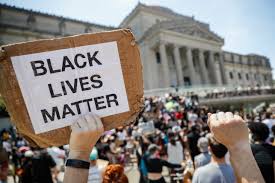
Both social movements and interest groups try to influence government, but they are not the same thing.
Social movements involve large groups of people pushing collectively for significant political or social change. They tend to represent many groups and individuals at once and aim for broad change rather than a single policy fix. Their structure is often loose, and participation can be informal.
Interest groups are explicitly organized to represent and advocate for a specific interest or policy issue. They usually have formal membership, leadership, and funding, and they focus their effort on a narrow set of policies.
The key difference to remember: social movements chase broad change with loose organization, while interest groups push specific policy goals through formal structures.
| Social Movements | Interest Groups | |
|---|---|---|
| Purpose | Broad social, political, or cultural change | Influence specific policy or legislation |
| Scope | Large-scale, often grassroots | Narrow, targets specific interests |
| Structure | Loose, often informal participation | Formal membership, leadership, funding |
| Tactics | Protests, demonstrations, civil disobedience | Lobbying, research, legal action |
| Longevity | Can be temporary or become institutionalized | Often more permanent |
Social Movements Across Course Countries
Social movements in the course countries have pushed governments on issues like indigenous civil rights, redistributing revenue from key exports such as oil, holding fair and transparent elections, and ensuring fair treatment based on sexual orientation. Here are the examples you should know.
Iran: The Green Movement
The Green Movement formed in response to alleged corruption in the 2009 presidential election. Protesters pushed for fair, transparent elections and accountability from the government. The movement relied on mass protest and used social media to organize and spread its message. The government responded with suppression rather than meaningful reform.
Mexico: The Zapatistas
The Zapatista uprising in Chiapas grew out of socioeconomic inequality and opposition to the North American Free Trade Agreement (NAFTA), which many indigenous communities saw as harmful. The movement combined armed resistance with grassroots mobilization to demand rights and political representation for indigenous people.
Nigeria: Niger Delta Movements and Boko Haram
Several movements in Nigeria, often militant, have advocated for ethnic minority rights or protested how oil is extracted and distributed in the Niger Delta:
- MEND (Movement for the Emancipation of the Niger Delta): demanded a greater share of oil wealth for the region.
- MOSOP (Movement for the Survival of the Ogoni People): focused on environmental justice and the rights of the Ogoni people.
Boko Haram is a separate movement attempting to establish an Islamic state in northern Nigeria through violent insurgency. The government has responded with military and counterterrorism operations.
Russia: Protests Over Anti-LGBT Legislation
After the Russian state Duma passed legislation targeting same-sex couples in 2013, domestic protests broke out. These were carried out by loosely organized groups pushing back against the law. The government responded with suppression and the policy stayed in place.
Telling Movements From Interest Groups and Citing Examples
MCQ: Multiple-choice questions often test the difference between a social movement and an interest group. If a description mentions formal membership, dues, and a single policy focus, that points to an interest group. If it describes a large, loosely organized group seeking broad change, that points to a social movement. Watch for source-based questions where you have to connect an author's argument to how movements operate in a course country.
Free Response:
- Conceptual Analysis: You may need to define social movement or interest group and then explain how one affects change. Use a precise definition and back it with a course-country example.
- Comparative Analysis: Be ready to compare how two countries handled a movement, such as Iran's suppression of the Green Movement versus Mexico's response to the Zapatistas.
- Argument Essay: Course-country movements are strong evidence. For a claim about civil society pressure or government responsiveness, cite specific examples like MEND or the Green Movement, then address an opposing view.
Common Trap: Do not assume a social movement always produces policy change. Many movements face suppression, splinter internally, or fail to mobilize enough support. Saying a movement "succeeded" without evidence weakens your argument. Describe the actual government response instead.
Grassroots Movements
Grassroots movements start at the local level and build power upward to regional, national, or international stages. They are driven by ordinary people and tend to be decentralized rather than run by a top-down hierarchy.
That decentralized structure cuts both ways:
- Strength: With limited organizational hierarchy, these movements are hard for state military or law enforcement to suppress because there is no single leader or headquarters to target.
- Weakness: The same loose structure can make it hard to attract and mobilize fellow citizens or to negotiate effectively with government officials.
Nigeria's MEND shows the negotiation problem clearly. When one faction accepted a ceasefire while another kept up attacks, the split made it harder for the government to reach any single deal.
Common Misconceptions
- Misconception: Social movements and interest groups are basically the same.Actually: They differ in scope and structure. Interest groups are formal and focus on one policy area; social movements are loose and seek broad change.
- Misconception: Movements always win policy changes.Actually: Outcomes vary a lot. Some are suppressed, some splinter, and some never gain enough support. Always tie your claim to the actual government response.
- Misconception: A decentralized movement is always more effective.Actually: Being hard to suppress is an advantage, but the lack of clear leadership can make it tough to negotiate or hold a movement together.
- Misconception: Interest groups only exist in democracies.Actually: Both democratic and authoritarian regimes deal with organized interests, though authoritarian governments often control which groups get access.
- Misconception: Boko Haram and MEND are the same kind of movement.Actually: They have very different goals. MEND focused on oil wealth and Niger Delta rights, while Boko Haram aims to establish an Islamic state in northern Nigeria.
Related AP Comparative Government Guides
Practice Questions for 4.5
1 of 10
The Zapatista movement secured Mexico's 2001 Indigenous Rights Bill while Iran's Green Movement failed to win concessions. This contrast shows that
A.
Movements in federal systems always succeed while those in theocratic systems always fail
B.
Movement success depends on state institutions providing formal channels to incorporate demands
C.
Indigenous rights movements are inherently more successful than electoral reform movements
D.
Larger movements automatically win more policy concessions than smaller movements
Vocabulary
The following words are mentioned explicitly in the AP® course framework for this topic.Term | Definition |
|---|---|
Boko Haram | A Nigerian social movement attempting to establish an Islamic state in northern Nigeria. |
grassroots movements | Social movements that originate and build power from the local level upward to regional, national, or international levels. |
Green Movement | An Iranian social movement that protested corruption in the 2009 election. |
indigenous civil rights | Legal and social protections and freedoms for native or aboriginal populations within a state. |
interest groups | Explicitly organized groups that represent and advocate for a specific interest or policy issue. |
Movement for the Emancipation of the Niger Delta (MEND) | A Nigerian social movement advocating for the rights of ethnic minorities and protesting against unjust methods of oil extraction and distribution in the Niger Delta region. |
Movement for the Survival of the Ogoni People (MOSOP) | A Nigerian social movement advocating for the rights of the Ogoni ethnic minority and protesting against unjust oil extraction and distribution practices. |
organizational hierarchies | Formal structures of authority and command within an organization; limited hierarchies in social movements make them difficult for states to suppress. |
social and political change | Transformations in society's structures, policies, and institutions affecting both social conditions and governmental systems. |
social movements | Large groups of people organizing collectively to push for significant political or social change. |
Zapatistas | A social movement in Chiapas, Mexico that arose in response to socioeconomic inequality and the negative impact of NAFTA. |
See Fiveable more often in Google
Mark Fiveable as a preferred source and Google is more likely to show you our guides in Top Stories, with a "preferred" badge in AI Mode and AI Overviews.