4.3 What are Political Party Systems?

🗳️AP Comparative Government and Politics Unit 4 Review
4.3 What are Political Party Systems?
🗳️ AP Comparative Government and Politics
What is a political party system in AP Comparative Government?
Political party systems describe how parties organize, compete, and connect citizens to power, and they range from dominant party systems to multiparty systems across the six course countries. China and Russia use rules to keep one party in control, Iran lacks formal party structures, Mexico has shifted away from one-party control, and Nigeria and the United Kingdom run competitive systems where a few parties lead. Knowing where each course country falls on the dominant-to-multiparty spectrum lets you compare how parties shape participation and policy.
Why This Matters for the AP Comparative Government Exam
This topic gives you the vocabulary and country examples you need to compare political systems, a core skill on the AP Comparative Government exam. Party systems show up when you describe how citizens gain influence, explain why some regimes limit competition, and connect rules to outcomes. Because Unit 4 is a meaningful part of the exam, you can expect questions that ask you to identify a country's party system or match a rule (like raising ballot thresholds) to its effect.
You can also use these examples on the free-response questions. Comparative Analysis questions may ask you to compare party systems in two course countries, and the Argument Essay rewards specific, accurate country evidence. Source Analysis appears only in the multiple-choice section, so practice connecting an author's claim about parties to what you know about a course country.
Key Takeaways
- Party systems range along a spectrum: dominant party systems (China, Russia) on one end and competitive multiparty systems (Nigeria, United Kingdom, Mexico) toward the other.
- China allows only the Communist Party of China to hold real power but permits eight other parties to broaden discussion and consultation.
- Russia keeps one party in control through rules like higher registration requirements, selective court disqualifications, media limits on opposition, higher ballot thresholds, and ending gubernatorial elections.
- Mexico moved away from one-party control by ending el dedazo, privatizing state corporations, decentralizing power, and strengthening its national electoral institute.
- Iran has no formal political party structures; parties act as loose alliances with weak ties to voters.
- Catch-all parties draw support from diverse groups, and party discipline (as in the UK House of Commons) shapes how legislatures vote.
Why Political Parties Matter
In democracies, parties give voters an organized way to engage in politics. They bundle beliefs and ideologies into a platform, which is the set of policies a candidate plans to pursue once elected. A clear platform increases accountability and access to information because voters know what to expect from a government.
Parties also hold real power, and that power can cut both ways. Authoritarian regimes have parties too, but they often use them to control a country's direction and limit competition rather than to represent diverse views. When a party system manipulates the rules to suppress opposition and protect one-party control, that is a warning sign for democracy.
The main idea to learn here is that party systems and membership differ across the course countries, ranging from dominant party systems to multiparty systems. The sections below place each course country on that spectrum.
Party Systems by Course Country
China
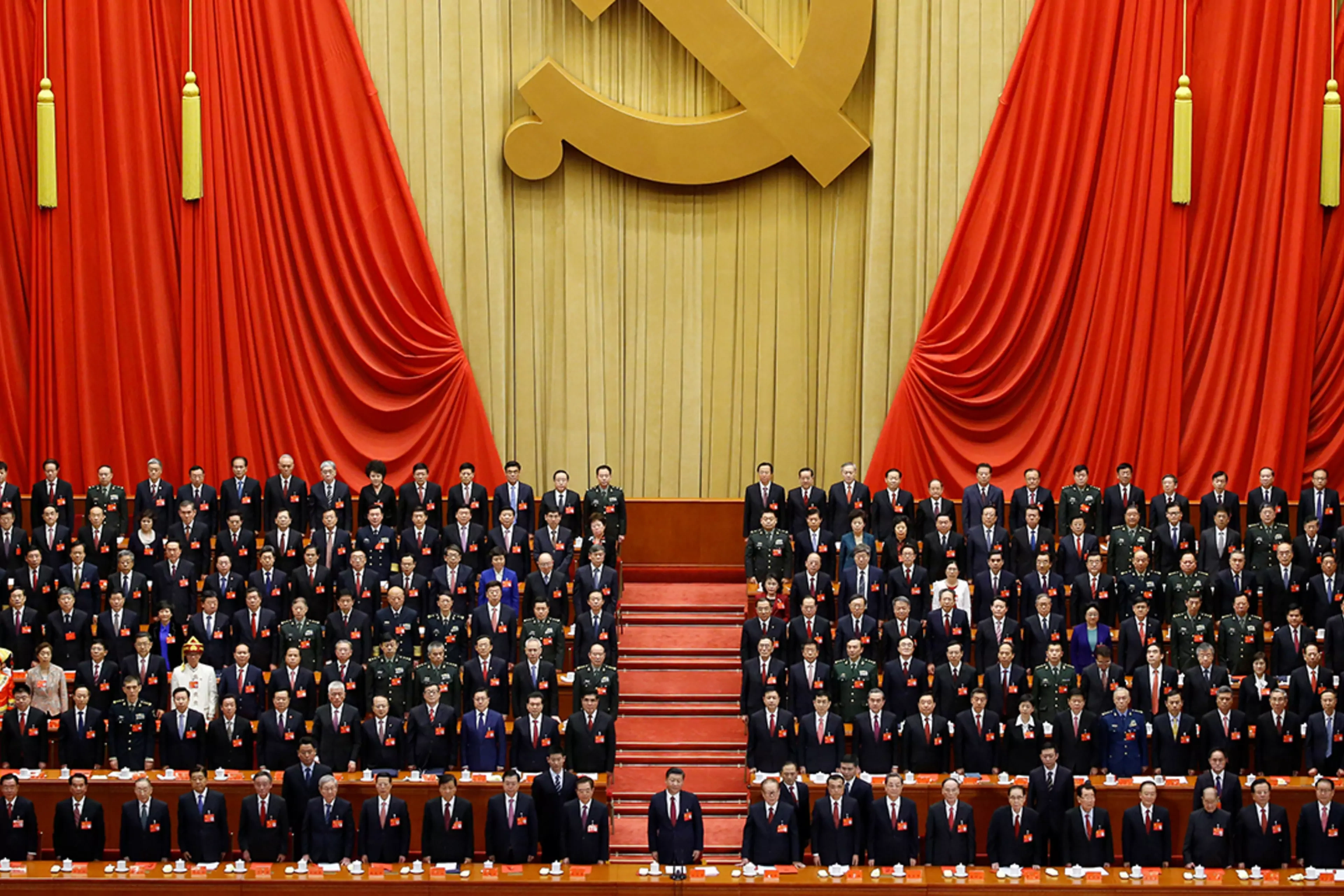
China is an authoritarian regime that allows only one party, the Communist Party of China, to hold governing power. This protects the values of centralism and order. Eight other parties are permitted to exist to broaden discussion and consultation, but they do not hold real power and authority. The Communist Party of China has controlled the government and military since 1949.
Russia

Russia keeps one party in control through several rules: increasing party registration requirements, allowing only legally registered parties to run, using selective court decisions to disqualify candidates, limiting opposition access to the media, raising threshold rules that limit ballot access, and eliminating gubernatorial elections. Unlike China, Russia holds direct national elections, but the changing threshold rules and shifting use of single-member districts reduce representation for smaller and regional parties and independent candidates. United Russia has led recent elections.
Mexico
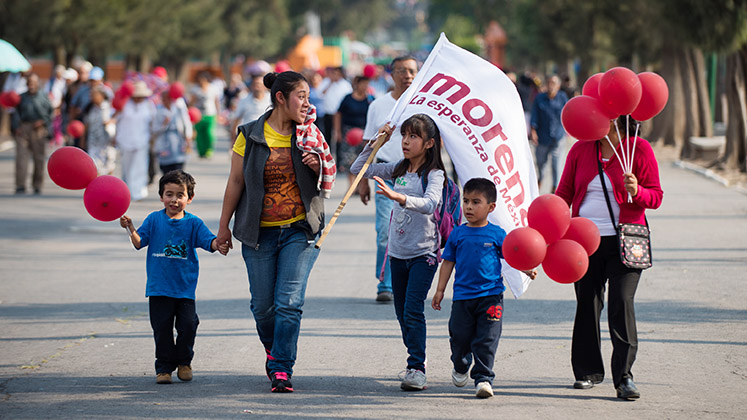
Mexico is moving away from one-party control, which had been held for decades by the Institutional Revolutionary Party (PRI). Reforms that supported this transition include:
- Eliminating el dedazo, the practice in which the president handpicked his successor
- Privatizing state-owned corporations to decrease patronage
- Decentralizing and reducing one-party power at the subnational level
- Establishing and strengthening the National Electoral Institute (originally IFE), an autonomous body that organizes federal elections
Mexico now has a multiparty system that includes the National Action Party (PAN), the Party of the Democratic Revolution (PRD), and the PRI, and parties may form coalitions to nominate candidates. The shift toward competitive parties is a marker of democratization, though clientelism and patronage networks have been part of the older system.
Nigeria

Nigeria is a multiparty system with 30 registered political parties. Two strong parties lead, and a third party has had some electoral success.
You should know these two major parties:
- The People's Democratic Party (PDP) controlled the National Assembly and presidency for much of the early Fourth Republic.
- The All Progressives Congress (APC) formed as an alliance of opposition parties and won the presidency in 2015.
Be careful with party ideologies in Nigeria. Platforms and coalitions can shift over time, and ethnic and regional factors heavily shape the parties, so avoid locking either party into a fixed left-right label on the exam. What is reliable to know is that two major parties have alternated control and that ethnic considerations affect representation in the federal legislature.
United Kingdom
The United Kingdom is a substantive democracy where two major parties compete: the Conservative (Tory) and Labour parties. They control the legislature and executive, and first-past-the-post election rules favor these larger parties.
- The Labour Party is generally center-left, historically tied to trade unions and working-class representation, and supportive of a stronger welfare state and labor rights.
- The Conservative Party is generally center-right, supporting free markets, lower taxes, and limited government intervention, with ideological shifts depending on leadership.
Minor and regional parties such as the Liberal Democrats, the Scottish National Party (SNP), Plaid Cymru, and the Democratic Unionist Party (DUP) can win seats, especially where they have regional strength. First-past-the-post tends to reduce minor-party representation overall, but single-member districts still let regional parties win seats. UKIP was the more central party in the pre-Brexit party debate over leaving the EU.
The House of Commons is highly organized by parties, with strict party discipline (enforced through the whip system) that shapes how members vote and how policy is made.
Iran

Iran is an authoritarian regime with no formal political party structures. This is an important point to remember for the exam. Instead of organized parties, politics runs through loosely formed alliances with weak linkage to constituents. The Guardian Council vets candidates and excludes those who do not support Islamic values, which limits competition.
Catch-All Parties and Party Discipline
Two concepts apply across these systems. Catch-all parties earn support from groups with different characteristics by running on ideologically diverse platforms. Party discipline, strongest in the UK House of Commons, means members vote with their party, which gives the leadership strong control over policy.
How to Use This on the AP Comparative Government Exam
MCQ
- Match a country to its party system: dominant party (China, Russia), no formal party structure (Iran), or competitive multiparty (Nigeria, UK, Mexico).
- Connect a rule to its effect. For example, raising ballot thresholds or disqualifying candidates reduces competition and protects one-party control in Russia.
- Watch for first-past-the-post: it favors two large parties but still lets regional parties win local seats in the UK.
- Source Analysis questions appear here, not on the FRQs. Practice reading an author's claim about parties and connecting it to a course country.
Free Response
- Comparative Analysis may ask you to compare party systems in two course countries. A strong pairing is China (one party holds power, others exist for consultation) versus the UK (two competitive parties plus regional minor parties).
- The Argument Essay rewards specific, accurate country evidence. Use named parties and concrete rules, not vague generalizations.
- Conceptual Analysis may ask you to define a term like catch-all party or party discipline and then explain or compare how it works in a course country.
Common Trap
Do not assume every country with a "party" has competitive parties. China permits eight minor parties that hold no real power, and Iran has alliances rather than formal parties. The label does not equal genuine competition.
Common Misconceptions
- Misconception: China has only one party.Actually: China allows the Communist Party of China to hold all governing power, but eight other parties are permitted to exist to broaden discussion and consultation. They simply do not hold real authority.
- Misconception: Russia has no elections.Actually: Russia holds direct national elections, but rules like court disqualifications, media limits, and ballot thresholds keep one party in control.
- Misconception: Iran has political parties like other countries.Actually: Iran lacks formal political party structures. Politics runs through loose alliances, and the Guardian Council vets candidates.
- Misconception: First-past-the-post means only two parties can win in the UK.Actually: It favors the two major parties, but regional parties like the SNP can still win seats in single-member districts.
- Misconception: Nigeria's PDP and APC have fixed, simple ideologies.Actually: Party platforms and coalitions shift over time, and ethnic and regional factors shape the parties, so avoid locking them into rigid left-right labels.
- Misconception: Reform UK led Brexit.Actually: UKIP was the more central party in the pre-Brexit debate over leaving the EU, not Reform UK.
Related AP Comparative Government Guides
- Unit 4 Overview: Party, Electoral Systems, and Citizen Organizations
- 4.2 Objectives of Election Rules
- 4.6 Pluralist and Corporatist Interests in Government
- 4.1 Electoral Systems and Rules
- 4.5 Impact of Social Movement and Interest Groups on Governments
- 4.4 Understanding the Role of Political Party Systems
Practice Questions for 4.3
1 of 10
Which constraint most limits interpreting stable membership figures for China's eight permitted parties excluding the Communist Party?
A.
Different founding dates explain history but not membership interpretation
B.
Inconsistent recordkeeping across parties causes documentation and data quality issues
C.
State-managed enrollment that masks pluralism and Communist Party dominance
D.
Some individuals hold dual membership with the Communist Party
Vocabulary
The following words are mentioned explicitly in the AP® course framework for this topic.Term | Definition |
|---|---|
catch-all political parties | Political parties that appeal to diverse groups across the political spectrum by adopting ideologically broad platforms to attract wide popular support. |
devolution | The transfer of political power and authority from central government to regional or local governments. |
dominant party system | A political system in which one party holds significant control over governing power while other parties are allowed to exist but have limited influence. |
el dedazo | A practice in Mexico where the sitting president informally designated the next presidential candidate, concentrating power within the ruling party. |
electoral competition | The degree to which multiple political parties compete for votes and representation in elections. |
first-past-the-post | An electoral system in which the candidate or party receiving the most votes in a district wins, regardless of whether they achieve a majority. |
formal political participation | Institutionalized forms of political engagement such as voting in elections and other official channels of citizen involvement. |
multiparty system | A political system in which multiple political parties compete for power and representation in government. |
one-party dominance | A system where a single political party maintains control over governing power and limits the ability of other parties to compete effectively. |
party discipline | The practice of requiring members of a political party, particularly legislators, to vote according to party leadership decisions rather than individual preference. |
party membership | The formal affiliation and participation of individuals within a political party. |
party registration requirements | Legal rules that political parties must meet to be officially recognized and permitted to participate in elections. |
patronage | The practice of distributing government jobs, resources, or favors to political supporters and allies. |
representation | The process by which elected officials act on behalf of their constituents in government. |
threshold rules | Minimum vote requirements that political parties must meet to gain representation in a legislature. |
Frequently Asked Questions
What is a political party system in AP Comparative Government?
A political party system is the pattern of how political parties organize, compete, and connect citizens to power in a country. For AP Comparative Government, use the term to compare systems such as China's one-party rule, Russia's limited competition, Iran's loose alliances, and more competitive party systems in Mexico, Nigeria, and the United Kingdom.
How do party systems differ across the AP Comparative Government course countries?
China allows the Communist Party of China to hold governing power, while Russia uses rules that limit opposition competition. Iran does not have formal political party structures. Mexico has moved away from one-party control, Nigeria has a multiparty system with two major parties leading, and the United Kingdom has two major parties plus regional and minor parties that can win seats.
Why is China not considered a competitive party system?
China is not considered competitive because only the Communist Party of China holds real governing power. The country permits eight other parties for discussion and consultation, but they do not compete for control of the government in the way parties do in democratic systems.
How did Mexico move away from one-party control?
Mexico moved away from one-party control through reforms such as ending el dedazo, privatizing state corporations to reduce patronage, decentralizing power, and strengthening the National Electoral Institute. These changes helped make elections more competitive after decades of PRI control.
What are catch-all parties and party discipline?
Catch-all parties try to attract support from many different social groups by using broad platforms. Party discipline means legislators usually vote with their party leadership; the United Kingdom House of Commons is the key AP Comparative Government example.
How should I use political party systems on AP Comparative Government FRQs?
Use party systems as specific country evidence. For example, you can compare China's one-party rule with the United Kingdom's competitive party system, or explain how Russia's ballot access and media rules limit opposition. Strong FRQ answers name the country, describe the rule or party structure, and connect it to political competition or participation.
See Fiveable more often in Google
Mark Fiveable as a preferred source and Google is more likely to show you our guides in Top Stories, with a "preferred" badge in AI Mode and AI Overviews.