4.3 Boundary layer separation

✈️Aerodynamics Unit 4 Review
4.3 Boundary layer separation
✈️ Aerodynamics
Boundary layer concept
Boundary layer separation happens when airflow detaches from a surface, creating regions of reversed flow, higher drag, and reduced lift. It's one of the most important phenomena in applied aerodynamics because it directly limits the performance of airfoils, diffusers, and vehicles.
To understand separation, you first need a solid grasp of the boundary layer itself. A boundary layer is the thin region of fluid adjacent to a solid surface where viscous effects dominate. Because of the no-slip condition, the fluid velocity is exactly zero at the wall and increases to the freestream velocity over a short distance. That velocity change creates shear stress and friction, and it's where most of the interesting (and problematic) viscous behavior occurs.

Top images from around the web for Viscous effects near surface
Flow separation - Wikipedia View original
Is this image relevant?
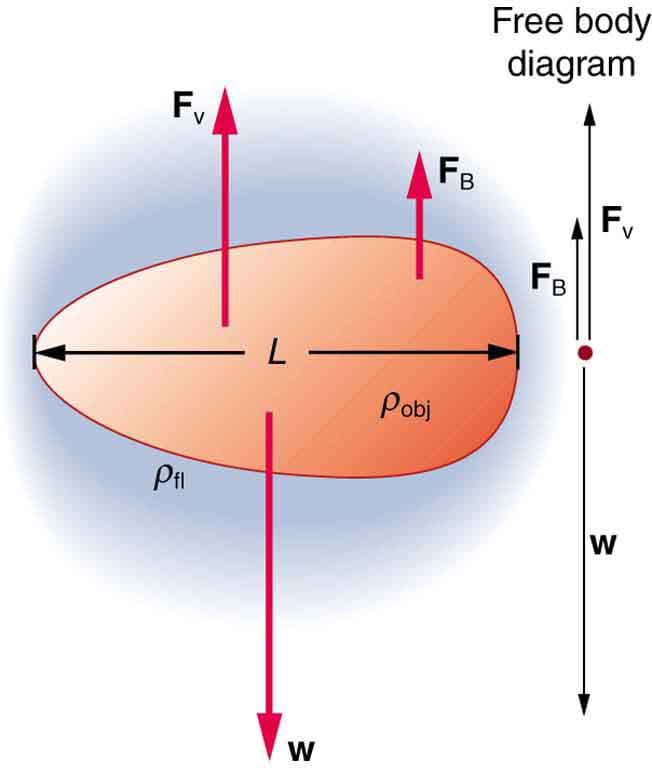
Motion of an Object in a Viscous Fluid · Physics View original
Is this image relevant?
WES - Laminar-turbulent transition characteristics of a 3-D wind turbine rotor blade based on ... View original
Is this image relevant?
Flow separation - Wikipedia View original
Is this image relevant?
Motion of an Object in a Viscous Fluid · Physics View original
Is this image relevant?
Viscous effects near the surface
Within the boundary layer, viscous forces are comparable in magnitude to inertial forces. The fluid right at the wall is essentially "stuck," and each successive layer drags on the one below it. This produces shear stress () proportional to the velocity gradient:
where is the dynamic viscosity, is the streamwise velocity, and is the wall-normal distance. These viscous interactions dissipate kinetic energy and are responsible for skin friction drag.
Velocity gradient
The velocity profile inside the boundary layer rises from zero at the wall to the freestream value . Near the wall the gradient is steep; farther out it flattens. The exact shape of this profile depends on whether the layer is laminar or turbulent, the local pressure gradient, and the Reynolds number. The shape of the velocity profile near the wall turns out to be the key indicator of whether separation is about to occur.
Boundary layer thickness
Boundary layer thickness () is conventionally defined as the distance from the surface where the velocity reaches 99% of . As you move downstream along a surface, grows because low-momentum fluid accumulates. Two other thickness measures show up frequently:
- Displacement thickness () quantifies how much the boundary layer displaces the outer flow.
- Momentum thickness () relates to the momentum deficit and is used to calculate drag.
The ratio (the shape factor) is a useful diagnostic: higher values of indicate a profile closer to separation.
Laminar boundary layers
Laminar boundary layers feature smooth, orderly flow where fluid moves in parallel layers with no cross-stream mixing. They occur at relatively low Reynolds numbers and produce low skin friction drag, but they're also more vulnerable to separation under adverse pressure gradients.
Laminar flow characteristics
In laminar flow, adjacent fluid layers slide past each other without mixing. The velocity profile is smooth and roughly parabolic, rising gradually from zero at the wall. Because there's no turbulent mixing to bring high-momentum fluid toward the surface, a laminar layer has less energy near the wall and separates more easily than a turbulent one. Laminar flow is also highly sensitive to disturbances: surface imperfections, vibrations, or freestream turbulence can trigger transition.
Laminar boundary layer equations
The Prandtl boundary layer equations govern laminar boundary layers. They're a simplified form of the Navier-Stokes equations that exploit the fact that the layer is thin (, where is the streamwise length scale). The key simplifications are:
- Pressure is approximately constant across the boundary layer ().
- Streamwise diffusion of momentum is negligible compared to wall-normal diffusion.
This reduces the problem to two equations (continuity and streamwise momentum) that are far more tractable than the full Navier-Stokes system.
Blasius solution
The Blasius solution is the classic exact (similarity) solution for a laminar boundary layer on a flat plate with zero pressure gradient. It predicts:
- A boundary layer thickness that grows as , where is kinematic viscosity and is distance from the leading edge.
- A skin friction coefficient .
The Blasius profile serves as a benchmark for validating both numerical codes and experimental setups. Keep in mind it applies only to zero-pressure-gradient flow; real airfoils always have pressure gradients.
Turbulent boundary layers
Turbulent boundary layers are characterized by chaotic, three-dimensional velocity fluctuations and intense mixing. They develop at higher Reynolds numbers and produce more skin friction drag than laminar layers, but their vigorous mixing makes them significantly more resistant to separation.
Transition from laminar to turbulent
Transition happens when small disturbances in the laminar layer amplify and eventually break down into turbulence. The process typically follows these stages:
- Small perturbations (Tollmien-Schlichting waves) grow in the unstable laminar layer.
- Nonlinear interactions cause three-dimensional breakdown.
- Turbulent spots form and merge until the entire layer is turbulent.
The transition location depends on the Reynolds number, pressure gradient, surface roughness, and freestream turbulence intensity. On a smooth flat plate in a quiet freestream, transition typically occurs around , but this value can shift dramatically with conditions.
Turbulent flow characteristics
Turbulent boundary layers have a fuller velocity profile than laminar ones: the velocity rises quickly near the wall and then levels off more gradually. This means more momentum is present near the surface, which is why turbulent layers resist separation better. The trade-off is higher wall shear stress and therefore higher skin friction drag.
The turbulent velocity profile is often described using the law of the wall, which divides the near-wall region into a viscous sublayer, a buffer layer, and a logarithmic region.
Turbulent boundary layer equations
Because resolving every turbulent fluctuation is impractical for most engineering problems, the Reynolds-Averaged Navier-Stokes (RANS) equations are used. Time-averaging the Navier-Stokes equations introduces extra unknowns called Reynolds stresses (), which represent the momentum transport due to turbulent fluctuations. Since there are more unknowns than equations, turbulence models are needed to close the system (more on these in the computational methods section).
Boundary layer separation
Separation occurs when the boundary layer can no longer follow the surface contour and detaches, creating a region of reversed flow. The root cause is an adverse pressure gradient (pressure increasing in the flow direction) that decelerates the near-wall fluid until it stalls and reverses.
Adverse pressure gradient
An adverse pressure gradient exists when , meaning pressure rises in the downstream direction. You encounter this on the aft portion of airfoils, in diffusers, and downstream of the point of minimum pressure on any curved body. The rising pressure acts like a headwind on the slow-moving fluid near the wall, progressively robbing it of momentum.
A favorable pressure gradient () does the opposite: it accelerates the near-wall fluid and stabilizes the boundary layer against separation.
Flow reversal near the wall
As the adverse pressure gradient strengthens, the velocity profile near the wall becomes increasingly "thin" at the base. Eventually the near-wall fluid decelerates to zero and then reverses direction. This reversal is the physical hallmark of separation. Once reversed flow appears, a recirculation zone forms, and the external flow is deflected away from the surface.
Separation point
The separation point is defined as the location where the wall shear stress drops to zero:
At this point the velocity gradient at the wall vanishes, and downstream of it the flow is reversed. Predicting the separation point accurately is critical because even small shifts in its location can dramatically change the drag and lift on a body.

Separated flow regions
Downstream of the separation point, a separated flow region (or "separation bubble") forms. This region features low pressure, recirculating flow, and often unsteady vortex shedding. The separated region effectively increases the body's apparent thickness, raising pressure drag. If the flow reattaches downstream, you get a closed separation bubble; if it doesn't, you get a fully separated wake.
Factors affecting separation
Several factors determine where (and whether) separation occurs. Designing around these factors is a central challenge in aerodynamics.
Pressure gradient
The pressure distribution along the surface is the single most important factor. Strong adverse pressure gradients push separation upstream; favorable gradients delay it. Airfoil designers carefully shape the pressure distribution to keep adverse gradients as gentle as possible over the aft portion of the wing.
Reynolds number
Higher Reynolds numbers produce thinner boundary layers with more momentum near the wall (especially once the layer is turbulent), making them more resistant to separation. At low Reynolds numbers, the boundary layer is thicker and more sluggish, so separation tends to occur earlier. This is why small-scale models in wind tunnels must be tested at matched or corrected Reynolds numbers to get realistic separation behavior.
Surface roughness
Surface roughness promotes earlier transition from laminar to turbulent flow. This can actually be beneficial in some cases: a turbulent layer resists separation better than a laminar one. The classic example is the dimpled golf ball, where roughness triggers transition, delays separation, and reduces the wake, cutting drag by roughly 50% compared to a smooth ball.
However, excessive roughness increases skin friction drag and can itself trigger separation if the roughness elements are large enough to create local flow disturbances.
Body shape
Streamlined bodies (airfoils, teardrop shapes) are designed so that the adverse pressure gradient is spread over a long distance, keeping it mild enough to avoid separation. Bluff bodies (cylinders, flat plates normal to the flow, buildings) force the flow to decelerate abruptly, producing strong adverse gradients and large separated wakes. The drag coefficient of a cylinder () is an order of magnitude higher than that of a well-designed airfoil at cruise, largely because of separation.
Consequences of separation
Increased drag
Separation causes a dramatic rise in pressure drag (also called form drag). The separated wake is a region of low pressure behind the body, so the pressure on the rear surface can't recover to balance the high pressure on the front. This pressure imbalance is the dominant drag source on bluff bodies and on airfoils past stall.
Reduced lift
On an airfoil, lift depends on maintaining a strong pressure difference between the upper and lower surfaces. When the boundary layer separates on the upper surface, the suction peak collapses and the pressure difference drops. The result is a loss of lift that can be sudden and severe.
Stall in airfoils
Stall occurs when an airfoil exceeds its critical angle of attack (typically around 12°–18° for conventional airfoils, though this varies). At that point, the adverse pressure gradient on the upper surface becomes too strong, separation spreads rapidly forward, and lift drops sharply. Stall can be:
- Trailing-edge stall: separation starts at the trailing edge and moves forward as angle of attack increases (common on thick airfoils).
- Leading-edge stall: a sudden separation bubble burst near the leading edge causes an abrupt loss of lift (common on thin airfoils).
Understanding the stall type matters for predicting how abruptly an aircraft will lose control.
Bluff body wakes
Bluff bodies produce large, unsteady wakes dominated by vortex shedding. For a circular cylinder, alternating vortices shed from each side at a frequency characterized by the Strouhal number ( for a wide range of Reynolds numbers). This periodic shedding causes fluctuating forces that can excite structural vibrations, a phenomenon that must be accounted for in the design of bridges, towers, and offshore platforms.
Control of separation
A variety of techniques exist to delay or suppress separation. They all work by the same basic principle: keeping enough momentum in the near-wall fluid to overcome the adverse pressure gradient.
Boundary layer suction
Suction removes the low-momentum fluid near the wall through small holes or slots in the surface. By thinning the boundary layer and refreshing it with higher-energy fluid, suction makes the layer far more resistant to separation.
- Passive suction relies on natural pressure differences to drive the flow through the perforations.
- Active suction uses pumps or compressors and offers more control but adds weight and complexity.
Suction is used on some laminar-flow research aircraft and in high-performance diffusers.
Vortex generators
Vortex generators (VGs) are small vanes or tabs mounted on the surface, typically upstream of where separation would otherwise occur. They create streamwise vortices that mix high-momentum outer flow down into the boundary layer. This energizes the near-wall fluid and delays separation.
VGs are common on commercial aircraft wings, wind turbine blades, and even on the roofs of some trucks. They add a small amount of parasitic drag but can significantly reduce the much larger drag penalty of separation.
Streamlining
The most fundamental approach to avoiding separation is to shape the body so that adverse pressure gradients remain gentle. Streamlined shapes (airfoils, teardrop profiles) taper gradually at the rear, allowing the pressure to recover slowly. Good streamlining can reduce drag by an order of magnitude compared to a bluff body of the same frontal area.

Active flow control methods
Active flow control uses external energy to manipulate the boundary layer in real time. Examples include:
- Synthetic jets: small cavities with oscillating membranes that inject zero-net-mass-flux pulsed jets into the boundary layer.
- Plasma actuators: dielectric barrier discharge devices that ionize air near the surface and induce a body force, energizing the boundary layer.
- Oscillating surfaces or blowing/suction: periodic forcing that exploits flow instabilities to delay separation.
These methods can adapt to changing flight conditions, making them attractive for next-generation aircraft, though most are still in the research or early-adoption stage.
Experimental techniques
Experimental methods are essential for studying separation, validating CFD, and understanding real flow physics.
Flow visualization
Flow visualization gives you a qualitative picture of where separation occurs and how the wake behaves. Common techniques:
- Smoke or fog injection: reveals streamlines and separated regions in wind tunnels.
- Surface oil flow: a mixture of oil and pigment applied to the model surface shows skin friction lines; separation and reattachment lines appear as convergence/divergence patterns.
- Tufts: small threads taped to the surface deflect in the flow direction and flutter or reverse in separated regions.
These methods are quick and inexpensive, making them a standard first step in wind tunnel testing.
Hot-wire anemometry
A hot-wire anemometer uses a very thin electrically heated wire (typically a few micrometers in diameter). As fluid flows past, it cools the wire, changing its resistance. By measuring the resistance (or the current needed to maintain constant temperature), you get a voltage signal proportional to velocity.
Hot-wire anemometry offers excellent temporal resolution (up to hundreds of kHz), making it ideal for capturing turbulent fluctuations and transition phenomena. Its main limitation is that it's intrusive and fragile.
Particle image velocimetry (PIV)
PIV is a non-intrusive optical technique that measures velocity fields over an entire plane simultaneously. The process works as follows:
- Seed the flow with small tracer particles (typically a few micrometers in diameter).
- Illuminate a thin sheet of the flow with a pulsed laser.
- Capture two images in rapid succession with a high-speed camera.
- Use cross-correlation algorithms to determine the displacement of particle groups between frames, yielding a 2D velocity field.
PIV is extremely powerful for mapping separation regions, vortex structures, and wake dynamics. Stereo-PIV and tomographic PIV extend the technique to three velocity components and full 3D volumes.
Laser Doppler velocimetry (LDV)
LDV (also called laser Doppler anemometry, LDA) measures velocity at a single point by detecting the Doppler shift of laser light scattered by particles passing through a small measurement volume formed by intersecting laser beams. It provides highly accurate, non-intrusive velocity measurements with good temporal resolution.
LDV is particularly useful for measuring boundary layer profiles and turbulence statistics at specific locations, complementing the full-field data from PIV.
Computational methods
Numerical simulation has become indispensable for predicting separation and optimizing aerodynamic designs. The methods span a wide range of fidelity and computational cost.
Boundary layer equations
Solving the Prandtl boundary layer equations numerically is the cheapest approach. These solvers march downstream along the surface, computing the boundary layer development. They work well for attached flow and can predict the separation point, but they break down once the flow actually separates (the equations become singular). They're often coupled with inviscid outer-flow solvers in so-called viscous-inviscid interaction methods.
Turbulence modeling
For full RANS simulations, you need a turbulence model to close the Reynolds stress terms. Common choices:
- model: robust and widely used for general industrial flows; can struggle with strong adverse pressure gradients and separation.
- SST model: blends near the wall with in the outer flow; generally more accurate for separation prediction and is the workhorse model in aerospace CFD.
- Reynolds stress models (RSM): solve transport equations for each Reynolds stress component; more physically complete but more expensive and harder to converge.
No single RANS model is universally accurate for separated flows, which is why validation against experiments remains essential.
Direct numerical simulation (DNS)
DNS solves the full, unsteady Navier-Stokes equations on a grid fine enough to resolve every scale of turbulence, from the largest energy-containing eddies down to the Kolmogorov dissipation scale. It requires no turbulence modeling and provides the most physically faithful results.
The catch is cost: the number of grid points scales roughly as , making DNS feasible only at low-to-moderate Reynolds numbers (currently up to about for complex geometries). DNS is primarily a research tool for understanding fundamental turbulence physics and generating benchmark data.
Large eddy simulation (LES)
LES resolves the large, energy-carrying turbulent structures directly and models only the small, more universal scales using a subgrid-scale (SGS) model. This captures the unsteady, three-dimensional nature of separated flows far better than RANS, at a fraction of the cost of DNS.
LES is increasingly used for studying separation, vortex shedding, and wake dynamics. Hybrid RANS-LES methods (such as Detached Eddy Simulation, DES) use RANS in the attached boundary layer and switch to LES in separated regions, offering a practical compromise for high-Reynolds-number flows.
Applications in aerodynamics
Airfoil design
Airfoil shape directly controls the pressure distribution and therefore the separation behavior. Designers manipulate parameters like maximum thickness location, camber, and leading-edge radius to tailor the pressure gradient. Laminar flow airfoils push the point of minimum pressure aft to maintain a favorable gradient over a larger fraction of the chord, reducing skin friction. Supercritical airfoils are shaped to weaken shock waves in transonic flow, which helps prevent shock-induced separation.
High-lift devices
During takeoff and landing, aircraft fly at high angles of attack where separation would normally occur. High-lift devices solve this problem:
- Leading-edge slats create a slot that channels high-energy air onto the upper surface, energizing the boundary layer.
- Trailing-edge flaps increase the effective camber and chord, boosting lift while managing the pressure gradient.
Multi-element high-lift systems on transport aircraft can achieve maximum lift coefficients of or more, compared to about 1.5 for a clean wing.
Diffuser performance
A diffuser decelerates flow and converts kinetic energy into pressure. Because the flow is decelerating, the entire diffuser operates under an adverse pressure gradient, making it inherently prone to separation. If the diffuser angle is too steep (typically beyond about 7° half-angle for a conical diffuser), the boundary layer separates and pressure recovery drops sharply. Diffuser design is a balancing act between achieving rapid pressure recovery and avoiding separation.
Bluff body aerodynamics
Buildings, bridges, vehicles, and many industrial structures are bluff bodies with significant separation. Controlling separation on these shapes reduces drag (important for vehicle fuel efficiency), limits vortex-induced vibrations (critical for bridges and tall structures), and reduces wind loading. Techniques range from geometric modifications (rounded edges, boat-tailing on trucks) to active flow control in research settings.
See Fiveable more often in Google
Mark Fiveable as a preferred source and Google is more likely to show you our guides in Top Stories, with a "preferred" badge in AI Mode and AI Overviews.