11.6 Acoustic measurement and analysis

✈️Aerodynamics Unit 11 Review
11.6 Acoustic measurement and analysis
✈️ Aerodynamics
Fundamentals of acoustics

Top images from around the web for Sound waves and propagation
Sources of Musical Sound – University Physics Volume 1 View original
Is this image relevant?
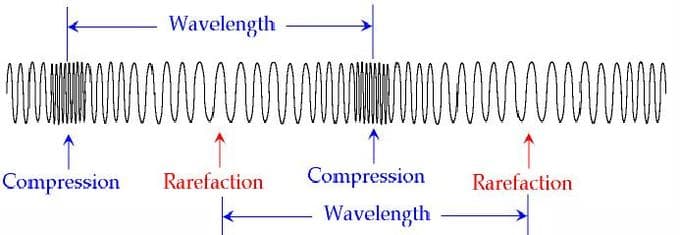
15.5: Waves - Physics LibreTexts View original
Is this image relevant?
Sound Intensity and Level | Boundless Physics View original
Is this image relevant?
Sources of Musical Sound – University Physics Volume 1 View original
Is this image relevant?
15.5: Waves - Physics LibreTexts View original
Is this image relevant?
Sound waves and propagation
Sound waves are mechanical waves that propagate through a medium by causing particles to oscillate. How well they propagate depends on the medium's density, compressibility, and temperature. Sound waves in air are longitudinal waves, meaning the particle motion runs parallel to the direction the wave travels.
Frequency, wavelength, and speed
- Frequency is the number of oscillation cycles per second, measured in Hertz (Hz).
- Wavelength is the distance between two consecutive in-phase points on a wave, measured in meters.
- Speed of sound is how fast the wave moves through the medium. In air at 20°C, it's roughly 343 m/s.
These three quantities are linked by:
where is the speed of sound, is frequency, and is wavelength. If you know any two, you can find the third.
Acoustic pressure and intensity
Acoustic pressure is the local deviation from ambient atmospheric pressure caused by a passing sound wave, measured in Pascals (Pa). Because the ear responds to pressure over an enormous range, we use a logarithmic scale: the sound pressure level (SPL), expressed in decibels (dB), compares the measured pressure to a reference value ( Pa for airborne sound).
Acoustic intensity is the power carried by sound waves per unit area, measured in . It relates to acoustic pressure by:
where is acoustic pressure, is the medium's density, and is the speed of sound. This equation assumes plane-wave or far-field conditions.
Acoustic measurement techniques
Microphones and transducers
Microphones convert acoustic pressure fluctuations into electrical signals. The main types you'll encounter are:
- Condenser (capacitor) microphones offer high sensitivity and flat frequency response, making them the standard for precision acoustic measurements.
- Dynamic microphones are more rugged and handle high SPLs well, but have lower sensitivity.
- Piezoelectric microphones use crystal deformation to generate a signal and are common in high-frequency or high-temperature environments.
More broadly, a transducer is any device that converts energy from one form to another. Microphones convert acoustic energy to electrical; loudspeakers do the reverse.
Sound level meters and analyzers
A sound level meter (SLM) measures sound pressure level and outputs a single dB reading. Most SLMs include A-weighting and C-weighting filters that approximate how the human ear perceives loudness at different frequencies.
Analyzers go further by performing frequency analysis, octave band breakdowns, and other signal processing. They're essential when you need to know not just how loud something is, but what frequencies dominate the noise.
Both instruments are required for assessing noise levels and verifying compliance with regulations.
Acoustic arrays and beamforming
An acoustic array is a set of multiple microphones arranged in a known geometric pattern to capture a sound field spatially. By processing the signals from all microphones together, you can determine the direction and strength of sound sources.
Beamforming is the signal processing technique that makes this work. It applies time delays (or phase shifts) to each microphone signal so that signals arriving from a chosen direction add constructively while off-axis signals cancel out. This boosts the signal-to-noise ratio for the direction of interest.
Common applications include noise source localization on aircraft components, directional recording, and acoustic imaging.
Near-field vs. far-field measurements
- Near-field measurements are taken close to the source, where the sound field is complex and strongly influenced by source geometry and directivity. Pressure and particle velocity aren't simply related here.
- Far-field measurements are taken at sufficient distance that the sound field behaves like simple spherical spreading, and the relationship holds cleanly.
The transition between the two depends on frequency and source size. A common rule of thumb: you're in the far field once you're more than a few source dimensions away, or beyond roughly one wavelength of the lowest frequency of interest.
Acoustic data analysis
Time domain vs. frequency domain
Time domain analysis examines the acoustic signal as it evolves over time, giving you waveform shape, amplitude, and duration. It's useful for identifying transient events like impacts or bursts.
Frequency domain analysis decomposes the signal into its constituent frequencies, revealing how energy is distributed across the spectrum. Most aeroacoustic problems require frequency domain analysis because noise sources have distinct spectral signatures.
You'll almost always need both perspectives to fully characterize an acoustic signal.
Fourier transforms and spectral analysis
The Fourier transform is the mathematical tool that converts a time-domain signal into its frequency-domain representation. In practice, you'll use the Fast Fourier Transform (FFT), an efficient algorithm for computing the discrete Fourier transform of a sampled signal.
Key outputs from spectral analysis:
- Power spectral density (PSD): shows how power is distributed per unit frequency. Useful for comparing signals of different durations.
- Spectrogram: a time-frequency plot that shows how the spectral content changes over time. Particularly valuable for non-stationary noise sources.
When running an FFT, pay attention to your sampling rate (it must satisfy the Nyquist criterion: at least twice the highest frequency of interest) and your window function (Hanning, Hamming, etc.), which affects spectral leakage.
Octave and 1/3 octave band analysis
Octave and 1/3 octave band analysis divides the frequency spectrum into bands that roughly match how the human ear perceives pitch. An octave represents a doubling of frequency (e.g., 500 Hz to 1000 Hz). A 1/3 octave splits each octave into three bands, giving finer resolution.
These band analyses are the standard format for noise regulations, acoustic treatment design, and performance evaluation of noise control measures. If a regulation specifies noise limits, it's very likely expressed in octave or 1/3 octave bands.

Noise source identification techniques
Identifying where noise comes from in a complex environment is often the hardest part of the problem. The main techniques include:
- Acoustic beamforming: uses microphone arrays to create spatial maps of noise source strength (covered above).
- Near-field acoustic holography (NAH): measures pressure on a surface close to the source and back-calculates the full 3D sound field. Provides very high spatial resolution but only works in the near field.
- Acoustic intensity mapping: uses paired microphones (intensity probes) to measure both pressure and particle velocity, giving the direction and magnitude of energy flow.
These techniques let engineers pinpoint dominant noise sources and develop targeted reduction strategies rather than treating everything at once.
Aeroacoustics
Noise generation mechanisms in flows
Aeroacoustic noise arises from unsteady fluid dynamic phenomena. Lighthill's framework classifies the fundamental source types:
- Monopole sources: caused by fluctuating mass flow or volume displacement (e.g., pulsating exhaust, unsteady combustion).
- Dipole sources: caused by fluctuating forces on surfaces (e.g., unsteady lift on an airfoil). Their intensity scales with flow velocity to the sixth power ().
- Quadrupole sources: caused by turbulent stress fluctuations in the flow itself (e.g., jet mixing noise). Their intensity scales as , which is why jet noise grows so rapidly with speed.
Understanding these source types is essential for predicting and mitigating noise from aircraft, wind turbines, and vehicles.
Turbulence and vortex shedding noise
Turbulence generates broadband noise through the chaotic, unsteady motion of fluid. It's present in boundary layers, wakes, and shear layers, and tends to produce a wide spectrum of frequencies.
Vortex shedding is more tonal. When flow passes a bluff body or sharp edge, alternating vortices shed from each side at a frequency governed by the Strouhal number:
where is the shedding frequency, is a characteristic dimension (e.g., cylinder diameter), and is the flow velocity. For a circular cylinder, . The resulting periodic pressure fluctuations produce what are called Aeolian tones.
Jet noise and shock-associated noise
Jet noise comes from the turbulent mixing between a high-speed jet and the surrounding air. It's broadband, peaks at low frequencies, and is the dominant noise source for subsonic commercial aircraft engines. Its intensity scales roughly as (Lighthill's scaling for quadrupole sources).
When jets are supersonic, additional shock-associated noise appears:
- Screech tones: discrete, high-amplitude tones caused by a feedback loop between downstream-propagating instability waves and upstream-propagating acoustic waves interacting with shock cells.
- Broadband shock-associated noise (BBSAN): generated by turbulence passing through the quasi-periodic shock cell structure in an imperfectly expanded jet.
Both require specialized prediction methods beyond simple turbulent mixing models.
Propeller and fan noise
Rotating blades generate noise through several mechanisms:
- Thickness noise: caused by the displacement of air as the blade passes. It's tonal and tied to the blade passing frequency.
- Loading noise: caused by the fluctuating aerodynamic forces (lift and drag) on the blades. Also tonal.
- Interaction noise: caused by blades encountering non-uniform inflow, such as wakes from upstream struts or ingested turbulence. This produces both tonal and broadband components.
For propellers and fans, the blade tip Mach number is a critical parameter. As it approaches or exceeds 1.0, noise increases dramatically. Careful blade design (sweep, lean, tip shaping) is used to minimize noise while maintaining aerodynamic performance.
Acoustic analogies and modeling
Lighthill's acoustic analogy
Lighthill's acoustic analogy, published in 1952, was the first rigorous framework for aeroacoustic prediction. It rearranges the compressible Navier-Stokes equations into the form of a wave equation with a source term:
The left side is a standard wave equation; the right side contains Lighthill's stress tensor , which captures the flow-generated sources. The analogy treats the turbulent flow as a distribution of quadrupole sources radiating into a stationary, uniform acoustic medium.
This framework revealed the famous velocity scaling law for jet noise and has been foundational for understanding directivity patterns of jet-generated sound.
Ffowcs Williams-Hawkings equation
The Ffowcs Williams-Hawkings (FW-H) equation extends Lighthill's analogy to account for solid surfaces in the flow. It adds:
- Monopole sources (from the displacement of fluid by moving surfaces)
- Dipole sources (from unsteady forces on surfaces)
to the quadrupole volume sources already in Lighthill's formulation. This makes it suitable for predicting noise from propellers, rotors, fans, and any configuration where solid boundaries interact with the flow.
The FW-H equation has become the standard tool in computational aeroacoustics for extracting far-field noise from CFD solutions. Most commercial and research codes implement some form of it.
Computational aeroacoustics (CAA)
CAA uses high-fidelity numerical simulations to directly resolve the generation and propagation of acoustic waves. Typical approaches include:
- Solve the compressible Navier-Stokes equations (DNS or LES) to capture noise generation in the source region.
- Use high-order spatial and temporal discretization schemes (e.g., DRP schemes) to minimize numerical dispersion and dissipation, which would otherwise corrupt the acoustic waves.
- Apply non-reflecting boundary conditions to prevent spurious reflections from computational domain boundaries.
- Optionally couple to an acoustic analogy (like FW-H) to propagate the sound to far-field observer locations.
CAA is computationally expensive because acoustic fluctuations are typically several orders of magnitude smaller than the aerodynamic fluctuations, demanding very fine grids and small time steps.
Acoustic boundary element methods
The boundary element method (BEM) solves acoustic problems by discretizing only the boundary surfaces rather than the entire volume. It's based on integral equations that relate acoustic pressure and velocity on the boundary to the pressure field everywhere in the domain.
BEM is especially well-suited for exterior acoustic problems (sound radiation from vibrating structures, scattering by obstacles) because it automatically satisfies the Sommerfeld radiation condition at infinity. You don't need to mesh the surrounding air, which is a major advantage over finite element methods for open-domain problems.
The trade-off is that BEM produces dense (non-sparse) matrices, so computational cost scales less favorably than FEM for very large problems.
Noise control and reduction

Sound absorption and insulation
These are two distinct strategies:
Sound absorption dissipates acoustic energy by converting it to heat as waves pass through a material. Porous materials like foam, fiberglass, and mineral wool work well because sound enters the material and loses energy through viscous friction and thermal exchange within the pore structure. Absorption is most effective at mid-to-high frequencies.
Sound insulation (or transmission loss) blocks sound from passing through a barrier. Dense, massive materials like concrete, brick, and steel are effective because their high impedance mismatch with air causes most of the sound energy to be reflected. The mass law gives a rough guide: doubling the surface mass density of a partition increases its transmission loss by about 6 dB.
Mufflers and silencers
Mufflers and silencers attenuate noise in ducts, pipes, and exhaust systems. They come in two main types:
- Reactive mufflers (expansion chambers, Helmholtz resonators) create impedance mismatches that reflect sound energy back toward the source. They're effective at specific frequencies determined by their geometry.
- Dissipative mufflers (lined ducts, absorptive silencers) use sound-absorbing materials to convert acoustic energy into heat. They provide broadband attenuation.
Many practical designs combine both approaches. The design depends on the noise spectrum, flow conditions, allowable pressure drop, and space constraints.
Active noise control techniques
Active noise control (ANC) uses secondary sound sources to produce a signal that destructively interferes with the unwanted noise, canceling it out.
A typical ANC system has three components:
- A reference microphone that detects the incoming noise.
- A control algorithm (usually adaptive, such as filtered-x LMS) that computes the required canceling signal.
- A secondary speaker that emits the anti-noise.
Feedforward ANC works when a reference signal is available ahead of time (e.g., a tachometer signal correlated with engine noise). Feedback ANC works without a reference signal and is used in applications like noise-canceling headphones.
ANC is most effective for low-frequency noise (below ~500 Hz) and in confined spaces like ducts, vehicle cabins, and around headrests. At higher frequencies, the short wavelengths make it very difficult to achieve cancellation over a useful spatial region.
Acoustic liners and metamaterials
Acoustic liners are passive treatments widely used in aircraft engine nacelles, industrial ducts, and noise barriers. A typical liner consists of a perforated facesheet backed by a honeycomb core, forming an array of Helmholtz resonators. Each cavity absorbs sound energy at frequencies near its resonant frequency. By varying cavity depth and perforate geometry, designers can tune the absorption bandwidth.
Acoustic metamaterials are engineered structures with properties not found in natural materials. Examples include:
- Sonic crystals: periodic arrays of scatterers that create frequency band gaps where sound cannot propagate.
- Acoustic cloaks: structures that guide sound waves smoothly around an object, reducing scattering.
- Acoustic lenses: structures that focus or redirect sound waves.
Metamaterials are still largely a research topic, but they offer the potential for more compact and efficient noise control solutions than conventional treatments.
Aeroacoustic testing and validation
Anechoic and reverberant chambers
Anechoic chambers are rooms designed to eliminate sound reflections, simulating free-field conditions. The walls, floor, and ceiling are lined with wedge-shaped absorbers (typically fiberglass or foam) that effectively absorb sound down to a designed cut-off frequency. They're used for measuring source directivity, microphone calibration, and any test requiring a reflection-free environment.
Reverberant chambers (reverberation rooms) do the opposite: they maximize reflections to create a diffuse sound field where energy density is uniform throughout the room. They're used for measuring the total sound power of a source (without needing to know its directivity) and for testing the absorption coefficients of materials.
Wind tunnel acoustic measurements
Measuring aeroacoustic noise in a wind tunnel is challenging because the tunnel itself generates background noise from the fan, turning vanes, and boundary layers on the walls.
Key techniques for dealing with this:
- Use aeroacoustic wind tunnels with treated walls and low-noise drive systems to minimize background contamination.
- Apply microphone phased arrays (beamforming) to spatially filter out tunnel noise and focus on the model's noise sources.
- Perform background subtraction: measure the tunnel noise with and without the model, then subtract.
- Place microphones outside the flow (behind acoustically transparent walls) to avoid flow-induced noise on the microphone itself.
Wind tunnel acoustic data are essential for validating CFD-based noise predictions and for comparing noise reduction concepts before committing to flight tests.
Flight testing and flyover noise
Flight testing measures aircraft noise under real operating conditions. Flyover noise measurements use ground-based microphone arrays (typically arranged along and perpendicular to the flight path) to capture the noise signature as the aircraft passes overhead.
Standard certification measurements are taken at three points:
- Flyover: 6.5 km from brake release
- Sideline: 450 m from the runway centerline
- Approach: 2 km before the runway threshold
Flight test data account for real atmospheric effects (wind, temperature gradients, humidity) and actual aircraft configurations that can't be fully replicated in a wind tunnel. The results are used to verify regulatory compliance, validate prediction models, and assess community noise impact.
Acoustic scaling and similarity laws
When testing scale models, you need scaling laws to relate model-scale acoustic results to full-scale conditions. The key principles are:
- Geometric scaling: maintain the proportions of the source and surrounding geometry.
- Dynamic scaling: match the relevant non-dimensional parameters between model and full scale. The most important are the Mach number () and the Strouhal number ().
If the Strouhal number is matched, the model-scale frequency will be higher than full scale by the inverse of the geometric scale factor. For example, a 1/10th scale model produces noise at 10× the full-scale frequency.
The inverse square law governs how sound pressure scales with distance: doubling the distance reduces SPL by 6 dB. Proper application of these scaling laws is critical for extrapolating wind tunnel results to predict full-scale noise levels accurately.
Standards and regulations
Noise certification and limits
Aircraft noise certification requires manufacturers to demonstrate that their aircraft meet noise limits set by regulatory authorities. The International Civil Aviation Organization (ICAO) establishes global standards (Annex 16, Volume I), which national authorities like the FAA (US) and EASA (Europe) adopt and enforce.
Certification measurements are taken at three reference points (flyover, sideline, and approach, as described above). Noise levels are expressed as the Effective Perceived Noise Level (EPNL) in EPNdB, a metric that accounts for:
- The duration of the noise event
- The frequency content (weighted toward frequencies the ear is most sensitive to)
- Tonal penalties for prominent discrete tones
ICAO has progressively tightened these limits over time, from Chapter 2 (oldest, now banned from most airports) through the current Chapter 14 standard.
Environmental noise regulations
Environmental noise regulations protect public health from the effects of noise pollution. Key frameworks include:
- WHO guidelines: recommend maximum noise exposure levels for daytime ( of 55 dB outdoors) and nighttime ( of 40 dB) to prevent sleep disturbance and health effects.
- US EPA: has established noise emission standards for construction equipment, transportation vehicles, and industrial machinery.
- EU Environmental Noise Directive (END): requires member states to produce strategic noise maps for major cities, roads, railways, and airports, and to develop action plans to manage noise exposure.
Occupational noise exposure guidelines
Prolonged exposure to high noise levels causes permanent hearing damage. Regulatory bodies set limits to protect workers:
- OSHA (US) sets a permissible exposure limit (PEL) of 90 dBA over an 8-hour workday, with a 5 dB exchange rate (every 5 dB increase halves the allowed exposure time).
- NIOSH recommends a more protective limit of 85 dBA over 8 hours with a 3 dB exchange rate.
When noise exceeds these thresholds, employers must implement a hearing conservation program that includes noise monitoring, audiometric testing, engineering controls, and provision of hearing protection devices.
Acoustic measurement standards
Standardized measurement procedures ensure that noise data are consistent, reliable, and comparable across different labs and applications. The two main standards bodies are:
- ISO (International Organization for Standardization)
- ANSI (American National Standards Institute)
Key standards include:
- ISO 1996: description, measurement, and assessment of environmental noise
- ISO 3744: determination of sound power levels using sound pressure measurements over an enveloping surface
- ANSI S1.4: specifications for sound level meters (accuracy classes, frequency weighting, time weighting)
Following these standards is not optional in most professional contexts. Regulatory compliance, legal disputes, and engineering credibility all depend on measurements taken according to recognized procedures.
See Fiveable more often in Google
Mark Fiveable as a preferred source and Google is more likely to show you our guides in Top Stories, with a "preferred" badge in AI Mode and AI Overviews.