15.1 Hardware-based Security Features

🥸Advanced Computer Architecture Unit 15 Review
15.1 Hardware-based Security Features
🥸 Advanced Computer Architecture
Hardware-based security features are the backbone of modern computer architecture's defense against cyber threats. These features, like Trusted Execution Environments and secure boot processes, provide a solid foundation for protecting sensitive data and operations from both software and physical attacks.
By implementing hardware-level security mechanisms, systems can achieve stronger protection than software alone. From memory encryption to hardware-based cryptographic primitives, these features offer robust safeguards against unauthorized access, tampering, and side-channel attacks, enhancing overall system security and trustworthiness.
Hardware-based Security Features

Top images from around the web for Trusted Execution Environments (TEEs)
Some notes on SGX OwnerEpoch and Sealing | davejingtian.org View original
Is this image relevant?
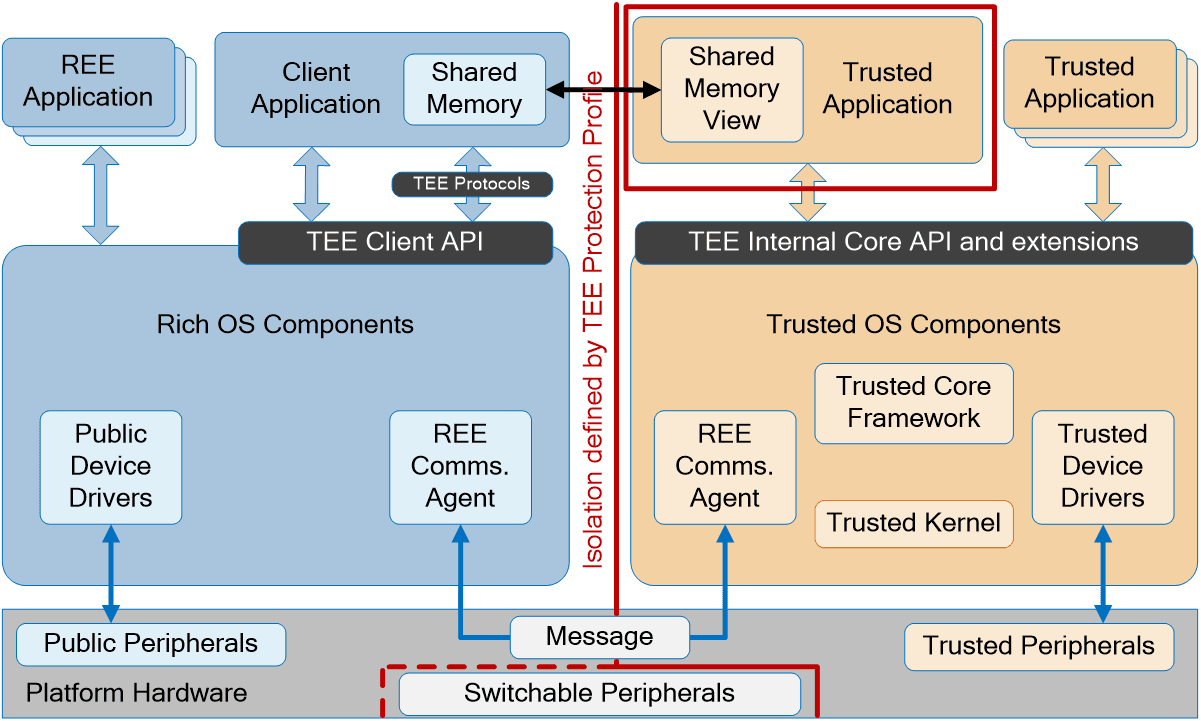
可信执行环境(TEE)技术介绍(Trusted Execution Environment)_Trust Bo-CSDN博客_tee ree View original
Is this image relevant?
ARM anuncia ARM TrustZone para cores Cortex-M View original
Is this image relevant?
Some notes on SGX OwnerEpoch and Sealing | davejingtian.org View original
Is this image relevant?
可信执行环境(TEE)技术介绍(Trusted Execution Environment)_Trust Bo-CSDN博客_tee ree View original
Is this image relevant?
Trusted Execution Environments (TEEs)
- Provide isolated execution environments for sensitive code and data
- Protect against unauthorized access and tampering, even if the main operating system is compromised (ARM TrustZone, Intel SGX)
- Offer an additional layer of security by separating critical operations from the regular operating system
- Enable secure storage and processing of sensitive information, such as cryptographic keys and biometric data
Hardware-based Memory Protection
- Implement memory encryption and integrity protection mechanisms to safeguard against physical attacks and unauthorized memory access
- Examples include Intel SGX (Software Guard Extensions) and AMD SEV (Secure Encrypted Virtualization)
- Encrypt data in memory to prevent unauthorized reading or modification
- Detect and prevent tampering attempts by verifying the integrity of memory contents
- Mitigate the risk of cold boot attacks and memory scraping techniques
Secure Boot Processes
- Ensure that only authenticated and unmodified firmware and operating systems are loaded during system startup
- Utilize hardware root of trust to establish a secure boot chain
- Verify the integrity and authenticity of each component in the boot process using digital signatures or cryptographic hashes
- Prevent the execution of malicious or unauthorized code at the firmware or operating system level
- Mitigate the risk of rootkits and boot-level malware infections
Hardware-based Cryptographic Primitives
- Provide high-quality entropy sources for cryptographic operations using hardware-based random number generators (RNGs)
- Enhance the security of key generation and random number-based protocols by generating unpredictable and unbiased random numbers
- Implement cryptographic algorithms and operations in hardware for improved performance and security
- Examples include hardware-based AES encryption, SHA-256 hashing, and public-key cryptography accelerators
- Offer tamper-resistant storage and management of cryptographic keys using hardware security modules (HSMs)
Hardware-based Access Control
- Enforce memory protection and isolate sensitive system components from unauthorized access
- Examples include Intel MPX (Memory Protection Extensions) and ARM TrustZone
- Define and enforce access control policies at the hardware level to restrict access to critical resources
- Implement privilege separation and least privilege principles to minimize the impact of vulnerabilities
- Prevent unauthorized access to memory regions, peripherals, and system configurations
- Complement software-based access control mechanisms for a more robust security solution
Hardware Security for Protection
Protection against Software-based Attacks
- Provide an additional layer of protection by isolating sensitive code and data from the main operating system and applications
- Prevent unauthorized access and tampering of critical assets, even if the software environment is compromised
- Mitigate the risk of malware, rootkits, and other software-based threats
- Examples include Trusted Execution Environments (TEEs) and hardware-based memory encryption

Safeguarding against Physical Attacks
- Implement hardware-enforced memory encryption and integrity protection mechanisms to protect against physical attacks
- Encrypt data in memory to prevent unauthorized reading or modification, even if an attacker has physical access to the system
- Detect and prevent tampering attempts by verifying the integrity of memory contents
- Mitigate the risk of cold boot attacks, memory scraping, and hardware tampering
- Examples include Intel SGX and AMD SEV
Mitigation of Side-channel Attacks
- Provide isolated execution environments and implement countermeasures to protect against side-channel attacks
- Examples of side-channel attacks include cache timing attacks, power analysis attacks, and electromagnetic emanation attacks
- Implement hardware-based isolation and partitioning to prevent leakage of sensitive information through side channels
- Employ hardware-based noise generation and randomization techniques to obfuscate side-channel signals
- Regularly update and patch hardware vulnerabilities to mitigate the risk of side-channel exploits
Complementing Software-based Security
- Hardware-based security features complement and enhance software-based security measures
- Provide a more comprehensive and robust security solution by combining hardware and software security mechanisms
- Hardware-based security features offer an additional layer of protection, even if software security measures fail or are bypassed
- Implement hardware-based security features to protect critical assets and sensitive operations, while software-based security handles higher-level security policies and access control
- Integrate hardware and software security mechanisms seamlessly to provide a cohesive and effective security solution
Trade-offs in Hardware Security
Performance Overhead
- Implementing hardware-based security features often introduces performance overhead due to additional processing requirements
- Encryption, integrity checks, and isolated execution consume computational resources and may impact system performance
- The level of performance impact depends on the specific hardware security features implemented and their configuration
- Trade-offs between security and performance need to be carefully considered based on the system's requirements and constraints
- Optimize hardware security implementations to minimize performance overhead while maintaining the desired level of security
Cost Considerations
- Hardware-based security features can increase the overall cost of the system
- Additional hardware components, such as secure enclaves, cryptographic accelerators, and tamper-resistant modules, add to the bill of materials
- The cost-benefit analysis of implementing hardware security features depends on the specific security requirements and budget constraints
- Consider the potential financial impact of security breaches and data loss when evaluating the cost of hardware security implementations
- Strike a balance between the level of security provided and the associated costs, considering the criticality of the assets being protected
Security-Performance-Cost Balance
- Balancing the trade-offs between security, performance, and cost requires careful consideration of the system's objectives and constraints
- Prioritize security requirements based on the sensitivity of the assets and the potential impact of security breaches
- Assess the performance requirements of the system and determine the acceptable level of performance overhead introduced by hardware security features
- Evaluate the available budget and resources for implementing hardware security solutions
- Make informed decisions on the selection and configuration of hardware security features to achieve the optimal balance between security, performance, and cost
- Regularly review and adjust the security-performance-cost balance as the system evolves and new threats emerge

Effectiveness of Hardware Security Mechanisms
Trusted Execution Environments (TEEs)
- TEEs, such as ARM TrustZone and Intel SGX, provide strong protection for sensitive code and data
- Isolate critical operations from the main operating system, reducing the attack surface
- Protect against unauthorized access and tampering, even if the main operating system is compromised
- Effectiveness depends on the security of the TEE implementation and the absence of vulnerabilities in the trusted computing base
- Regular security audits and updates are necessary to maintain the effectiveness of TEEs against evolving threats
Hardware-based Memory Encryption and Integrity Protection
- Mechanisms like Intel SGX and AMD SEV provide robust protection against physical attacks and unauthorized memory access
- Encrypt data in memory, preventing unauthorized reading or modification
- Detect and prevent tampering attempts by verifying the integrity of memory contents
- Effectiveness may be impacted by certain side-channel attacks, such as cache timing attacks and speculative execution vulnerabilities
- Continuous research and improvements are necessary to address emerging side-channel attack vectors and enhance the effectiveness of memory protection mechanisms
Secure Boot Processes
- Secure boot processes are highly effective in preventing the execution of malicious or unauthorized firmware and operating systems
- Utilize hardware root of trust to establish a secure boot chain and verify the integrity and authenticity of each component
- Effectiveness relies on the security of the hardware root of trust and the integrity of the boot chain
- Regular updates and security patches are essential to maintain the effectiveness of secure boot processes against evolving boot-level threats
- Proper management and protection of cryptographic keys used in the secure boot process are crucial for its effectiveness
Hardware-based Random Number Generators (RNGs)
- Hardware-based RNGs significantly improve the security of cryptographic operations by providing high-quality entropy
- Generate unpredictable and unbiased random numbers, reducing the risk of predictable or weak cryptographic keys
- Effectiveness depends on the quality and robustness of the RNG implementation and the absence of vulnerabilities or backdoors
- Regular testing and certification of hardware-based RNGs are necessary to ensure their effectiveness and compliance with security standards
- Proper use and integration of hardware-based RNGs into cryptographic protocols and applications are essential for their effectiveness
Hardware Security Modules (HSMs)
- HSMs offer strong protection for cryptographic keys and sensitive data by providing tamper-resistant storage and secure execution environments
- Effectiveness depends on the physical security measures and access controls implemented around the HSMs
- Regular security audits and penetration testing are necessary to assess the effectiveness of HSMs against physical and logical attacks
- Proper management and lifecycle handling of cryptographic keys within HSMs are crucial for their effectiveness
- Integration of HSMs into the overall security architecture and processes is essential for their effective utilization
Hardware-based Access Control Mechanisms
- Mechanisms like Intel MPX and ARM TrustZone can effectively enforce memory protection and isolate sensitive system components
- Effectiveness depends on the correctness and comprehensiveness of the access control policies defined and enforced by the hardware
- Regular review and update of access control policies are necessary to maintain their effectiveness against evolving threats and system changes
- Proper integration and configuration of hardware-based access control mechanisms with software-based security measures are crucial for their effectiveness
- Continuous monitoring and auditing of access control violations and anomalies are essential for detecting and responding to potential security breaches
See Fiveable more often in Google
Mark Fiveable as a preferred source and Google is more likely to show you our guides in Top Stories, with a "preferred" badge in AI Mode and AI Overviews.