12.3 Air pollution sources, types, and effects

🌈Earth Systems Science Unit 12 Review
12.3 Air pollution sources, types, and effects
🌈 Earth Systems Science
Air pollution refers to the introduction of harmful substances into the atmosphere from both natural and human sources. Understanding the types, sources, and effects of these pollutants is central to Earth Systems Science because air pollution doesn't stay in one place: it cycles through atmospheric, hydrologic, and biological systems, creating cascading impacts on health, ecosystems, and climate.
Air Pollutants
Types of Particulate Matter
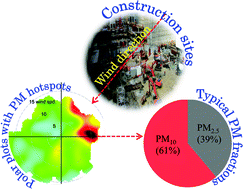
Particulate matter (PM) refers to tiny solid particles and liquid droplets suspended in the air, including dust, soot, and smoke. PM is classified by size, and size determines how dangerous it is:
- PM10 particles have diameters ≤ 10 micrometers (coarse particles). These are inhalable but are mostly filtered by the nose and throat.
- PM2.5 particles have diameters ≤ 2.5 micrometers (fine particles). These pose the greatest health risk because they're small enough to travel deep into the lungs and even enter the bloodstream.
Major sources of particulate matter include fossil fuel combustion (coal and oil), biomass burning (wildfires, agricultural burning), and mechanical processes like construction and traffic on unpaved roads.
Gaseous Pollutants
Sulfur dioxide () is a colorless gas with a sharp, pungent odor produced when sulfur-containing fossil fuels (especially coal and heavy oil) are burned. The biggest emitters are coal-fired power plants, industrial facilities like smelters and paper mills, and diesel vehicles.
Nitrogen oxides () are a family of highly reactive gases that form when fuel is burned at high temperatures. The most significant of these is nitrogen dioxide (), a reddish-brown toxic gas that contributes to both smog and acid rain. Motor vehicles, electric utilities, and industrial boilers are the primary sources.
Volatile organic compounds (VOCs) are carbon-based chemicals that evaporate easily at room temperature. Sources span a wide range:
- Outdoor: vehicle exhaust, industrial emissions, gasoline vapors
- Indoor: paints, solvents, aerosol sprays, cleaning products, building materials, office equipment (copiers, printers)
Many VOCs cause eye, nose, and throat irritation, headaches, and nausea. Some, like formaldehyde and benzene, are known or suspected carcinogens.
Atmospheric Effects

Photochemical Smog
Smog is a mixture of ground-level ozone, nitrogen oxides, VOCs, and particulate matter that forms a visible brownish haze over cities. The process behind photochemical smog works like this:
- Vehicles and industrial sources release and VOCs into the air.
- Sunlight provides the energy for these pollutants to react chemically.
- The reactions produce ground-level ozone and other secondary pollutants.
- These products accumulate near the surface, especially under stagnant atmospheric conditions (temperature inversions).
Smog is worst in urban areas during summer, when sunlight is strongest and calm winds allow pollutants to build up rather than disperse.
Ozone Pollution
Ozone () is a molecule made of three oxygen atoms, and its effects depend entirely on where it is in the atmosphere:
- Stratospheric ozone (the "ozone layer," roughly 15–35 km up) is beneficial. It absorbs harmful ultraviolet (UV) radiation and protects life on Earth.
- Ground-level ozone is harmful. It's a major component of smog and forms through the same + VOC + sunlight reactions described above.
Ground-level ozone is a powerful oxidant that irritates the respiratory system, reduces lung function, and worsens asthma and other chronic lung conditions.
The key distinction: ozone is protective in the stratosphere but destructive at ground level. Same molecule, very different consequences depending on altitude.
Acid Deposition
Acid rain (more accurately called acid deposition) includes any form of precipitation with unusually acidic components, primarily sulfuric acid and nitric acid. It forms through a straightforward chain:
- and are released into the atmosphere from power plants, vehicles, and industry.
- These gases react with water vapor, oxygen, and other atmospheric chemicals.
- The resulting sulfuric and nitric acids dissolve into cloud droplets.
- Acidic precipitation falls as rain, snow, sleet, or fog, sometimes hundreds of kilometers from the original source.
The effects are widespread:
- Aquatic ecosystems: Acidified lakes and streams lose fish and other organisms that can't tolerate low pH.
- Soils: Acid deposition leaches essential nutrients and can release toxic aluminum into the soil.
- Built structures: Limestone and marble buildings and monuments weather much faster under acid rain exposure.
Urban Heat Island Effect
The urban heat island (UHI) effect describes how cities are measurably warmer than surrounding rural areas, often by 1–3°C on average and even more at night. Several factors drive this:
- Dark surfaces like asphalt and rooftops absorb and re-radiate more heat than vegetation or soil.
- Cities have less vegetation, which means less cooling through evapotranspiration.
- Waste heat from vehicles, industrial processes, and air conditioning systems adds directly to urban temperatures.
The UHI effect matters for air quality because higher temperatures accelerate the chemical reactions that produce ground-level ozone and smog. It also intensifies heat waves, raising health risks for urban populations.
Health Impacts
Indoor Air Pollution
Indoor air pollution refers to harmful pollutants that accumulate inside buildings and enclosed spaces. This is a significant concern because people in developed countries spend roughly 90% of their time indoors.
Common indoor pollutants and their sources:
- Particulate matter: cooking (especially with gas stoves or solid fuels), heating, tobacco smoke
- VOCs: off-gassing from building materials, furniture, paints, and cleaning products
- Carbon monoxide (CO): malfunctioning or poorly ventilated fuel-burning appliances
- Radon: a naturally occurring radioactive gas that seeps into buildings from underlying rock and soil; the second leading cause of lung cancer after smoking
Inadequate ventilation is the key factor that turns indoor pollutant sources into a health problem. Without sufficient air exchange, pollutant concentrations can build to levels far exceeding outdoor air.
Respiratory Diseases
Air pollution exposure is a major risk factor for several serious respiratory conditions, including asthma, chronic obstructive pulmonary disease (COPD), and lung cancer.
Two pollutants are especially damaging to the respiratory system:
- PM2.5 penetrates deep into the lungs and can cross into the bloodstream, triggering inflammation and oxidative stress throughout the body. Long-term exposure is linked to both cardiovascular and respiratory disease.
- Ground-level ozone damages airway tissues directly, reducing lung function and worsening existing conditions.
Vulnerable populations include children (whose lungs are still developing), the elderly, and anyone with pre-existing respiratory or cardiovascular conditions.
Reducing exposure involves action at both the individual and policy level:
- Individual: using air purifiers with HEPA filters, limiting outdoor exertion during high-pollution days, ensuring good indoor ventilation
- Policy: enforcing stricter emissions standards, transitioning to cleaner energy sources, expanding air quality monitoring networks
See Fiveable more often in Google
Mark Fiveable as a preferred source and Google is more likely to show you our guides in Top Stories, with a "preferred" badge in AI Mode and AI Overviews.