4.1 Harmony and Voice Leading I

🎶AP Music Theory Unit 4 Review
4.1 Harmony and Voice Leading I
🎶 AP Music Theory
Soprano bass counterpoint is about writing and hearing the outer two voices of an 18th century four part texture so they sound smooth and independent. You learn the four types of motion, the voice leading guidelines (like avoiding parallel fifths and octaves), and how to build a bass line under a given soprano that implies a strong harmonic progression ending in a perfect authentic cadence.
Why This Matters for the AP Music Theory Exam
This topic is the foundation for the part-writing and outer-voice dictation skills you keep using through the rest of the course. On the AP Music Theory exam, the outer voices show up in several ways:
- In aural skills, you notate the soprano and bass lines of a performed progression, then use those lines to figure out the chords and inversions.
- In written part-writing, you compose a bass line under a given soprano following 18th-century conventions, and your motion choices directly earn or lose points.
- In harmonic analysis, the soprano and bass tell you which chord and inversion you are looking at, so reading the outer voices fast pays off everywhere.
Getting comfortable with these rules now means the four-voice writing in later units feels like an extension of the same skill.
Key Takeaways
- Voice leading is how each voice moves from one chord to the next, with attention to chord spelling, spacing, and doubling so lines stay smooth and independent.
- Memorize the four types of motion: parallel, similar, oblique, and contrary.
- Avoid parallel fifths and parallel octaves between any two voices, and resolve a leading tone in an outer voice up by step.
- Keep upper voices mostly stepwise, hold common tones, and exclude melodic augmented, diminished, and larger-than-a-fifth intervals in the upper voices (the bass has more leap options).
- When you build a bass line under a soprano, the bass leaps more than the upper voices, the quarter note is the most common rhythmic value, and every phrase ends with an appropriate cadence.
- The final cadence of a passage must be a perfect authentic cadence (V to I, both root position, scale degree 1 in the soprano).
What Voice Leading Means
The way individual voices of a composition move from chord to chord is called voice leading. In the 17th and 18th centuries, as written music became more standardized, composers developed conventions to guide how voices should move so the result sounds pleasing. This era is the Common Practice Period, roughly 1650 (the Baroque period) to 1900 (the Romantic period).
When you follow voice-leading conventions, you have to consider correct chord spelling, spacing, and doubling. Done well, voice leading achieves linear smoothness (no big unexpected jumps) and keeps voices independent (no voice simply copying another).
Soprano-Bass Counterpoint

This topic focuses on the relationship between the soprano and bass lines of a four-part texture. These outer voices carry the most information about the harmony, which is why composers and analysts pay so much attention to them.
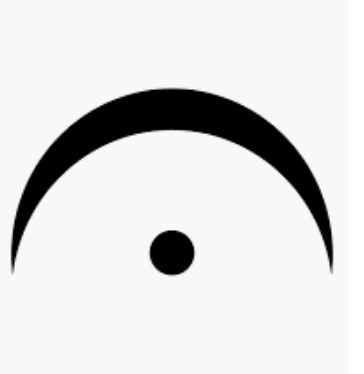
In four-part writing, the voices are named soprano, alto, tenor, and bass, or SATB. The soprano is the highest line and the bass is the lowest. These correspond to the standard voice parts in a choir. The end of a musical phrase is marked by a cadence, the point of relative repose that concludes a phrase. In chorale-style writing, cadences are often marked with a fermata, though not every cadence has one. Cadence types get full treatment in Unit 4.3, so keep this definition handy.
Types of Motion


The linear movement between two voices can happen in four ways:
- Parallel motion: voices move in the same direction (both up or both down) by the same melodic interval.
- Similar motion: voices move in the same direction but not by the same melodic interval.
- Oblique motion: one voice stays still while the other moves up or down.
- Contrary motion: voices move in opposite directions.
Knowing these labels matters because most of the voice-leading guidelines describe which kinds of motion are allowed and which to avoid.
Voice-Leading Guidelines for Outer Voices
These are the conventions of 18th-century voice leading for the outer voices. Remember that voice leading is about how each voice gets from one chord to the next.
- Voice leading should proceed mostly by step without excessive leaps.
- When possible, common tones between adjacent chords should stay in the same voice part.
- Any chord should keep soprano-alto-tenor-bass order from high to low to avoid voice crossing.
- If a perfect fifth between two voices is not immediately repeated, it should move to an interval other than another perfect fifth between those voices. This applies to parallel motion (parallel fifths) and contrary motion, and to nonadjacent chords on successive beats.
- If a perfect octave or unison between two voices is not immediately repeated, it should move to an interval other than another perfect octave or unison between those voices. This applies to parallel motion (parallel octaves), contrary motion, and nonadjacent chords on successive beats.
- Upper voices (soprano, alto, tenor) should move by these melodic intervals only: major and minor seconds, major and minor thirds, perfect fourth, and perfect fifth. Exclude all melodic augmented and diminished intervals (they create uncharacteristic dissonances) and all melodic intervals larger than a perfect fifth (they create uncharacteristic disjunct motion).
- A leading tone in an outer voice (soprano or bass) should always resolve up by step to avoid an unresolved leading tone.
- Outer voices may include leading tones as long as they are not doubled in another voice and they resolve to the tonic by ascending stepwise motion.
You also need to watch the dissonances between the outer voices. Note-against-note dissonances are allowed only if they imply an acceptable progression. For example, a note-against-note fourth works only as part of an acceptable second-inversion pattern, such as the cadential, neighboring (pedal), or passing ⁶₄ patterns.
Another thing to avoid is a cross-relation, where a chromatically inflected pitch appears while the non-inflected version of that pitch is in another voice directly before it. This often comes up in minor keys when you raise the seventh, so before you submit, check that a non-raised seventh is not sitting right next to a raised seventh in a different voice.
Building a Bass Line Under a Given Soprano
On the AP Music Theory exam, you will compose a bass line for a given soprano line. Adding a bass line implies a harmonic progression, so the bass you write has to make those chords plausible and strong.
- All implied chords must let the soprano notes make harmonic sense.
- An acceptable progression can be built using tonic, supertonic, subdominant, and dominant triads exclusively, as long as you follow normative progression procedures.
- Repeating a specific harmony (same chord, same position) is acceptable only if the repeat starts on a strong beat. At the beginning of a phrase, a repeat may start on a weak beat.
- Create melodic interest by balancing upward and downward motion and balancing steps and leaps.
- A bass line uses leaps more often than the upper voices, which tend to move by step.
- Allowable leaps include thirds, perfect fourths and fifths, sixths, octaves, and a descending diminished fifth if it resolves properly.
- Octave leaps should be followed by a change in direction.
- Successive leaps in the same direction are fine as long as the pitches outline a triad.
- Repeated bass notes are acceptable only if they start on a strong beat, unless it is the start of a phrase or the second note is a suspension.
- The quarter note is the most frequent rhythmic value in a chorale bass line. Bass lines may use note values from half notes to eighth notes, but a 4/4 bass line made almost entirely of half notes would be atypical of the style.
Each phrase ending should imply an appropriate cadence. Acceptable cadences include perfect authentic, imperfect authentic, half, Phrygian half, plagal, and deceptive. The final cadence must be a perfect authentic cadence: V to I with both chords in root position and scale degree 1 in the soprano.
Roman and Arabic Numerals
The notes of a bass line, especially combined with the other voices, imply full chords and progressions. You show those chords with Roman-numeral analysis, adding Arabic numerals to mark inversion or specific voice leading. If your analysis is accurate, every given note must be explainable by the chords you label.
Notating the Outer Voices by Ear
You will also notate progressions by ear and add the matching figured bass. The outer voices give the strongest clues about which chords you are hearing, so focus your listening there.
Use what you know about voice leading to keep the voices straight. Most voices, especially the soprano, move by step, so if you are hearing big leaps you are probably tracking the wrong voice. Once you have the top and bottom notes, you can usually identify the chords and inversions. If you get stuck on one, make an educated guess based on what you know about how progressions normally work.
One helpful boundary: soprano notes should always be notated in the correct octave, but octave displacement of bass-line pitches is treated as a more acceptable error and is allowed on the AP Music Theory exam.
Chord Spacing: Open and Closed Position

Spacing describes how far apart the voices sit on the staff. In closed (close) position, all the upper voices (soprano, alto, and tenor) are placed as close together as the chord tones allow. Any other spacing is open position.
When spacing a chord, adjacent upper parts may be as far apart as an octave but no more. The distance between the bass and its nearest upper part may be more than an octave.
How to Use This on the AP Music Theory Exam
Free Response
When you write a bass line, work through it like a checklist: do the chords support the soprano, do you avoid parallel fifths and octaves, do leading tones in outer voices resolve up by step, and do the phrase endings land on appropriate cadences? Confirm the final cadence is a perfect authentic cadence before you move on. These specific choices are where points are earned.
Aural Skills
For outer-voice dictation, notate the soprano and bass first, then use those lines to deduce chords and inversions. Lean on voice-leading habits: the soprano usually moves by step, so unexpected big leaps mean you are probably hearing a different voice. Remember every notated note has to be accounted for in your Roman-numeral analysis.
Common Trap
Parallel fifths and octaves are the easiest mistakes to make and the easiest for graders to spot. Check the motion between the soprano and bass at every chord change, including nonadjacent chords on successive beats, before you finalize an answer.
Common Misconceptions
- Misconception: Parallel fifths and octaves are banned only in parallel motion.Actually: Parallel fifths and octaves are not banned only in parallel motion. The convention also applies to contrary motion and to nonadjacent chords on successive beats.
- Misconception: A leading tone in an outer voice is optional to resolve.Actually: A leading tone in an outer voice is not optional to resolve. It should resolve up by step to the tonic, and it should not be doubled in another voice.
- Misconception: Open and closed position is determined by whether the chord is inverted.Actually: Open and closed position is about the spacing of the upper voices, not about whether the chord is inverted. Closed position keeps soprano, alto, and tenor as close as the chord tones allow.
- Misconception: Every cadence has a fermata.Actually: Not every cadence has a fermata. Fermatas often mark cadences in chorales, but a cadence is defined by the harmonic and melodic arrival, not the symbol.
- Misconception: The bass line is not allowed to leap more than the upper voices.Actually: The bass line is allowed to leap more than the upper voices, but the leaps are still limited to specific intervals, and the soprano and other upper voices should stay mostly stepwise.
- Misconception: A V-to-I cadence is perfect even if a chord is inverted or another chord tone is on top.Actually: A perfect authentic cadence has strict requirements: V to I, both in root position, with scale degree 1 in the soprano. If a chord is inverted or another chord tone is on top, it is imperfect, not perfect.
Related AP Music Theory Guides
Practice Questions for 4.1
1 of 10
In a two-voice counterpoint exercise in G Major, the score shows the soprano voice resolving stepwise to G5 and the bass voice resolving to G2 at the phrase ending. The recording features the bass resolving to G2, but the soprano resolves to B4. What type of cadence is heard compared to the one notated?
A.
A Perfect Authentic Cadence is heard instead of the notated Imperfect Authentic Cadence.
B.
A Plagal Cadence is heard instead of the notated Perfect Authentic Cadence.
C.
An Imperfect Authentic Cadence is heard instead of the notated Perfect Authentic Cadence.
D.
A Deceptive Cadence is heard instead of the notated Perfect Authentic Cadence.
Vocabulary
The following words are mentioned explicitly in the AP® course framework for this topic.Term | Definition |
|---|---|
18th-century chorale | A hymn-like composition from the Baroque period, typically featuring four-part harmony with a soprano melody and supporting bass, alto, and tenor lines. |
Arabic numerals | Numbers (1, 2, 3, etc.) used in figured bass notation to denote specific intervals above a given bass note. |
bass | The lowest voice part in SATB four-voice texture, typically the lowest musical line. |
bass line | The lowest melodic line in a musical composition that often implies harmonic progressions through its note choices. |
cadence | A harmonic progression that marks the end of a phrase and provides punctuation in musical flow. |
cadential ⁶₄ chord | A second-inversion chord that typically appears before a V-I cadence, functioning as an acceptable harmonic pattern in voice leading. |
change in direction | A shift in melodic contour from ascending to descending motion or vice versa. |
chord inversion | A chord voicing in which a chord member other than the root appears in the bass, resulting in first or second inversion. |
chord spelling | The correct arrangement of the notes of a chord, including all necessary accidentals, to properly represent the harmonic function indicated by Roman numerals or figured bass. |
chord tone | Any of the individual notes that make up a harmonic chord. |
chromatically altered pitches | Pitches that are raised or lowered by a semitone from their diatonic position within a key. |
chromatically inflected pitch | A note that has been altered from its diatonic pitch by the addition of an accidental. |
close position | A chord spacing where all upper parts are placed as close together as chord tones will allow. |
common practice era | The period of Western classical music, roughly from 1650 to 1900, characterized by specific conventions of harmony and voice leading. |
common tones | Pitches that are shared between adjacent chords and should be retained in the same voice part to ensure smooth voice leading. |
conclusive cadences | Cadences that provide a sense of finality and closure, including perfect authentic and plagal cadences. |
contrary motion | Movement of two voices in opposite directions. |
counterpoint | The practice of composing polyphonic music using historical conventions, and the resulting texture of independent melodic lines. |
cross relation | The prohibited occurrence of a preinflected pitch in one voice directly preceding a chromatically inflected version of that same pitch in another voice. |
deceptive cadence | A cadence that avoids the expected V-I resolution of an authentic cadence by substituting a non-tonic chord for the tonic. |
dictation | The process of listening to performed music and notating the pitches and rhythms heard. |
diminished fifth | An interval spanning five letter names that is one semitone smaller than a perfect fifth, typically requiring proper resolution in counterpoint. |
dominant triad | A chord built on the fifth scale degree, which creates tension and typically resolves to the tonic. |
doubling | The practice of having two or more voices or instruments play the same pitch or pitch class in different octaves. |
downward motion | Melodic movement in which successive pitches descend in pitch. |
eighth notes | Musical notes with a duration equal to one eighth of a whole note. |
half cadence | An inconclusive cadence that typically ends on the dominant chord (V). |
half notes | Musical notes with a duration equal to half of a whole note. |
harmonic progression | A sequence of chords that move from one harmony to another, creating the harmonic structure of a musical passage. |
imperfect authentic cadence | An inconclusive cadence created by a V-I progression where chords may be inverted and any chord tone may appear in the soprano. |
inconclusive cadences | Cadences that do not provide a sense of finality, including half, imperfect authentic, and deceptive cadences. |
leading tone | The seventh scale degree in a major scale, located one half step below the tonic with a strong tendency to resolve upward to the tonic. |
major key | A key or tonal center based on a major scale, characterized by a specific pattern of whole and half steps. |
melodic interest | The quality of a melody that engages the listener through varied and compelling musical ideas. |
melodic leaps | Movement between non-adjacent pitches in a melody, typically larger than a second. |
minor key | A key or tonal center based on a minor scale, characterized by a different pattern of whole and half steps than major keys. |
neighboring ⁶₄ chord | A second-inversion chord that functions as a passing or embellishing chord, typically supported by a pedal tone in the bass. |
note values | The relative duration of musical notes, such as whole notes, half notes, quarter notes, and eighth notes. |
note-against-note dissonances | Dissonant intervals that occur between outer voices simultaneously and must imply an acceptable harmonic progression. |
oblique motion | Movement where one voice remains stationary while the second voice moves up or down. |
octave leap | A melodic jump spanning eight letter names, requiring a change in direction in the bass line. |
open position | A chord spacing where the upper parts are spaced more widely apart than in close position. |
outer voices | The soprano and bass lines in a harmonic progression, which provide structural and harmonic information. |
parallel fifths | The prohibited motion of two voices moving in the same direction to consecutive perfect fifth intervals. |
parallel motion | Movement of two voices in the same direction by the same melodic interval. |
parallel octaves | The prohibited motion of two voices moving in the same direction to consecutive perfect octave intervals. |
passing ⁶₄ chord | A second-inversion chord that connects two root-position or first-inversion chords in stepwise bass motion. |
perfect authentic cadence | A conclusive cadence created by a V-I progression with both harmonies in root position, ending with scale degree 1 in the soprano. |
perfect fifth | An interval spanning five letter names with a frequency ratio of 3:2, considered a perfect consonance in tonal music. |
perfect fourth | An interval spanning four letter names with a frequency ratio of 4:3, considered a perfect consonance in tonal music. |
phrases | Complete musical utterances that form syntactical units in music and typically conclude with a cadence. |
Phrygian half cadence | A cadence that moves from a subdominant chord in first inversion (iv⁶) to a dominant chord (V), used in minor keys only. |
plagal cadence | A cadence that moves from a subdominant chord (IV or iv) to a tonic chord (I or i), also known as an 'Amen cadence.' |
quarter notes | Musical notes with a duration equal to one quarter of a whole note. |
repeated bass notes | The same pitch sounded consecutively in the bass line, subject to specific restrictions regarding beat placement. |
rhythmic profile | The characteristic pattern of note values and rhythmic patterns that define the style of a musical line. |
Roman numeral analysis | A system of notation using Roman numerals to identify chords and their harmonic function within a key. |
root position | A chord voicing in which the chordal root appears in the bass (lowest part) of the chord. |
SATB order | The arrangement of voices from highest to lowest as soprano, alto, tenor, and bass to maintain proper voice crossing conventions. |
scale degree 1 | The tonic note, the first degree of a musical scale. |
similar motion | Movement of two voices in the same direction but not by the same melodic interval. |
soprano line | The highest melodic line in a musical composition, typically sung by the highest voices or played by the highest instruments. |
spacing | The vertical distance between adjacent voices in a chord, which affects the clarity and balance of the harmonic sound. |
step | A melodic interval that traverses adjacent pitches with neighboring letter names. |
stepwise motion | Movement in a melodic line by adjacent scale degrees, either ascending or descending. |
strong beat | A beat in a measure that receives primary emphasis, typically the first beat or other metrically accented beats. |
subdominant triad | A chord built on the fourth scale degree, typically used to move toward the dominant or return to the tonic. |
supertonic triad | A chord built on the second scale degree of a major or minor scale. |
suspension | A nonharmonic tone created when a note from a previous chord is held or rearticulated over a new chord before resolving downward by step to a chord tone; an upward-resolving suspension is called a retardation. |
tendency tones | Scale degrees that have a strong inclination to resolve to a specific neighboring pitch, such as the leading tone resolving upward to the tonic. |
tonic triad | A chord built on the first scale degree, serving as the primary harmonic center and point of rest in a key. |
triad | A chord whose essence consists of three distinct pitches stacked on adjacent lines or spaces in thirds. |
upward motion | Melodic movement in which successive pitches ascend in pitch. |
voice crossing | The inappropriate overlap of pitch ranges between adjacent voices, which should be avoided for clarity of voice leading. |
voice leading | The technique of moving individual melodic lines (voices) in a musical composition, including considerations for smooth transitions and proper resolution of chords. |
weak beat | A beat in a measure that receives less emphasis than the downbeat or other strong beats. |
Frequently Asked Questions
What is voice leading in AP Music Theory?
Voice leading is how individual musical lines move from one chord to the next while keeping the voices smooth, independent, and stylistically correct.
What is soprano-bass counterpoint?
Soprano-bass counterpoint focuses on the relationship between the highest and lowest voices in a four-part texture, which strongly shapes the implied harmony.
What are the four types of motion?
The four types are parallel motion, similar motion, oblique motion, and contrary motion. They describe how two voices move relative to each other.
Why are parallel fifths and octaves avoided?
Parallel fifths and octaves make voices sound less independent, which conflicts with common-practice voice-leading expectations.
What cadence should end a soprano-bass counterpoint passage?
The final cadence should be a perfect authentic cadence: V to I, both chords in root position, with scale degree 1 in the soprano.
How is harmony and voice leading tested on the AP Music Theory exam?
You may need to write a bass line, identify outer voices by ear, analyze Roman numerals, avoid voice-leading errors, and create a stylistic cadence.
See Fiveable more often in Google
Mark Fiveable as a preferred source and Google is more likely to show you our guides in Top Stories, with a "preferred" badge in AI Mode and AI Overviews.