8.1 Principles of Differentiated Instruction

📅Curriculum Development Unit 8 Review
8.1 Principles of Differentiated Instruction
📅 Curriculum Development
Principles of Differentiated Instruction
Differentiated instruction is a teaching approach that adapts what you teach, how you teach it, and how students show what they've learned. The goal is to meet each student where they are so that every learner gets appropriately challenging, meaningful work. This matters in curriculum development because a single, one-size-fits-all lesson plan will inevitably leave some students bored and others lost.
This section covers the core elements of differentiation (content, process, product, and learning environment), the role of assessment in keeping differentiation responsive, and the main strategies teachers use to differentiate by readiness, interest, and learning profile.
Definition of Differentiated Instruction
Differentiated instruction is a teaching approach that adapts instruction to accommodate diverse learner needs, including differences in readiness levels, interests, and learning profiles. Rather than expecting all students to engage with the same material in the same way at the same pace, it recognizes those differences and uses them as a starting point for planning.
The aim is to maximize each student's growth by meeting them where they are. That doesn't mean giving struggling students easier work and calling it a day. It means ensuring every student has access to the same core concepts while adjusting the path they take to get there.
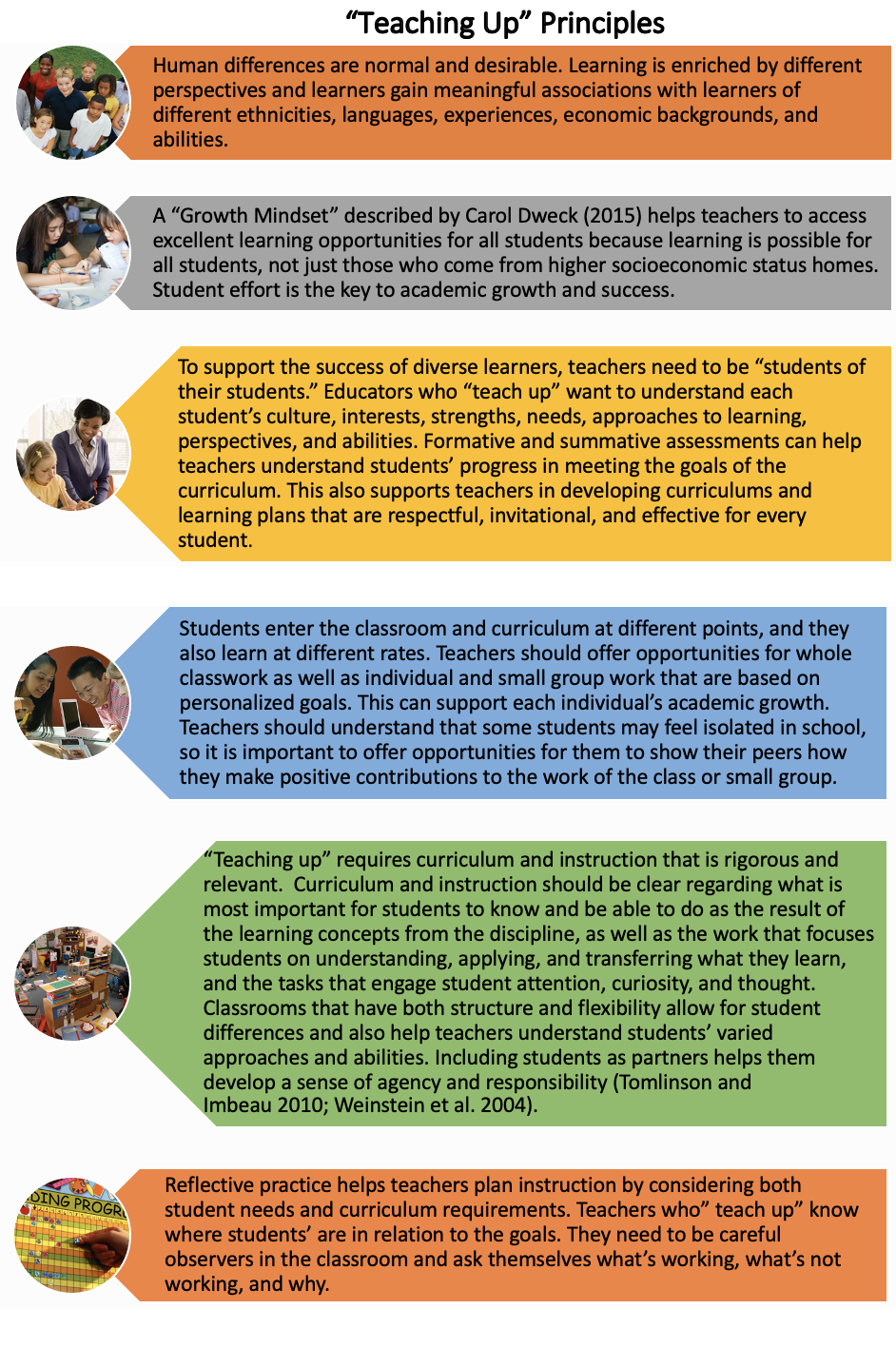
Elements of Differentiated Instruction
Differentiation happens across four elements. Think of these as the four "levers" a teacher can adjust:
- Content refers to what students learn or the materials used to teach it. You can vary content by providing leveled texts, supplementary multimedia, or alternative readings that all address the same core concept but at different levels of complexity.
- Process refers to how students make sense of the material. This includes the activities and strategies students use to explore ideas, such as hands-on experiments, discussion groups, guided practice, or independent analysis. Different students may work through different activities to reach the same understanding.
- Product refers to how students demonstrate what they've learned. Instead of requiring a single format (like a written essay for everyone), you might allow students to choose from presentations, projects, written assignments, or other formats that let them show mastery in a way that fits their strengths.
- Learning environment refers to the physical and emotional climate of the classroom. This includes flexible seating, collaborative spaces, grouping arrangements, and classroom routines. A supportive, inclusive environment makes differentiation possible because students need to feel safe taking on appropriately challenging work.

Assessment in Differentiated Instruction
Assessment is what makes differentiation responsive rather than guesswork. Without it, you're just offering variety for variety's sake.
- Pre-assessments identify students' current understanding and skill levels before a unit begins. This is how you figure out where each student is starting from.
- Formative assessments monitor progress during instruction. These can include observations, exit tickets, performance tasks, or self-assessments. The data they provide is what drives day-to-day instructional decisions.
Based on assessment data, you adjust the pace, complexity, or depth of instruction for individuals or groups. A student who has already mastered a concept might receive extension activities or enrichment, while a student who's struggling might get targeted small-group instruction or additional scaffolding.
The key point: differentiation isn't a plan you set once and forget. Assessment keeps it a continuous cycle. As students' needs and abilities change, your instructional decisions change with them. Using a variety of assessment methods (observations, performance tasks, self-assessments, quizzes) gives you more comprehensive data to work from.
Strategies for Differentiation
Teachers typically differentiate along three dimensions: readiness, interest, and learning profile. Each one targets a different aspect of student diversity.
Readiness involves varying tasks based on students' current knowledge and skill levels.
- Tiered assignments adjust the complexity or depth of a task while keeping the same learning objective. For example, in a math class, all students might work on solving equations, but one tier works with single-step equations while another tackles multi-step equations with variables on both sides.
- Flexible grouping organizes students by readiness for targeted instruction or peer support. Skill-based reading groups are a common example. These groups should shift regularly as students grow, not become permanent tracks.
- Scaffolding provides structured support so students can access challenging work. Tools like graphic organizers, sentence starters, or partially completed models help bridge the gap between what a student can do independently and what they can do with support.
Interest incorporates students' personal passions and curiosities to increase engagement and motivation.
- Interest-based projects let students explore a topic they care about while still meeting learning objectives. A student researching marine biology and another researching space exploration can both practice the same research and writing skills.
- Choice boards or menus offer a selection of learning activities students can choose from, such as book clubs, experiments, or creative projects.
- Even small moves matter: integrating student interests into lesson examples and discussions (like using sports statistics to teach percentages) can make abstract concepts more concrete.
Learning profile accommodates students' preferred modes of learning and the conditions under which they learn best.
- Use varied instructional methods within a lesson or unit: visual aids, audio recordings, hands-on manipulatives, and text-based resources give students multiple entry points into the same content.
- Offer flexible seating or workspace options (standing desks, quiet corners, collaborative tables) so students can work in conditions that help them focus.
- Provide opportunities for different working structures: independent work, collaborative projects, partner activities, and teacher-supported learning stations. Some students thrive in group discussion; others need quiet processing time first.
See Fiveable more often in Google
Mark Fiveable as a preferred source and Google is more likely to show you our guides in Top Stories, with a "preferred" badge in AI Mode and AI Overviews.