3.2 Learner-Centered Curriculum Models

📅Curriculum Development Unit 3 Review
3.2 Learner-Centered Curriculum Models
📅 Curriculum Development
Learner-centered curricula flip the traditional model by starting with students rather than content. Instead of asking "what do we need to cover?", these designs ask "what do our students need, and how do they learn best?" The result is a curriculum built around active learning, student choice, and personalized experiences, all grounded in well-established learning theories.
This section covers the foundational theories behind learner-centered design, how it compares to subject-centered approaches, its impact on student outcomes, and a practical framework for planning learner-centered lessons.
Fundamental Principles and Theories
Principles of learner-centered curricula
Four major theories inform how learner-centered curricula are designed. Each one highlights a different aspect of how students learn, and in practice, effective curricula draw on several of them at once.
- Constructivism
- Learners actively build knowledge through experiences and interactions with their environment, not by passively receiving information. Think hands-on activities, group discussions, and lab work.
- The teacher's role shifts from lecturer to facilitator. That means providing opportunities for exploration, discovery, and problem-solving through tools like open-ended questions and inquiry-based learning.
- Self-Determination Theory (SDT)
- SDT holds that intrinsic motivation depends on three psychological needs: autonomy (having choices), competence (experiencing mastery), and relatedness (feeling a sense of belonging).
- A curriculum aligned with SDT offers meaningful choices (e.g., letting students pick project topics), optimal challenges (e.g., differentiated tasks that stretch but don't overwhelm), and community-building (e.g., collaborative activities and group norms).
- Multiple Intelligences Theory
- Howard Gardner proposed that learners possess various types of intelligence: linguistic, logical-mathematical, spatial, kinesthetic, musical, interpersonal, intrapersonal, and naturalistic.
- The practical takeaway is that curriculum should provide multiple pathways to understanding. A single topic might be taught through visual aids, hands-on experiments, group projects, and outdoor activities so that students with different strengths can all access the material.
- Experiential Learning Theory
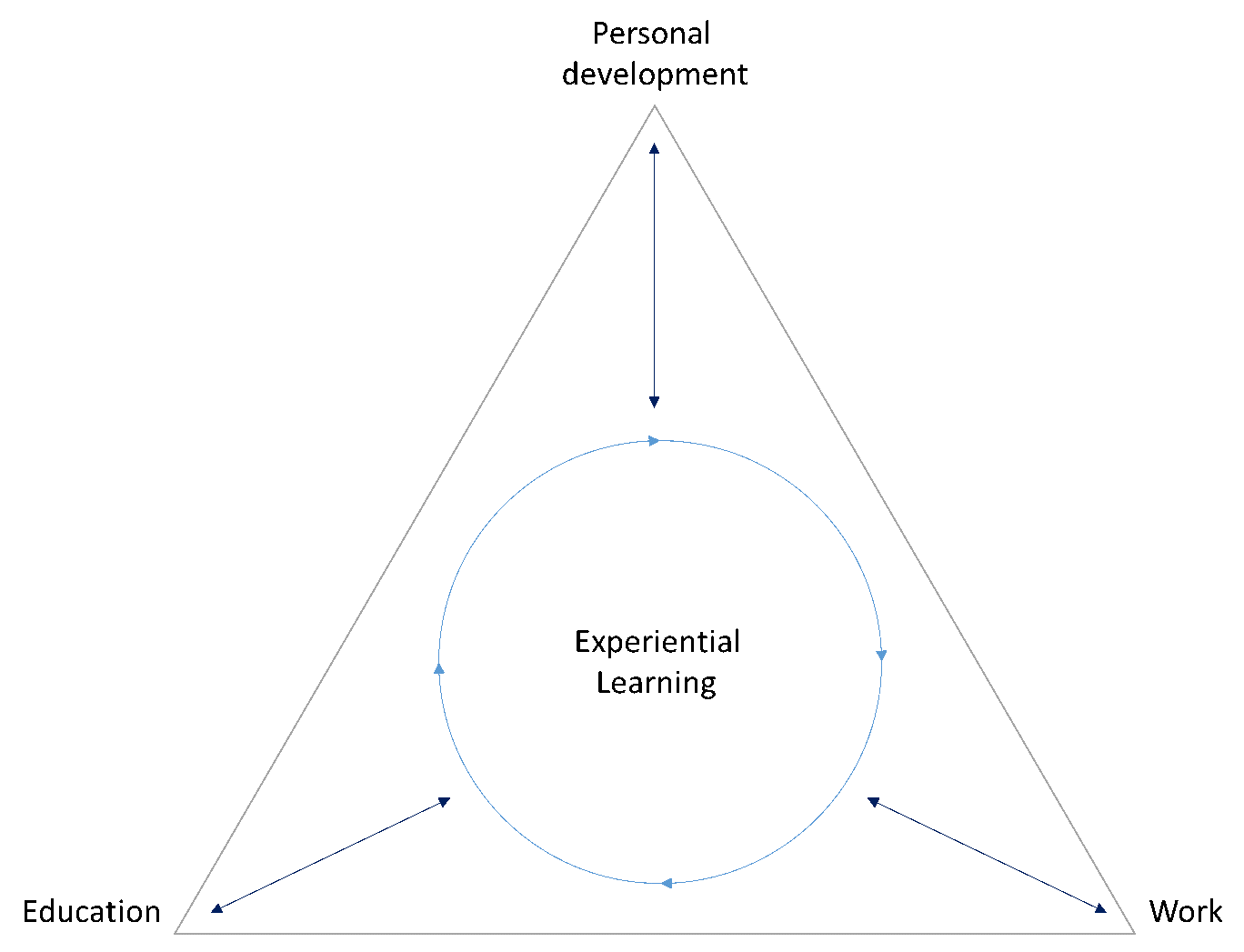
- David Kolb's model describes learning as a four-stage cycle: concrete experience (doing), reflective observation (reviewing), abstract conceptualization (concluding), and active experimentation (planning and trying again).
- Curriculum built on this theory incorporates all four stages. For example, students might run a simulation (concrete experience), write in reflective journals (reflective observation), draw conclusions about underlying principles (abstract conceptualization), and then apply those principles to a real-world project (active experimentation).
Comparison and Impact
Learner-centered vs. subject-centered models
These two approaches represent fundamentally different starting points for curriculum design. Neither is inherently "better" in all contexts, but understanding the contrast helps you make deliberate design choices.
- Learner-Centered Approaches
- Start with individual learner needs, interests, and abilities (e.g., personalized learning plans)
- Emphasize active learning and student engagement (discussions, debates, role-plays)
- Position the teacher as a facilitator and guide (Socratic questioning, scaffolding)
- Allow for a flexible, adaptable curriculum (student-generated topics, self-paced learning)
- Subject-Centered Models
- Start with content and subject matter (textbook-driven, standardized curriculum)
- Emphasize teacher-directed instruction and knowledge transmission (lectures, memorization)
- Position the teacher as an expert and authority figure (direct instruction, teacher-led demonstrations)
- Follow a more fixed scope and sequence with less room for student input
The key distinction: subject-centered models ask what content must be delivered, while learner-centered models ask what experiences will help this particular group of students learn.
Impact of learner-centered design
Research consistently links learner-centered approaches to gains in three areas:
- Engagement
- Active participation and collaboration increase when students work on group projects, peer tutoring, and cooperative tasks.
- Students engage more deeply when learning feels relevant to their lives. Authentic tasks with real-world connections (e.g., designing a community survey rather than completing a worksheet) make a noticeable difference.
- Motivation
- Tying back to Self-Determination Theory, learner-centered curricula foster intrinsic motivation by addressing autonomy (choice of topics), competence (self-paced learning that allows mastery), and relatedness (cooperative learning structures).
- Students who have ownership over their learning, through goal-setting and self-assessment, tend to be more invested in outcomes.
- Achievement
- Deeper understanding and better retention result from strategies like elaborative rehearsal and retrieval practice, both of which are naturally embedded in learner-centered activities.
- Students in these environments demonstrate higher levels of critical thinking (analysis, evaluation), problem-solving (design thinking challenges), and creativity (divergent thinking tasks).
- Personalized learning supports individual growth through tools like adaptive technology and differentiated instruction, helping each student progress toward mastery at an appropriate pace.

Lesson Planning
Development of learner-centered lessons
Designing a learner-centered lesson follows a structured process. Each step builds on the previous one.
-
Identify learner characteristics
- Conduct surveys or assessments to determine student interests (hobbies, career aspirations), prior knowledge (pre-tests), and learning preferences (visual, auditory, kinesthetic).
- Account for diverse cultural backgrounds (language, customs), language proficiency (ELL support needs), and special needs (IEPs, 504 plans). This step is the foundation: you can't center students if you don't know who they are.
-
Set learner-centered objectives
- Write objectives that focus on what students will be able to do, not just what content will be covered. The emphasis is on skills and competencies.
- Use action verbs from Bloom's taxonomy: analyze, create, evaluate, design, interpret, synthesize. Compare "Students will learn about ecosystems" (vague, content-focused) with "Students will analyze how changes in one species affect an ecosystem's balance" (specific, learner-focused).
-
Select appropriate instructional strategies
- Incorporate a variety of teaching methods to reach different learners: graphic organizers, podcasts, simulations, role-plays.
- Prioritize strategies that promote active engagement, such as cooperative learning (jigsaw, think-pair-share), project-based learning (design challenges), and inquiry-based learning (case studies). The strategy should match both the objective and the learner characteristics you identified in step one.
-
Design authentic assessments
- Develop assessments that align directly with your learner-centered objectives. Performance tasks (presentations, exhibitions), portfolios (curated collections of student work), and self-assessments (reflective journals) all work well here.
- Build in student choice (e.g., letting students select how they demonstrate understanding) and self-reflection (e.g., self-evaluation rubrics). Assessment in a learner-centered model isn't just about measuring outcomes; it's also a learning experience itself.
-
Create a supportive learning environment
- Establish a classroom climate that values diversity (cultural celebrations, inclusive materials), collaboration (clear norms for group work), and risk-taking (a growth mindset culture where mistakes are treated as learning opportunities).
- Provide resources and support structures for individual and group needs: differentiated materials, peer tutoring systems, and regular teacher conferences. The environment you create determines whether the other four steps actually work in practice.
See Fiveable more often in Google
Mark Fiveable as a preferred source and Google is more likely to show you our guides in Top Stories, with a "preferred" badge in AI Mode and AI Overviews.