8.2 Adapting Curriculum for Special Needs Students

📅Curriculum Development Unit 8 Review
8.2 Adapting Curriculum for Special Needs Students
📅 Curriculum Development
Understanding Special Needs Students
Special needs students bring a wide range of learning challenges and abilities to the classroom. Adapting curriculum, instruction, and assessments for these learners is a core skill in curriculum development. This section covers the characteristics of different special needs populations, how individualized education programs (IEPs) are built, the types of adaptations you'll need to know, and why collaboration ties it all together.

Top images from around the web for Characteristics of special needs students
Inclusive Design Research Centre View original
Is this image relevant?
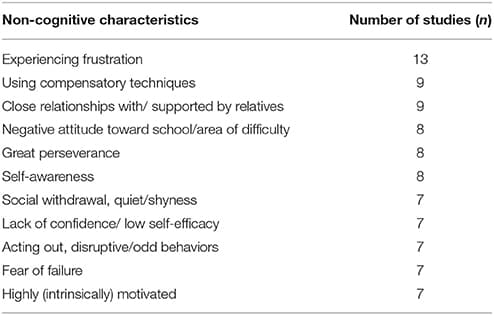
Frontiers | Non-cognitive Characteristics of Gifted Students With Learning Disabilities: An In ... View original
Is this image relevant?
Frontiers | From Learning to Memory: What Flies Can Tell Us about Intellectual Disability ... View original
Is this image relevant?
Inclusive Design Research Centre View original
Is this image relevant?
Frontiers | Non-cognitive Characteristics of Gifted Students With Learning Disabilities: An In ... View original
Is this image relevant?
Characteristics of Special Needs Students
Not all special needs students face the same barriers. Recognizing the distinct characteristics of each group is the first step toward designing appropriate support.
Learning Disabilities
Students with learning disabilities typically have average or above-average intelligence but struggle with specific academic skills like reading, writing, or math. They process information differently, which can show up as difficulty with memory, organization, or following multi-step directions. Time management and task completion are common pain points, not because of effort or motivation, but because of how their brains handle information.
Intellectual Disabilities
These students have limitations in both intellectual functioning (generally an IQ below 70–75) and adaptive behaviors like communication, self-care, and social skills. Abstract thinking and problem-solving tend to be especially challenging. The key difference from learning disabilities: students with intellectual disabilities need significantly more time, repetition, and structured support to master new concepts across all areas, not just one skill domain.
Gifted and Talented Students
Gifted students are also considered special needs because standard curriculum often doesn't meet their learning requirements. They demonstrate exceptional ability in academics, creativity, leadership, or other domains. Without appropriately challenging work, these students can become disengaged or develop behavioral issues. They benefit from differentiated instruction, enrichment activities, and acceleration options like grade-skipping or compacted curriculum.

Development of Individualized Education Programs
An Individualized Education Program (IEP) is a legally binding document that outlines the specific services, goals, and supports a student with a disability will receive. The process for creating one follows a structured sequence.
Step 1: Referral and Evaluation
- A teacher, parent, or other professional refers the student for evaluation based on a suspected disability.
- A comprehensive evaluation is conducted, assessing cognitive, academic, and behavioral functioning. This often involves multiple professionals (school psychologist, speech-language pathologist, etc.).
- The evaluation results are used to determine whether the student meets eligibility criteria for special education services under categories defined by IDEA (the Individuals with Disabilities Education Act).
Step 2: IEP Team Collaboration
- An IEP team is assembled. This includes general education teachers, special education teachers, parents or guardians, specialists (e.g., therapists), and often an administrator.
- The team develops measurable goals and objectives based on the student's unique strengths and needs.
- The team determines what accommodations, modifications, and related services (such as speech therapy or occupational therapy) the student requires.
Step 3: Implementation and Progress Monitoring
- Teachers and support staff carry out the IEP's accommodations and strategies in the classroom.
- Student progress toward each goal is tracked through ongoing assessments, observations, and data collection.
- The IEP is reviewed at least annually and revised as needed. If a student isn't making adequate progress, the team reconvenes to adjust the plan.

Adaptations for Special Needs Learners
Adaptations fall into three categories: what you teach (curriculum), how you teach it (instruction), and how you measure learning (assessment). Understanding the distinction between these is important for exam purposes and for practice.
Curriculum Modifications
Curriculum modifications change what the student is expected to learn.
- Adjust content complexity or volume to match the student's instructional level. For example, a student might work on single-digit multiplication while peers tackle multi-digit problems.
- Provide alternative materials such as audiobooks, simplified texts, or visual-heavy resources that cover the same core concepts.
- Break assignments into smaller, more manageable chunks. Instead of a 10-question worksheet done at once, a student might complete it in sets of three with check-ins between each set.
Instructional Adaptations
Instructional adaptations change how content is delivered.
- Use multi-sensory teaching methods that combine visual, auditory, and kinesthetic input. A vocabulary lesson might pair written definitions with images and a physical sorting activity.
- Provide visual supports like graphic organizers, anchor charts, pictures, and videos to aid comprehension.
- Offer additional scaffolding during lessons, such as sentence starters, worked examples, or guided practice before independent work.
Assessment Accommodations
Assessment accommodations change how students demonstrate what they've learned, without altering the standard being measured.
- Modify the test format: reduce the number of questions, use multiple-choice instead of open-ended prompts, or enlarge print.
- Allow alternative response modes such as oral responses, use of a scribe, or computer-assisted answers.
- Provide extended time, scheduled breaks, or a distraction-free testing environment.
A useful distinction to remember: accommodations change how a student accesses content or shows learning (the standard stays the same). Modifications change what the student is expected to learn (the standard itself is altered). Both appear in IEPs, but they serve different purposes.
Collaboration in Special Education Support
Effective special education support doesn't happen in isolation. It depends on consistent communication and shared responsibility among everyone involved with the student.
Interdisciplinary Teamwork
Special educators, general educators, therapists, and specialists each bring different expertise. When they collaborate, they can develop comprehensive support plans that address academic, behavioral, and social-emotional needs together. Regular team meetings keep everyone aligned and allow for ongoing problem-solving when something isn't working.
Consistency Across Settings
Students with special needs often move between classrooms, therapists, and support settings throughout the day. Collaborative planning ensures that expectations and strategies stay consistent no matter where the student is. This consistency helps students generalize skills from one setting to another and reduces confusion caused by conflicting approaches.
Family Partnerships
Parents and guardians are essential members of the support team. They offer insights into a child's strengths, interests, triggers, and home life that school staff simply can't observe. Regular, open communication keeps families informed and actively involved. Research consistently shows that meaningful family engagement in the IEP process leads to stronger student outcomes.
See Fiveable more often in Google
Mark Fiveable as a preferred source and Google is more likely to show you our guides in Top Stories, with a "preferred" badge in AI Mode and AI Overviews.