2.5 Physical Applications

➗Calculus II Unit 2 Review
2.5 Physical Applications
➗ Calculus II
2.1
Areas between Curves
2.2
Determining Volumes by Slicing
2.3
Volumes of Revolution: Cylindrical Shells
2.4
Arc Length of a Curve and Surface Area
2.5
Physical Applications
2.6
Moments and Centers of Mass
2.7
Integrals, Exponential Functions, and Logarithms
2.8
Exponential Growth and Decay
2.9
Calculus of the Hyperbolic Functions
Mass and Density Functions
Integration lets you calculate total quantities (mass, work, force) when the contributing factor varies continuously across a region. Instead of multiplying a single constant by a length or area, you slice the object into infinitesimal pieces, account for how density or force changes at each point, and sum everything up with an integral.

Top images from around the web for Mass calculation with density functions
9.6 Center of Mass | University Physics Volume 1 View original
Is this image relevant?
Moments and Centers of Mass · Calculus View original
Is this image relevant?
Calculating Centers of Mass and Moments of Inertia · Calculus View original
Is this image relevant?
9.6 Center of Mass | University Physics Volume 1 View original
Is this image relevant?
Moments and Centers of Mass · Calculus View original
Is this image relevant?
Mass Calculation with Linear Density
A linear density function describes how mass is distributed along a one-dimensional object like a thin rod or wire. It gives you mass per unit length at position .
To find the total mass of a rod stretching from to :
Example: A 2-meter rod has linear density kg/m. Its total mass is:
Notice that the density increases along the rod, so more mass is concentrated near . If the density were constant, you'd just multiply density by length, but the integral handles the variation for you.
Mass Calculation with Radial Density
For a circular disk or plate, a radial density function describes mass per unit area as a function of distance from the center. The key detail here is getting the area element right. A thin ring at radius with thickness has area , so:
where is the radius of the disk. The factor of comes from the circumference of the ring. Don't forget it; this is a common mistake.

Center of Mass
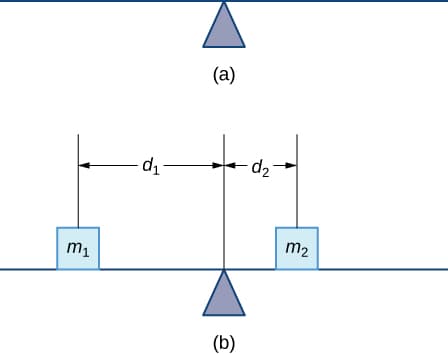
The center of mass is the average position of all the mass in an object, weighted by how much mass sits at each location. For a rod with linear density :
The denominator is the total mass, and the numerator weights each position by the mass at that point. If density is uniform, the center of mass lands at the geometric center. Non-uniform density shifts it toward the heavier side.
Work and Fluid Systems

Work Done by a Variable Force
When a force changes as an object moves, you can't just use . Instead, you integrate the force function over the displacement:
Geometrically, this is the area under the force-displacement curve.
Spring example (Hooke's Law): A spring with constant N/m is stretched from its natural length () to m. Since :
Pumping problems are another classic application. To pump fluid out of a tank, you slice the fluid into thin horizontal layers at height , figure out the weight of each layer, and multiply by the distance that layer must travel. The setup looks like:
where is the cross-sectional area of the tank at height and is the distance that slice must be lifted.
Hydrostatic Force on Submerged Surfaces
A fluid at rest exerts pressure that increases with depth. At depth below the surface, hydrostatic pressure is:
where is the fluid density (for water, kg/m³) and m/s².
To find the total hydrostatic force on a submerged vertical surface, you can't just multiply pressure by area because pressure varies with depth. Instead, slice the surface into thin horizontal strips at depth , each with width :
Here is the horizontal width of the surface at depth , and you integrate over the range of depths the surface spans. The trickiest part of these problems is usually setting up the coordinate system and expressing correctly. Drawing a picture and labeling your axes first saves a lot of grief.
Setting Up Physical Application Integrals
These problems all follow the same general strategy:
- Identify what varies. Is it density along a rod? Force over a displacement? Pressure at different depths?
- Slice the object or region into thin pieces where the varying quantity is approximately constant.
- Write an expression for the contribution of one slice (mass of a thin piece, work to move one layer, force on one strip).
- Set up the integral by summing all slices from one boundary to the other.
- Determine limits of integration from the physical dimensions of the problem.
- Evaluate the integral using whatever technique fits (substitution, integration by parts, etc.).
The hardest step is usually step 3. If you can write down what one thin slice contributes, the rest is mechanical.
Checking Your Results
- Units matter. Mass should come out in kg (or g, lbs), work in joules (or ft-lbs), and force in newtons (or lbs). If your units don't work out, your integral is set up wrong.
- Sanity check with estimates. If a rod is 2 m long and density ranges from 1 to 5 kg/m, total mass should be somewhere between 2 kg and 10 kg.
- Sign conventions. Depth is positive going down in hydrostatic problems. Displacement is positive in the direction of motion for work problems. Be consistent with your coordinate system.
See Fiveable more often in Google
Mark Fiveable as a preferred source and Google is more likely to show you our guides in Top Stories, with a "preferred" badge in AI Mode and AI Overviews.