8.5 Regenerative processes and Gerber-Shiu functions

📊Actuarial Mathematics Unit 8 Review
8.5 Regenerative processes and Gerber-Shiu functions
📊 Actuarial Mathematics
Definition of regenerative processes
A regenerative process is a stochastic process that probabilistically restarts itself at certain random times called regeneration points. After any regeneration point, the future evolution of the process is independent of its past and follows the same probability distribution as the original process. This "fresh start" property is what makes these processes so tractable analytically.
In actuarial mathematics, regenerative processes model phenomena like the surplus process of an insurance company, claim arrival patterns, and policyholder lifetimes. Their structure lets you break a complex, long-running process into independent, identically distributed pieces that are much easier to analyze.

Top images from around the web for Regeneration points
Optimal Investment and Risk Control Strategies for an Insurance Fund in Stochastic Framework View original
Is this image relevant?
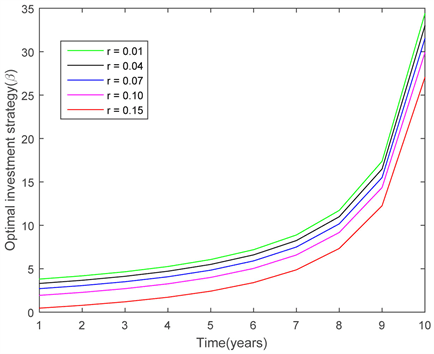
Optimal Investment and Risk Control Strategies for an Insurance Fund in Stochastic Framework View original
Is this image relevant?
Optimal Investment and Risk Control Strategies for an Insurance Fund in Stochastic Framework View original
Is this image relevant?
Optimal Investment and Risk Control Strategies for an Insurance Fund in Stochastic Framework View original
Is this image relevant?
Regeneration points
Regeneration points are the specific times where the process effectively resets. At each regeneration point, everything that happens afterward is statistically identical to starting the whole process over, with no dependence on what came before.
Common examples of regeneration points:
- The time of a claim arrival in an insurance surplus process
- The moment of a policy renewal in an insurance contract
- The instant of a machine breakdown in a reliability model
Cycles in regenerative processes
A cycle is the time interval between two consecutive regeneration points. Because of the regenerative property, each cycle is independent and identically distributed. The cycle length is a random variable, and its distribution is one of the most important characteristics of the process.
Understanding cycle behavior is what lets you derive long-run averages. By the regenerative theorem, the long-run time-average of a regenerative process equals the expected value of a quantity accumulated over one cycle divided by the expected cycle length.
Delayed vs. non-delayed regeneration
- In a non-delayed regenerative process, the first regeneration point occurs at time zero. The process starts fresh from the very beginning, so the first cycle has the same distribution as all subsequent cycles.
- In a delayed regenerative process, the first regeneration point occurs at some random time after the process starts. The first cycle may have a different distribution than the rest.
This distinction matters when analyzing steady-state properties. Delayed processes require extra care because the initial "partial cycle" can affect transient behavior, though the long-run averages typically converge to the same values as in the non-delayed case.
Markov regenerative processes
Markov regenerative processes combine the regenerative property with the Markov property. At each regeneration point, the future evolution depends only on the current state of the process, not on the full history of how it got there. This makes them especially useful for modeling systems where regeneration points correspond to state changes.
Markov property in regenerative processes
The Markov property says that the future of the process is conditionally independent of its past, given the present state. In a Markov regenerative process, this property holds specifically at regeneration points: the probability distribution of the process after a regeneration point is determined solely by the state at that point.
Between regeneration points, the process does not need to be Markovian. This flexibility is what distinguishes Markov regenerative processes from ordinary Markov chains and makes them applicable to a wider range of models.
Examples of Markov regenerative processes
Surplus process of an insurance company. The surplus represents the company's financial reserves over time. Premiums flow in continuously, and claims arrive according to a Poisson process. The regeneration points are the claim arrival times. At each claim, the future surplus depends only on the current surplus level (not on the history of past claims), so the Markov property holds at these points.
M/G/1 queue. Customers arrive according to a Poisson process, and service times are i.i.d. with a general distribution. The regeneration points are the moments when a customer completes service and departs. The queue length at these departure epochs forms a Markov regenerative process because the future queue evolution depends only on how many customers are currently waiting.
Gerber-Shiu functions
The Gerber-Shiu function (also called the expected discounted penalty function) is a unified tool for analyzing ruin-related quantities in risk models. Introduced by Hans Gerber and Elias Shiu in 1998, it encodes information about the time to ruin, the surplus just before ruin, and the deficit at ruin into a single function. By choosing different penalty functions, you can extract whichever quantity you need.
Definition and notation
The Gerber-Shiu function is defined as:
where:
- is the initial surplus
- is the force of interest (discount rate)
- is the time of ruin (the first time the surplus drops below zero)
- is the surplus immediately before ruin
- is the deficit at ruin (how far below zero the surplus falls)
- is the penalty function, a non-negative function of the surplus prior to ruin and the deficit at ruin
- is the indicator that ruin actually occurs
Discounted penalty functions
The expression inside the expectation has three components working together:
- discounts the penalty back to time zero, reflecting the time value of money. A ruin event far in the future is "worth less" in present-value terms.
- assigns a penalty based on the severity of ruin. You control what aspects of ruin matter by choosing .
- restricts attention to sample paths where ruin actually occurs. If the surplus never hits zero, this term is zero and no penalty is assessed.
Expected discounted penalty functions
The real power of the Gerber-Shiu function is its versatility. Different choices of and recover different classical quantities:
- Ruin probability : Set and . Then .
- Joint distribution of surplus prior to ruin and deficit at ruin: Set for constants and . This gives the probability that the pre-ruin surplus is at most and the deficit is at most .
- Laplace transform of the ruin time: Set and leave . Then .
- Expected time to ruin: Differentiate with respect to and evaluate at :
Higher moments of the ruin time can be obtained by taking higher-order derivatives.
Applications of Gerber-Shiu functions
Ruin theory and Gerber-Shiu functions
Ruin theory studies the probability and severity of an insurer's surplus falling below zero. The Gerber-Shiu function consolidates many ruin-related questions into one framework. Rather than deriving separate equations for the ruin probability, the deficit distribution, and the pre-ruin surplus distribution, you solve a single equation for and then specialize.

Surplus prior to ruin vs. deficit at ruin
These two quantities capture different aspects of how ruin unfolds:
- Surplus prior to ruin : How much reserve the company had just before the fatal claim arrived. A small pre-ruin surplus suggests the company was already in a precarious position.
- Deficit at ruin : How far below zero the surplus drops. This measures the immediate shortfall the company faces and determines how much external capital would be needed to restore solvency.
Their joint distribution matters because a company might want to know, for instance, the probability that it was nearly solvent before ruin (large ) but suffered a catastrophic claim (large ). Setting in the Gerber-Shiu function gives exactly this joint probability.
Time to ruin and Gerber-Shiu functions
The distribution of the ruin time tells you not just whether ruin happens but when. The Gerber-Shiu framework handles this through the discount factor :
- With and , the function is the Laplace transform of the ruin time.
- Differentiating with respect to at yields moments of .
- Inverting the Laplace transform (analytically or numerically) recovers the full distribution of .
These results are useful for setting reinsurance levels, determining capital reserves, and stress-testing under different claim scenarios.
Computing Gerber-Shiu functions
Integro-differential equations
In the classical Cramér-Lundberg model, the Gerber-Shiu function satisfies the following integro-differential equation (IDE):
where:
- is the premium rate
- is the Poisson claim arrival rate
- is the claim size distribution function
The intuition behind this equation comes from conditioning on what happens in a small time interval: either no claim arrives (giving the derivative term on the left), or a claim arrives that either does not cause ruin (the first integral) or does cause ruin (the second integral).
Closed-form solutions exist for special cases. For example, when claim sizes are exponentially distributed with rate , the IDE reduces to an ordinary differential equation that can be solved explicitly.
Laplace transforms and Gerber-Shiu functions
Taking the Laplace transform of the IDE converts it into an algebraic equation, which is often easier to solve. The Laplace transform of is:
The steps for this approach are:
- Write down the IDE for
- Multiply both sides by and integrate over
- Recognize convolution integrals and express them in terms of and the Laplace transform of the claim size distribution
- Solve the resulting algebraic equation for
- Invert the Laplace transform to recover
This method works especially well when the claim size distribution has a tractable Laplace transform (e.g., exponential, Erlang, or mixtures of exponentials).
Numerical methods for Gerber-Shiu functions
When analytical solutions are unavailable, numerical methods provide flexible alternatives:
- Monte Carlo simulation: Simulate many sample paths of the surplus process, compute the discounted penalty for each path where ruin occurs, and average the results. This is straightforward to implement but can be slow to converge, especially when ruin is a rare event.
- Quadrature methods: Approximate the integrals in the IDE using numerical integration (e.g., trapezoidal rule, Gaussian quadrature) and solve the resulting system of equations. This tends to be more efficient than simulation for smooth claim size distributions.
- Finite difference methods: Discretize the IDE on a grid of surplus values, replacing derivatives with finite difference approximations. The resulting linear system can be solved with standard techniques (e.g., Thomas algorithm for tridiagonal systems, or iterative solvers for larger systems).
The choice of method depends on the complexity of the model, the form of the penalty function, and the accuracy you need.
Generalizations of Gerber-Shiu functions
Gerber-Shiu functions with multiple thresholds
The standard Gerber-Shiu function uses a single ruin level at zero. The multiple threshold generalization introduces additional levels that trigger different responses. For example, a two-threshold model might define:
- A warning level : when the surplus drops below , the company changes its dividend or reinsurance strategy
- A ruin level at zero: when the surplus drops below zero, ruin occurs
The penalty function can now depend on which thresholds were crossed and in what order. This provides a more granular view of risk and supports the design of tiered intervention strategies.
Matrix-valued Gerber-Shiu functions
When an insurer operates multiple lines of business or faces multiple correlated risk factors, the scalar Gerber-Shiu function generalizes to a matrix-valued version . Each entry corresponds to a specific combination of business lines or risk states.
The matrix-valued function satisfies a matrix IDE analogous to the scalar case. This framework captures interactions between lines of business, such as how a large claim in one line affects the overall surplus. It's particularly useful for analyzing diversification effects and optimal capital allocation in multi-line insurance companies.
Regenerative processes in risk theory
Surplus process as a regenerative process
In the classical Cramér-Lundberg model, the surplus process is:
where:
- is the initial surplus
- is the premium rate
- is a Poisson process with rate counting claims up to time
- are i.i.d. claim sizes
The claim arrival times serve as regeneration points. At each claim, the surplus jumps down by the claim amount, and the subsequent evolution depends only on the current surplus level. The cycles between consecutive claims are exponentially distributed with rate , and the surplus increments within each cycle are independent.
Ruin probabilities and regenerative processes
The regenerative structure of the surplus process leads directly to an integral equation for the ruin probability. By conditioning on the first claim (its timing and size), you get:
The first integral covers claims that reduce the surplus but don't immediately cause ruin (ruin may still happen later). The second integral covers claims large enough to cause immediate ruin. This is a defective renewal equation, and it can be solved using renewal theory techniques or Laplace transforms.
The regenerative framework also yields important asymptotic results. Under the net profit condition , the Cramér-Lundberg approximation gives:
where is the adjustment coefficient (Lundberg exponent) and is a constant. This exponential decay tells you that higher initial surplus dramatically reduces ruin probability.
Gerber-Shiu functions in risk models
The regenerative structure of the Cramér-Lundberg model is precisely what makes the Gerber-Shiu IDE derivable. By conditioning on the first claim in the same way as for the ruin probability, you obtain the IDE for . The regenerative property guarantees that the process "resets" after each claim, so the conditional analysis at the first claim captures all the information needed to write a self-consistent equation for .
This connection between regenerative processes and Gerber-Shiu functions extends to more general models, including Sparre Andersen models (where inter-claim times have a general distribution rather than exponential) and models with investment income or dividend strategies. In each case, identifying the regeneration points is the first step toward deriving the functional equation that satisfies.
See Fiveable more often in Google
Mark Fiveable as a preferred source and Google is more likely to show you our guides in Top Stories, with a "preferred" badge in AI Mode and AI Overviews.