4.5 Multiple state models and disability insurance

📊Actuarial Mathematics Unit 4 Review
4.5 Multiple state models and disability insurance
📊 Actuarial Mathematics
Multiple state models
Multiple state models describe how individuals move between different conditions over time, such as being healthy, disabled, or deceased. In actuarial work, these models are the foundation for pricing and reserving on products like disability insurance, where you need to track not just whether someone is alive or dead, but what condition they're in.

Top images from around the web for Defining multiple state models
Topic 1: Governance of Pension Plans – Pension Finance and Management View original
Is this image relevant?
The Graphic Classroom: August 2010 View original
Is this image relevant?
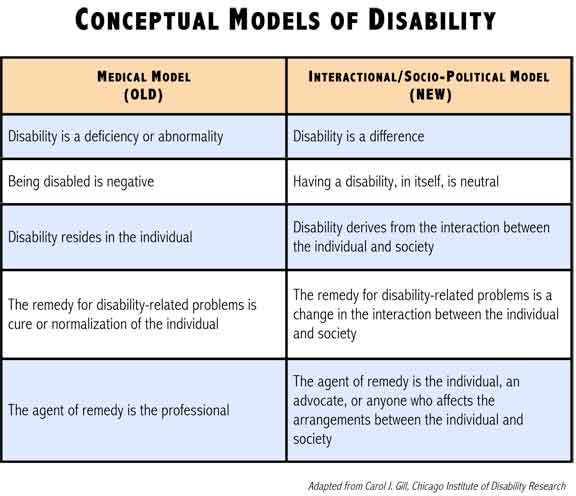
Medical and Social Models of Disability: The one with the Medical Model View original
Is this image relevant?
Topic 1: Governance of Pension Plans – Pension Finance and Management View original
Is this image relevant?
The Graphic Classroom: August 2010 View original
Is this image relevant?
Defining multiple state models
A multiple state model consists of a set of distinct states representing the possible conditions an individual can occupy. States are mutually exclusive: a person can only be in one state at any given time.
The states you choose depend on the product you're modeling:
- A disability insurance model might use: Active, Disabled, Dead
- A pension plan model might use: Active, Retired, Deceased
The number of states reflects how much detail you need. A simple mortality model has two states (Alive, Dead). A disability model that distinguishes partial from total disability might have four or five.
Classifying states in models
States fall into a few categories based on how individuals interact with them:
- Transient states can be entered and left. An individual who is "Active" can become "Disabled," and a "Disabled" individual can recover back to "Active."
- Absorbing states can be entered but never left. "Dead" is the classic absorbing state.
- Initial states are the states where an individual can begin the process. In most disability models, "Active" is the initial state.
This classification matters because it determines the long-term behavior of the model. Every individual in a model with an absorbing state will eventually end up there, given enough time.
Transitions between states
Transitions are the movements between states. In a diagram, you'd draw them as arrows connecting one state to another.
Which transitions are possible depends on the problem:
- Active → Disabled (onset of disability)
- Disabled → Active (recovery)
- Active → Dead (death while healthy)
- Disabled → Dead (death while disabled)
Some transitions are reversible (Active ↔ Disabled), while others are irreversible (any state → Dead). The set of allowed transitions defines the structure of your model and directly affects how you calculate premiums and reserves.
Probabilities of state transitions
Each transition has an associated probability that quantifies how likely it is over a given time period.
The standard notation is:
This represents the probability of moving from state to state over a time period of length .
These probabilities are arranged in a transition probability matrix , where each row corresponds to a starting state and each column to an ending state. Two properties must always hold:
- Every entry satisfies
- Each row sums to 1: for all and
The row-sum condition makes intuitive sense: starting from any state, you must end up somewhere (including possibly staying in the same state).
Estimating transition probabilities
There are several approaches to estimating these probabilities, depending on your data and assumptions:
- Empirical estimation: Count observed transitions in historical data and compute proportions directly. Straightforward but requires large datasets.
- Parametric models: Fit a distribution (e.g., exponential, Weibull) to observed transition times. Useful when you want a smooth function and can justify the distributional assumption.
- Cox proportional hazards model: Model transition intensities as functions of covariates like age, gender, or occupation. Flexible and widely used when you need to account for multiple risk factors.
The right method depends on data availability, model complexity, and the accuracy you need.
Markov property in state models
Most multiple state models in actuarial work assume the Markov property: the future evolution of the process depends only on the current state, not on how the individual got there.
Under this assumption, transition probabilities satisfy the Chapman-Kolmogorov equations:
This says: the probability of going from state to state in time equals the sum over all intermediate states of the probability of reaching in time and then reaching in the remaining time . In matrix form, this is simply .
The Markov property greatly simplifies calculations. However, it's not always realistic. For disability insurance, the probability of recovery often depends on how long someone has been disabled, which violates the Markov assumption. In those cases, semi-Markov models (where transition probabilities depend on duration in the current state) may be more appropriate.
Disability insurance
Disability insurance provides income replacement to individuals who cannot work due to illness or injury. It covers a risk that's often underestimated: the chance of losing your earning capacity for months or years. Actuaries are central to designing, pricing, and managing these products.
Purpose of disability insurance
The core purpose is financial protection. When a qualifying disability prevents someone from working, the policy replaces a portion of their pre-disability income. This helps cover living expenses and maintain the insured's standard of living during the disability period.
Types of disability insurance
Several types exist, each serving different needs:
- Individual disability income (IDI) insurance: Purchased directly by individuals to protect their personal income. Highly customizable.
- Group long-term disability (LTD) insurance: Offered by employers as part of a benefits package. Coverage is generally uniform across the group.
- Social Security Disability Insurance (SSDI): A federal program providing benefits to eligible disabled individuals who have sufficient work history.
- Other specialized types include short-term disability (STD), business overhead expense (BOE) insurance (covers business costs while the owner is disabled), and disability buy-out (DBO) insurance (funds the purchase of a disabled partner's share of a business).

Individual vs group coverage
Individual (IDI) policies are purchased directly from an insurer. The policyholder can customize benefit amounts, elimination periods, and definitions of disability. Premiums reflect individual risk factors: age, health, occupation, and income.
Group (LTD) policies are employer-sponsored with limited customization. Premiums are based on the group's overall characteristics, such as age distribution, occupational mix, and claims history.
Group coverage is typically less expensive per person because risk is pooled across many individuals and administrative costs are spread over the group.
Short-term vs long-term disability
The distinction comes down to benefit duration:
- Short-term disability (STD): Benefits last 3 to 6 months. Covers temporary conditions like recovery from surgery or pregnancy. Elimination periods are short, typically 7 to 14 days.
- Long-term disability (LTD): Benefits can last years, often until age 65 or for a specified period (e.g., 5 or 10 years). Covers extended or permanent impairments. Elimination periods are longer, typically 90 to 180 days.
The longer elimination period on LTD policies is a key pricing lever. The insured bears more of the initial financial risk, which reduces the premium.
Qualifying for disability benefits
To receive benefits, the insured must meet the policy's definition of disability. Two common definitions:
- Own occupation: The insured cannot perform the material duties of their specific occupation. A surgeon who loses fine motor skills qualifies even if they could do other work.
- Any occupation: The insured cannot perform the duties of any occupation for which they're reasonably suited by education, training, or experience. This is a stricter standard.
Many policies use own-occupation for an initial period (e.g., 2 years), then switch to any-occupation for the remainder. Policies also typically require certification by a licensed physician and ongoing appropriate treatment. Exclusions may apply for pre-existing conditions or specific categories like mental illness or substance abuse.
Benefit amounts and durations
Benefit amounts are usually a percentage of pre-disability income, commonly 60% to 70%. Policies often include:
- A maximum monthly benefit cap (e.g., $10,000/month regardless of income)
- A maximum total benefit payable over the life of the claim
Benefit durations vary by policy type and the insured's age at disability onset. LTD policies commonly pay benefits to age 65, though some offer 5- or 10-year benefit periods. A few policies provide lifetime benefits for disabilities occurring before a specified age.
Elimination periods in policies
The elimination period (or waiting period) is the gap between disability onset and the first benefit payment. During this time, the insured receives no benefits and must cover expenses on their own.
Typical elimination periods:
- STD policies: 7 to 14 days
- LTD policies: 30 to 180 days (90 days is very common)
Longer elimination periods mean lower premiums because the insurer avoids paying for short-duration claims. Choosing an elimination period involves balancing premium savings against the insured's ability to self-fund during the waiting period.
Exclusions and limitations
Most policies exclude or limit coverage for certain situations:
- Pre-existing conditions: Disabilities from conditions that existed before the policy's effective date, often subject to a look-back period (e.g., 3 to 12 months)
- Self-inflicted injuries: Disabilities caused by intentional self-harm
- Criminal activities: Disabilities resulting from participation in illegal acts
Many policies also limit the benefit duration for mental health and substance abuse disabilities (e.g., 24 months maximum). Policyholders should review these provisions carefully to understand the actual scope of their coverage.
Underwriting disability insurance
Underwriting assesses the risk of insuring an applicant and determines the premium. Key factors include:
- Age and gender: Disability incidence generally increases with age. Historically, females have had higher claim rates for certain disability types.
- Occupation and income: A construction worker faces different disability risks than an office worker. Higher incomes require larger benefit amounts, increasing the insurer's exposure.
- Health history: Pre-existing conditions, chronic illnesses, and lifestyle factors all affect risk.
The underwriter may request medical records, require a medical exam, or conduct an interview. Based on the assessment, the insurer may offer standard rates, apply a premium loading or specific exclusion, or decline the application.
Pricing disability insurance
Pricing sets premium rates that cover expected claims, expenses, and a profit margin. Actuaries build pricing models using several key inputs:
- Morbidity rates: The incidence and expected duration of disability claims, broken down by age, gender, occupation, and other risk factors
- Mortality rates: The probability of death during disability, which terminates the claim
- Recovery rates: The probability of returning to work, which also terminates the claim
- Interest rates: Expected investment returns on collected premiums, which offset future claims costs
Premiums are typically expressed as a rate per unit of monthly benefit (e.g., $2.50 per $100 of monthly benefit) or as a percentage of the insured's income. For group policies, experience rating adjusts premiums based on the group's actual claims history.
Actuarial applications
Actuaries apply multiple state models and statistical techniques to analyze disability risk, estimate claim costs, and maintain the financial stability of disability insurance programs. The sections below cover the main actuarial tasks in this area.

Constructing disability models
A basic disability model includes these states:
- Active: Healthy and working
- Disabled: Unable to work, receiving benefits
- Recovered: Returned to work after disability
- Dead: Deceased (absorbing state)
More complex models add states for partial disability, multiple severity levels, or distinctions between short-term and long-term disability. The model structure should match the product's features and the granularity of available data.
The transition diagram for a basic three-state model (Active, Disabled, Dead) would show:
- Active → Disabled (governed by incidence rates)
- Disabled → Active (governed by recovery rates)
- Active → Dead and Disabled → Dead (governed by mortality rates, which may differ between states)
Active vs disabled states
These are the two primary transient states. The active state represents individuals currently working and not claiming benefits. The disabled state represents individuals receiving disability benefits.
The key transition rates between them are:
- Incidence rate: The probability of an active individual becoming disabled in a given period
- Recovery rate: The probability of a disabled individual returning to the active state
Both rates typically vary by age, gender, occupation, and (for recovery) duration of disability.
Recovery and mortality rates
Recovery rates measure how likely a disabled individual is to return to work. They tend to be highest in the early months of disability and decline as disability duration increases, reflecting the fact that longer-duration claims are less likely to resolve.
Mortality rates during disability are generally higher than for the active population of the same age. This elevated mortality must be accounted for in the model because death terminates the claim.
Both rates are estimated from historical claims data and are critical for projecting claim durations and total benefit payments.
Incorporating multiple disabilities
Some models distinguish between different types or severities of disability:
- Short-term disability: Temporary, less severe conditions
- Long-term disability: Permanent or more severe impairments
- Partial disability: The individual can work at reduced capacity
Each pair of states has its own transition rates. For example, someone in a short-term disability state might recover, transition to long-term disability, or die. This granularity supports more accurate pricing and allows insurers to design products with benefits that vary by disability severity.
Estimating claim termination rates
A claim terminates when the disabled individual recovers, dies, or reaches the maximum benefit duration. The claim termination rate combines these exit probabilities into a single measure of how quickly claims close.
Actuaries estimate termination rates from historical data, segmented by age, gender, occupation, cause of disability, and especially duration of disability. These rates feed directly into reserve calculations and pricing models. Underestimating termination rates leads to under-reserving, which threatens the insurer's financial stability.
Valuing disability benefits
The present value of future benefits (PVFB) represents the expected cost of disability benefits in today's dollars. Calculating it involves:
- Project the probability of being in the disabled state at each future time point, using the multiple state model's transition probabilities.
- Multiply each period's disability probability by the benefit payment amount for that period.
- Discount each expected payment back to the valuation date using an appropriate interest rate.
- Sum the discounted expected payments across all future time points.
The PVFB accounts for the probability of becoming disabled, the expected claim duration (via recovery and mortality rates), and the time value of money. It's the basis for both reserving and profitability analysis.
Calculating disability reserves
Reserves are the funds insurers set aside to cover expected future claim payments on policies currently in force. Actuaries typically use the prospective method:
where PVFB is the present value of future benefits and PVFP is the present value of future premiums.
Reserves are calculated separately for:
- Active life reserves: For individuals currently healthy but who may become disabled in the future
- Disabled life reserves: For individuals currently receiving benefits, reflecting expected remaining claim payments
Adequate reserves are essential. If reserves are too low, the insurer may not be able to pay future claims. Actuaries regularly review and update reserve assumptions as new experience data becomes available.
Pricing disability products
Pricing brings together all the model components. The actuary sets premiums sufficient to cover:
- Expected claims costs: Driven by incidence rates, claim termination rates, and benefit amounts
- Expenses: Underwriting, administration, and claims management costs
- Profit margin: The insurer's required return
Techniques used in pricing include:
- Risk classification: Grouping insureds by characteristics (age, occupation, etc.) that predict disability risk
- Credibility analysis: Blending a group's own experience with industry-wide data, giving more weight to the group's data as it becomes more statistically reliable
- Experience rating: Adjusting group premiums based on actual claims history (discussed further below)
Experience rating for disability
Experience rating adjusts group disability premiums to reflect each group's actual claims experience rather than relying solely on manual (industry-wide) rates.
The process works as follows:
- Calculate the group's actual claims experience over a recent period (e.g., 3 years).
- Compare actual claims to the expected claims based on manual rates.
- If actual claims exceed expected, increase the group's premium. If actual claims are lower, decrease it.
- Apply credibility weighting: larger groups with more data get more weight on their own experience; smaller groups rely more on manual rates.
This approach promotes fairness by ensuring each group's premiums reflect its own risk profile, and it gives groups an incentive to manage disability risk through workplace safety and return-to-work programs.
Regulatory considerations
Disability insurance operates within a regulatory framework at both state and federal levels. Key areas actuaries must navigate:
- Rate filing and approval: Insurers must file premium rates with state insurance departments and, in many states, receive approval before using them.
- Minimum loss ratios: Some states require that a minimum percentage of premiums be returned to policyholders as benefits, ensuring premiums aren't excessive.
- Benefit mandates: Certain states require coverage for specific conditions or minimum benefit levels.
- Consumer protection: Regulations govern marketing, underwriting, and claims practices to prevent unfair or deceptive treatment of policyholders.
Actuaries must ensure that product design, pricing, and reserving all comply with applicable regulations while still meeting the insurer's financial objectives.
See Fiveable more often in Google
Mark Fiveable as a preferred source and Google is more likely to show you our guides in Top Stories, with a "preferred" badge in AI Mode and AI Overviews.