12.4 Professionalism and communication skills

📊Actuarial Mathematics Unit 12 Review
12.4 Professionalism and communication skills
📊 Actuarial Mathematics
Professionalism and communication skills are what allow actuaries to translate complex quantitative work into trusted, actionable advice. Without these skills, even the most technically brilliant analysis can fail to influence decisions or, worse, erode stakeholder confidence.
This section covers the standards of conduct actuaries must follow, the communication techniques that make actuarial work useful, and the ethical and professional development obligations that come with the credential.
Importance of professionalism
Professionalism in the actuarial context is more than just "being professional." It's a specific set of values, behaviors, and enforceable standards that shape how actuaries conduct their work and interact with clients, employers, regulators, and the public. Maintaining high professionalism is what allows the profession to self-regulate and retain public trust.
At its core, actuarial professionalism involves three things: adhering to ethical principles, communicating effectively, and continuously developing your skills and knowledge.

Top images from around the web for Defining professionalism
What are competencies? – eCampusOntario Open Competency Toolkit View original
Is this image relevant?
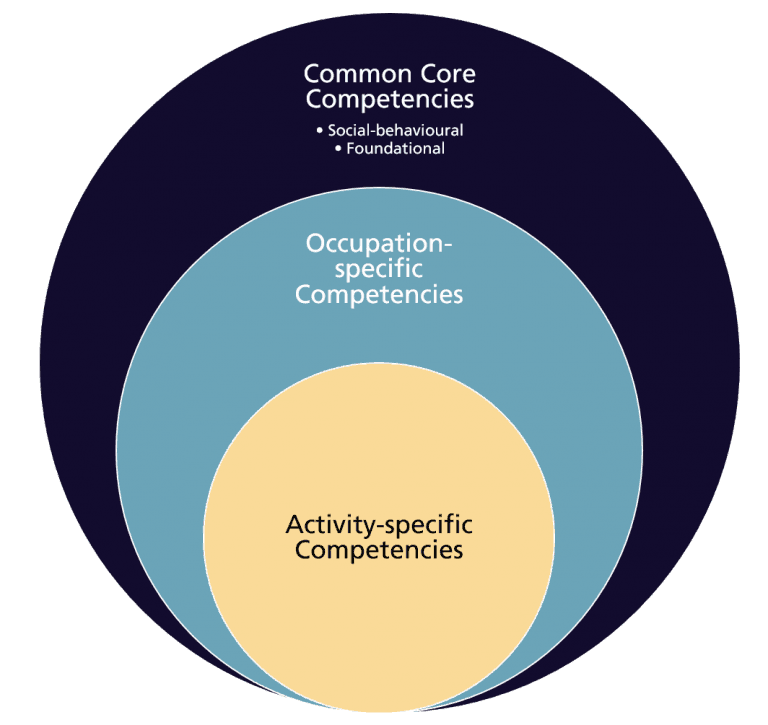
Sample competency framework structures – eCampusOntario Open Competency Toolkit View original
Is this image relevant?
Uses for competency frameworks – eCampusOntario Open Competency Toolkit View original
Is this image relevant?
What are competencies? – eCampusOntario Open Competency Toolkit View original
Is this image relevant?
Sample competency framework structures – eCampusOntario Open Competency Toolkit View original
Is this image relevant?
Defining professionalism
Professionalism refers to the conduct, aims, and qualities expected of someone practicing in a recognized profession. For actuaries, this means demonstrating a commitment to excellence, integrity, and responsibility in every aspect of work.
The key elements are:
- Competence: Performing only work you're qualified to do
- Objectivity: Providing unbiased analysis regardless of who's paying
- Confidentiality: Protecting sensitive client and employer information
- Adherence to professional standards: Following the codes and standards set by actuarial organizations
Professionalism in actuarial work
Actuaries are expected to uphold professionalism across every stage of their work, from data analysis and model development through to communicating results and recommendations. This means applying technical skills in an ethical, objective, and transparent manner.
A major part of actuarial professionalism is the ability to communicate complex information clearly to both technical and non-technical audiences. An actuary who can build a perfect model but can't explain its implications to a board of directors isn't fully meeting professional expectations.
Professionalism vs. ethics
These two concepts overlap but aren't identical. Ethics refers to the moral principles governing behavior. Professionalism is broader: it includes ethical conduct but also encompasses competence, communication skills, and adherence to formal professional standards.
Think of it this way: all ethical violations are professionalism failures, but not all professionalism failures are ethical violations. An actuary who writes a confusing, poorly organized report hasn't necessarily done anything unethical, but they've fallen short of professional expectations.
Communication skills for actuaries
Actuaries regularly need to convey technical information to audiences who range from fellow actuaries to CEOs to regulators. The ability to communicate clearly, both verbally and in writing, determines whether your analysis actually gets understood and acted upon.
Good communication also runs in both directions. Active listening helps you understand what clients and stakeholders actually need before you start building models or writing reports.
Effective verbal communication
In meetings and presentations, actuaries must explain complex ideas in a way that lands with the audience. This means:
- Using plain language and minimizing jargon when speaking with non-technical audiences
- Adapting your level of detail to match what the audience needs to make decisions
- Being prepared to answer follow-up questions and provide additional context on the spot
The goal isn't to simplify your work to the point of inaccuracy. It's to make the key takeaways accessible without requiring the listener to hold an actuarial credential.
Writing clear actuarial reports
Actuarial reports are often the primary deliverable of an engagement. A well-written report should be:
- Well-organized: Use a logical structure with clear headings so readers can find what they need
- Clearly written: Avoid unnecessarily complex sentence structures; state conclusions directly
- Accurate and consistent: Errors or internal contradictions undermine credibility fast
- Visually supported: Tables, graphs, and charts help convey quantitative results more effectively than paragraphs of numbers
Actuarial Standards of Practice (ASOPs) also prescribe specific disclosure and communication requirements for many types of actuarial work, so your reports need to satisfy those as well.
Presenting complex information
When presenting findings to clients, senior management, or regulators, focus on three things:
- Lead with the key conclusions and recommendations. Most audiences want to know the "so what" before the methodology.
- Use visual aids strategically. A well-designed chart can communicate in seconds what a paragraph of text cannot.
- Tailor depth to the audience. A presentation to a chief risk officer will look very different from one to a marketing team, even if the underlying analysis is the same.
Always anticipate questions and prepare concise answers. Being caught off guard on a basic assumption undermines confidence in the entire analysis.
Active listening techniques
Active listening means fully concentrating on what's being said rather than just waiting for your turn to talk. For actuaries, this skill is critical during client meetings and stakeholder interviews where you're gathering requirements or understanding business context.
Practical techniques include:
- Paying attention to nonverbal cues (tone, body language, hesitation)
- Asking clarifying questions rather than assuming you understand
- Summarizing key points back to the speaker to confirm alignment
Better listening leads to better problem definition, which leads to more useful actuarial work.
Professional conduct standards
The actuarial profession is governed by formal conduct standards that define the ethical and professional obligations of every credentialed actuary. These standards exist to ensure integrity, objectivity, and competence across the profession, and adherence to them is not optional.

Actuarial Code of Professional Conduct
The Code of Professional Conduct is the foundational document governing actuarial behavior. In the U.S., it's maintained by the American Academy of Actuaries and applies to members of all U.S.-based actuarial organizations (SOA, CAS, AAA, ASA, and ASPPA).
The Code addresses several areas:
- Professional integrity: Actuaries shall not engage in dishonest or deceptive conduct
- Qualification standards: Actuaries shall perform only work they are qualified to do
- Standards of practice: Actuaries shall comply with applicable ASOPs
- Communication and disclosure: Actuaries shall communicate clearly and disclose relevant information
- Conflict of interest: Actuaries shall disclose any conflicts that could impair objectivity
- Confidentiality: Actuaries shall protect confidential information
All members of actuarial professional organizations are bound by this Code as a condition of membership.
Adherence to standards of practice
Beyond the Code, actuaries must follow Actuarial Standards of Practice (ASOPs), which provide detailed guidance on specific areas of actuarial work. The Actuarial Standards Board (ASB) issues and maintains these standards in the U.S.
ASOPs cover topics such as:
- Data quality and selection of assumptions
- Modeling approaches and validation
- Communication of actuarial findings (ASOP No. 41 is particularly important here)
- Risk treatment and measurement
You're expected to be familiar with every ASOP relevant to your area of practice. "I didn't know about that standard" is not an acceptable defense.
Consequences of unprofessional behavior
Violations of professional conduct standards trigger a formal disciplinary process. The Actuarial Board for Counseling and Discipline (ABCD) in the U.S. investigates complaints and can refer cases to the relevant organization's discipline committee.
Possible consequences include:
- Private or public reprimands
- Suspension or expulsion from the professional organization
- Loss of credentials and the right to sign actuarial opinions
- Damage to professional reputation that can effectively end a career
In serious cases, unprofessional behavior can also lead to legal liability or regulatory sanctions, particularly if the actuary's work product was relied upon for regulatory filings.
Ethical considerations
Actuaries frequently encounter situations where competing interests create tension. A client may want favorable assumptions. An employer may pressure you to downplay risks. Ethical decision-making is the skill that helps you navigate these situations while maintaining your professional obligations.
Ethical decision-making framework
When facing an ethical dilemma, a structured approach helps you think through the situation rather than react to pressure. A typical framework involves these steps:
- Identify the ethical issue. What obligation or principle is at stake?
- Gather relevant facts. What do you know, and what do you need to find out?
- Consider the stakeholders. Who is affected, and how?
- Evaluate alternative courses of action. What are your options, and what does each one mean for the stakeholders?
- Choose the course of action most consistent with professional standards and ethical principles.
- Document your reasoning. This protects you and creates a record of thoughtful decision-making.
When a situation is particularly complex, consult with colleagues or contact the ABCD for confidential guidance. That's exactly what the ABCD's counseling function is designed for.
Conflicts of interest
A conflict of interest arises when your personal or professional interests could interfere with your ability to provide objective, unbiased advice. Common examples include:
- Having a financial stake in a client's business or in the outcome of your analysis
- Providing services to competing clients without disclosure
- Accepting gifts or favors from clients or vendors that could influence your judgment
The Code of Professional Conduct requires you to disclose any actual or potential conflicts to affected parties. In some cases, disclosure alone isn't enough, and you may need to decline the engagement or put safeguards in place to manage the conflict.
Confidentiality and privacy
Actuaries routinely handle sensitive data: individual health records, proprietary business information, financial projections, and more. Maintaining confidentiality is both an ethical obligation and, in many cases, a legal one (think HIPAA for health data or state privacy laws).
Practical steps to safeguard confidential information include:
- Using encrypted storage and secure communication channels
- Limiting access to sensitive data on a need-to-know basis
- Never discussing confidential client information in public or unsecured settings
- Following your organization's data governance policies
Continuous professional development
Continuous professional development (CPD) is the ongoing process of maintaining and expanding your skills and knowledge throughout your career. The actuarial field evolves constantly through new regulations, emerging risks, technological advances, and shifting market conditions. CPD keeps you current.
Most actuarial organizations have formal CPD requirements. For example, the SOA requires members to complete a minimum number of CPD credits annually, including credits specifically related to professionalism.
Importance of lifelong learning
The technical knowledge you gain while passing exams is a starting point, not an endpoint. Regulatory frameworks change, new modeling techniques emerge, and entirely new risk categories (like cyber risk or climate risk) develop over time.
Actuaries who stop learning after earning their credentials risk becoming outdated. Lifelong learning keeps your work relevant and your career competitive.

Staying current with industry trends
The actuarial profession is shaped by trends in regulation, technology, consumer behavior, and the broader economy. Staying informed requires deliberate effort:
- Attending industry conferences and section meetings (SOA, CAS, AAA)
- Participating in professional discussion forums and working groups
- Reading publications like The Actuary, the North American Actuarial Journal, and relevant regulatory bulletins
- Following developments in adjacent fields like data science, finance, and risk management
Pursuing advanced certifications
Advanced credentials signal specialized expertise and can open doors to senior roles. Key certifications include:
- Fellowship (FSA or FCAS): The highest credential in the SOA or CAS track, respectively
- Chartered Enterprise Risk Analyst (CERA): Focuses on enterprise risk management
- Specialty tracks: The SOA offers fellowship tracks in areas like retirement, health, investment, and general insurance
Earning these credentials requires significant additional study and examination beyond the associateship level, but they enhance both your career trajectory and your ability to contribute to complex, high-stakes work.
Collaboration and teamwork
Actuaries rarely work in isolation. Complex projects in insurance pricing, reserving, pension funding, or enterprise risk management require input from finance, accounting, IT, legal, and business teams. Your ability to collaborate across disciplines directly affects the quality and usefulness of your work.
Working effectively in teams
Whether you're on a team of actuaries or a cross-functional project group, effective teamwork depends on:
- Clear roles and responsibilities: Everyone should know what they're accountable for
- Shared goals and timelines: Align on deliverables and deadlines early
- Regular communication: Brief check-ins prevent misalignment from compounding over weeks
- Flexibility: Be willing to lead, support, or provide technical input depending on what the project needs
Communicating with non-actuarial professionals
This is where many actuaries struggle. When working with people outside the profession, you need to translate actuarial concepts into language that connects with their frame of reference.
Practical approaches:
- Replace actuarial jargon with plain language (say "the range of possible outcomes" instead of "the stochastic distribution")
- Provide business context for your numbers (what does a 5% change in the loss ratio actually mean for the company's bottom line?)
- Use analogies and examples that relate to the audience's domain
- Ask questions to gauge understanding rather than assuming your explanation landed
Resolving conflicts professionally
Disagreements are normal in collaborative work. What matters is how you handle them. Effective conflict resolution follows a straightforward process:
- Identify the root cause of the disagreement (is it about data, methodology, priorities, or something interpersonal?)
- Listen to all perspectives without interrupting or becoming defensive
- Focus on the problem, not the person
- Work toward a solution that addresses the core concern
If direct resolution isn't working, escalate to a supervisor or neutral third party before the conflict damages the working relationship or the project timeline.
Actuarial professionalism organizations
Professional organizations are the institutional backbone of actuarial professionalism. They set standards, provide education, credential members, and enforce discipline. Understanding their role is part of understanding what it means to be a professional actuary.
Role of professional organizations
The major U.S. actuarial organizations include:
- Society of Actuaries (SOA): Primarily covers life, health, retirement, and finance practice areas
- Casualty Actuarial Society (CAS): Focuses on property and casualty insurance
- American Academy of Actuaries (AAA): Serves as the public policy voice of the U.S. actuarial profession and coordinates across organizations
- Actuarial Standards Board (ASB): Promulgates ASOPs
- Actuarial Board for Counseling and Discipline (ABCD): Provides guidance and investigates potential violations
These organizations set conduct and practice standards, offer educational resources and professional development, and investigate members who may have violated professional standards.
Membership requirements and benefits
Becoming a credentialed actuary requires passing a rigorous series of examinations and meeting educational and experience requirements. The exam process typically takes several years of dedicated study.
Benefits of membership include:
- Professional recognition and the right to use actuarial credentials
- Access to educational resources, research, and networking events
- Eligibility to sign actuarial opinions and certifications required by regulators
- Participation in the governance and direction of the profession
Membership also carries obligations: adherence to the Code of Professional Conduct, compliance with ASOPs, and completion of CPD requirements.
Continuing education opportunities
Actuarial organizations offer extensive continuing education through:
- Seminars and webinars on technical and professional topics
- Annual meetings and section-specific conferences
- Online courses and self-study modules
- Professionalism workshops (often required as part of CPD)
The SOA's CPD requirement, for example, mandates a minimum of 30 credits of professional development per year, with at least 3 credits in professionalism topics. The CAS has similar requirements. These aren't just box-checking exercises; they're designed to ensure that credentialed actuaries remain competent and current throughout their careers.
See Fiveable more often in Google
Mark Fiveable as a preferred source and Google is more likely to show you our guides in Top Stories, with a "preferred" badge in AI Mode and AI Overviews.