14.1 Island Formation and Geological Features

🗺️World Geography Unit 14 Review
14.1 Island Formation and Geological Features
🗺️ World Geography
Oceania's islands are shaped by volcanic activity, tectonic processes, and coral reef formation. These geological forces create diverse landscapes, from towering volcanoes to low-lying atolls. Understanding how these processes work is essential for grasping Oceania's unique physical geography.
Many of the region's islands face serious challenges from climate change and human activities. Rising sea levels threaten low-lying coral islands, while pollution and overfishing damage vital reef ecosystems. Balancing development with conservation is key to preserving these fragile environments.
Island Formation in Oceania

Top images from around the web for Volcanic Activity and Hotspot Volcanism
Hawaii hotspot - Wikipedia View original
Is this image relevant?
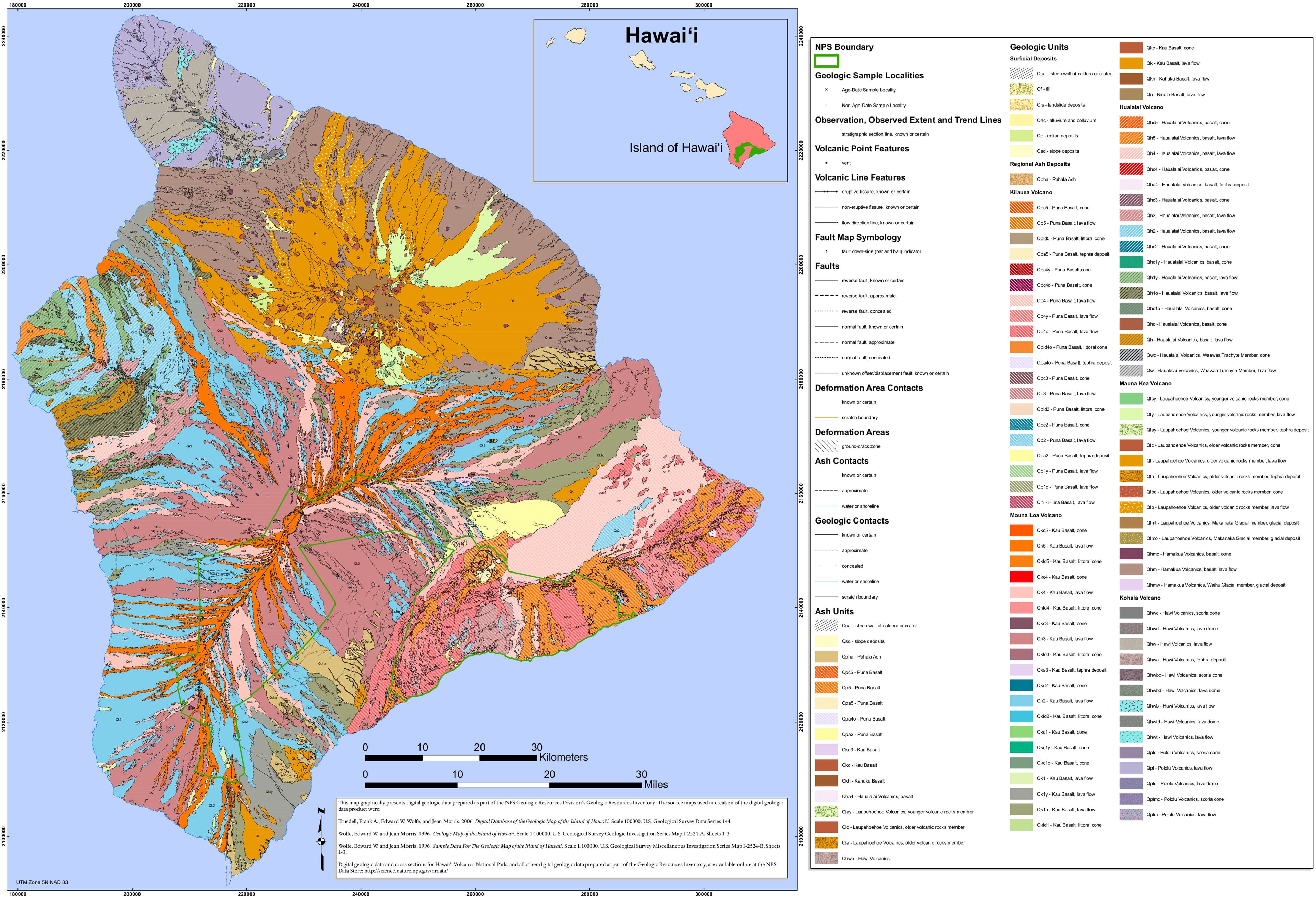
File:NPS hawaii-volcanoes-geologic-map.jpg - Wikimedia Commons View original
Is this image relevant?
Lab--Plate Tectonics View original
Is this image relevant?
Hawaii hotspot - Wikipedia View original
Is this image relevant?
File:NPS hawaii-volcanoes-geologic-map.jpg - Wikimedia Commons View original
Is this image relevant?
Volcanic Activity and Hotspot Volcanism
Volcanic eruptions create new islands when lava and ash accumulate on the ocean floor and eventually break the surface. Hawaii is the most famous example.
The process behind many of Oceania's volcanic islands is hotspot volcanism. A hotspot is a stationary plume of hot material deep in Earth's mantle. As a tectonic plate slowly drifts over this fixed plume, a series of volcanoes forms one after another. The result is a linear chain of islands where the oldest islands sit farthest from the hotspot and the youngest sit closest. The Hawaiian-Emperor seamount chain stretches over 6,000 km and clearly shows this pattern.
The type of lava also matters. Basaltic lava is fluid and produces broad, gently sloping islands, while more viscous andesitic lava tends to produce steeper, more explosive volcanoes. These differences in eruption style directly shape the size and profile of the resulting islands.
Tectonic Processes and Sea Level Changes
Not all islands are built by volcanoes. Tectonic uplift occurs when colliding plates force existing landmasses upward above sea level. Tonga's islands formed this way, along subduction zones where one plate dives beneath another.
- Uplift can push ancient coral reefs high above the ocean, creating uplifted limestone islands with steep cliffs and flat plateaus (Nauru, Niue)
- These islands look very different from volcanic ones because their rock is primarily old reef material rather than cooite or basalt
Sea level changes driven by climate fluctuations also play a role. During ice ages, enormous amounts of water were locked in glaciers, dropping sea levels and exposing land that had been submerged. When ice ages ended and sea levels rose again, low-lying areas flooded. This process continues to reshape Oceania's coastlines today, and current sea level rise threatens many of the region's lowest islands.
Coral Reef Formation and Erosion Processes
Coral reefs can build islands on their own, without any volcanic or tectonic activity. Over thousands of years, coral organisms grow, die, and accumulate. Eventually this buildup can break the ocean surface, forming low-lying coral islands. The Tuamotu Archipelago in French Polynesia contains dozens of islands formed this way.
A critical detail: healthy coral growth can sometimes keep pace with slowly rising sea levels, allowing coral islands to maintain their elevation. This natural process is one reason scientists closely monitor reef health.
Erosion and deposition also reshape existing islands:
- Waves, currents, and wind erode coastlines and redistribute sediments
- This creates features like sand bars, spits, and tombolos (sand bridges connecting an island to a nearby landform)
- Deposition of sediments can extend existing islands or form entirely new ones, like the sand cays scattered across the Great Barrier Reef
Oceania's Geological Features
Volcanic Landforms and Atolls
Volcanic islands are found throughout Oceania, and they come in two main forms:
- Shield volcanoes form from fluid basaltic lava that spreads out in thin layers, creating broad, gently sloping islands. Mauna Loa in Hawaii is a classic shield volcano.
- Stratovolcanoes are built from alternating layers of lava and ash, producing steep-sided, conical peaks. Bora Bora in French Polynesia has this dramatic profile. Vanuatu and the Solomon Islands also contain numerous stratovolcanoes.
Coral atolls are ring-shaped reefs encircling a central lagoon, often dotted with small, low-lying islands or islets. The Marshall Islands and Maldives are well-known examples. Atolls form through a specific sequence:
- A volcanic island forms and coral begins growing around its shores as a fringing reef
- Over time, the volcanic island slowly subsides (sinks) or erodes away
- The coral continues growing upward, keeping pace with the sinking land
- Eventually the volcano disappears entirely beneath the surface, leaving only the ring of coral reef and its lagoon behind
Charles Darwin first proposed this sequence in the 1830s, and it has since been confirmed by drilling into atolls and finding volcanic rock beneath the coral.

Barrier Reefs and Uplifted Limestone Islands
Barrier reefs are coral reefs that run parallel to a shoreline but are separated from it by a lagoon. The Great Barrier Reef off Australia's northeast coast is the world's largest, stretching over 2,300 km. Barrier reefs serve two important functions: they protect coastlines from wave energy and storms, and they support incredibly diverse marine ecosystems.
Uplifted limestone islands form when tectonic forces push ancient coral reefs above sea level. Nauru and Niue are prime examples. These islands have distinctive characteristics:
- Steep coastal cliffs and relatively flat plateau surfaces
- Karst topography, featuring caves, sinkholes, and underground drainage systems carved by water dissolving the limestone
- Thin, nutrient-poor soils that limit vegetation growth and make agriculture difficult
Subduction Trenches and Seamounts
Subduction trenches are the deepest features on Earth's surface, formed where one tectonic plate dives beneath another. The Mariana Trench in the western Pacific reaches depths exceeding 11,000 meters. Trenches are typically found alongside volcanic island arcs and are zones of intense earthquake activity.
Seamounts are underwater mountains formed by volcanic activity, often found in chains. The Louisville Seamount Chain in the South Pacific formed from hotspot volcanism, much like the Hawaiian chain, but its volcanoes never grew tall enough to break the ocean surface. Seamounts are ecologically important because they create habitats for unique deep-sea communities and can influence ocean circulation patterns by redirecting currents.
Plate Tectonics and Volcanic Activity in Oceania
Pacific Ring of Fire and Subduction Zones
The Pacific Ring of Fire is a horseshoe-shaped belt of intense volcanic and seismic activity that encircles the Pacific Ocean. It exists because multiple tectonic plates converge and subduct along this boundary.
Here's how subduction creates volcanic island arcs:
- Two tectonic plates converge, and the denser oceanic plate is forced beneath the other
- As the subducting plate descends into the mantle, intense heat and pressure cause parts of it to melt
- This molten rock (magma) is less dense than the surrounding material, so it rises toward the surface
- The magma erupts through the ocean floor, building volcanoes that can eventually emerge as islands
This process created the Mariana Islands and the Tonga-Kermadec Island Arc, among many others.
Hotspot Volcanism and Island Chains
Hotspot volcanism works differently from subduction. Instead of plate boundaries driving the process, a fixed mantle plume generates magma in one spot while the plate above it keeps moving.
The Hawaiian Islands are the textbook example. The islands increase in age from southeast (the Big Island, which still has active volcanoes) to northwest (Kauai and beyond, which are older, more eroded, and slowly subsiding). As the Pacific Plate continues drifting northwest over the Hawaiian hotspot, new volcanic material builds up, and the next island in the chain is already forming underwater as Lōʻihi Seamount.
Other hotspot island chains in Oceania include the Society Islands (which contain Tahiti) and the Samoan Islands.

Volcanic Eruptions and Landscape Alteration
Volcanic eruptions can dramatically reshape island landscapes in a matter of hours or days:
- Calderas are large circular depressions that form when a volcano's summit collapses after a massive eruption empties the magma chamber below. Rano Kau on Easter Island is one example.
- Lava fields, ash deposits, and pyroclastic flows can bury existing landscapes and create entirely new terrain. The eruptions at Rabaul in Papua New Guinea have repeatedly reshaped the surrounding area.
- The 1883 eruption of Krakatoa in the Sunda Strait destroyed most of the original island, but a new volcanic island, Anak Krakatoa ("Child of Krakatoa"), has since grown from the remnants.
Tectonic Uplift and Earthquakes
Tectonic uplift associated with plate collisions can raise coral reefs and other landmasses above sea level, creating islands with steep cliffs and plateaus.
- The Huon Peninsula in Papua New Guinea has been uplifted over time, exposing a staircase-like series of coral terraces. Each terrace represents a former sea level, making this site valuable evidence of past climate and sea level changes.
- Uplifted islands often have asymmetrical profiles, with steep cliffs on the side facing the tectonic collision and gentler slopes on the opposite side.
Earthquakes generated by tectonic activity pose their own risks:
- The 2009 earthquake and tsunami in Samoa caused significant damage to coastal areas and physically reshaped shorelines
- Earthquake-triggered landslides can alter drainage patterns, create new lakes, and dam rivers, changing how island landscapes evolve over time
Coral Reefs in Oceania
Coastal Protection and Island Formation
Coral reefs act as natural barriers that protect islands from wave erosion and storm surge. They absorb wave energy before it reaches the shore, helping to stabilize coastlines. Fringing reefs, which grow directly along an island's shoreline, provide the most immediate buffer against erosion. Tahiti in French Polynesia is surrounded by fringing reefs.
Reefs also provide the foundation for coral island formation. As reef material accumulates over time, it can create the low-lying islands and islets that make up nations like Kiribati and Tuvalu. Healthy coral growth can keep pace with gradual sea level rise, allowing these islands to maintain their elevation above water. When reef health declines, this natural building process slows or stops, putting the islands at greater risk.
Lagoons and Marine Ecosystems
Coral reefs create lagoons and sheltered waters around islands, providing calm areas for both marine life and human communities.
- Lagoons serve as nursery grounds for fish and other marine species, supporting rich ecosystems. The lagoon at Bora Bora in French Polynesia is a well-known example.
- Sheltered lagoon waters facilitate fishing, transportation, and recreation for island communities.
The marine ecosystems supported by coral reefs are central to life across the Pacific. Many islanders depend on reefs for food, income, and cultural practices. Reef ecosystems in places like Vanuatu and the Solomon Islands are home to a wide variety of fish, invertebrates, and other organisms, many of which are found nowhere else on Earth.
Threats and Conservation
The health of coral reefs directly affects the long-term stability and habitability of many Pacific islands. The major threats include:
- Climate change and ocean acidification: Rising sea surface temperatures stress coral, and increased carbon dioxide absorption makes ocean water more acidic, which weakens coral skeletons
- Coral bleaching: When water temperatures stay elevated for extended periods, corals expel the symbiotic algae that give them color and provide most of their energy. Prolonged bleaching leads to coral death. The Great Barrier Reef has experienced several mass bleaching events in recent years.
- Pollution and sedimentation: Runoff from deforestation and coastal development smothers reefs with sediment, blocking the sunlight corals need to survive
- Overfishing and destructive fishing practices: Removing too many fish disrupts reef ecosystems, and methods like blast fishing physically destroy reef structures
Conservation efforts focus on establishing marine protected areas, implementing sustainable fishing practices, and reducing land-based pollution. The Phoenix Islands Protected Area in Kiribati, one of the world's largest marine reserves, is a notable example of these efforts in action.
See Fiveable more often in Google
Mark Fiveable as a preferred source and Google is more likely to show you our guides in Top Stories, with a "preferred" badge in AI Mode and AI Overviews.