17.1 Urban Growth Patterns and Megacities

🗺️World Geography Unit 17 Review
17.1 Urban Growth Patterns and Megacities
🗺️ World Geography
Urban growth patterns and megacities are central to understanding how the world's population is redistributing itself. More than half of all people now live in cities, and that share keeps climbing. This section covers what drives urbanization, how it differs between developed and developing countries, and the challenges megacities face as they grow.
Factors for Urbanization and Megacities

Top images from around the web for Push and Pull Factors Driving Urbanization
Reading: Urbanization on the Rise | Introductory Sociology View original
Is this image relevant?
bpurban - Urbanisation View original
Is this image relevant?
Demographic Trends and Urbanization View original
Is this image relevant?
Reading: Urbanization on the Rise | Introductory Sociology View original
Is this image relevant?
bpurban - Urbanisation View original
Is this image relevant?
Push and Pull Factors Driving Urbanization
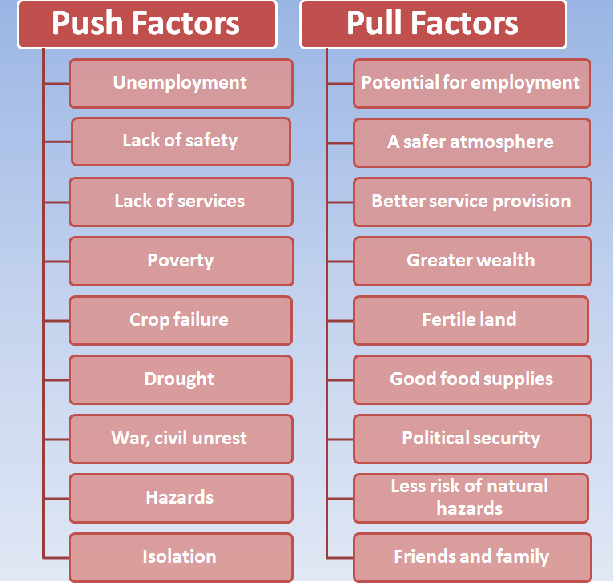
Urbanization happens because people move from rural areas to cities. The reasons break into two categories: push factors that make rural life difficult, and pull factors that make cities attractive.
Push factors drive people away from rural areas:
- Poverty and limited jobs in the countryside leave families with few ways to earn a living
- Poor access to services like healthcare, education, and clean water makes daily life harder in rural settings
- Environmental problems such as drought, soil degradation, or flooding can destroy agricultural livelihoods
Pull factors draw people toward cities:
- Cities concentrate economic activity, offering a much wider range of job opportunities across manufacturing, services, and trade
- Better services are available, from hospitals and universities to electricity and sanitation
- Industrialization creates strong labor demand, especially in countries building up their manufacturing and service sectors
- Urban lifestyles and amenities appeal to younger generations looking for more opportunity
Urbanization Enablers and Contributors
Beyond push and pull, several broader forces make urbanization possible:
- Transportation advances like expanded road networks, rail systems, and public transit allow people and goods to move efficiently, supporting larger and denser cities
- Communication technology, especially internet and mobile access, connects urban economies and enables remote work and e-commerce, reinforcing the economic advantages of cities
- Population growth fuels urban expansion through both natural increase (high birth rates, especially in developing countries) and continued rural-to-urban migration
- Government policies can actively encourage urbanization through infrastructure investment, land-use planning, and the creation of special economic zones or industrial parks designed to attract businesses
Urban Growth Patterns: Developed vs Developing
Urbanization Timelines and Rates
Developed and developing countries have followed very different urbanization paths.
Developed countries (Western Europe, North America, Japan) urbanized mainly during the 19th and early 20th centuries, driven by the Industrial Revolution. This process unfolded over roughly 150 years, giving cities time to build infrastructure gradually. Today, urbanization rates in most developed countries exceed 80%.
Developing countries are urbanizing now, and much faster. Many nations in Africa, South Asia, and Southeast Asia are compressing into a few decades what took developed countries over a century. Projections indicate that several developing countries will reach 50–60% urbanization by 2050, up from 30–40% today.
Urban Planning and Infrastructure
- Developed countries generally have more organized urban growth, guided by established zoning regulations, building codes, and planning agencies. Infrastructure systems for water, sanitation, energy, and transportation are more mature.
- Developing countries often struggle to keep pace with growth. Rapid expansion frequently outstrips the government's ability to provide housing, roads, and utilities. This leads to the spread of informal settlements (slums) where residents lack basic services like clean water and sewage systems.

Spatial Patterns and Economic Drivers
Urban growth takes different spatial forms depending on the context:
- In developed countries, growth often means suburbanization, where people spread outward from city centers into surrounding towns, forming large metropolitan regions. Economic growth is driven by service sectors and knowledge-based industries (finance, tech, healthcare).
- In developing countries, growth tends to concentrate in a small number of very large cities. This pattern produces megacities, defined as urban areas with populations exceeding 10 million. Examples include Lagos (Nigeria), Dhaka (Bangladesh), and Mumbai (India). The economic driver is often rural-to-urban migration, as people leave poverty and limited rural prospects in search of work.
Impacts of Megacities on Regions
Economic Impacts
Megacities function as economic engines. Tokyo's metropolitan area, for instance, produces a GDP comparable to entire mid-sized countries. These cities concentrate industries, financial services, and consumer markets in ways that drive national and regional growth.
- Agglomeration effects occur when businesses, workers, and institutions cluster together. Proximity makes it easier to share knowledge, find specialized labor, and collaborate, boosting innovation and productivity.
- Megacities attract investment and create jobs that benefit surrounding regions through supply chains and commuter economies.
- A significant informal economy exists in most megacities, especially in developing countries. Street vendors, domestic workers, and small-scale manufacturers provide livelihoods for millions, though these workers often lack labor protections and social safety nets.
Social and Cultural Impacts
Megacities are places of both opportunity and deep inequality.
- Inequality is often stark. Wealthy neighborhoods with modern amenities can sit just blocks from slums where residents lack running water. Income gaps and social segregation tend to be more pronounced in megacities than in smaller cities.
- Slum populations face limited access to healthcare, education, and safe housing. In Mumbai, for example, over 40% of the population lives in informal settlements.
- At the same time, megacities serve as cultural and educational hubs. They house major universities, research centers, museums, and media industries. Their diversity fosters cultural exchange and artistic innovation.
- Challenges around crime, public safety, and social cohesion grow as populations swell. Effective policing, community programs, and inclusive planning are needed to maintain social stability.
Environmental Impacts
The environmental footprint of megacities is enormous and extends well beyond city limits.
- Air pollution from vehicles, factories, and power generation is a serious health threat. Cities like Delhi and Beijing regularly exceed WHO air quality guidelines by several times over.
- Water pollution and inadequate waste management contaminate rivers and groundwater, affecting both city residents and downstream communities.
- Megacities consume vast quantities of water, food, and energy drawn from surrounding regions, straining those resources.
- Urban sprawl converts agricultural land and natural habitats into built-up areas.
- Megacities are major contributors to greenhouse gas emissions through transportation, industry, and energy use. The urban heat island effect, where cities are significantly warmer than surrounding rural areas due to concrete, asphalt, and waste heat, intensifies these climate impacts.

Challenges of Megacities: Infrastructure, Housing, Resources
Transportation and Mobility Challenges
Traffic congestion is one of the most visible problems in megacities. In cities like São Paulo or Jakarta, commuters can spend 3–4 hours per day in traffic, reducing productivity and quality of life. Public transit systems are often overcrowded and underfunded.
Solutions that cities are pursuing include:
- Investing in mass transit (metro rail, bus rapid transit systems)
- Promoting cycling and walking through dedicated infrastructure
- Integrating land-use planning with transportation planning so people live closer to where they work
Housing and Slum Challenges
Rapid growth creates intense pressure on housing. When affordable options don't exist, people build their own shelter in informal settlements.
- Affordable housing shortages are critical, especially for low-income residents
- Slums often lack paved roads, sewage systems, electricity, and clean water, creating serious health risks
- Overcrowding worsens disease transmission and fire hazards
Approaches to addressing this include slum upgrading programs that bring basic services to existing settlements, community-led housing initiatives that involve residents in planning, and urban policies that prioritize affordable housing construction and integrate informal areas into the broader city.
Resource Management Challenges
Water: Growing demand, aging pipes, and pollution strain water supplies. Many megacities face periodic water crises. Conservation, recycling, and rainwater harvesting are increasingly necessary.
Sanitation and waste: Inadequate sewage and waste collection systems create health hazards and environmental contamination. Comprehensive strategies including recycling programs and waste-to-energy technology are part of the solution.
Energy: Megacities have massive energy needs. Meeting demand sustainably requires diversifying energy sources (including renewables), improving efficiency in buildings and transportation, and deploying smart grid technologies.
Resilience and Governance Challenges
Many megacities sit in vulnerable locations. Coastal megacities like Mumbai, Shanghai, and Lagos face rising sea levels and intensifying storms. Inland cities deal with heat waves, flooding, and water scarcity.
Building resilience means investing in flood defenses, expanding green spaces, and developing disaster response plans. But none of this works without effective governance.
- Megacity governance requires coordination among government agencies, the private sector, and civil society
- Participatory planning that includes community voices leads to better outcomes
- Strengthening institutional capacity, transparency, and accountability is essential for managing cities of this scale
See Fiveable more often in Google
Mark Fiveable as a preferred source and Google is more likely to show you our guides in Top Stories, with a "preferred" badge in AI Mode and AI Overviews.