16.1 Physical Characteristics and Climate

🗺️World Geography Unit 16 Review
16.1 Physical Characteristics and Climate
🗺️ World Geography
The Arctic and Antarctica are Earth's polar regions, defined by extreme cold and unique landscapes. The Arctic is an ocean basin surrounded by landmasses, while Antarctica is a continent buried under ice. Both regions play outsized roles in regulating global climate, ocean circulation, and sea levels.
Arctic vs Antarctica: Geography and Features

Top images from around the web for Location and Hemispheres
Arctic Circle - Wikipedia View original
Is this image relevant?
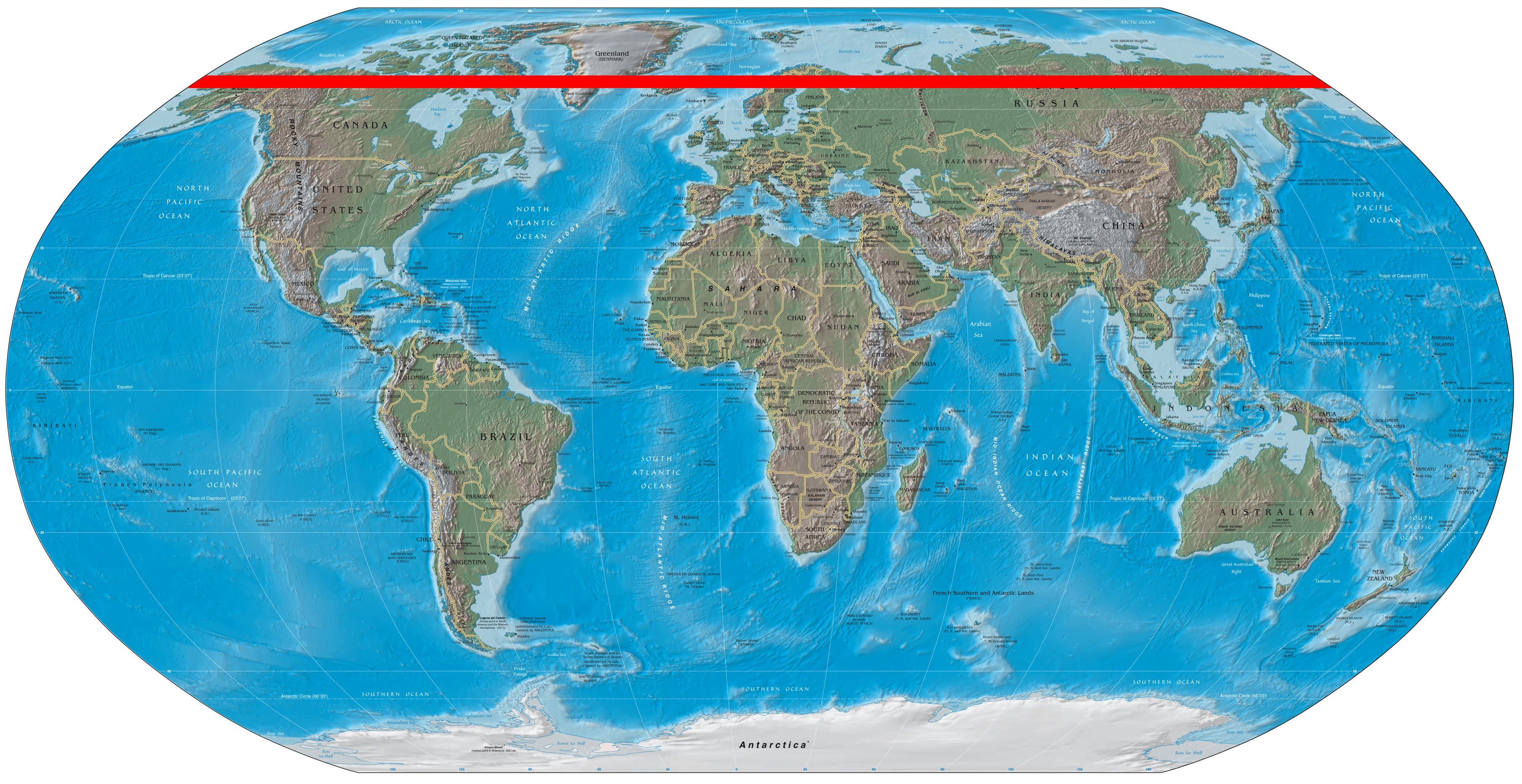
File:World map with arctic circle.jpg - Wikipedia View original
Is this image relevant?
File:Antarctica.jpg - Wikimedia Commons View original
Is this image relevant?
Arctic Circle - Wikipedia View original
Is this image relevant?
File:World map with arctic circle.jpg - Wikipedia View original
Is this image relevant?
Location and Hemispheres
The Arctic sits in the Northern Hemisphere, centered on the North Pole. Antarctica sits in the Southern Hemisphere, centered on the South Pole. The Arctic Circle marks the latitude 66°34' N, and the Antarctic Circle marks 66°34' S. Above and below these lines, you get at least one full day per year of continuous sunlight and one full day of continuous darkness.
- The Arctic region includes the Arctic Ocean and territory belonging to Canada, Russia, Norway, the United States (Alaska), and Greenland (Denmark)
- Antarctica is not owned by any country. It's governed by the Antarctic Treaty System, which reserves the continent for peaceful scientific research
Landmasses and Landscapes
The Arctic and Antarctica look like geographic opposites. The Arctic is an ocean surrounded by land; Antarctica is land surrounded by ocean.
- The Arctic has a varied landscape: tundra (treeless plains with low-growing vegetation), glaciers, sea ice, and mountain ranges like the Brooks Range in Alaska
- Antarctica is dominated by a massive ice sheet, with some exposed rock and the Transantarctic Mountains dividing East and West Antarctica
- The Antarctic ice sheet is the largest single mass of ice on Earth, holding about 90% of the world's ice and roughly 70% of its freshwater
- Because the Arctic has more exposed land and milder summers, it supports far more vegetation than Antarctica
Human Presence and Infrastructure
- The Arctic has a significant human population, including indigenous communities like the Inuit (North America/Greenland) and Sami (Northern Europe), along with established towns such as Longyearbyen, Norway and Utqiaġvik (Barrow), Alaska
- Antarctica has no permanent human population. The only residents are rotating teams of research scientists and support staff at stations like McMurdo Station (U.S.) and Amundsen-Scott South Pole Station (U.S.)
Polar Climate: Patterns and Conditions

Temperature and Seasons
Both regions have polar climates with long, bitterly cold winters and brief, cool summers. But Antarctica is significantly colder.
- Arctic average temperatures range from about in winter to in summer
- Antarctic average temperatures range from about in winter to in summer, making it the coldest continent on Earth
- The lowest temperature ever recorded on Earth was at Russia's Vostok Station in Antarctica (July 1983)
- Due to the tilt of Earth's axis, polar regions experience polar night (extended winter darkness) and midnight sun (extended summer daylight). At the poles themselves, this means roughly six months of each
Precipitation and Wind Patterns
Polar regions are surprisingly dry. Cold air holds very little moisture, so precipitation is low in both places.
- The Arctic receives more precipitation than Antarctica because it's closer to moisture-carrying ocean and atmospheric systems
- Antarctica qualifies as a polar desert, receiving less than 250 mm of precipitation per year on average. Interior Antarctica gets even less, comparable to the Sahara
- Antarctica's extreme dryness results from cold temperatures and its isolation from warmer, moisture-bearing air masses by the Antarctic Circumpolar Current
- Strong katabatic winds are a defining feature of Antarctica's climate. These form when cold, dense air over the high interior ice sheet flows downhill toward the coast under gravity, reaching speeds up to 320 km/h
Ocean Currents and Polar Climate
Ocean currents are a major reason the Arctic and Antarctica have such different climates, even though both are polar regions.
Arctic Ocean Currents
- The North Atlantic Current, an extension of the Gulf Stream, carries warmer water northward into the Arctic. This is a key reason the Arctic is milder than Antarctica at comparable latitudes
- The Beaufort Gyre is a wind-driven current circulating in the Arctic Ocean. It affects how sea ice is distributed and helps regulate the freshwater balance of the Arctic basin

Antarctic Ocean Currents
- The Antarctic Circumpolar Current (ACC) is the world's largest ocean current, flowing eastward around the entire continent. It acts as a barrier, preventing warmer subtropical water from reaching Antarctica's coast
- This isolation is a major reason Antarctica is so much colder than the Arctic
- The Weddell Gyre and Ross Gyre are large circulation patterns in the Southern Ocean that influence regional sea ice formation and nutrient distribution
Atmospheric Circulation
- The polar cell is a circulation pattern where cold, dense air sinks at the poles and flows toward the mid-latitudes near the surface, helping drive global weather patterns
- The polar vortex is a large-scale band of low-pressure air that circulates over each pole during winter, keeping extremely cold air contained at high latitudes
- When the polar vortex weakens or splits, frigid Arctic air can spill southward into the mid-latitudes, causing severe cold snaps. The polar vortex disruption in early 2021, for example, contributed to extreme cold across parts of North America
Climate Change: Impacts on Polar Regions
Rapid Warming and Ice Melt
The polar regions are warming faster than anywhere else on Earth, and the consequences extend far beyond the poles.
- The Arctic is warming roughly two to three times faster than the global average, a phenomenon called Arctic amplification. This happens partly because melting ice exposes darker ocean water, which absorbs more solar energy instead of reflecting it
- Arctic sea ice has been declining in both extent and thickness over recent decades. Some projections suggest ice-free Arctic summers could occur within the coming decades
- The Greenland ice sheet and Antarctic ice sheet together hold enough ice to raise global sea levels by over 65 meters if fully melted. Even partial melting poses serious threats to coastal communities and low-lying island nations like the Maldives and Tuvalu
Ecosystem and Wildlife Impacts
- Shrinking Arctic sea ice threatens species that depend on it, including polar bears, walruses, and ringed seals, which use ice platforms for hunting, resting, and breeding
- Changes in the timing and extent of sea ice disrupt the entire Arctic marine food web, from phytoplankton blooms to fish populations
- Warmer Arctic temperatures are pushing shrubs and trees northward into what was previously open tundra, altering habitat for species adapted to treeless landscapes like caribou
- In Antarctica, warming of the Southern Ocean reduces populations of krill, a small crustacean that forms the base of the Antarctic food web. Declining krill has cascading effects on penguins, seals, and whales that depend on it
Global Implications and Feedback Loops
Changes in the polar regions don't stay in the polar regions. Several feedback mechanisms can amplify warming and affect the entire planet.
- Melting Arctic ice and increased freshwater runoff can slow the Atlantic Meridional Overturning Circulation (AMOC), a major ocean "conveyor belt." A weakened AMOC could cool parts of Europe, shift rainfall patterns, and alter hurricane tracks
- Permafrost (permanently frozen ground) across the Arctic stores vast amounts of organic carbon. As it thaws, microbes break down this material and release methane and carbon dioxide. Since these are greenhouse gases, this creates a positive feedback loop: warming causes thawing, which releases gases, which causes more warming
- Methane hydrates (frozen methane deposits) on the Arctic Ocean floor could release additional methane as ocean temperatures rise
- Retreating ice is also opening new shipping routes like the Northwest Passage and Northern Sea Route, creating economic opportunities but also raising concerns about oil spills, invasive species, and geopolitical competition over Arctic resources
See Fiveable more often in Google
Mark Fiveable as a preferred source and Google is more likely to show you our guides in Top Stories, with a "preferred" badge in AI Mode and AI Overviews.